Philippines Office Chair Market Top 5 Importing Countries and Market Competition (HHI) Analysis
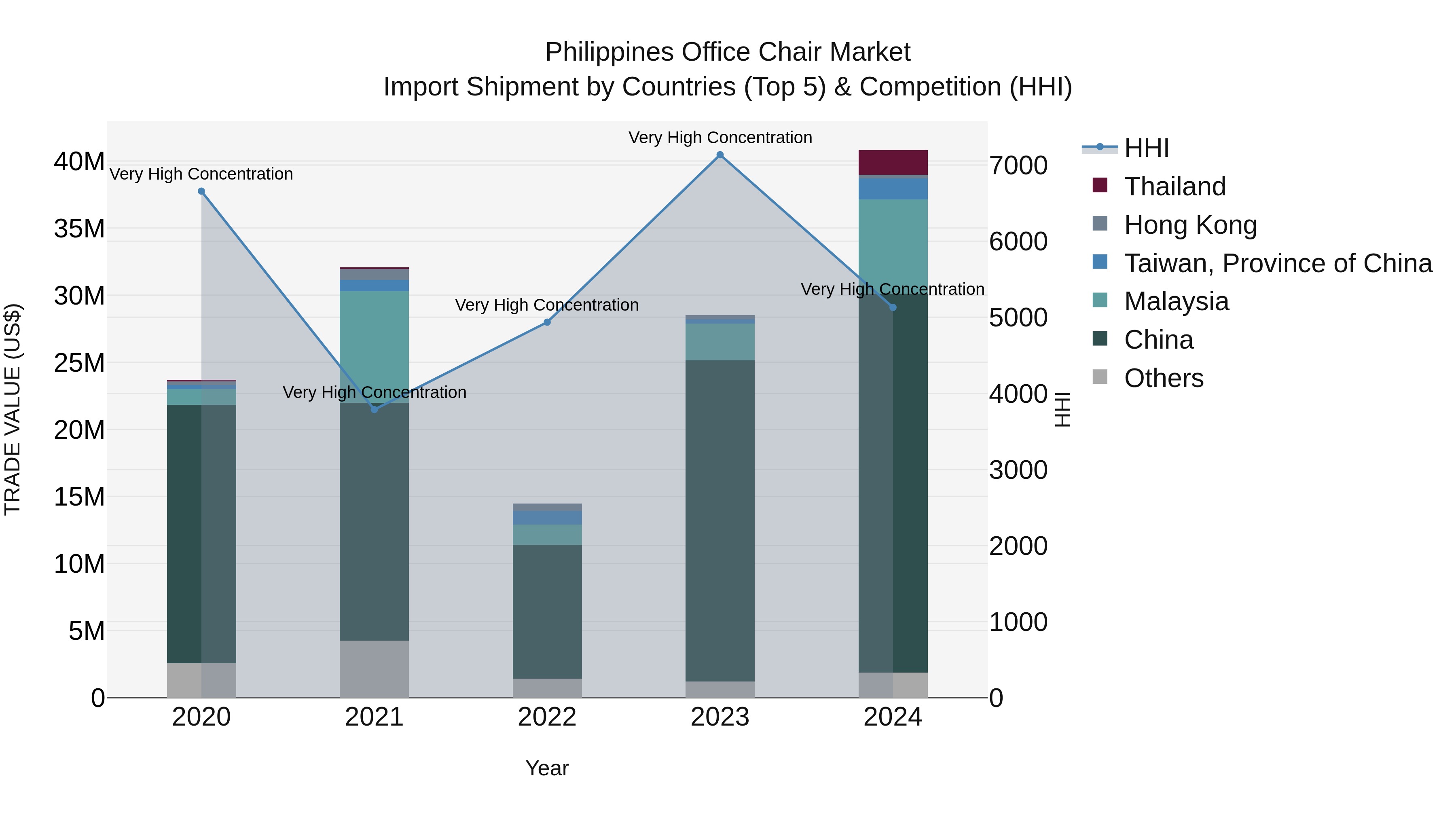
The Philippines continues to rely heavily on imports of office chairs, with China, Malaysia, Thailand, Taiwan, and Singapore being the top exporters in 2024. The high Herfindahl-Hirschman Index (HHI) indicates a concentrated market. The industry has shown strong growth, with a Compound Annual Growth Rate (CAGR) of 14.55% from 2020 to 2024. The impressive growth rate of 43.07% from 2023 to 2024 suggests a thriving market for office chairs in the Philippines, driven by demand for quality and ergonomic office furniture.
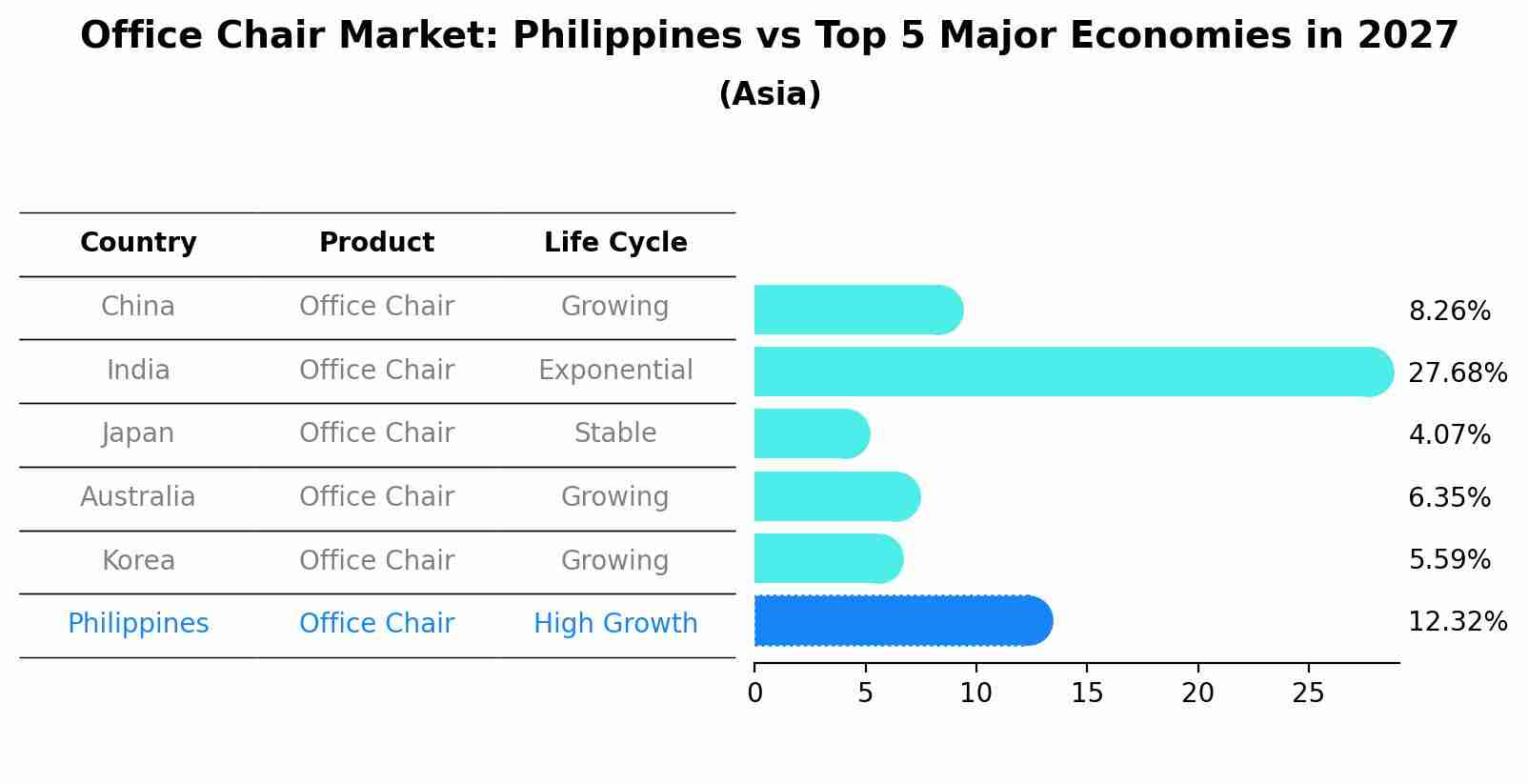
Office Chair Market: Philippines vs Top 5 Major Economies in 2027 (Asia)
By 2027, the Office Chair market in Philippines is anticipated to reach a growth rate of 12.32%, as part of an increasingly competitive Asia region, where China remains at the forefront, supported by India, Japan, Australia and South Korea, driving innovations and market adoption across sectors.
philippines office chair market Synopsis
The Philippines office chair market was valued at around $128. 3 million in 2025 and is estimated to grow at a CAGR of 5. 8% during the forecast period. Office chairs, also known as desk chairs, are used in offices for several hours by workers while working on their computers or paperwork. The increasing demand from corporate and government offices has been driving the growth of the Philippine office chair market. Moreover, rising awareness regarding ergonomic designs among consumers is expected to fuel the demand for these products over the next few years.
Drivers of the Market
The Philippines office chair market is expected to grow in tandem with the evolving work landscape. As remote work and flexible office setups become more prevalent, the demand for ergonomic, comfortable, and visually appealing office chairs is on the rise. Employers and employees alike are recognizing the importance of proper seating for productivity and well-being, which will drive the demand for high-quality office chairs in the country.
Challenges of the Market
The Philippines office chair market is closely linked to the overall business landscape. Economic fluctuations can influence demand, while ergonomic considerations and competitive pricing pose challenges for manufacturers. Adapting to remote work trends and integrating technology into office furniture also present ongoing challenges.
COVID-19 Impact on the Market
The office chair market in the Philippines is closely linked to the dynamics of the corporate sector. With the rise of remote work during the COVID-19 pandemic, the demand for office chairs for home setups surged. However, the overall market faced disruptions due to office closures and economic uncertainties. As companies adopt hybrid work models, the market is likely to evolve with an increased focus on ergonomic designs, comfort, and versatility to accommodate diverse work environments.
Key Players in the Market
The Philippines office chair market is driven by the growing demand for ergonomic and comfortable seating solutions in workplaces. Major players in this market include companies like ErgoHome Philippines, which offers a range of ergonomic office chairs designed to enhance comfort and productivity. Both local and international players contribute to the market`s offerings, reflecting the emphasis on employee well-being in the workplace.
Key Highlights of the Report:
- Philippines Office Chair Market Outlook
- Market Size of Philippines Office Chair Market, 2024
- Forecast of Philippines Office Chair Market, 2031
- Historical Data and Forecast of Philippines Office Chair Revenues & Volume for the Period 2021-2031
- Philippines Office Chair Market Trend Evolution
- Philippines Office Chair Market Drivers and Challenges
- Philippines Office Chair Price Trends
- Philippines Office Chair Porter's Five Forces
- Philippines Office Chair Industry Life Cycle
- Historical Data and Forecast of Philippines Office Chair Market Revenues & Volume By Product Type for the Period 2021-2031
- Historical Data and Forecast of Philippines Office Chair Market Revenues & Volume By Executive Office for the Period 2021-2031
- Historical Data and Forecast of Philippines Office Chair Market Revenues & Volume By Ergonomic for the Period 2021-2031
- Historical Data and Forecast of Philippines Office Chair Market Revenues & Volume By Conference for the Period 2021-2031
- Historical Data and Forecast of Philippines Office Chair Market Revenues & Volume By Material for the Period 2021-2031
- Historical Data and Forecast of Philippines Office Chair Market Revenues & Volume By Mesh for the Period 2021-2031
- Historical Data and Forecast of Philippines Office Chair Market Revenues & Volume By Lather for the Period 2021-2031
- Historical Data and Forecast of Philippines Office Chair Market Revenues & Volume By Plastic for the Period 2021-2031
- Historical Data and Forecast of Philippines Office Chair Market Revenues & Volume By Fabric for the Period 2021-2031
- Historical Data and Forecast of Philippines Office Chair Market Revenues & Volume By Sales Channel for the Period 2021-2031
- Historical Data and Forecast of Philippines Office Chair Market Revenues & Volume By Offline for the Period 2021-2031
- Historical Data and Forecast of Philippines Office Chair Market Revenues & Volume By Online for the Period 2021-2031
- Philippines Office Chair Import Export Trade Statistics
- Market Opportunity Assessment By Product Type
- Market Opportunity Assessment By Material
- Market Opportunity Assessment By Sales Channel
- Philippines Office Chair Top Companies Market Share
- Philippines Office Chair Competitive Benchmarking By Technical and Operational Parameters
- Philippines Office Chair Company Profiles
- Philippines Office Chair Key Strategic Recommendations






































