Philippines Sugar Substitute Market Top 5 Importing Countries and Market Competition (HHI) Analysis
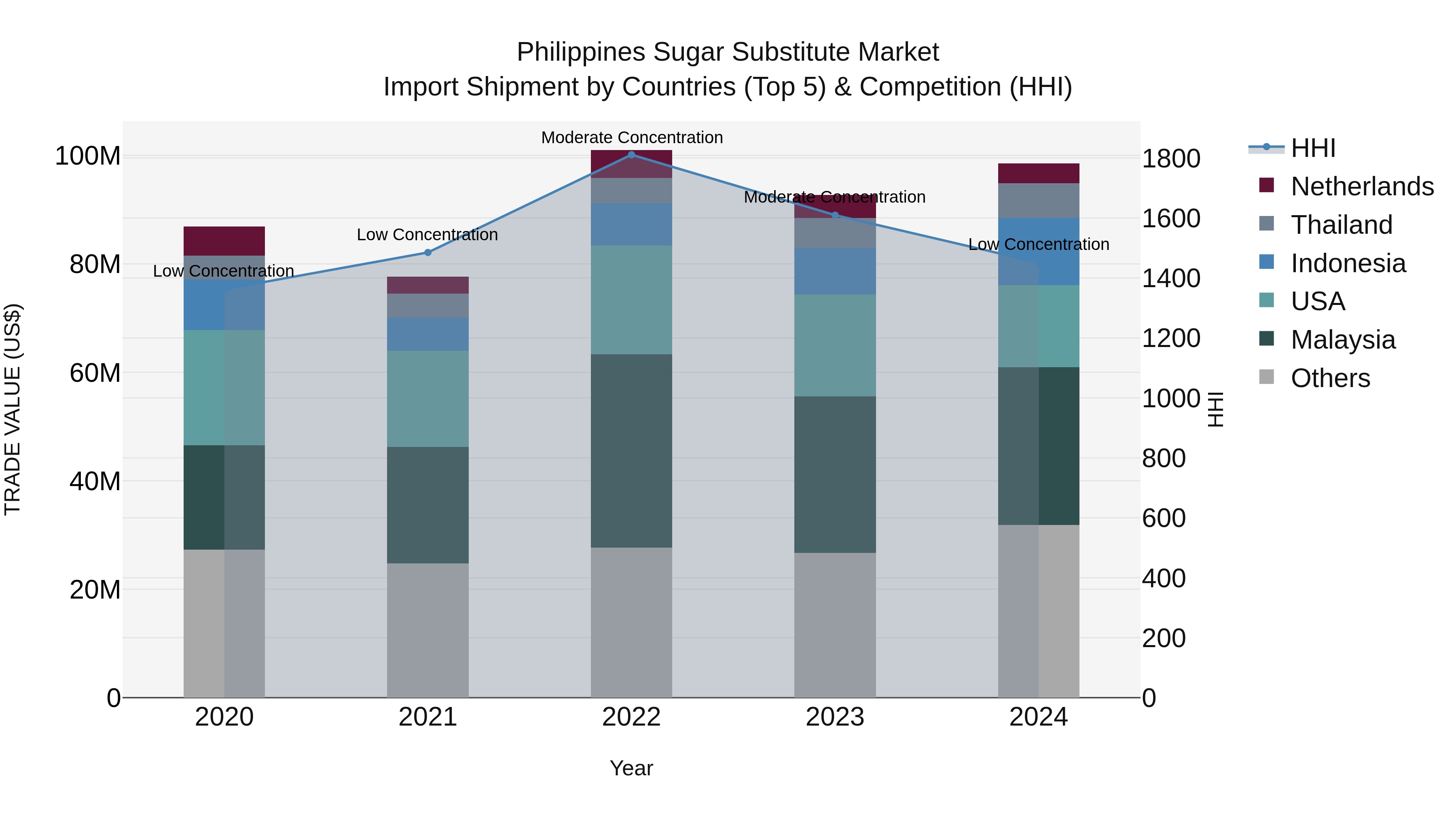
In 2024, Philippines saw a steady increase in sugar substitute import shipments, with key exporters being Malaysia, USA, Indonesia, South Korea, and Thailand. The market exhibited a shift from moderate to low concentration, indicating a more diverse import landscape. With a Compound Annual Growth Rate (CAGR) of 3.17% from 2020 to 2024 and a notable growth rate of 6.27% in 2024, the sugar substitute market in the Philippines is showing resilience and potential for further expansion. This trend suggests a growing demand for alternative sweeteners in the region.
Philippines Sugar Substitute Market Synopsis
The sugar substitute market in the Philippines is flourishing as consumers look for alternatives that help manage weight and prevent chronic illnesses. Both artificial and natural sweeteners are experiencing rising demand, with stevia and monk fruit gaining prominence due to their clean-label appeal. Government initiatives promoting healthier diets are also supporting market expansion.
Trends of the market
The sugar substitute market is booming as more consumers adopt low-sugar diets. Natural alternatives like stevia and erythritol are gaining preference over artificial options, and regulatory support for health-focused labeling is accelerating adoption.
Challenges of the market
The Sugar Substitute market in the Philippines faces challenges related to consumer skepticism about the health benefits of substitutes and the availability of suitable alternatives. While sugar substitutes offer a solution for people looking to reduce sugar intake, there is a widespread lack of understanding about the long-term health implications of various substitutes. Many sugar substitutes, such as artificial sweeteners, face criticism and suspicion, which impacts their widespread adoption. Additionally, the market struggles with the high cost of production for certain sugar substitutes, making them less accessible to lower-income consumers. Supply chain issues and the limited availability of quality substitutes also contribute to challenges in meeting demand.
Investment opportunities in the Market
The sugar substitute market in the Philippines is experiencing strong growth due to the increasing health-consciousness of consumers. With more people looking for ways to reduce their sugar intake, products such as stevia, monk fruit extract, and artificial sweeteners are gaining traction. Investment opportunities in this market lie in the development of new, natural sugar alternatives, as well as the enhancement of production processes to ensure cost-effective manufacturing. There is also potential for partnerships with beverage and food companies to offer sugar-free or reduced-sugar product lines, catering to a growing segment of health-conscious consumers.
Government Policy of the market
The sugar substitute market in the Philippines is regulated by the FDA, which ensures that alternative sweeteners meet safety standards for consumption. The government encourages the use of natural and artificial sweeteners as part of efforts to combat the health issues associated with excessive sugar intake. Policies aim to promote consumer awareness of the benefits and risks of sugar substitutes, fostering a safer, more sustainable market.
Key Highlights of the Report:
- Philippines Sugar Substitute Market Outlook
- Market Size of Philippines Sugar Substitute Market, 2024
- Forecast of Philippines Sugar Substitute Market, 2031
- Historical Data and Forecast of Philippines Sugar Substitute Revenues & Volume for the Period 2021- 2031
- Philippines Sugar Substitute Market Trend Evolution
- Philippines Sugar Substitute Market Drivers and Challenges
- Philippines Sugar Substitute Price Trends
- Philippines Sugar Substitute Porter's Five Forces
- Philippines Sugar Substitute Industry Life Cycle
- Historical Data and Forecast of Philippines Sugar Substitute Market Revenues & Volume By Product Type for the Period 2021- 2031
- Historical Data and Forecast of Philippines Sugar Substitute Market Revenues & Volume By High-Intensity for the Period 2021- 2031
- Historical Data and Forecast of Philippines Sugar Substitute Market Revenues & Volume By Low-Intensity for the Period 2021- 2031
- Historical Data and Forecast of Philippines Sugar Substitute Market Revenues & Volume By High Fructose Syrup for the Period 2021- 2031
- Historical Data and Forecast of Philippines Sugar Substitute Market Revenues & Volume By Application for the Period 2021- 2031
- Historical Data and Forecast of Philippines Sugar Substitute Market Revenues & Volume By Food and Beverage for the Period 2021- 2031
- Historical Data and Forecast of Philippines Sugar Substitute Market Revenues & Volume By Dietary Supplements for the Period 2021- 2031
- Historical Data and Forecast of Philippines Sugar Substitute Market Revenues & Volume By Pharmaceuticals for the Period 2021- 2031
- Philippines Sugar Substitute Import Export Trade Statistics
- Market Opportunity Assessment By Product Type
- Market Opportunity Assessment By Application
- Philippines Sugar Substitute Top Companies Market Share
- Philippines Sugar Substitute Competitive Benchmarking By Technical and Operational Parameters
- Philippines Sugar Substitute Company Profiles
- Philippines Sugar Substitute Key Strategic Recommendations






































