Philippines Thermal Paper Market Top 5 Importing Countries and Market Competition (HHI) Analysis
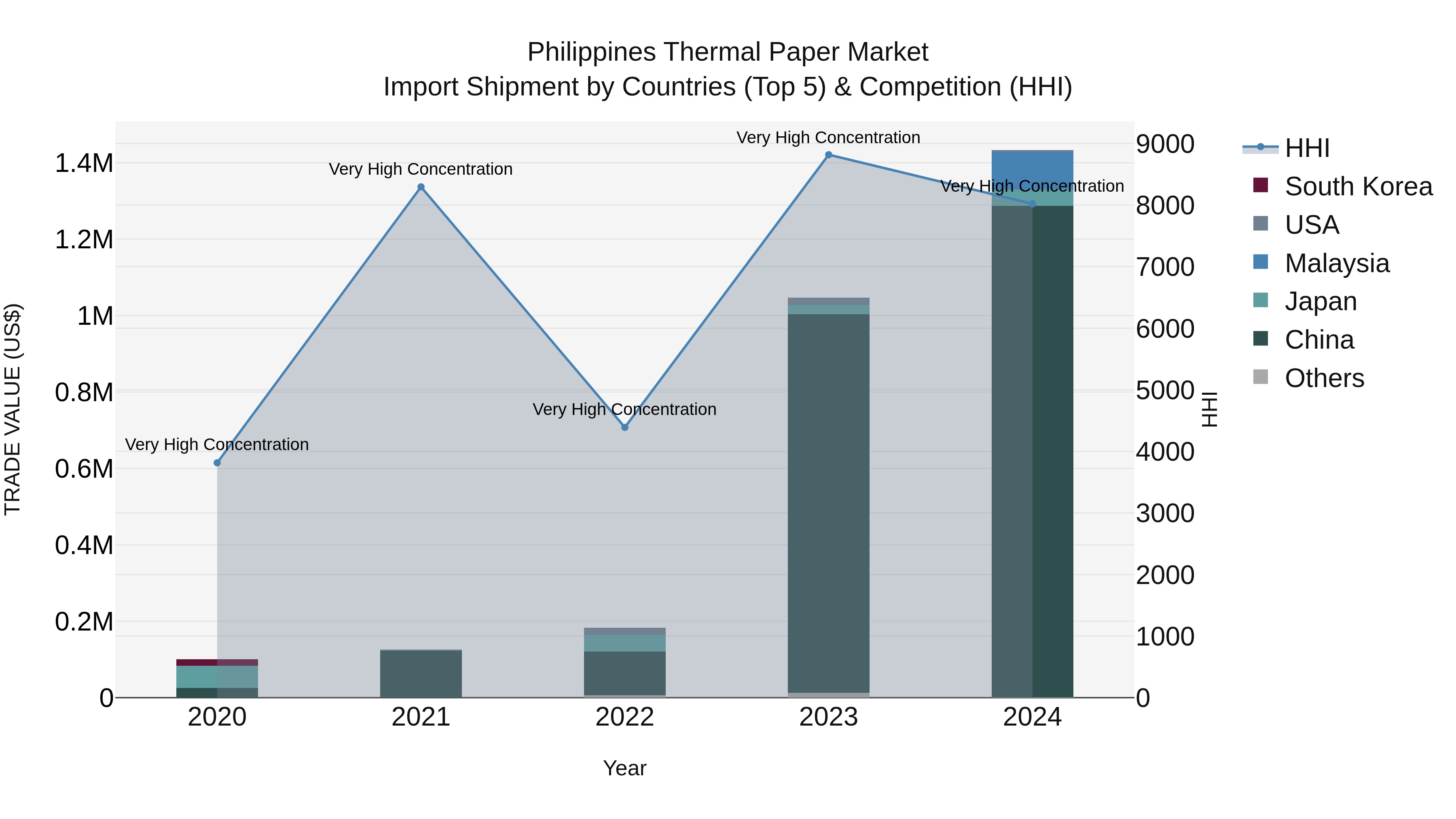
Philippines` thermal paper import shipments in 2024 continued to be dominated by top exporters such as China, Malaysia, Japan, USA, and Singapore. The high Herfindahl-Hirschman Index (HHI) indicates a concentrated market. The impressive compound annual growth rate (CAGR) of 94.44% from 2020 to 2024 reflects strong demand for thermal paper in the Philippines. Furthermore, the notable growth rate of 36.88% from 2023 to 2024 suggests a sustained upward trend in the importation of thermal paper, highlighting the country`s reliance on these key exporting nations for their supply.
philippines thermal paper market Synopsis
The Philippines thermal paper market is estimated to be worth USD 26. 7 million in 2025 and is estimated to grow at a CAGR of 5. 8% over the cominig years, reaching USD 37. 6 million by the estimated years. This market has been driven by increasing demand for convenience products such as mobile payment systems and automated ticketing machines that require thermal paper for printing receipts or tickets. Additionally, the rising demand for barcode labels with enhanced features such as water resistance and durability also provides traction to this growing segment of the industry.
Drivers of the Market
Thermal paper is widely used for printing receipts, labels, and tickets. The market outlook could be influenced by the growth of retail and hospitality industries, technological advancements in printing, and environmental concerns regarding paper waste.
Challenges of the Market
Thermal paper often contains chemicals like bisphenol A (BPA). The challenge might involve addressing environmental and health concerns associated with the use of such chemicals in paper production.
COVID-19 Impact on the Market
Thermal paper is widely used in receipts and labels. The pandemic could have affected the thermal paper market through changes in retail and commercial activities. Lockdowns and restrictions could have reduced the need for printed receipts and labels as businesses faced closures or decreased foot traffic.
Key Players in the Market
Thermal paper is widely used in receipts, labels, and other applications requiring printing without ink. Major players in this market might include paper manufacturers like Paperlink International Corporation and United Pulp and Paper Co., Inc. (UPPC), which could produce thermal paper products.
Key Highlights of the Report:
- Philippines Thermal Paper Market Outlook
- Market Size of Philippines Thermal Paper Market, 2024
- Forecast of Philippines Thermal Paper Market, 2031
- Historical Data and Forecast of Philippines Thermal Paper Revenues & Volume for the Period 2021-2031
- Philippines Thermal Paper Market Trend Evolution
- Philippines Thermal Paper Market Drivers and Challenges
- Philippines Thermal Paper Price Trends
- Philippines Thermal Paper Porter's Five Forces
- Philippines Thermal Paper Industry Life Cycle
- Historical Data and Forecast of Philippines Thermal Paper Market Revenues & Volume By Application for the Period 2021-2031
- Historical Data and Forecast of Philippines Thermal Paper Market Revenues & Volume By Point of Sale (PoS) for the Period 2021-2031
- Historical Data and Forecast of Philippines Thermal Paper Market Revenues & Volume By Tags & Labels for the Period 2021-2031
- Historical Data and Forecast of Philippines Thermal Paper Market Revenues & Volume By Lottery & Gaming for the Period 2021-2031
- Historical Data and Forecast of Philippines Thermal Paper Market Revenues & Volume By Others for the Period 2021-2031
- Philippines Thermal Paper Import Export Trade Statistics
- Market Opportunity Assessment By Application
- Philippines Thermal Paper Top Companies Market Share
- Philippines Thermal Paper Competitive Benchmarking By Technical and Operational Parameters
- Philippines Thermal Paper Company Profiles
- Philippines Thermal Paper Key Strategic Recommendations






































