Poland Acrylate Market: Import Trend Analysis
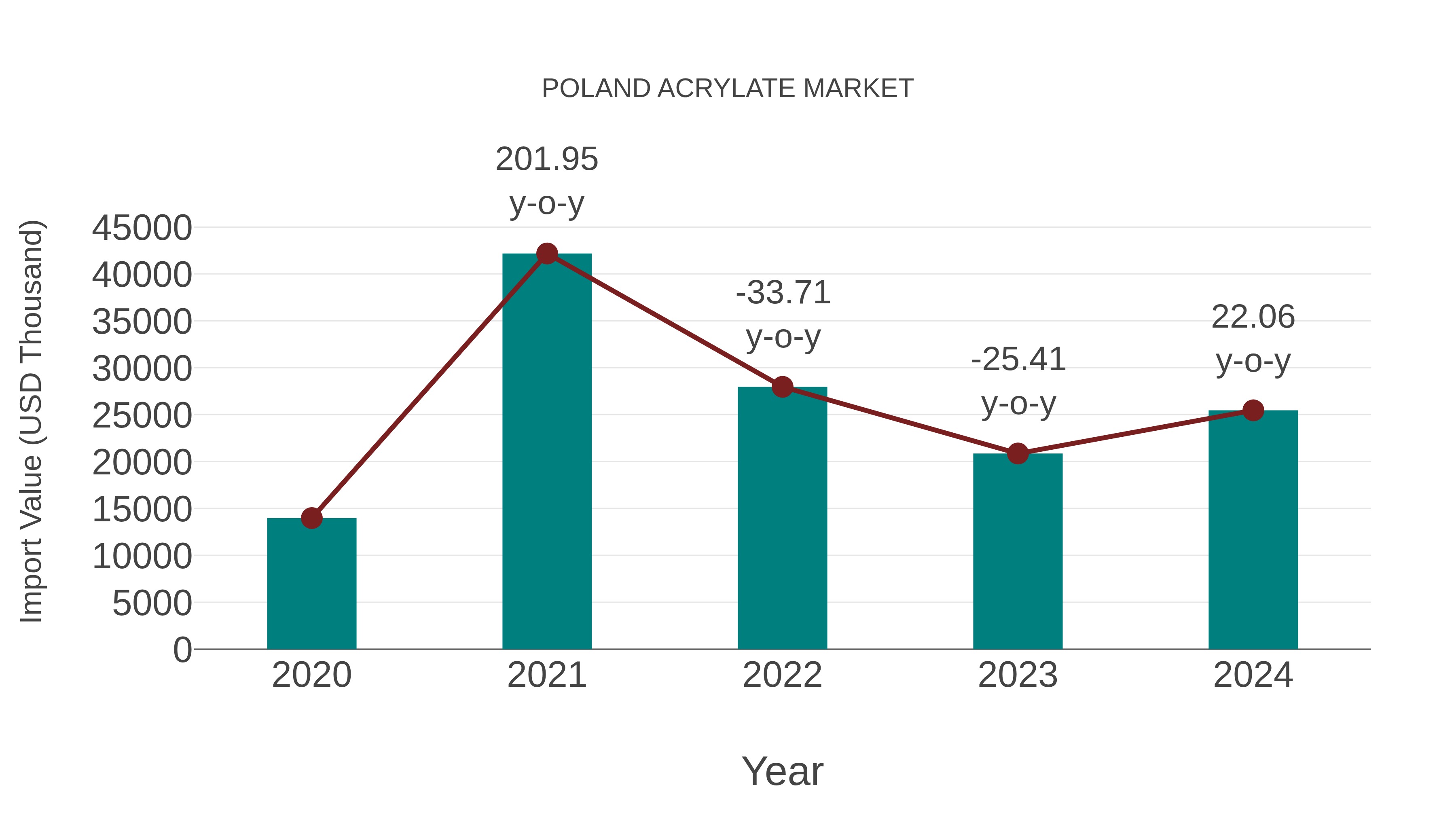
In the Poland acrylate market, the import trend showed significant growth from 2023 to 2024, with a growth rate of 22.06%. The compound annual growth rate (CAGR) from 2020 to 2024 stood at 16.19%. This import momentum can be attributed to increasing demand for acrylate products in various industries, indicating a positive shift in market stability and trade dynamics during the period analyzed.
Poland Acrylate Market Overview
The Poland Acrylate Market is experiencing steady growth driven by increasing demand from various end-use industries such as adhesives, paints and coatings, textiles, and construction. The market is primarily dominated by methyl acrylate, ethyl acrylate, and butyl acrylate segments due to their versatile applications. The growing construction and automotive sectors in Poland are expected to further propel the demand for acrylates in the coming years. Key market players are focusing on product innovation, strategic partnerships, and expansions to strengthen their market presence. However, fluctuating prices of raw materials and stringent regulations regarding environmental impact are some of the challenges faced by the market. Overall, the Poland Acrylate Market is poised for growth, driven by expanding industrial sectors and increasing adoption of acrylate-based products.
Poland Acrylate Market Trends and Opportunities
The Poland Acrylate Market is experiencing growth driven by increasing demand from end-use industries such as construction, automotive, and textiles. The market is witnessing a trend towards the development of eco-friendly and sustainable acrylate products in response to growing environmental concerns. There is also a rising demand for high-performance acrylates in various applications, leading to opportunities for innovation and product development. Additionally, the increasing focus on research and development activities to enhance product properties and performance is creating opportunities for market expansion. Overall, the Poland Acrylate Market is poised for growth, with potential for new product developments and strategic partnerships to cater to evolving customer needs and market demands.
Poland Acrylate Market Challenges
In the Poland Acrylate Market, several challenges are faced, including intense competition from domestic and international players, fluctuating raw material prices, stringent regulations on environmental sustainability and safety, and a growing focus on developing eco-friendly and bio-based alternatives. Additionally, the market is influenced by factors such as changing consumer preferences, economic uncertainties, and technological advancements in production processes. Companies operating in the Poland Acrylate Market must navigate these challenges to stay competitive, maintain profitability, and meet evolving customer demands while also addressing sustainability concerns and regulatory requirements in order to sustain long-term growth and success.
Poland Acrylate Market Drivers
The Poland Acrylate Market is primarily driven by the increasing demand for acrylate-based products in various industries such as paints and coatings, adhesives, textiles, and construction. The growth in the construction sector, driven by infrastructure development and rising urbanization, is fueling the demand for acrylate-based products like adhesives and sealants. Additionally, the growing automotive industry in Poland is driving the demand for acrylate-based coatings and adhesives for vehicle manufacturing and maintenance. Moreover, the shift towards eco-friendly and sustainable products is also boosting the demand for bio-based acrylates in the market. Overall, the continuous innovation in product development, increasing investment in research and development activities, and the expanding application scope of acrylates are key factors driving the growth of the Poland Acrylate Market.
Poland Acrylate Market Government Policies
In Poland, government policies related to the Acrylate Market primarily focus on promoting environmental sustainability and ensuring product safety. The Polish government has implemented regulations to control emissions and waste management in the acrylate industry to protect the environment and public health. Additionally, there are strict guidelines in place to monitor the quality and safety of acrylate products to prevent any potential risks to consumers. These policies aim to foster responsible production practices, encourage innovation in sustainable technologies, and ultimately contribute to the overall growth and competitiveness of the Acrylate Market in Poland.
Poland Acrylate Market Future Outlook
The Poland Acrylate Market is poised for steady growth in the coming years, driven by increasing demand from various industries such as adhesives, coatings, and textiles. The market is expected to benefit from the rising construction activities and automotive sector in the country. Additionally, the growing trend towards eco-friendly and sustainable products is likely to drive the demand for bio-based acrylates. Manufacturers in Poland are also focusing on product innovation and technological advancements to cater to the evolving market needs. However, challenges such as volatile raw material prices and regulatory constraints may impact market growth. Overall, the Poland Acrylate Market is anticipated to witness moderate growth with opportunities for expansion and development in the near future.
Key Highlights of the Report:
- Poland Acrylate Market Outlook
- Market Size of Poland Acrylate Market, 2025
- Forecast of Poland Acrylate Market, 2032
- Historical Data and Forecast of Poland Acrylate Revenues & Volume for the Period 2022 - 2032F
- Poland Acrylate Market Trend Evolution
- Poland Acrylate Market Drivers and Challenges
- Poland Acrylate Price Trends
- Poland Acrylate Porter's Five Forces
- Poland Acrylate Industry Life Cycle
- Historical Data and Forecast of Poland Acrylate Market Revenues & Volume By Chemistry for the Period 2022 - 2032F
- Historical Data and Forecast of Poland Acrylate Market Revenues & Volume By Butyl Acrylate for the Period 2022 - 2032F
- Historical Data and Forecast of Poland Acrylate Market Revenues & Volume By Ethyl Acrylate for the Period 2022 - 2032F
- Historical Data and Forecast of Poland Acrylate Market Revenues & Volume By Methyl Acrylate for the Period 2022 - 2032F
- Historical Data and Forecast of Poland Acrylate Market Revenues & Volume By Application for the Period 2022 - 2032F
- Historical Data and Forecast of Poland Acrylate Market Revenues & Volume By Paints & Coatings for the Period 2022 - 2032F
- Historical Data and Forecast of Poland Acrylate Market Revenues & Volume By Adhesives for the Period 2022 - 2032F
- Historical Data and Forecast of Poland Acrylate Market Revenues & Volume By Fabrics for the Period 2022 - 2032F
- Historical Data and Forecast of Poland Acrylate Market Revenues & Volume By End Use Industry for the Period 2022 - 2032F
- Historical Data and Forecast of Poland Acrylate Market Revenues & Volume By Packaging for the Period 2022 - 2032F
- Historical Data and Forecast of Poland Acrylate Market Revenues & Volume By Consumer Goods for the Period 2022 - 2032F
- Historical Data and Forecast of Poland Acrylate Market Revenues & Volume By Building & Construction for the Period 2022 - 2032F
- Historical Data and Forecast of Poland Acrylate Market Revenues & Volume By Automotive for the Period 2022 - 2032F
- Poland Acrylate Import Export Trade Statistics
- Market Opportunity Assessment By Chemistry
- Market Opportunity Assessment By Application
- Market Opportunity Assessment By End Use Industry
- Poland Acrylate Top Companies Market Share
- Poland Acrylate Competitive Benchmarking By Technical and Operational Parameters
- Poland Acrylate Company Profiles
- Poland Acrylate Key Strategic Recommendations






































