Poland Dyes & Pigments Market: Import Trend Analysis
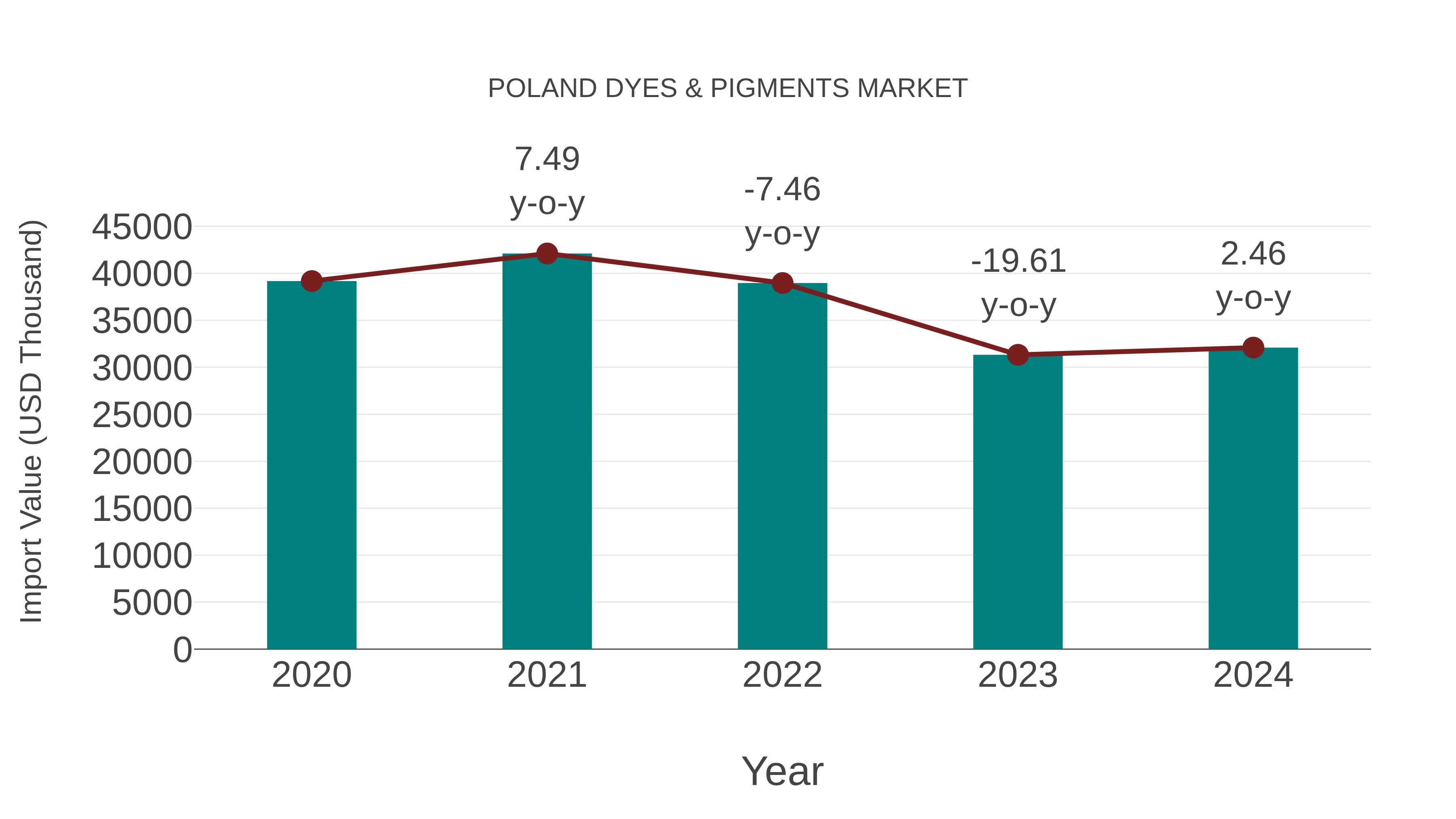
In the Poland dyes & pigments market, the import trend saw a growth rate of 2.46% from 2023 to 2024, while the compound annual growth rate (CAGR) for 2020-2024 stood at -4.86%. This decline in CAGR could be attributed to shifts in demand dynamics or changes in trade policies impacting market stability.
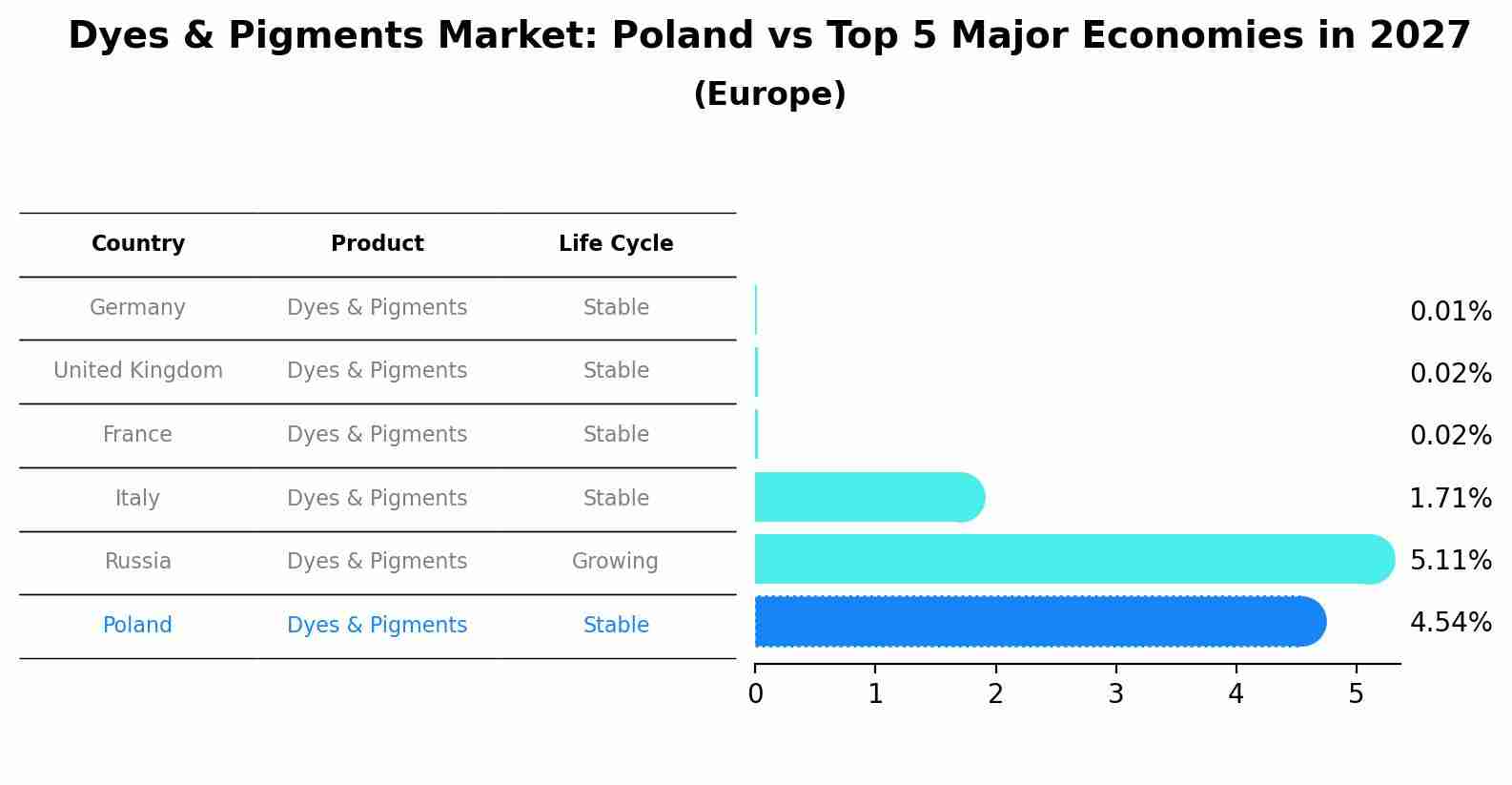
Dyes & Pigments Market: Poland vs Top 5 Major Economies in 2027 (Europe)
By 2027, the Dyes & Pigments market in Poland is anticipated to reach a growth rate of 4.54%, as part of an increasingly competitive Europe region, where Germany remains at the forefront, supported by United Kingdom, France, Italy and Russia, driving innovations and market adoption across sectors.
Poland Dyes & Pigments Market Synopsis
The Poland dyes and pigments market is experiencing steady growth driven by increasing demand from various end-use industries such as textiles, automotive, construction, and packaging. The market is characterized by the presence of both domestic and international players offering a wide range of products including organic, inorganic, and specialty dyes and pigments. Key factors influencing market growth include growing disposable income, expanding industrial base, and increasing focus on product innovation and sustainability. However, factors such as stringent regulations regarding environmental impact and fluctuating raw material prices pose challenges to market players. Overall, the Poland dyes and pigments market is poised for further expansion with opportunities for manufacturers to capitalize on the growing demand for high-quality and environmentally friendly colorants.
Poland Dyes & Pigments Market Trends
The Poland Dyes & Pigments Market is experiencing a shift towards environmentally friendly and sustainable products, driven by increasing consumer awareness and regulatory pressure. Manufacturers are focusing on developing eco-friendly dyes and pigments that have minimal impact on the environment, from sourcing raw materials to production processes. There is a growing demand for natural and organic pigments derived from renewable sources such as plants and minerals. Additionally, the market is witnessing a rise in the adoption of high-performance pigments that offer superior color strength and durability, especially in industrial applications. Companies are also investing in research and development to innovate and introduce new color options to cater to evolving customer preferences and trends in various industries such as textiles, automotive, and cosmetics.
Poland Dyes & Pigments Market Challenges
In the Poland Dyes & Pigments Market, some challenges include increasing competition from international manufacturers, fluctuating raw material prices, and stringent environmental regulations. The presence of established global players with advanced technologies and economies of scale poses a challenge for local manufacturers to compete effectively. Fluctuations in raw material prices, especially for petrochemical-based dyes and pigments, can impact the cost structure and profitability of companies in the market. Additionally, strict environmental regulations concerning the use of chemicals and waste disposal require companies to invest in sustainable practices, which can add to their operational costs. Navigating these challenges while maintaining product quality, innovation, and compliance with regulations is crucial for businesses operating in the Poland Dyes & Pigments Market.
Poland Dyes & Pigments Market Investment Opportunities
The Poland dyes and pigments market presents attractive investment opportunities due to the country`s growing manufacturing sector and increasing demand for high-quality colorants in various industries such as textiles, automotive, and construction. With a focus on sustainable and eco-friendly products gaining momentum, there is a rising need for innovative and environmentally friendly dyes and pigments in the market. Investing in research and development to create such products could be a lucrative opportunity. Additionally, advancements in technology and increasing disposable income among consumers are driving the demand for premium quality dyes and pigments, providing further growth prospects for investors in the Poland market. Collaborating with local manufacturers, leveraging distribution networks, and staying updated on regulatory changes can help investors capitalize on the evolving landscape of the dyes and pigments market in Poland.
Poland Dyes & Pigments Market Future Outlook
The Poland Dyes & Pigments Market is expected to witness steady growth in the coming years due to increasing demand from various end-use industries such as textiles, paints & coatings, plastics, and printing inks. The market is projected to benefit from technological advancements leading to the development of innovative and eco-friendly products. Additionally, rising disposable income and changing consumer preferences towards sustainable and high-quality products are likely to drive market growth. However, challenges such as stringent environmental regulations and volatility in raw material prices may hinder the market`s growth to some extent. Overall, with the growing industrial sectors and increasing focus on environmentally friendly products, the Poland Dyes & Pigments Market is expected to show promising growth prospects in the foreseeable future.
Key Highlights of the Report:
- Poland Dyes & Pigments Market Outlook
- Market Size of Poland Dyes & Pigments Market, 2021
- Forecast of Poland Dyes & Pigments Market, 2031
- Historical Data and Forecast of Poland Dyes & Pigments Revenues & Volume for the Period 2018 - 2031
- Poland Dyes & Pigments Market Trend Evolution
- Poland Dyes & Pigments Market Drivers and Challenges
- Poland Dyes & Pigments Price Trends
- Poland Dyes & Pigments Porter's Five Forces
- Poland Dyes & Pigments Industry Life Cycle
- Historical Data and Forecast of Poland Dyes & Pigments Market Revenues & Volume By Product for the Period 2018 - 2031
- Historical Data and Forecast of Poland Dyes & Pigments Market Revenues & Volume By Dyes for the Period 2018 - 2031
- Historical Data and Forecast of Poland Dyes & Pigments Market Revenues & Volume By Pigments for the Period 2018 - 2031
- Poland Dyes & Pigments Import Export Trade Statistics
- Market Opportunity Assessment By Product
- Poland Dyes & Pigments Top Companies Market Share
- Poland Dyes & Pigments Competitive Benchmarking By Technical and Operational Parameters
- Poland Dyes & Pigments Company Profiles
- Poland Dyes & Pigments Key Strategic Recommendations






































