Poland Emollient Market: Import Trend Analysis
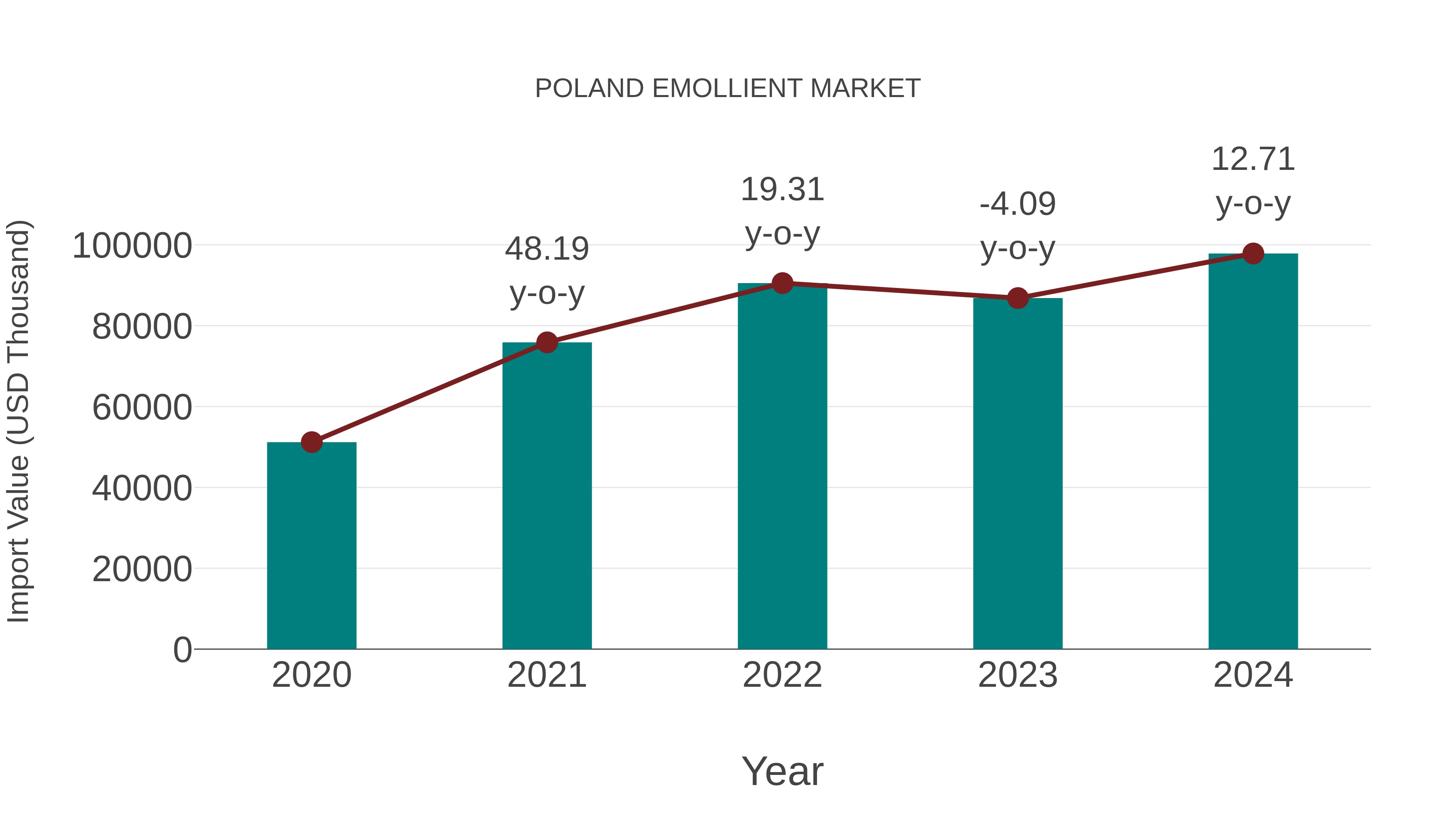
In the Poland emollient market, the import trend showed a significant growth rate of 12.71% from 2023 to 2024, with a compound annual growth rate (CAGR) of 17.58% for the period 2020-2024. This robust import momentum can be attributed to increasing demand for high-quality skincare products in the region, driving market stability and expansion.
Poland Emollient Market Overview
The Poland Emollient Market is witnessing steady growth driven by increasing demand for skincare and personal care products. Emollients are essential ingredients in cosmetics, providing hydration and protection to the skin. The market is characterized by the presence of both domestic and international manufacturers offering a wide range of emollient products such as creams, lotions, and oils. Key factors contributing to market growth include growing consumer awareness of skincare routines, changing lifestyles, and a preference for natural and organic products. The market is competitive, with companies focusing on product innovation, quality, and marketing strategies to stay ahead. With a rising trend towards self-care and wellness, the demand for emollients is expected to continue to rise in Poland.
Poland Emollient Market Trends and Opportunities
The Poland Emollient Market is experiencing growth due to the increasing demand for skincare and personal care products. Consumers are seeking products with moisturizing and nourishing properties, driving the demand for emollients in various formulations. Natural and organic emollients are gaining popularity as consumers become more conscious of the ingredients used in their products. Opportunities exist for manufacturers to innovate and develop emollients that cater to specific skin concerns, such as sensitive skin or anti-aging. With the rising trend of clean beauty and sustainability, there is a need for eco-friendly emollients sourced from renewable resources. Collaborations with cosmetic companies and retailers to offer customized emollients for their product lines can also be a lucrative opportunity in the Poland Emollient Market.
Poland Emollient Market Challenges
In the Poland Emollient Market, one of the main challenges faced by manufacturers and suppliers is the increasing competition from both domestic and international players. This competition leads to price wars, making it difficult for companies to maintain profitability and market share. Additionally, regulatory changes and evolving consumer preferences for natural and sustainable ingredients pose challenges for emollient manufacturers in Poland. Adapting to these changes while ensuring product quality and safety further complicates the landscape. Furthermore, the need for innovation and differentiation to stand out in a crowded market adds another layer of complexity for companies operating in the Poland Emollient Market. Overall, navigating these challenges requires strategic planning, market intelligence, and a deep understanding of consumer trends.
Poland Emollient Market Drivers
The Poland Emollient Market is primarily driven by the increasing demand for personal care and cosmetic products, as well as the growing awareness among consumers regarding skincare routines. The rising disposable income levels in Poland have led to an increased willingness to spend on high-quality skincare products, boosting the demand for emollients. Additionally, the shift towards natural and organic ingredients in skincare formulations has further fueled the market growth, as emollients are known for their moisturizing and skin-soothing properties. The beauty and personal care industry in Poland is witnessing a trend towards premium and specialized products, driving manufacturers to innovate and develop emollients that cater to specific skin concerns, thus propelling the market forward.
Poland Emollient Market Government Policy
The Polish government has implemented various regulations and policies related to the emollient market to ensure consumer safety and product quality. The market is governed by the European Union regulations, including the Registration, Evaluation, Authorization, and Restriction of Chemicals (REACH) regulation, which sets standards for the use of chemicals in emollient products. Additionally, the Polish Office for Registration of Medicinal Products, Medical Devices, and Biocidal Products (URPL) oversees the registration and safety assessment of emollient products to ensure compliance with regulations. The government also monitors labeling requirements, advertising standards, and ingredient restrictions to protect consumer health and prevent misleading claims in the emollient market. Overall, these policies aim to promote transparency, safety, and quality in the emollient industry in Poland.
Poland Emollient Market Future Outlook
The future outlook for the Poland Emollient Market appears promising with steady growth anticipated in the coming years. Factors driving this growth include the increasing consumer demand for skincare products, particularly those with natural and organic ingredients. Emollients are essential components in various cosmetic and personal care products, providing moisturizing and skin-soothing benefits. As the awareness of skincare routines and the importance of maintaining healthy skin increases among consumers in Poland, the demand for emollients is expected to rise. Key players in the market are likely to focus on product innovation, incorporating advanced technologies and sustainable practices to meet the evolving consumer preferences. Overall, the Poland Emollient Market is poised for expansion, with opportunities for growth in both the domestic and international markets.
Key Highlights of the Report:
- Poland Emollient Market Outlook
- Market Size of Poland Emollient Market, 2025
- Forecast of Poland Emollient Market, 2032
- Historical Data and Forecast of Poland Emollient Revenues & Volume for the Period 2022 - 2032F
- Poland Emollient Market Trend Evolution
- Poland Emollient Market Drivers and Challenges
- Poland Emollient Price Trends
- Poland Emollient Porter's Five Forces
- Poland Emollient Industry Life Cycle
- Historical Data and Forecast of Poland Emollient Market Revenues & Volume By Type for the Period 2022 - 2032F
- Historical Data and Forecast of Poland Emollient Market Revenues & Volume By Esters for the Period 2022 - 2032F
- Historical Data and Forecast of Poland Emollient Market Revenues & Volume By Fatty Alcohols for the Period 2022 - 2032F
- Historical Data and Forecast of Poland Emollient Market Revenues & Volume By Fatty Acids for the Period 2022 - 2032F
- Historical Data and Forecast of Poland Emollient Market Revenues & Volume By Ethers for the Period 2022 - 2032F
- Historical Data and Forecast of Poland Emollient Market Revenues & Volume By Silicones for the Period 2022 - 2032F
- Historical Data and Forecast of Poland Emollient Market Revenues & Volume By Others for the Period 2022 - 2032F
- Historical Data and Forecast of Poland Emollient Market Revenues & Volume By Form for the Period 2022 - 2032F
- Historical Data and Forecast of Poland Emollient Market Revenues & Volume By Solid for the Period 2022 - 2032F
- Historical Data and Forecast of Poland Emollient Market Revenues & Volume By Liquid for the Period 2022 - 2032F
- Historical Data and Forecast of Poland Emollient Market Revenues & Volume By Application for the Period 2022 - 2032F
- Historical Data and Forecast of Poland Emollient Market Revenues & Volume By Skin Care for the Period 2022 - 2032F
- Historical Data and Forecast of Poland Emollient Market Revenues & Volume By Hair Care for the Period 2022 - 2032F
- Historical Data and Forecast of Poland Emollient Market Revenues & Volume By Deodorants for the Period 2022 - 2032F
- Historical Data and Forecast of Poland Emollient Market Revenues & Volume By Oral Care for the Period 2022 - 2032F
- Historical Data and Forecast of Poland Emollient Market Revenues & Volume By Others for the Period 2022 - 2032F
- Poland Emollient Import Export Trade Statistics
- Market Opportunity Assessment By Type
- Market Opportunity Assessment By Form
- Market Opportunity Assessment By Application
- Poland Emollient Top Companies Market Share
- Poland Emollient Competitive Benchmarking By Technical and Operational Parameters
- Poland Emollient Company Profiles
- Poland Emollient Key Strategic Recommendations






































