Poland Placenta Market Size, Share & Growth Rate
The Poland Placenta Market was estimated at USD 360 Million in 2025 and is projected to reach USD 471 Million by 2032, growing at a CAGR of 3.9% from 2026 to 2032. This upward trajectory is fueled by a growing consumer interest in natural skincare products, as well as an increasing recognition of the therapeutic potential of placenta-derived ingredients. The trend towards organic and sustainable beauty solutions positions the market for substantial growth opportunities as companies innovate and expand their product lines.
Poland Placenta Market Year-wise Growth Rate and Key Drivers
This graph highlights how the Poland Placenta Market has steadily grown over the years, supported by major growth factors.
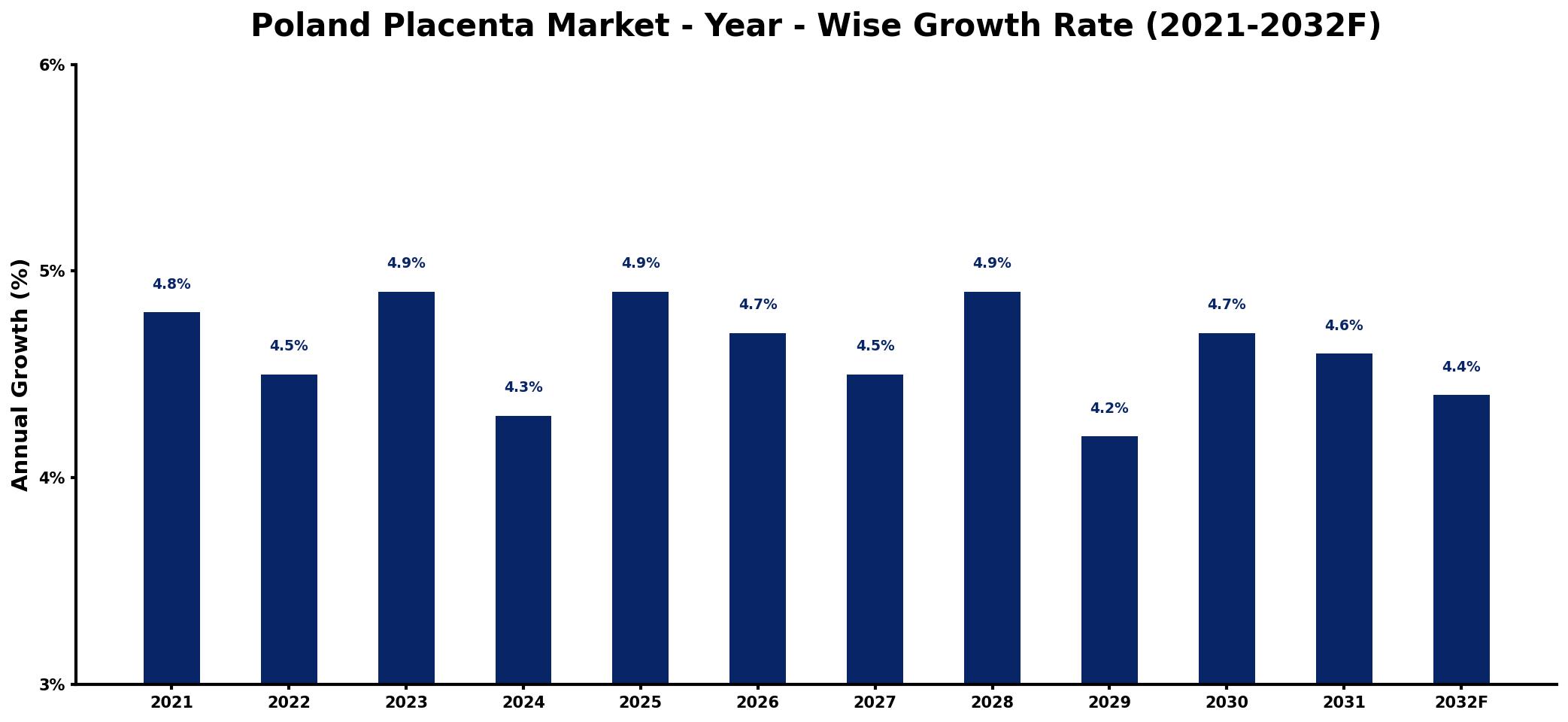
The table below presents the year‑wise growth rates along with the key drivers influencing the market
| Year | Growth Rate | Major Drivers |
| 2021 | 4.8% | Rising demand for natural ingredients |
| 2022 | 4.5% | Increased consumer awareness of benefits |
| 2023 | 4.9% | Growth in wellness product applications |
| 2024 | 4.3% | strengthening underlying market demand |
| 2025 | 4.9% | Surge in cosmetic industry investments |
| 2026 | 4.7% | Development of innovative formulations |
| 2027 | 4.5% | Growing interest in alternative therapies |
| 2028 | 4.9% | Rise in e-commerce sales channels |
| 2029 | 4.2% | Emergence of premium product lines |
| 2030 | 4.7% | Strengthening of regulatory frameworks |
| 2031 | 4.6% | Focus on sustainable sourcing practices |
| 2032 | 4.4% | Diversification of product offerings |
Note: Market size estimations and growth projections presented in this report are based on 6Wresearch's proprietary forecasting methodology, utilizing the latest available industry data, government publications, and primary research inputs.
Poland Placenta Market Synopsis
In Poland, the placenta market is characterized by a rising consumer base interested in the skincare and health benefits offered by placenta-based products. The segment is gaining traction, particularly in skincare, where consumers are increasingly turning to placenta extracts for their anti-aging properties and skin rejuvenation effects.
Polish companies are actively investing in research and development to create innovative placenta-derived products tailored to market demands. This focus on product innovation not only enhances the appeal of placenta in cosmetics but also opens doors for its application in pharmaceuticals and nutraceuticals, catering to a broader audience seeking holistic wellness solutions.
Poland Placenta Market Key Takeaways
- Rising consumer awareness about the benefits of placenta-based products is driving market growth.
- The demand for natural and organic skincare solutions is influencing product innovation in the industry.
- Regulatory frameworks ensure product safety and ethical sourcing, fostering consumer confidence.
- Challenges remain regarding consumer stigma and regulatory compliance, affecting market penetration.
- Investment opportunities exist in regenerative medicine and therapeutic applications of placenta.
Evaluation of Restraints in Poland Placenta Market
The Poland Placenta Market faces notable constraints, primarily stemming from consumer skepticism about placenta-derived products. Despite the increasing awareness of their benefits, there remains a cultural stigma that can impede widespread acceptance. Additionally, regulatory hurdles regarding the sourcing and use of placenta in products are significant. Companies must navigate complex compliance issues while ensuring transparency in their manufacturing processes to mitigate concerns surrounding ethical sourcing.
Poland Placenta Market Trends
The market is currently witnessing a trend towards holistic wellness and natural beauty solutions, with placenta-based products becoming popular among consumers seeking effective anti-aging and rejuvenating options. Furthermore, there is an increase in research exploring the therapeutic applications of placenta extracts in healthcare, which is expected to enhance product diversification. Companies are innovating with new formulations, integrating placenta into a variety of cosmetics and nutraceuticals, thus appealing to a health-conscious demographic.
Poland Placenta Market Opportunities
The Poland Placenta Market is ripe with opportunities, particularly in the realms of regenerative medicine and advanced skincare. As scientific research continues to unveil the regenerative properties of placenta, companies have the potential to develop groundbreaking therapies and skincare solutions. Additionally, investors may find lucrative opportunities in companies focused on ethical sourcing and innovative product development that resonate with the growing demand for sustainable and organic offerings.
Government Initiatives in the Poland Placenta Market
The Polish government has established strict regulations governing the placenta market to ensure consumer safety and ethical standards. Oversight by the Ministry of Health includes monitoring the collection, processing, and distribution of placenta-derived products, enforcing compliance with Good Manufacturing Practices (GMP). This regulatory framework is designed to instill confidence in consumers while promoting high-quality standards in the industry.
Future Insights of the Poland Placenta Market
Looking ahead to 2026-2032, the Poland Placenta Market is projected to sustain its growth trajectory, driven by an increasing consumer inclination towards natural, organic products. Continued advancements in research focused on the therapeutic benefits of placenta are likely to further enhance market potential. However, addressing the regulatory and ethical concerns surrounding placenta sourcing will be critical for sustained success and consumer acceptance in this evolving market.
Poland Placenta Market Latest Developments (2025 - 2026)
Recent developments in the Poland Placenta Market indicate a growing emphasis on sustainability and ethical sourcing practices. Companies are increasingly transparent about their sourcing methods, aiming to alleviate consumer concerns. Moreover, innovations in product formulations featuring placenta extracts are on the rise, addressing the demand for effective skincare solutions. This period has also seen an uptick in collaborative efforts among companies and research institutions focusing on the potential therapeutic applications of placenta.
Poland Placenta Market - Key Attractiveness of the Report
- 10 Years of Market Numbers
- Historical Data Starting from 2022 to 2025
- Base Year: 2025
- Forecast Data until 2032
- Key Performance Indicators Impacting the Market
- Major Upcoming Developments and Projects
Key Highlights of the Report:
- Poland Placenta Market Outlook
- Market Size of Poland Placenta Market, 2025
- Forecast of Poland Placenta Market, 2032
- Historical Data and Forecast of Poland Placenta Revenues & Volume for the Period 2022-2032F
- Poland Placenta Market Trend Evolution
- Poland Placenta Market Drivers and Challenges
- Poland Placenta Price Trends
- Poland Placenta Porter's Five Forces
- Poland Placenta Industry Life Cycle
- Historical Data and Forecast of Poland Placenta Market Revenues & Volume By Type for the Period 2022-2032F
- Historical Data and Forecast of Poland Placenta Market Revenues & Volume By Porcine for the Period 2022-2032F
- Historical Data and Forecast of Poland Placenta Market Revenues & Volume By Equine for the Period 2022-2032F
- Historical Data and Forecast of Poland Placenta Market Revenues & Volume By Ovine for the Period 2022-2032F
- Historical Data and Forecast of Poland Placenta Market Revenues & Volume By Others for the Period 2022-2032F
- Historical Data and Forecast of Poland Placenta Market Revenues & Volume By Application for the Period 2022-2032F
- Historical Data and Forecast of Poland Placenta Market Revenues & Volume By Pharmaceuticals for the Period 2022-2032F
- Historical Data and Forecast of Poland Placenta Market Revenues & Volume By Cosmetics for the Period 2022-2032F
- Historical Data and Forecast of Poland Placenta Market Revenues & Volume By Supplements for the Period 2022-2032F
- Historical Data and Forecast of Poland Placenta Market Revenues & Volume By Others for the Period 2022-2032F
- Poland Placenta Import Export Trade Statistics
- Market Opportunity Assessment By Type
- Market Opportunity Assessment By Application
- Poland Placenta Top Companies Market Share
- Poland Placenta Competitive Benchmarking By Technical and Operational Parameters
- Poland Placenta Company Profiles
- Poland Placenta Key Strategic Recommendations






































