Qatar Processed Pork Market Size, Share & Growth Rate
The Qatar Processed Pork Market was estimated at USD 465 Million in 2025 and is projected to reach USD 635 Million by 2032, growing at a CAGR of 4.6% from 2026 to 2032. This growth trajectory is largely driven by the increasing expatriate population and the demand for familiar and culturally relevant food options. Additionally, the introduction of halal-certified processed pork products has expanded the market, catering specifically to non-Muslim residents and visitors.
Qatar Processed Pork Market Year-wise Growth Rate and Key Drivers
This graph highlights how the Qatar Processed Pork Market has steadily grown over the years, supported by major growth factors.
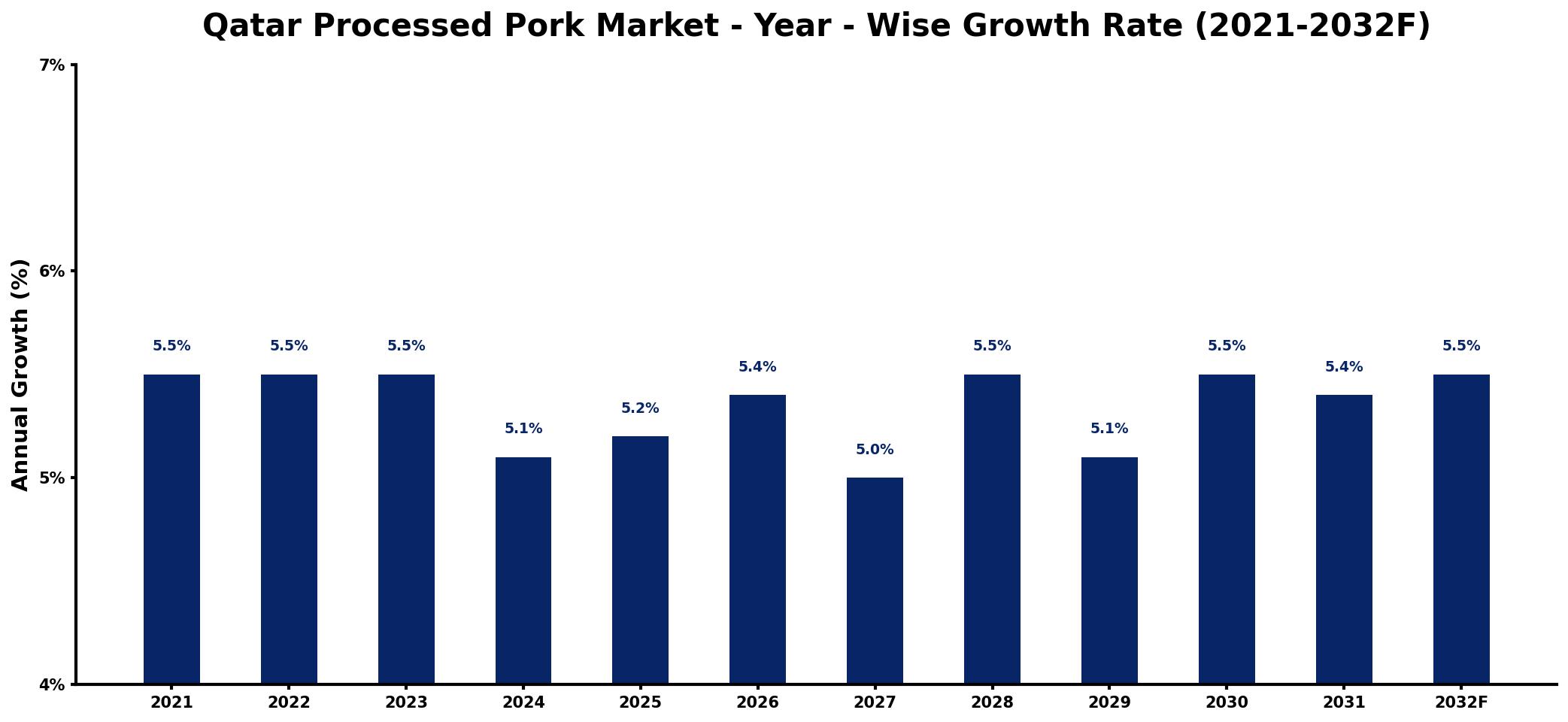
The table below presents the year‑wise growth rates along with the key drivers influencing the market
| Year | Growth Rate | Major Drivers |
| 2021 | 5.5% | Rising consumer health awareness |
| 2022 | 5.5% | Increased import regulations easing |
| 2023 | 5.5% | Growing culinary diversity trends |
| 2024 | 5.1% | Emerging market investment opportunities |
| 2025 | 5.2% | Enhanced distribution network capabilities |
| 2026 | 5.4% | Expanded retail channel presence |
| 2027 | 5.0% | Innovative product development initiatives |
| 2028 | 5.5% | Strengthened local sourcing partnerships |
| 2029 | 5.1% | Increased tourism boosting demand |
| 2030 | 5.5% | Growing online shopping preferences |
| 2031 | 5.4% | Enhanced marketing strategies effectiveness |
| 2032 | 5.5% | Broader consumer demographic engagement |
Note: Market size estimations and growth projections presented in this report are based on 6Wresearch's proprietary forecasting methodology, utilizing the latest available industry data, government publications, and primary research inputs.
Qatar Processed Pork Market Synopsis
A pivotal force in the Qatar processed pork market is the steady influx of expatriates, creating a consistent demand for processed pork products. This segment, though niche, remains crucial for maintaining dietary preferences within the diverse population of Qatar, showcasing a unique blend of cultural adaptability in food consumption.
Moreover, compliance with stringent local regulations has become a priority for companies operating in this space. As consumer awareness grows regarding food safety and quality, brands that prioritize these elements stand to differentiate themselves in a competitive yet limited market.
Qatar Processed Pork Market Key Takeaways
- The processed pork market in Qatar caters primarily to non-Muslim expatriates and tourists, focusing on quality and compliance with local regulations.
- Demand for halal-certified processed pork products is increasingly shaping product offerings.
- The market's growth is supported by an expanding expatriate community that seeks familiar food options.
- Producers are adapting to market dynamics by exploring innovative processing methods and diversifying product lines.
- Cultural and religious sensitivities play a critical role in shaping consumer behavior and market potential.
Evaluation of Restraints in Qatar Processed Pork Market
Cultural and religious sensitivities present significant restraints for the processed pork market in Qatar. These sensitivities limit overall consumption and acceptance, forcing producers to navigate a complex landscape. Additionally, the preference for halal options among consumers complicates the market's operational dynamics, leading to a constant need for innovation and compliance in product development. Establishing consumer trust and understanding local preferences are essential for overcoming these barriers and fostering market growth.
Qatar Processed Pork Market Trends
Current trends in the Qatar processed pork market reflect a shift towards health-conscious consumption patterns. Consumers are increasingly seeking out higher-quality products that align with their dietary preferences while also being mindful of food safety standards. The emergence of gourmet processed pork items and specialty offerings are gaining traction, appealing to a niche market that values unique flavors and superior quality. Moreover, the growing awareness around sustainable sourcing is prompting some producers to explore eco-friendly practices in their supply chains.
Qatar Processed Pork Market Opportunities
Investment opportunities in the Qatar processed pork market lie primarily in product innovation and the expansion of distribution channels. Companies can capitalize on the growing expatriate demographic by introducing a wider array of processed pork products that cater to varying tastes and preferences. Additionally, partnerships with local retailers and restaurants could enhance visibility and accessibility for processed pork offerings, tapping into the markets potential and driving sales. Overall, a strategic focus on diversifying products and enhancing market presence presents significant opportunities for growth.
Government Initiatives in the Qatar Processed Pork Market
The Qatari government continues to implement initiatives aimed at enhancing food safety and regulatory compliance within the processed meat industry, including pork products. By establishing stringent quality control measures and supporting local producers through various programs, the government helps maintain standards that promote consumer confidence. Additionally, the facilitation of trade relationships encourages a diverse food supply, which could foster greater acceptance of processed pork among the expatriate community.
Future Insights of the Qatar Processed Pork Market
Looking ahead to 2026-2032, the Qatar processed pork market is poised for gradual expansion, fueled by the persistent influx of expatriates seeking familiar dietary options. As cultural dynamics continue to evolve, companies that effectively address consumer demands for quality and safety will likely thrive. Furthermore, the potential for innovation in product offerings, including gourmet and health-focused options, is expected to attract a broader consumer base. The market's niche nature will remain a defining characteristic, but targeted strategies can unlock new growth avenues.
Qatar Processed Pork Market Latest Developments (2025 - 2026)
In the latest developments within the Qatar processed pork market, producers are increasingly focusing on developing innovative product lines that appeal to the changing preferences of consumers. Efforts to expand retail presence and enhance online sales channels have also been observed, aiming to reach more of the expatriate population. As companies explore partnerships with local distributors, an uptick in promotional campaigns and consumer engagement initiatives is anticipated to further drive demand in this niche market.
Qatar Processed Pork Market - Key Attractiveness of the Report
- 10 Years of Market Numbers
- Historical Data Starting from 2022 to 2025
- Base Year: 2025
- Forecast Data until 2032
- Key Performance Indicators Impacting the Market
- Major Upcoming Developments and Projects
Key Highlights of the Report:
- Qatar Processed Pork Market Outlook
- Market Size of Qatar Processed Pork Market, 2025
- Forecast of Qatar Processed Pork Market, 2032
- Historical Data and Forecast of Qatar Processed Pork Revenues & Volume for the Period 2022-2032F
- Qatar Processed Pork Market Trend Evolution
- Qatar Processed Pork Market Drivers and Challenges
- Qatar Processed Pork Price Trends
- Qatar Processed Pork Porter's Five Forces
- Qatar Processed Pork Industry Life Cycle
- Historical Data and Forecast of Qatar Processed Pork Market Revenues & Volume By Meat Product for the Period 2022-2032F
- Historical Data and Forecast of Qatar Processed Pork Market Revenues & Volume By Cured Meat for the Period 2022-2032F
- Historical Data and Forecast of Qatar Processed Pork Market Revenues & Volume By Uncured Meat for the Period 2022-2032F
- Historical Data and Forecast of Qatar Processed Pork Market Revenues & Volume By Pork Meat for the Period 2022-2032F
- Historical Data and Forecast of Qatar Processed Pork Market Revenues & Volume By Fresh Pork Meat for the Period 2022-2032F
- Historical Data and Forecast of Qatar Processed Pork Market Revenues & Volume By Processed Pork Meat for the Period 2022-2032F
- Historical Data and Forecast of Qatar Processed Pork Market Revenues & Volume By Packaging Type for the Period 2022-2032F
- Historical Data and Forecast of Qatar Processed Pork Market Revenues & Volume By Chilled Processed Meat for the Period 2022-2032F
- Historical Data and Forecast of Qatar Processed Pork Market Revenues & Volume By Frozen Processed Meat for the Period 2022-2032F
- Historical Data and Forecast of Qatar Processed Pork Market Revenues & Volume By Canned Processed Meat for the Period 2022-2032F
- Historical Data and Forecast of Qatar Processed Pork Market Revenues & Volume By Distribution for the Period 2022-2032F
- Historical Data and Forecast of Qatar Processed Pork Market Revenues & Volume By Supermarket for the Period 2022-2032F
- Historical Data and Forecast of Qatar Processed Pork Market Revenues & Volume By Convenience Stores for the Period 2022-2032F
- Historical Data and Forecast of Qatar Processed Pork Market Revenues & Volume By Grocery Stores for the Period 2022-2032F
- Historical Data and Forecast of Qatar Processed Pork Market Revenues & Volume By Individual Retailers for the Period 2022-2032F
- Historical Data and Forecast of Qatar Processed Pork Market Revenues & Volume By Online Sales Channel for the Period 2022-2032F
- Qatar Processed Pork Import Export Trade Statistics
- Market Opportunity Assessment By Meat Product
- Market Opportunity Assessment By Pork Meat
- Market Opportunity Assessment By Packaging Type
- Market Opportunity Assessment By Distribution
- Qatar Processed Pork Top Companies Market Share
- Qatar Processed Pork Competitive Benchmarking By Technical and Operational Parameters
- Qatar Processed Pork Company Profiles
- Qatar Processed Pork Key Strategic Recommendations






































