Romania Electric Mobility Market: Import Trend Analysis
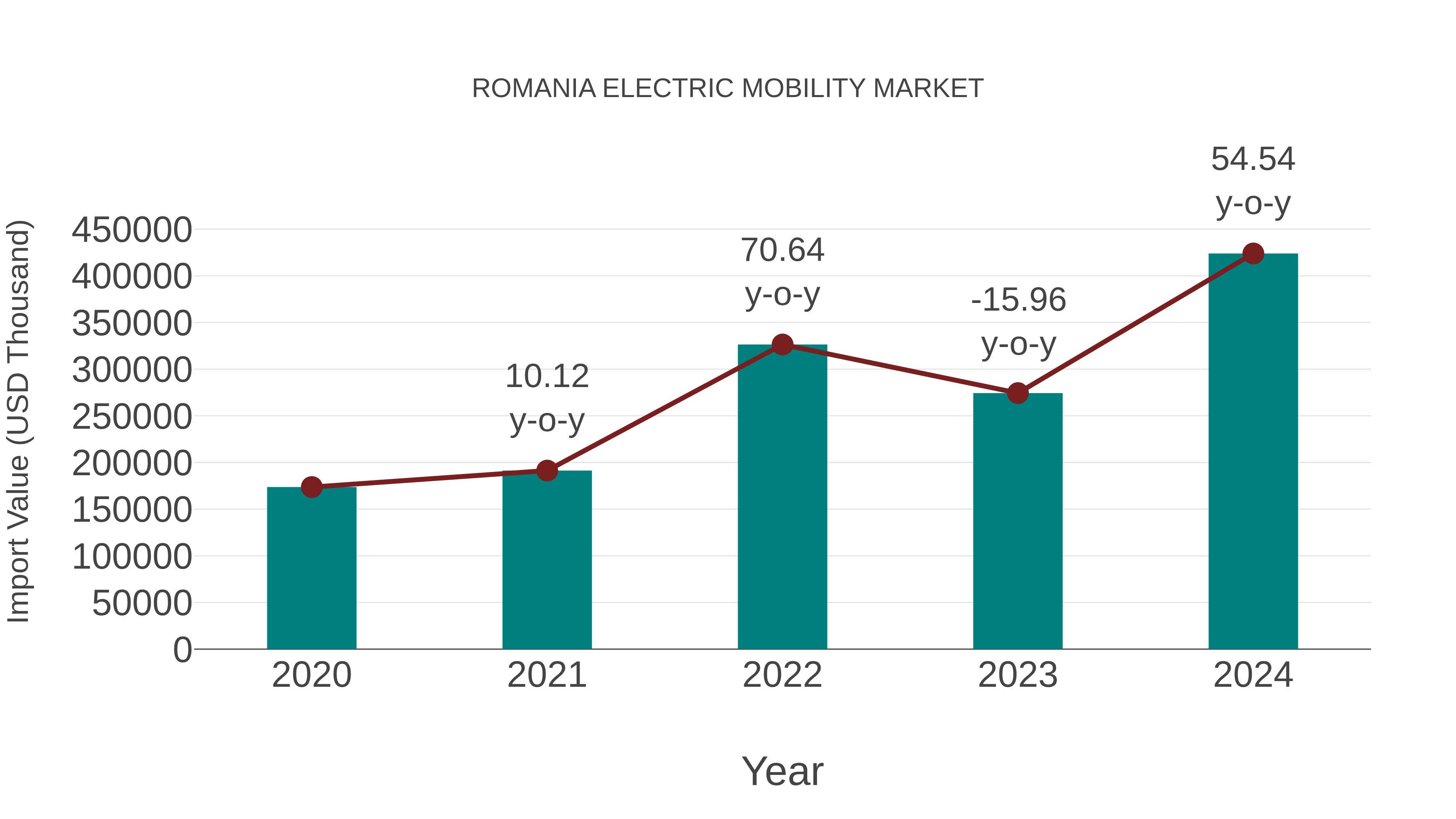
In the Romania electric mobility market, the import trend experienced a notable upsurge from 2023 to 2024, with a growth rate of 54.54%. The compound annual growth rate (CAGR) for imports in this market from 2020 to 2024 stood at 24.99%. This significant acceleration in import momentum can be attributed to a shifting demand towards sustainable transportation solutions, reflecting a growing market preference for electric vehicles over traditional combustion engine models.
Romania Electric Mobility Market Overview
The electric mobility market in Romania is experiencing significant growth driven by government incentives, increasing environmental concerns, and advancements in technology. The country has set ambitious targets to increase the share of electric vehicles on the roads, leading to a surge in the number of electric car registrations. Supportive policies such as subsidies, tax breaks, and the development of charging infrastructure have further boosted the adoption of electric vehicles. Key players in the market include both domestic and international automakers offering a range of electric vehicle models to cater to the growing demand. With a focus on sustainability and reducing carbon emissions, Romania is poised to see continued expansion in the electric mobility sector in the coming years.
Romania Electric Mobility Market Trends and Opportunities
The electric mobility market in Romania is experiencing significant growth driven by government incentives, increasing environmental awareness, and advancements in technology. The country aims to have 250,000 electric vehicles on the roads by 2030, creating opportunities for electric vehicle manufacturers, charging infrastructure providers, and related services. Partnerships between automotive companies and energy providers are also on the rise to enhance the charging infrastructure network. Furthermore, the Romanian government has introduced subsidies and tax incentives to promote electric vehicle adoption, attracting investments in the sector. The market is expected to continue expanding, offering opportunities for innovation in sustainable transportation solutions and driving the transition towards a greener future in Romania.
Romania Electric Mobility Market Challenges
In the Romania Electric Mobility Market, several challenges are currently being faced. These include the limited availability of charging infrastructure, which hinders the widespread adoption of electric vehicles. The high upfront costs of electric vehicles compared to traditional internal combustion engine vehicles also pose a barrier for consumers. Additionally, there is a lack of government incentives and policies to promote electric mobility, such as tax breaks or subsidies. Range anxiety, or the fear of running out of battery power before reaching a charging station, is another significant challenge for consumers considering electric vehicles. Overall, addressing these challenges through investment in charging infrastructure, incentivizing electric vehicle purchases, and implementing supportive policies will be crucial to further develop the electric mobility market in Romania.
Romania Electric Mobility Market Drivers
The Romania Electric Mobility Market is primarily being driven by government incentives and policies aimed at promoting sustainable transportation options, such as tax breaks, subsidies, and infrastructure development for electric vehicles (EVs). Rising environmental consciousness among consumers, coupled with increasing concerns about air pollution and climate change, is also fueling the demand for EVs in Romania. Additionally, advancements in EV technology, including improvements in battery range and charging infrastructure, are making electric vehicles more practical and appealing to a wider audience. The availability of a variety of EV models from both domestic and international manufacturers is further driving the growth of the electric mobility market in Romania.
Romania Electric Mobility Market Government Policy
The government of Romania has implemented various policies to promote electric mobility in the country. These policies include offering financial incentives for purchasing electric vehicles, such as grants and tax benefits, as well as subsidies for installing charging infrastructure. Additionally, Romania has set targets for increasing the number of electric vehicles on the road and aims to have a significant percentage of new vehicle sales be electric by the next decade. The government is also working on improving the regulatory framework to support the growth of the electric mobility market, including developing standards for charging infrastructure and promoting research and development in the sector. Overall, Romania`s government is actively supporting the transition to electric vehicles to reduce emissions and promote sustainable transportation in the country.
Romania Electric Mobility Market Future Outlook
The future outlook for the Romania Electric Mobility Market looks promising as the country is making significant strides towards adopting sustainable transportation solutions. With increasing government support in the form of incentives and infrastructure development, coupled with growing environmental awareness among consumers, the demand for electric vehicles (EVs) is expected to rise. The market is likely to witness a surge in EV sales and charging infrastructure investments, driving market growth. Additionally, advancements in battery technology and the expansion of EV models offered by manufacturers will further boost the adoption of electric mobility in Romania. Overall, the Romania Electric Mobility Market is poised for growth and transformation in the coming years, presenting opportunities for both industry players and consumers alike.
Key Highlights of the Report:
- Romania Electric Mobility Market Outlook
- Market Size of Romania Electric Mobility Market, 2025
- Forecast of Romania Electric Mobility Market, 2032
- Historical Data and Forecast of Romania Electric Mobility Revenues & Volume for the Period 2022 - 2032F
- Romania Electric Mobility Market Trend Evolution
- Romania Electric Mobility Market Drivers and Challenges
- Romania Electric Mobility Price Trends
- Romania Electric Mobility Porter's Five Forces
- Romania Electric Mobility Industry Life Cycle
- Historical Data and Forecast of Romania Electric Mobility Market Revenues & Volume By Product for the Period 2022 - 2032F
- Historical Data and Forecast of Romania Electric Mobility Market Revenues & Volume By Electric Bikes for the Period 2022 - 2032F
- Historical Data and Forecast of Romania Electric Mobility Market Revenues & Volume By Electric Scooters for the Period 2022 - 2032F
- Historical Data and Forecast of Romania Electric Mobility Market Revenues & Volume By Electric Motorized Scooters for the Period 2022 - 2032F
- Historical Data and Forecast of Romania Electric Mobility Market Revenues & Volume By Electric Motorcycles for the Period 2022 - 2032F
- Historical Data and Forecast of Romania Electric Mobility Market Revenues & Volume By Drive for the Period 2022 - 2032F
- Historical Data and Forecast of Romania Electric Mobility Market Revenues & Volume By Belt Drive for the Period 2022 - 2032F
- Historical Data and Forecast of Romania Electric Mobility Market Revenues & Volume By Chain Drive for the Period 2022 - 2032F
- Historical Data and Forecast of Romania Electric Mobility Market Revenues & Volume By Hub Drive for the Period 2022 - 2032F
- Historical Data and Forecast of Romania Electric Mobility Market Revenues & Volume By Battery for the Period 2022 - 2032F
- Historical Data and Forecast of Romania Electric Mobility Market Revenues & Volume By Lead Acid Battery for the Period 2022 - 2032F
- Historical Data and Forecast of Romania Electric Mobility Market Revenues & Volume By Li-Ion Battery for the Period 2022 - 2032F
- Historical Data and Forecast of Romania Electric Mobility Market Revenues & Volume By End-use for the Period 2022 - 2032F
- Historical Data and Forecast of Romania Electric Mobility Market Revenues & Volume By Personal for the Period 2022 - 2032F
- Historical Data and Forecast of Romania Electric Mobility Market Revenues & Volume By Commercial for the Period 2022 - 2032F
- Romania Electric Mobility Import Export Trade Statistics
- Market Opportunity Assessment By Product
- Market Opportunity Assessment By Drive
- Market Opportunity Assessment By Battery
- Market Opportunity Assessment By End-use
- Romania Electric Mobility Top Companies Market Share
- Romania Electric Mobility Competitive Benchmarking By Technical and Operational Parameters
- Romania Electric Mobility Company Profiles
- Romania Electric Mobility Key Strategic Recommendations






































