Romania Rum Market Size (2020-2030)
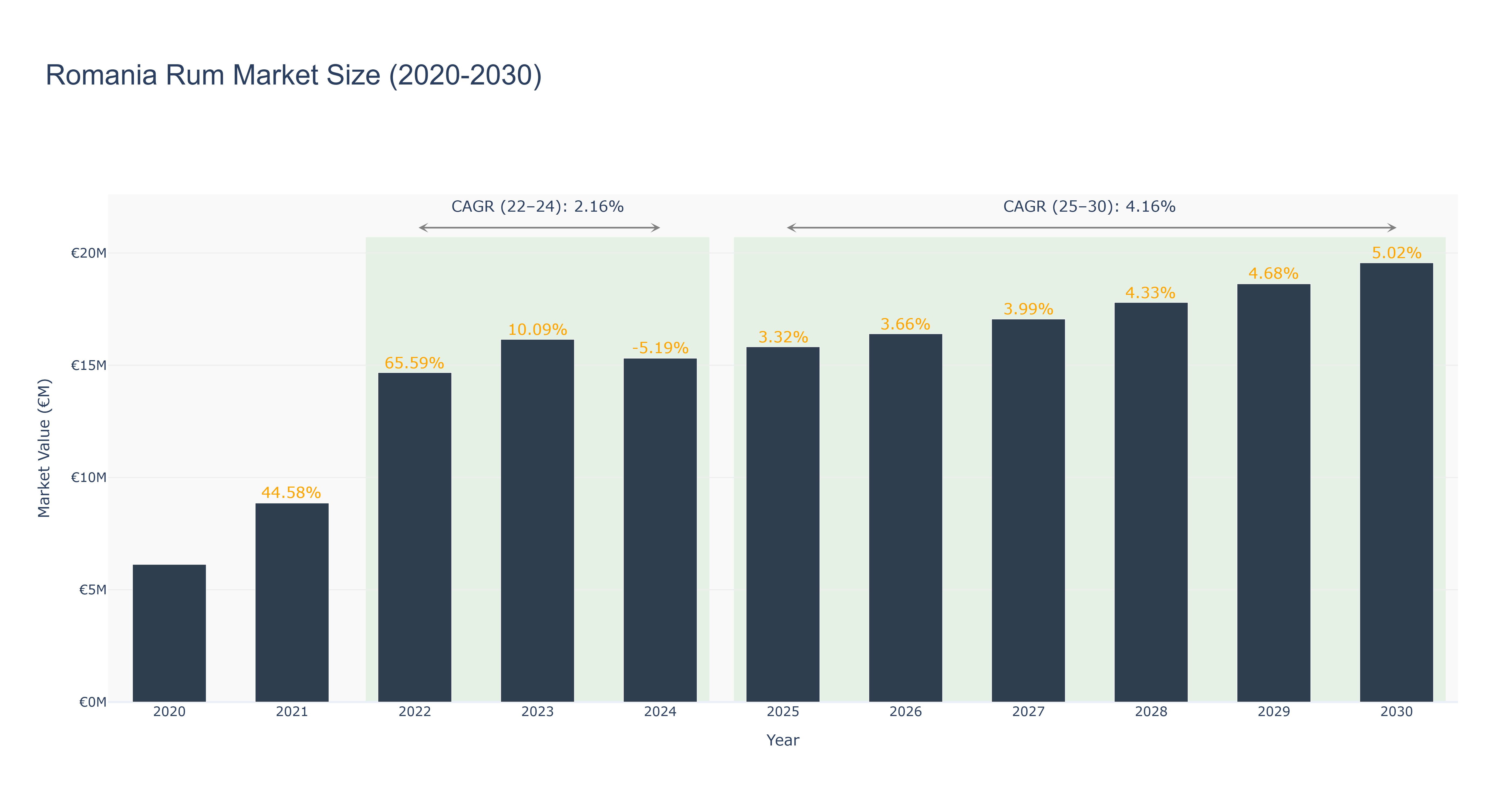
Romania Rum Market has shown a steady growth trajectory over the past decade. The peak market size was €19.56 million in 2030, with a consistent annual increase. From 2020 to 2024, the market size fluctuated, with a slight decrease in 2024 due to a negative growth rate. However, from 2025 to 2030, the forecasted market size is expected to continue its upward trend, with a Compound Annual Growth Rate (CAGR) of 4.16%. The CAGR for the period 2022-24 was 2.16%. The market's growth can be attributed to increasing consumer demand for premium rum products and a growing trend of cocktail culture in Romania. Looking ahead, upcoming projects in the country's rum market include collaborations with local distilleries to produce unique rum blends, catering to evolving consumer preferences.
Romania Rum Market: Production & Trade Performance (2019-2025)
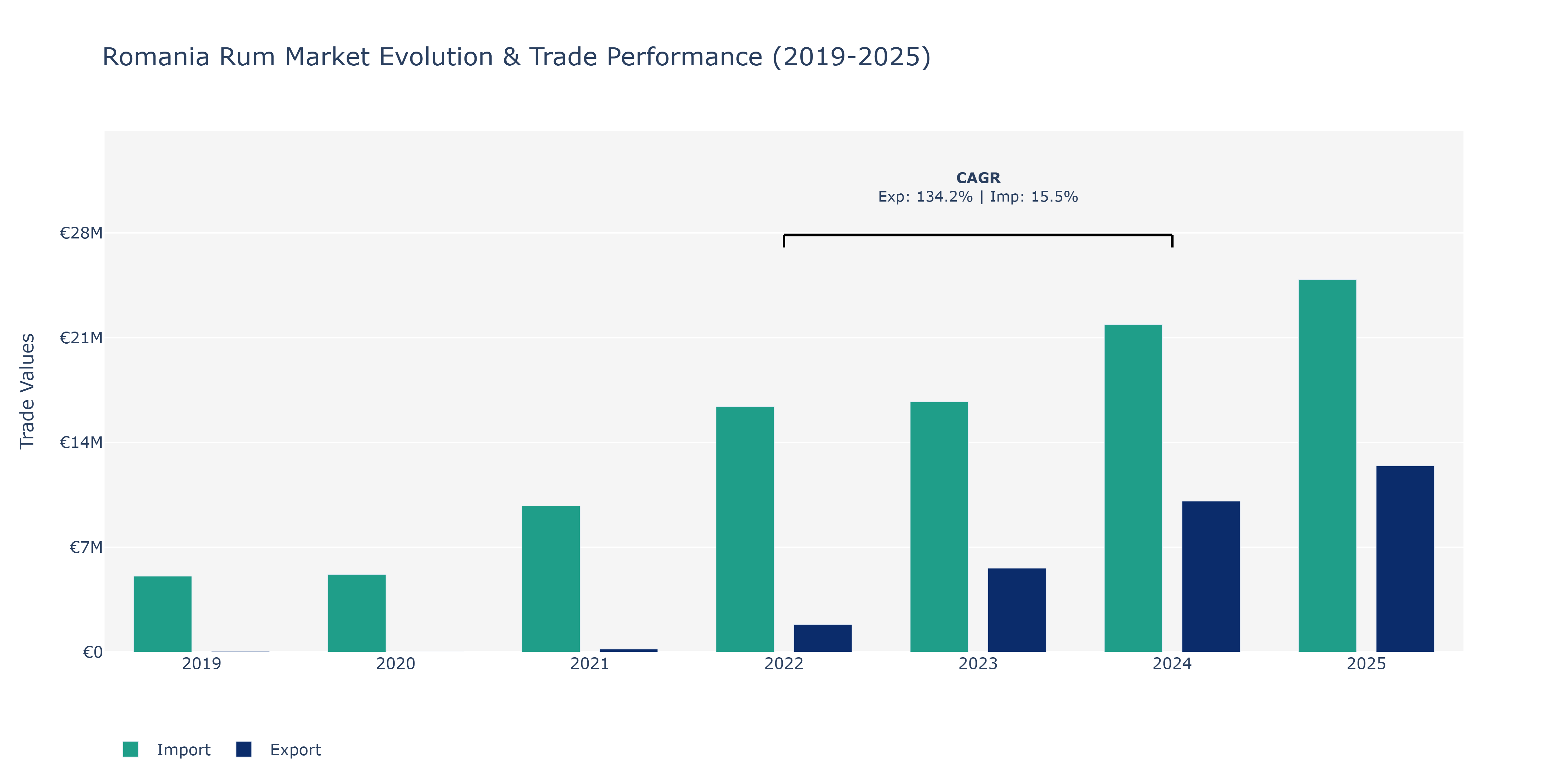
Between 2019 and 2025, Romania's Rum Market witnessed varied trends in exports and imports. Exports saw a notable decrease from €48.14 thousand in 2019 to €4.77 thousand in 2020 before rebounding significantly to €202.56 thousand in 2021. The peak export value of €12.44 million in 2025 indicates a steady recovery trend. On the imports side, the market experienced a steady increase from €5.07 million in 2019 to €24.88 million in 2025, showing consistent growth year over year. The period between 2022 and 2024 stood out with impressive export growth at a CAGR of 134.17%, while imports grew at a more moderate rate of 15.49%. These fluctuations can be attributed to factors such as changes in consumer preferences, global economic conditions, and potentially evolving trade agreements impacting the rum market in Romania. Real-world developments like increased international demand for Romanian rum products and strategic partnerships with key importing countries likely influenced these trends.
Romania Rum Market Overview
The Romania rum market is characterized by a growing demand for premium and high-quality rum products among consumers. The market has seen an increasing interest in craft and small-batch rums, as well as flavored and spiced variants. Key players in the market are focusing on product innovation and marketing strategies to cater to the evolving preferences of consumers. The younger demographic in Romania is driving the growth of the rum market, with a preference for unique and trendy rum products. Additionally, the country`s vibrant nightlife scene and tourism industry contribute to the increasing consumption of rum in bars and restaurants. Overall, the Romania rum market presents opportunities for both domestic and international rum brands to expand their presence and market share in the country.
Romania Rum Market Trends
In Romania, the rum market is experiencing a growing interest in premium and craft rums among consumers. This trend is driven by an increasing appreciation for unique flavors, high-quality ingredients, and artisanal production methods. Consumers are seeking out small-batch, aged rums with distinct flavor profiles, often produced by local distilleries. There is also a rising demand for flavored rums and cocktail mixers, reflecting a shift towards experiential drinking and at-home mixology. Additionally, sustainability and ethical production practices are becoming important factors influencing purchasing decisions, with consumers preferring brands that prioritize environmental and social responsibility. Overall, the Romania rum market is evolving towards a more diverse and sophisticated range of products to cater to the changing preferences and values of consumers.
Romania Rum Market Challenges
In the Romania Rum Market, there are several challenges faced by businesses operating in this sector. One significant challenge is the high taxation on alcoholic beverages, including rum, which can drive up prices and adversely affect consumer demand. Additionally, the market is highly competitive with both domestic and international brands vying for market share. This intense competition makes it difficult for new entrants to establish themselves and for existing brands to differentiate themselves effectively. Another challenge is the impact of regulations and restrictions on advertising and marketing of alcoholic products, which can limit promotional efforts and brand visibility. Finally, changing consumer preferences and increasing health consciousness are also posing challenges as consumers are becoming more selective about their alcohol consumption, leading to a shift towards healthier alternatives.
Romania Rum Market Investment Opportunities
The Romania rum market presents promising investment opportunities due to the country`s growing demand for premium spirits and a shift towards higher quality products among consumers. With a rich history of rum consumption and a rising interest in craft and artisanal spirits, there is potential for growth in the premium rum segment. Additionally, Romania`s increasing disposable income levels and changing drinking preferences create a favorable environment for innovative rum brands to enter the market and capture market share. Investors could consider opportunities in importing high-quality rums from renowned rum-producing regions, establishing partnerships with local distilleries for production, or launching new brands targeting the premium segment to capitalize on the evolving consumer preferences in Romania.
Romania Rum Market Government Policy
The Romanian rum market is primarily governed by the European Union`s regulations, as Romania is a member state. These regulations include rules on production methods, labeling requirements, and quality standards. Additionally, the Romanian government imposes excise duties on alcohol products, including rum, to regulate consumption and generate revenue. The government also enforces strict advertising restrictions to prevent underage consumption and promote responsible drinking. Importantly, Romania has implemented measures to combat illicit alcohol activities, such as smuggling and counterfeiting, to protect both consumers and legitimate businesses in the rum market. Overall, the Romanian rum market is influenced by a combination of EU regulations and national policies aimed at ensuring consumer safety, fair competition, and market integrity.
Romania Rum Market Future Outlook
The Romania Rum Market is expected to experience moderate growth in the coming years, driven by increasing consumer interest in premium and craft spirits. Factors such as rising disposable incomes, evolving consumer tastes, and a growing cocktail culture are likely to contribute to this growth. The market is also anticipated to benefit from the expanding presence of international rum brands and the rising popularity of rum-based cocktails among younger consumers. However, the market may face challenges such as increasing competition from other spirits categories and changing regulations regarding alcohol consumption. Overall, the Romania Rum Market is poised for steady growth, with opportunities for both domestic and international rum producers to capitalize on the evolving preferences of Romanian consumers.
Key Highlights of the Report:
- Romania Rum Market Outlook
- Market Size of Romania Rum Market, 2025
- Forecast of Romania Rum Market, 2032
- Historical Data and Forecast of Romania Rum Revenues & Volume for the Period 2022 - 2032F
- Romania Rum Market Trend Evolution
- Romania Rum Market Drivers and Challenges
- Romania Rum Price Trends
- Romania Rum Porter's Five Forces
- Romania Rum Industry Life Cycle
- Historical Data and Forecast of Romania Rum Market Revenues & Volume By Type for the Period 2022 - 2032F
- Historical Data and Forecast of Romania Rum Market Revenues & Volume By Golden for the Period 2022 - 2032F
- Historical Data and Forecast of Romania Rum Market Revenues & Volume By Dark for the Period 2022 - 2032F
- Historical Data and Forecast of Romania Rum Market Revenues & Volume By White for the Period 2022 - 2032F
- Historical Data and Forecast of Romania Rum Market Revenues & Volume By Spiced for the Period 2022 - 2032F
- Historical Data and Forecast of Romania Rum Market Revenues & Volume By Distribution Channel for the Period 2022 - 2032F
- Historical Data and Forecast of Romania Rum Market Revenues & Volume By On-trade for the Period 2022 - 2032F
- Historical Data and Forecast of Romania Rum Market Revenues & Volume By Off-trade for the Period 2022 - 2032F
- Romania Rum Import Export Trade Statistics
- Market Opportunity Assessment By Type
- Market Opportunity Assessment By Distribution Channel
- Romania Rum Top Companies Market Share
- Romania Rum Competitive Benchmarking By Technical and Operational Parameters
- Romania Rum Company Profiles
- Romania Rum Key Strategic Recommendations






































