Romania Smart Tracker Market: Import Trend Analysis
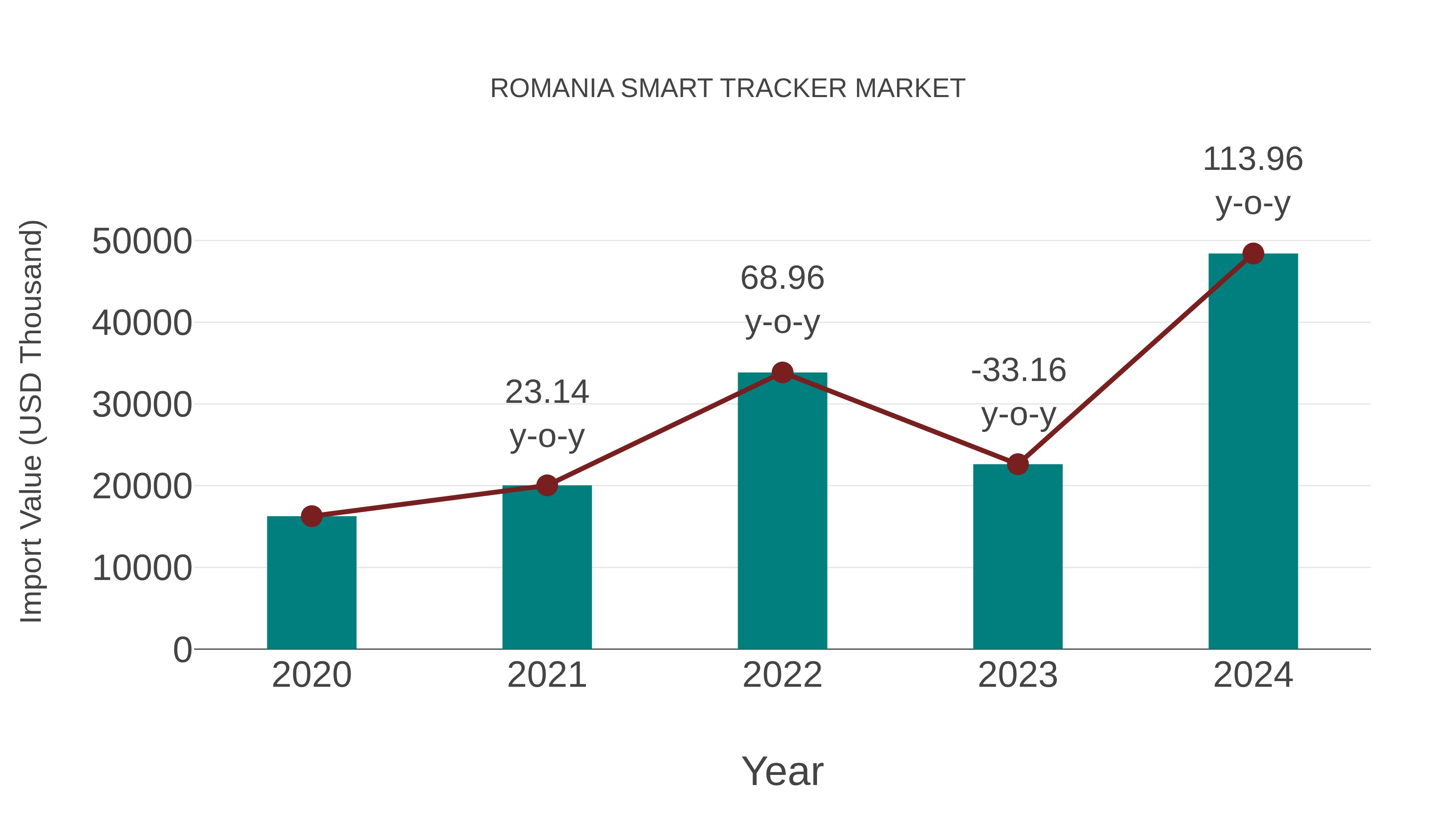
Romania`s import trend for smart trackers saw significant growth from 2023 to 2024, increasing by 113.96%. The compound annual growth rate (CAGR) for the period 2020-2024 stood at 31.33%. This surge in imports can be attributed to an evident shift in consumer demand towards advanced tracking technologies, indicating a strong market momentum for smart trackers in Romania during this period.
Romania Smart Tracker Market Overview
The Romania Smart Tracker market is experiencing steady growth driven by increasing consumer awareness about the benefits of such devices for personal safety, security, and asset tracking. Key players in the market are offering a variety of smart tracker products with advanced features such as real-time location tracking, geofencing, and long battery life. The demand for smart trackers is also being fueled by the rising adoption of Internet of Things (IoT) technology and the growing trend of connected devices. Additionally, the market is witnessing a shift towards smaller, more discrete designs that can be easily attached to personal belongings or used for tracking children and pets. As the market continues to evolve, we can expect to see further innovations and enhancements in smart tracker technology to meet the diverse needs of consumers in Romania.
Romania Smart Tracker Market Trends and Opportunities
The Romania Smart Tracker Market is experiencing growth driven by the increasing adoption of smart technology and the rising demand for tracking and monitoring solutions. Key trends include the development of more advanced and compact smart trackers, integration of GPS and Bluetooth technologies for precise location tracking, and the incorporation of additional features such as real-time notifications and geofencing capabilities. Opportunities in the market lie in the expanding applications of smart trackers across various sectors including logistics, healthcare, personal safety, and asset tracking. Additionally, the growing trend of IoT and connected devices presents a promising market landscape for smart tracker manufacturers to innovate and provide tailored solutions to meet the evolving needs of consumers and businesses in Romania.
Romania Smart Tracker Market Challenges
In the Romania Smart Tracker Market, one of the key challenges faced is the limited awareness and adoption of smart tracker devices among the general population. This can be attributed to a lack of understanding about the benefits and functionalities of smart trackers, leading to slower market penetration. Additionally, the presence of cheaper alternatives or traditional tracking methods can hinder the uptake of smart trackers. Furthermore, concerns around data privacy and security may also deter some consumers from investing in these devices. To overcome these challenges, companies operating in the Romania Smart Tracker Market need to focus on educating consumers about the advantages of smart trackers, ensuring competitive pricing, and implementing robust security measures to build trust among users.
Romania Smart Tracker Market Drivers
The Romania Smart Tracker Market is primarily driven by the increasing demand for efficient and convenient tracking solutions across various industries such as logistics, transportation, and personal consumer applications. The growing awareness about the benefits of real-time tracking, including improved operational efficiency, asset security, and fleet management, is fueling the adoption of smart tracker devices in the country. Additionally, the rising concerns related to theft prevention, safety, and the need for effective monitoring of valuable assets are driving the market growth. Technological advancements in GPS tracking technology, the emergence of IoT-enabled tracking solutions, and the availability of cost-effective devices are further contributing to the expansion of the smart tracker market in Romania.
Romania Smart Tracker Market Government Policy
The Romanian government has implemented various policies to promote the growth of the Smart Tracker market. These policies include subsidies and tax incentives for companies investing in research and development of Smart Tracker technologies. Additionally, the government has established partnerships with industry players to accelerate the adoption of Smart Tracker solutions in various sectors such as healthcare, transportation, and logistics. Furthermore, regulatory frameworks have been put in place to ensure data security and privacy in Smart Tracker applications. Overall, the government`s initiatives aim to stimulate innovation, drive economic growth, and enhance the competitiveness of the Romanian Smart Tracker market.
Romania Smart Tracker Market Future Outlook
The Romania Smart Tracker Market is poised for significant growth in the coming years, driven by increasing awareness of personal safety and security, as well as the rising adoption of smart technology. The market is expected to experience a surge in demand for smart trackers, such as GPS devices and Bluetooth-enabled tags, used for tracking personal belongings, pets, and even children. With the growing trend of connected devices and the Internet of Things (IoT), the market is likely to witness a plethora of innovative products and solutions catering to various consumer needs. Additionally, the integration of advanced features like real-time tracking, geofencing, and alerts will further propel the market growth. Overall, the Romania Smart Tracker Market is set to expand and evolve rapidly, offering lucrative opportunities for businesses in the smart tracking industry.
Key Highlights of the Report:
- Romania Smart Tracker Market Outlook
- Market Size of Romania Smart Tracker Market, 2025
- Forecast of Romania Smart Tracker Market, 2032
- Historical Data and Forecast of Romania Smart Tracker Revenues & Volume for the Period 2022 - 2032F
- Romania Smart Tracker Market Trend Evolution
- Romania Smart Tracker Market Drivers and Challenges
- Romania Smart Tracker Price Trends
- Romania Smart Tracker Porter's Five Forces
- Romania Smart Tracker Industry Life Cycle
- Historical Data and Forecast of Romania Smart Tracker Market Revenues & Volume By Technology for the Period 2022 - 2032F
- Historical Data and Forecast of Romania Smart Tracker Market Revenues & Volume By Cellular for the Period 2022 - 2032F
- Historical Data and Forecast of Romania Smart Tracker Market Revenues & Volume By Bluetooth for the Period 2022 - 2032F
- Historical Data and Forecast of Romania Smart Tracker Market Revenues & Volume By GPS for the Period 2022 - 2032F
- Historical Data and Forecast of Romania Smart Tracker Market Revenues & Volume By UWB for the Period 2022 - 2032F
- Historical Data and Forecast of Romania Smart Tracker Market Revenues & Volume By Application for the Period 2022 - 2032F
- Historical Data and Forecast of Romania Smart Tracker Market Revenues & Volume By Consumer Products for the Period 2022 - 2032F
- Historical Data and Forecast of Romania Smart Tracker Market Revenues & Volume By Pets for the Period 2022 - 2032F
- Historical Data and Forecast of Romania Smart Tracker Market Revenues & Volume By Luggage for the Period 2022 - 2032F
- Historical Data and Forecast of Romania Smart Tracker Market Revenues & Volume By Others for the Period 2022 - 2032F
- Romania Smart Tracker Import Export Trade Statistics
- Market Opportunity Assessment By Technology
- Market Opportunity Assessment By Application
- Romania Smart Tracker Top Companies Market Share
- Romania Smart Tracker Competitive Benchmarking By Technical and Operational Parameters
- Romania Smart Tracker Company Profiles
- Romania Smart Tracker Key Strategic Recommendations






































