Romania Table Olives Market: Import Trend Analysis
In the Romania table olives market, the import trend showed a notable growth rate of 15.01% from 2023 to 2024. The compound annual growth rate (CAGR) for imports between 2020 and 2024 stood at 8.39%. This substantial import momentum can be attributed to shifting consumer preferences towards healthier food options, indicating a potential demand shift in the market.
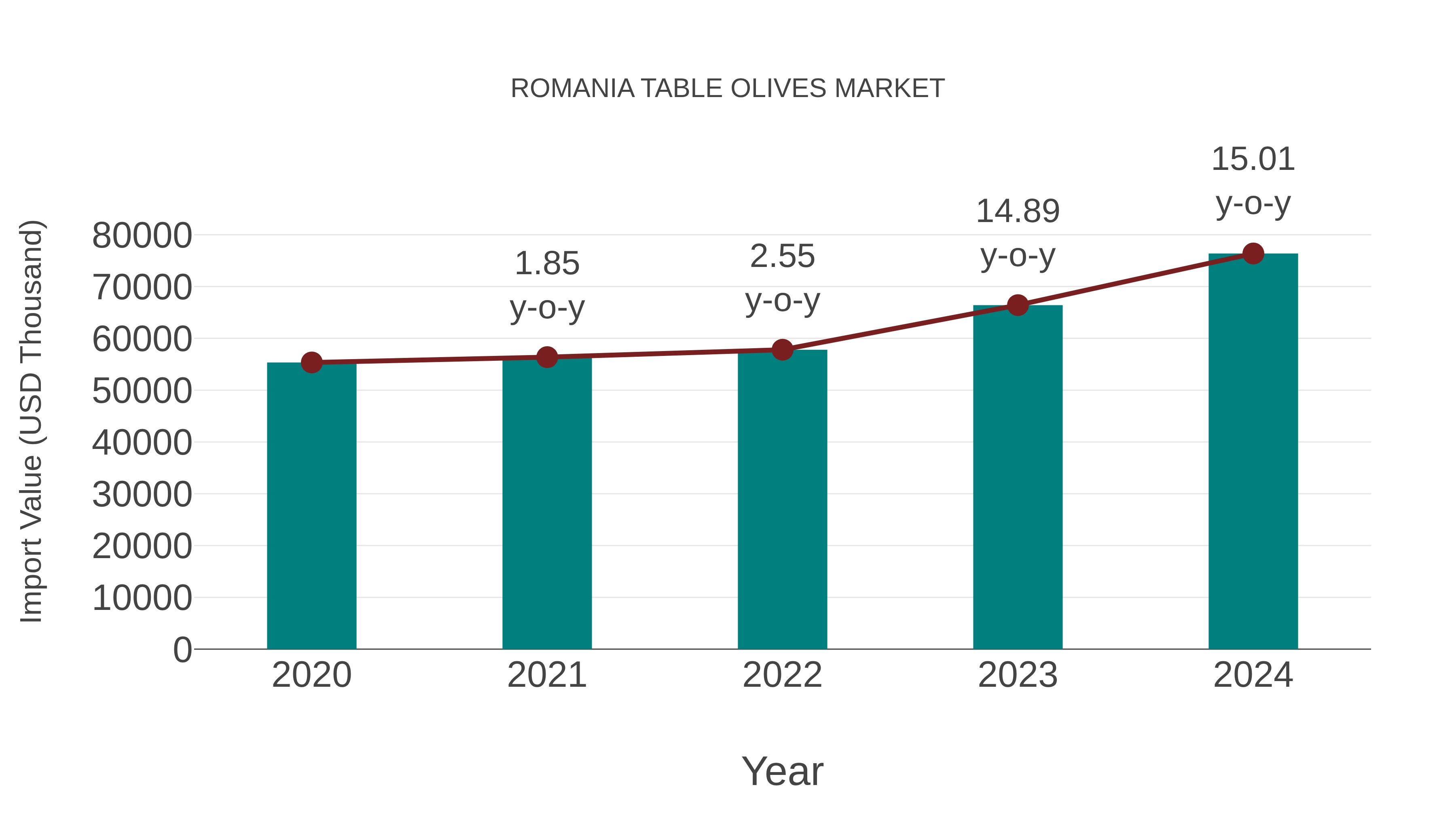
Romania Table Olives Market Synopsis
The Romania table olives market is experiencing steady growth driven by increasing consumer awareness of the health benefits associated with olives, such as their high antioxidant content and potential cardiovascular benefits. The market is primarily dominated by imported olives, with Greece and Spain being the main suppliers. Local production is also increasing, with Romanian olive farms expanding their cultivation areas. The market is characterized by a diverse range of olive varieties, including Kalamata, Manzanilla, and Halkidiki, catering to different consumer preferences. Retail channels, such as supermarkets and specialty stores, are the primary distribution channels for table olives in Romania. The market is expected to continue growing as consumers seek healthier snack options and incorporate olives into their diets for their nutritional value and unique flavors.
Romania Table Olives Market Trends
The Romania Table Olives Market is experiencing a growing demand for premium and gourmet varieties of olives due to increasing consumer interest in Mediterranean cuisine and healthy eating habits. There is a rising trend towards organic and locally sourced table olives, driven by a preference for products with no artificial additives or preservatives. Furthermore, the market presents opportunities for innovative flavors and packaging designs to attract younger consumers looking for unique and convenient snack options. The increasing popularity of online shopping platforms also offers a chance for producers to expand their reach and target a wider audience. Overall, the Romania Table Olives Market is poised for growth, with a focus on quality, health benefits, and appealing presentation driving consumer preferences.
Romania Table Olives Market Challenges
In the Romania Table Olives Market, some challenges include limited consumer awareness and understanding of the various types and health benefits of table olives, leading to lower overall consumption levels compared to other countries. Additionally, the market faces stiff competition from other snack options and imported olives from countries with established olive industries, making it difficult for local producers to gain market share. Distribution and logistics issues also impact the market, with inadequate infrastructure sometimes causing delays in getting products to consumers. Lastly, fluctuating prices of olives due to factors such as weather conditions and global market trends can pose challenges for both producers and consumers in Romania. Addressing these challenges would require increased marketing efforts, improved distribution networks, and possibly collaborations with international partners to enhance competitiveness in the market.
Romania Table Olives Market Investment Opportunities
The Romania Table Olives Market is primarily driven by increasing consumer awareness regarding the health benefits of olives, such as being rich in antioxidants and healthy fats. Changing consumer preferences towards healthier snacking options and Mediterranean diet trends also contribute to the market growth. Additionally, the rising demand for convenience foods and ready-to-eat products further fuels the demand for table olives in Romania. The influence of food bloggers and social media platforms promoting the culinary uses of olives has also played a role in driving market growth. Furthermore, the expanding retail sector and increasing availability of a variety of table olive products in supermarkets and specialty stores are enhancing market penetration and consumer accessibility.
Romania Table Olives Market Government Polices
In Romania, the table olives market is primarily regulated by the Ministry of Agriculture and Rural Development, which oversees policies related to production, marketing, and quality standards. The government provides support to olive growers through subsidies, grants, and technical assistance programs aimed at increasing productivity and ensuring quality standards are met. Additionally, Romania is part of the European Union`s Common Agricultural Policy, which establishes regulations and guidelines for the production and marketing of agricultural products, including olives. The government also works to promote the consumption of table olives domestically and internationally through marketing campaigns and trade agreements. Overall, government policies in Romania aim to support the sustainable growth of the table olives market while ensuring compliance with quality and safety standards.
Romania Table Olives Market Future Outlook
The future outlook for the Romania Table Olives Market appears promising, with a projected steady growth trajectory driven by increasing consumer awareness of the health benefits associated with olives, such as being rich in antioxidants and healthy fats. The growing trend towards Mediterranean diets and a preference for natural, minimally processed foods is expected to further boost demand for table olives in Romania. Additionally, the rising popularity of international cuisines and flavors among Romanian consumers is likely to drive innovation and product diversification in the market. However, challenges such as fluctuating raw material prices and competition from other snack options may impact market growth. Overall, with favorable market trends and evolving consumer preferences, the Romania Table Olives Market is anticipated to witness sustained growth in the coming years.
Key Highlights of the Report:
- Romania Table Olives Market Outlook
- Market Size of Romania Table Olives Market, 2025
- Forecast of Romania Table Olives Market, 2032
- Historical Data and Forecast of Romania Table Olives Revenues & Volume for the Period 2022 - 2032F
- Romania Table Olives Market Trend Evolution
- Romania Table Olives Market Drivers and Challenges
- Romania Table Olives Price Trends
- Romania Table Olives Porter's Five Forces
- Romania Table Olives Industry Life Cycle
- Historical Data and Forecast of Romania Table Olives Market Revenues & Volume By Type for the Period 2022 - 2032F
- Historical Data and Forecast of Romania Table Olives Market Revenues & Volume By Black Olive for the Period 2022 - 2032F
- Historical Data and Forecast of Romania Table Olives Market Revenues & Volume By Green Olive for the Period 2022 - 2032F
- Historical Data and Forecast of Romania Table Olives Market Revenues & Volume By Application for the Period 2022 - 2032F
- Historical Data and Forecast of Romania Table Olives Market Revenues & Volume By Online Store for the Period 2022 - 2032F
- Historical Data and Forecast of Romania Table Olives Market Revenues & Volume By Supermarket for the Period 2022 - 2032F
- Historical Data and Forecast of Romania Table Olives Market Revenues & Volume By Convenience Store for the Period 2022 - 2032F
- Historical Data and Forecast of Romania Table Olives Market Revenues & Volume By Other for the Period 2022 - 2032F
- Romania Table Olives Import Export Trade Statistics
- Market Opportunity Assessment By Type
- Market Opportunity Assessment By Application
- Romania Table Olives Top Companies Market Share
- Romania Table Olives Competitive Benchmarking By Technical and Operational Parameters
- Romania Table Olives Company Profiles
- Romania Table Olives Key Strategic Recommendations






































