Samoa Decaffeinated Coffee Market Growth Rate Analysis (2021 - 2031)
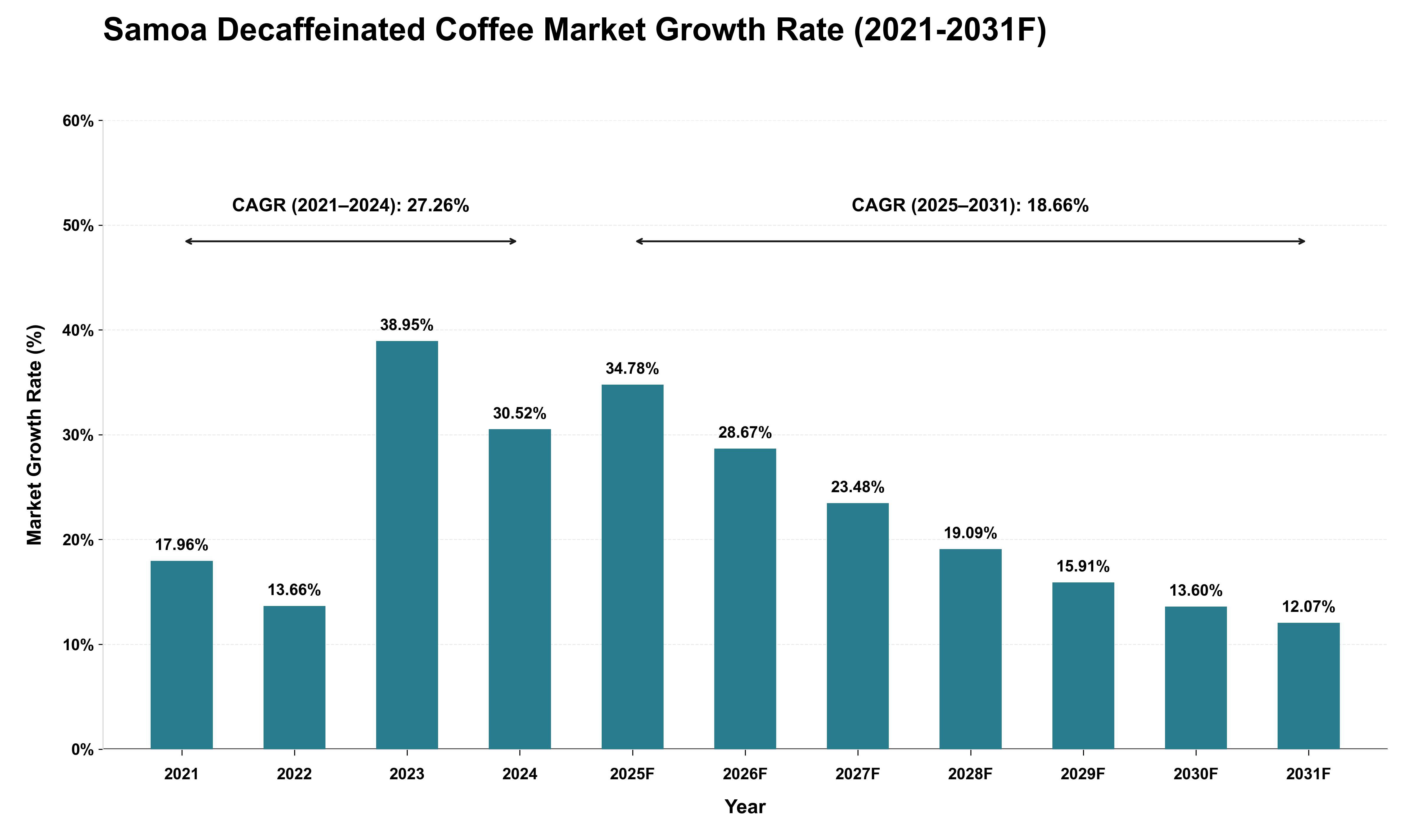
The Samoa decaffeinated coffee market experienced significant growth from 2021 to 2024, with a historical CAGR of 27.26%, driven by shifts in end-use demand as consumers increasingly sought healthier beverage options amid rising health consciousness. The surge in annual growth rates, particularly notable in 2023 at 38.95%, can be attributed to post-pandemic recovery trends that revitalized the hospitality sector and increased consumer spending on premium products. As global supply chains stabilized following disruptions from the COVID-19 pandemic and shipping container crises, import reliance on high-quality coffee surged, further fueling demand. Looking ahead to 2025-2031, the forecasted CAGR of 18.66% suggests sustained interest in decaffeinated options, albeit at a moderated pace as market dynamics evolve and competition intensifies within the broader specialty coffee segment. This period will likely see continued adaptation to consumer preferences and potential innovations in product offerings that align with health trends.
Key Highlights of the Report:
- Samoa Decaffeinated Coffee Market Outlook
- Market Size of Samoa Decaffeinated Coffee Market, 2024
- Forecast of Samoa Decaffeinated Coffee Market, 2031
- Historical Data and Forecast of Samoa Decaffeinated Coffee Revenues & Volume for the Period 2021-2031
- Samoa Decaffeinated Coffee Market Trend Evolution
- Samoa Decaffeinated Coffee Market Drivers and Challenges
- Samoa Decaffeinated Coffee Price Trends
- Samoa Decaffeinated Coffee Porter`s Five Forces
- Samoa Decaffeinated Coffee Industry Life Cycle
- Historical Data and Forecast of Samoa Decaffeinated Coffee Market Revenues & Volume By Product for the Period 2021-2031
- Historical Data and Forecast of Samoa Decaffeinated Coffee Market Revenues & Volume By Roasted for the Period 2021-2031
- Historical Data and Forecast of Samoa Decaffeinated Coffee Market Revenues & Volume By Raw for the Period 2021-2031
- Historical Data and Forecast of Samoa Decaffeinated Coffee Market Revenues & Volume By Speciesfor the Period 2021-2031
- Historical Data and Forecast of Samoa Decaffeinated Coffee Market Revenues & Volume By Arabica for the Period 2021-2031
- Historical Data and Forecast of Samoa Decaffeinated Coffee Market Revenues & Volume By Robusta for the Period 2021-2031
- Historical Data and Forecast of Samoa Decaffeinated Coffee Market Revenues & Volume By Distribution Channel for the Period 2021-2031
- Historical Data and Forecast of Samoa Decaffeinated Coffee Market Revenues & Volume By Online for the Period 2021-2031
- Historical Data and Forecast of Samoa Decaffeinated Coffee Market Revenues & Volume By Offline for the Period 2021-2031
- Samoa Decaffeinated Coffee Import Export Trade Statistics
- Market Opportunity Assessment By Product
- Market Opportunity Assessment By Species
- Market Opportunity Assessment By Distribution Channel
- Samoa Decaffeinated Coffee Top Companies Market Share
- Samoa Decaffeinated Coffee Competitive Benchmarking By Technical and Operational Parameters
- Samoa Decaffeinated Coffee Company Profiles
- Samoa Decaffeinated Coffee Key Strategic Recommendations






































