Saudi Arabia Ascorbic Acid Market Size, Share & Growth Rate
The Saudi Arabia Ascorbic Acid Market was estimated at USD 255 Million in 2025 and is projected to reach USD 327 Million by 2032, growing at a CAGR of 3.6% from 2026 to 2032. This positive trajectory is largely fueled by an escalating consumer awareness surrounding the health benefits of vitamin C, particularly in dietary supplements and functional foods. The increase in demand for ascorbic acid across pharmaceutical and cosmetic applications further amplifies growth prospects in the region.
Saudi Arabia Ascorbic Acid Market Year-wise Growth Rate and Key Drivers
This graph highlights how the Saudi Arabia Ascorbic Acid Market has steadily grown over the years, supported by major growth factors.
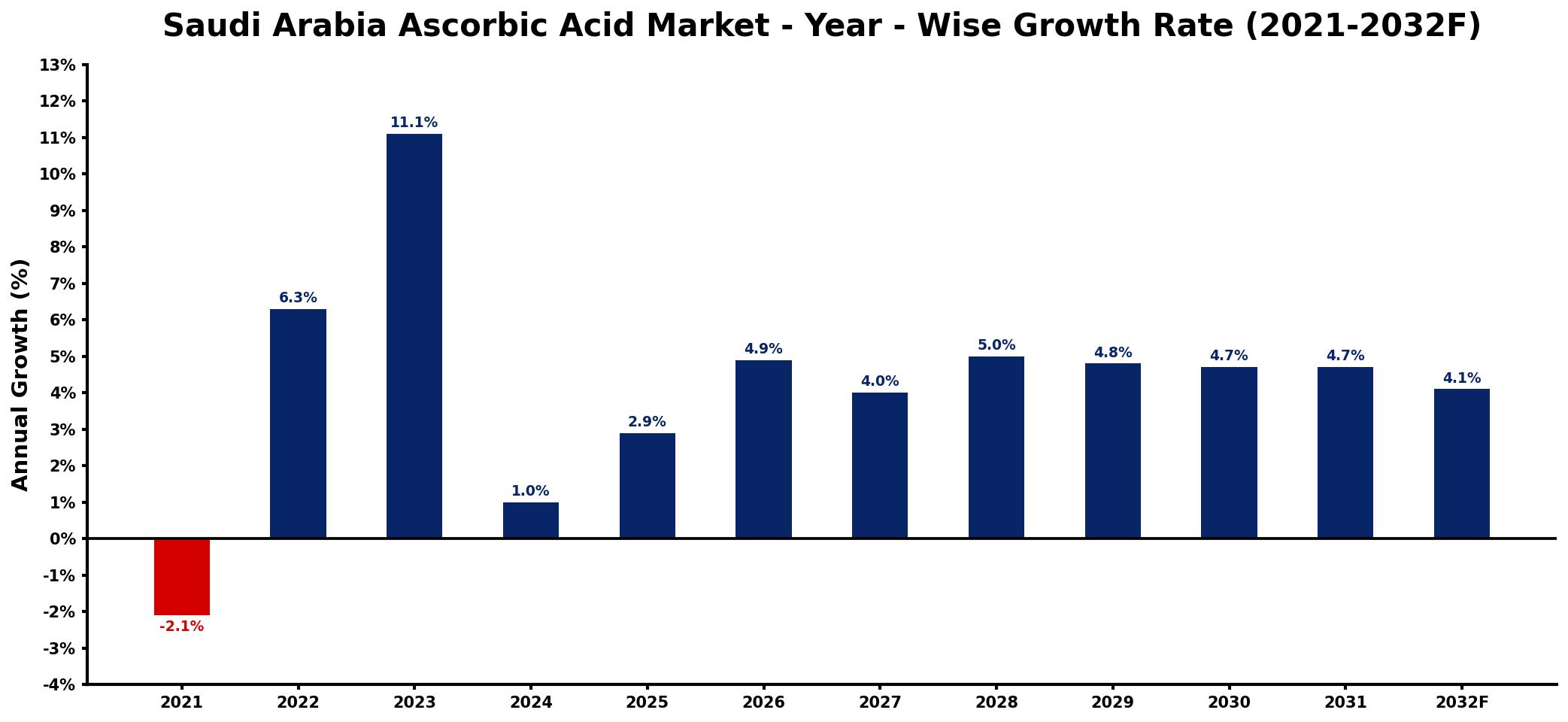
The table below presents the year‑wise growth rates along with the key drivers influencing the market
| Year | Growth Rate | Major Drivers |
| 2021 | -2.1% | Supply chain disruptions affecting production |
| 2022 | 6.3% | Rising health awareness among consumers |
| 2023 | 11.1% | Expansion of dietary supplement market |
| 2024 | 1.0% | Increased demand for natural ingredients |
| 2025 | 2.9% | Growth in functional food sector |
| 2026 | 4.9% | rising end-use demand growth |
| 2027 | 4.0% | Rising popularity of health beverages |
| 2028 | 5.0% | Investments in biotechnology innovations |
| 2029 | 4.8% | Development of new distribution channels |
| 2030 | 4.7% | Growing trend of personalized nutrition |
| 2031 | 4.7% | stronger distribution network expansion |
| 2032 | 4.1% | Increased focus on preventive healthcare |
Note: Market size estimations and growth projections presented in this report are based on 6Wresearch's proprietary forecasting methodology, utilizing the latest available industry data, government publications, and primary research inputs.
Saudi Arabia Ascorbic Acid Market Synopsis
A significant force driving the Saudi Arabia ascorbic acid market is the growing focus on health and wellness among consumers. As awareness of vitamin C's myriad benefits spreads, its demand across dietary supplements and food products has surged, effectively enhancing market dynamics.
Additionally, the cosmetic industrys adoption of ascorbic acid as a key ingredient due to its antioxidant properties further enriches the market landscape. Consumers are increasingly seeking skincare products that not only provide immediate aesthetic benefits but also contribute to long-term skin health.
Saudi Arabia Ascorbic Acid Market Key Takeaways
- The market is driven by increasing consumer interest in health and wellness.
- Regulatory compliance plays a vital role in product quality assurance.
- Ascorbic acid serves multiple functions across various industries.
- Global supply chain disruptions during the pandemic have highlighted vulnerabilities.
- Natural sources of vitamin C are gaining traction as alternatives to synthetic options.
Evaluation of Restraints in Saudi Arabia Ascorbic Acid Market
The Saudi Arabia ascorbic acid market is currently contending with several restraint factors that could hinder its growth. One prominent challenge is the rising demand for natural vitamin C sources, which poses competition to synthetic ascorbic acid. Compliance with stringent regulatory standards also drives up production costs, limiting profit margins for manufacturers. Moreover, fluctuations in raw material prices can disrupt the supply chain, while the logistics of maintaining appropriate storage conditions during transportation adds another layer of complexity. Consumer apprehensions regarding excessive vitamin C intake further influence purchasing behavior, compelling businesses to adapt to shifting consumption patterns.
Saudi Arabia Ascorbic Acid Market Trends
Current trends in the Saudi Arabia ascorbic acid market indicate a notable shift toward transparency and traceability in sourcing. Consumers are increasingly prioritizing clean labels and the origin of ingredients. Furthermore, the rise of e-commerce platforms has transformed the way vitamin C products are marketed and sold, providing greater accessibility to health-conscious consumers. Innovation in formulations—particularly those combining ascorbic acid with other beneficial ingredients—continues to gain traction, appealing to a wider audience seeking multifaceted health benefits.
Saudi Arabia Ascorbic Acid Market Opportunities
Amidst the challenges, the Saudi Arabia ascorbic acid market presents promising growth and investment opportunities. The expanding interest in preventive healthcare offers a fertile ground for vitamin C-rich dietary supplements. Additionally, innovative product development in the skincare sector can leverage ascorbic acid's antioxidant properties, catering to consumer demand for enhanced skin health solutions. Manufacturers also stand to benefit from exploring natural sourcing options to align with evolving consumer preferences, thus creating a niche market for organic vitamin C products.
Government Initiatives in the Saudi Arabia Ascorbic Acid Market
The Saudi government is increasingly recognizing the importance of health and nutrition in its public health initiatives. Policies aimed at promoting dietary supplements are gradually evolving, with an emphasis on ensuring quality standards and consumer safety. Public awareness campaigns about the benefits of vitamins, including vitamin C, are being implemented, which indirectly supports the market. Additionally, efforts to bolster local manufacturing capabilities for essential vitamins and supplements are underway to reduce reliance on imports, which could enhance market stability.
Future Insights of the Saudi Arabia Ascorbic Acid Market
Looking ahead to 2026-2032, the Saudi Arabia ascorbic acid market is poised for sustained growth. As the emphasis on immune health continues to resonate with consumers, particularly post-pandemic, the demand for vitamin C products is expected to remain robust. Innovations in product formulations and distribution methods will likely drive the market further. Stakeholders should remain agile, adapting to both consumer trends and regulatory changes to effectively harness the opportunities ahead.
Saudi Arabia Ascorbic Acid Market Latest Developments (2025 - 2026)
Recent developments in the Saudi Arabia ascorbic acid market indicate a rising trend toward integrating technology in product development and distribution. Companies are increasingly investing in research to enhance the bioavailability of ascorbic acid in dietary supplements. Moreover, the shift toward eco-friendly packaging solutions is gaining momentum, reflecting broader sustainability goals among consumers. These trends showcase the market's responsiveness to evolving consumer preferences and the need for innovation in a competitive landscape.
Saudi Arabia Ascorbic Acid Market - Key Attractiveness of the Report
- 10 Years of Market Numbers
- Historical Data Starting from 2022 to 2025
- Base Year: 2025
- Forecast Data until 2032
- Key Performance Indicators Impacting the Market
- Major Upcoming Developments and Projects
Key Highlights of the Report:
- Saudi Arabia Ascorbic Acid Market Outlook
- Market Size of Saudi Arabia Ascorbic Acid Market, 2025
- Forecast of Saudi Arabia Ascorbic Acid Market, 2032
- Historical Data and Forecast of Saudi Arabia Ascorbic Acid Revenues & Volume for the Period 2022-2032F
- Saudi Arabia Ascorbic Acid Market Trend Evolution
- Saudi Arabia Ascorbic Acid Market Drivers and Challenges
- Saudi Arabia Ascorbic Acid Price Trends
- Saudi Arabia Ascorbic Acid Porter's Five Forces
- Saudi Arabia Ascorbic Acid Industry Life Cycle
- Historical Data and Forecast of Saudi Arabia Ascorbic Acid Market Revenues & Volume By Grade for the Period 2022-2032F
- Historical Data and Forecast of Saudi Arabia Ascorbic Acid Market Revenues & Volume By Food & Pharmaceutical for the Period 2022-2032F
- Historical Data and Forecast of Saudi Arabia Ascorbic Acid Market Revenues & Volume By Industrial for the Period 2022-2032F
- Historical Data and Forecast of Saudi Arabia Ascorbic Acid Market Revenues & Volume By Application for the Period 2022-2032F
- Historical Data and Forecast of Saudi Arabia Ascorbic Acid Market Revenues & Volume By Food & Beverages for the Period 2022-2032F
- Historical Data and Forecast of Saudi Arabia Ascorbic Acid Market Revenues & Volume By Pharmaceutical for the Period 2022-2032F
- Historical Data and Forecast of Saudi Arabia Ascorbic Acid Market Revenues & Volume By Cosmetics for the Period 2022-2032F
- Historical Data and Forecast of Saudi Arabia Ascorbic Acid Market Revenues & Volume By Chemicals for the Period 2022-2032F
- Historical Data and Forecast of Saudi Arabia Ascorbic Acid Market Revenues & Volume By Agriculture for the Period 2022-2032F
- Historical Data and Forecast of Saudi Arabia Ascorbic Acid Market Revenues & Volume By Others for the Period 2022-2032F
- Saudi Arabia Ascorbic Acid Import Export Trade Statistics
- Market Opportunity Assessment By Grade
- Market Opportunity Assessment By Application
- Saudi Arabia Ascorbic Acid Top Companies Market Share
- Saudi Arabia Ascorbic Acid Competitive Benchmarking By Technical and Operational Parameters
- Saudi Arabia Ascorbic Acid Company Profiles
- Saudi Arabia Ascorbic Acid Key Strategic Recommendations






































