Saudi Arabia Broccoli Market: Import Trend Analysis
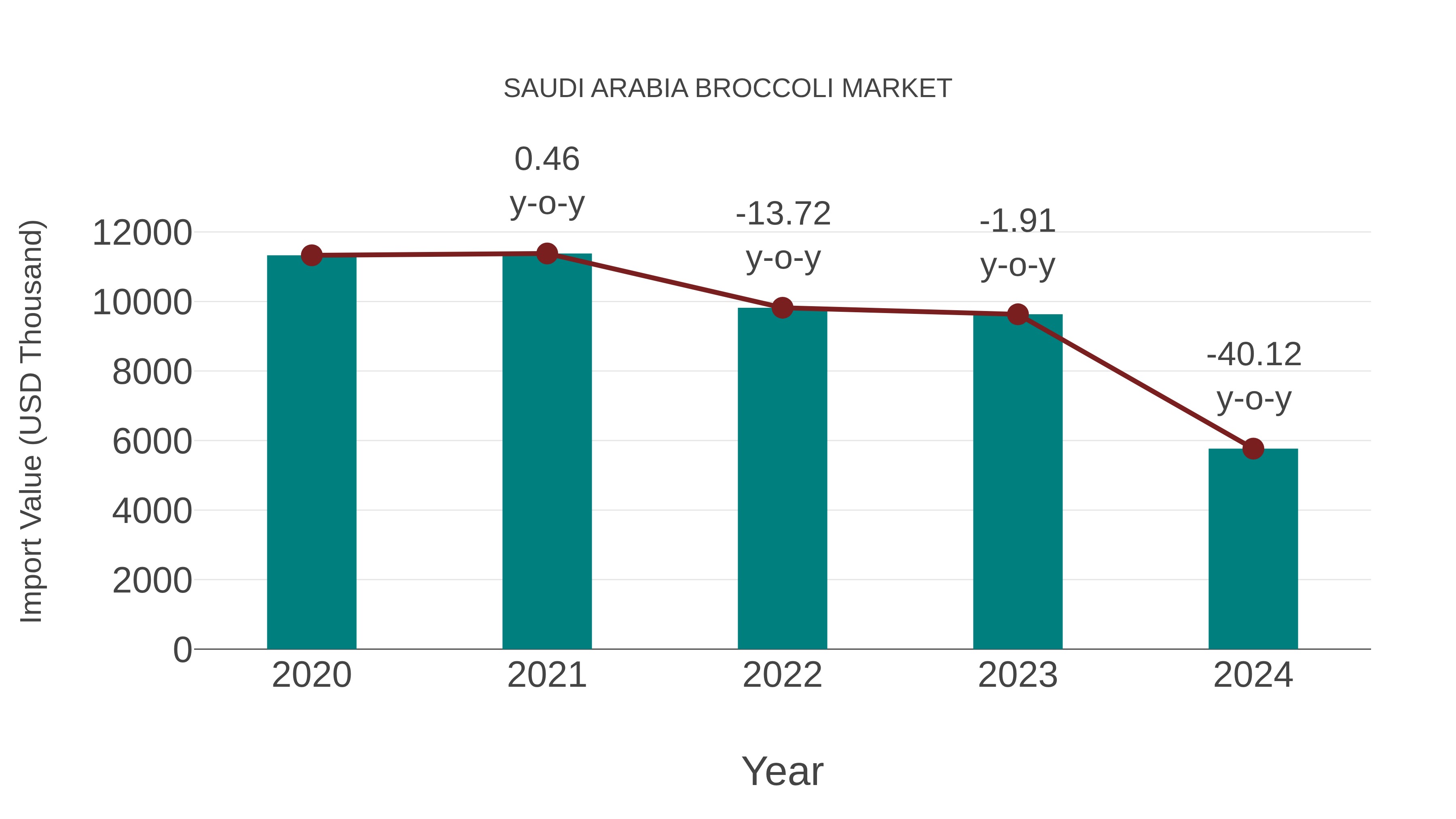
In the Saudi Arabia broccoli market, the import trend experienced a significant decline from 2023 to 2024, with a growth rate of -40.12%. The compound annual growth rate (CAGR) for the period 2020-2024 stood at -15.53%. This sharp decrease could be attributed to shifting consumer preferences, changes in trade policies, or market saturation affecting import momentum.
Saudi Arabia Broccoli Market Overview
The Saudi Arabia broccoli market is experiencing steady growth due to increasing health consciousness among consumers. Broccoli is becoming popular for its high nutritional value and health benefits, leading to a growing demand for fresh produce. The market is primarily driven by a rising awareness of the importance of a healthy diet, particularly among the urban population. Retail chains and supermarkets are key distribution channels for broccoli in the country. However, challenges such as limited local production and dependence on imports may affect market dynamics. Overall, the Saudi Arabia broccoli market is poised for further expansion as consumers continue to prioritize health and wellness in their food choices.
Saudi Arabia Broccoli Market Trends
In Saudi Arabia, the broccoli market is experiencing a growing demand due to increasing awareness of the health benefits associated with consuming cruciferous vegetables. Consumers are becoming more health-conscious and are seeking out nutrient-dense foods like broccoli. Additionally, there is a trend towards healthy eating and cooking at home, leading to higher broccoli sales in supermarkets and grocery stores. The foodservice industry is also incorporating broccoli into their menus to cater to health-conscious customers. With a focus on promoting a healthy lifestyle and diet, the Saudi Arabian broccoli market is expected to continue growing in the foreseeable future.
Saudi Arabia Broccoli Market Challenges
In the Saudi Arabia broccoli market, some of the key challenges faced include limited domestic production capacity, high reliance on imports, varying consumer preferences, and logistical constraints. The country`s climate and soil conditions are not particularly suitable for broccoli cultivation, leading to a heavy dependence on imports which can be affected by fluctuations in international prices and supply chain disruptions. Additionally, consumer preferences in Saudi Arabia are diverse, with some segments preferring traditional Middle Eastern vegetables over broccoli. This can make it challenging for producers and retailers to predict demand accurately. Furthermore, logistical challenges such as transportation and storage facilities can impact the quality and availability of broccoli in the market. Overall, navigating these challenges requires strategic planning, market research, and adaptation to changing consumer trends.
Saudi Arabia Broccoli Market Investment Opportunities
In the Saudi Arabia broccoli market, there are several investment opportunities for both domestic and international investors. With the growing health consciousness and increasing demand for nutritious food choices in the region, investing in broccoli cultivation and production facilities can be a lucrative option. Additionally, there is a potential for value-added products such as frozen broccoli, broccoli snacks, and ready-to-eat meals incorporating broccoli as a key ingredient to cater to the convenience-seeking consumer segment. Collaborating with local farmers to improve broccoli farming practices and introduce advanced technologies for cultivation can also be a promising investment avenue. Furthermore, establishing distribution channels and partnerships with supermarkets, grocery stores, and restaurants to supply fresh and processed broccoli products can help capitalize on the expanding market demand for this versatile and nutrient-rich vegetable.
Saudi Arabia Broccoli Market Government Policy
Government policies related to the Saudi Arabia broccoli market are aimed at promoting domestic agricultural production and reducing reliance on imports. The government offers subsidies and incentives to local farmers to increase broccoli cultivation and improve crop yields. Additionally, there are regulations in place to ensure the quality and safety of broccoli products in the market, with strict standards for pesticide use and food handling practices. Saudi Arabia also imposes import tariffs on broccoli to protect local producers and encourage self-sufficiency in agricultural production. Overall, government policies in Saudi Arabia aim to support the growth of the domestic broccoli market, enhance food security, and reduce dependency on imported vegetables.
Saudi Arabia Broccoli Market Future Outlook
The future outlook for the Saudi Arabia broccoli market is positive, driven by increasing consumer awareness of the health benefits associated with broccoli consumption. As more Saudi consumers are adopting healthier lifestyles and dietary habits, the demand for broccoli is expected to rise. Additionally, the government`s focus on promoting agricultural sustainability and reducing dependence on food imports is likely to boost domestic broccoli production. However, challenges such as water scarcity and limited arable land may hinder the market growth. Overall, with the growing health consciousness among consumers and government support for domestic agriculture, the Saudi Arabia broccoli market is projected to experience steady growth in the coming years.
Key Highlights of the Report:
- Saudi Arabia Broccoli Market Outlook
- Market Size of Saudi Arabia Broccoli Market,2025
- Forecast of Saudi Arabia Broccoli Market, 2032
- Historical Data and Forecast of Saudi Arabia Broccoli Revenues & Volume for the Period 2022-2032F
- Saudi Arabia Broccoli Market Trend Evolution
- Saudi Arabia Broccoli Market Drivers and Challenges
- Saudi Arabia Broccoli Price Trends
- Saudi Arabia Broccoli Porter's Five Forces
- Saudi Arabia Broccoli Industry Life Cycle
- Historical Data and Forecast of Saudi Arabia Broccoli Market Revenues & Volume By Product Type for the Period 2022-2032F
- Historical Data and Forecast of Saudi Arabia Broccoli Market Revenues & Volume By Fresh Broccoli for the Period 2022-2032F
- Historical Data and Forecast of Saudi Arabia Broccoli Market Revenues & Volume By Frozen Broccoli for the Period 2022-2032F
- Historical Data and Forecast of Saudi Arabia Broccoli Market Revenues & Volume By Organic Broccoli for the Period 2022-2032F
- Historical Data and Forecast of Saudi Arabia Broccoli Market Revenues & Volume By Broccoli Extracts for the Period 2022-2032F
- Historical Data and Forecast of Saudi Arabia Broccoli Market Revenues & Volume By Form for the Period 2022-2032F
- Historical Data and Forecast of Saudi Arabia Broccoli Market Revenues & Volume By Whole for the Period 2022-2032F
- Historical Data and Forecast of Saudi Arabia Broccoli Market Revenues & Volume By Florets for the Period 2022-2032F
- Historical Data and Forecast of Saudi Arabia Broccoli Market Revenues & Volume By Chemical-Free for the Period 2022-2032F
- Historical Data and Forecast of Saudi Arabia Broccoli Market Revenues & Volume By Powder for the Period 2022-2032F
- Historical Data and Forecast of Saudi Arabia Broccoli Market Revenues & Volume By Chopped for the Period 2022-2032F
- Historical Data and Forecast of Saudi Arabia Broccoli Market Revenues & Volume By Puree for the Period 2022-2032F
- Historical Data and Forecast of Saudi Arabia Broccoli Market Revenues & Volume By Capsules for the Period 2022-2032F
- Historical Data and Forecast of Saudi Arabia Broccoli Market Revenues & Volume By Application for the Period 2022-2032F
- Historical Data and Forecast of Saudi Arabia Broccoli Market Revenues & Volume By Culinary Use for the Period 2022-2032F
- Historical Data and Forecast of Saudi Arabia Broccoli Market Revenues & Volume By Processed Foods for the Period 2022-2032F
- Historical Data and Forecast of Saudi Arabia Broccoli Market Revenues & Volume By Health-Conscious Diet for the Period 2022-2032F
- Historical Data and Forecast of Saudi Arabia Broccoli Market Revenues & Volume By Nutritional Supplements for the Period 2022-2032F
- Historical Data and Forecast of Saudi Arabia Broccoli Market Revenues & Volume By End User for the Period 2022-2032F
- Historical Data and Forecast of Saudi Arabia Broccoli Market Revenues & Volume By Households & Restaurants for the Period 2022-2032F
- Historical Data and Forecast of Saudi Arabia Broccoli Market Revenues & Volume By Food Manufacturers for the Period 2022-2032F
- Historical Data and Forecast of Saudi Arabia Broccoli Market Revenues & Volume By Retail & Supermarkets for the Period 2022-2032F
- Historical Data and Forecast of Saudi Arabia Broccoli Market Revenues & Volume By Pharma & Cosmetics for the Period 2022-2032F
- Saudi Arabia Broccoli Import Export Trade Statistics
- Market Opportunity Assessment By Product Type
- Market Opportunity Assessment By Form
- Market Opportunity Assessment By Application
- Market Opportunity Assessment By End User
- Saudi Arabia Broccoli Top Companies Market Share
- Saudi Arabia Broccoli Competitive Benchmarking By Technical and Operational Parameters
- Saudi Arabia Broccoli Company Profiles
- Saudi Arabia Broccoli Key Strategic Recommendations






































