Saudi Arabia Hexane Market: Import Trend Analysis
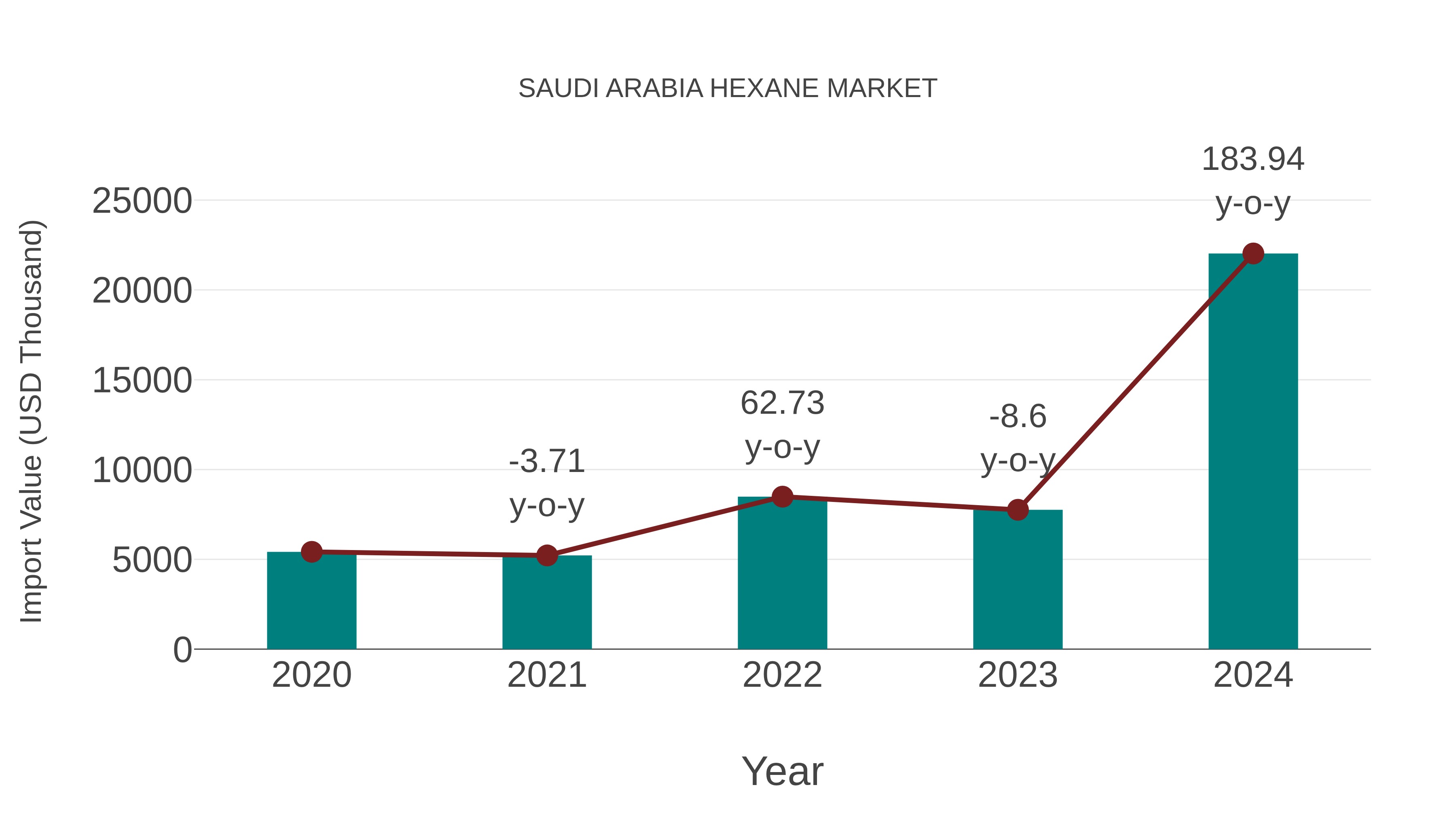
In the Saudi Arabia hexane market, the import trend exhibited significant growth from 2023 to 2024, with a notable increase of 183.94%. The compound annual growth rate (CAGR) for the period from 2020 to 2024 stood at 42.01%. This surge in imports can be attributed to a combination of factors, including shifts in demand dynamics and evolving trade policies.
Saudi Arabia Hexane Market Overview
Hexane is a versatile chemical solvent used in various industries, including food processing and pharmaceuticals. This market encompasses hexane products utilized in extraction processes and as a cleaning solvent in manufacturing.
Drivers of the Market
The Saudi Arabia Hexane market is on the rise due to hexane`s applications in the food industry for oil extraction and as a solvent in various processes. Hexane is considered an environmentally friendly solvent. The growth is fueled by the demand for safe and food-grade solvents, aligning with Saudi Arabia commitment to high-quality food production and safety standards.
Challenges of the Market
The hexane market in Saudi Arabia faces hurdles related to sustainability, product diversification, and market demand. Overcoming challenges associated with sustainable production methods, diversifying product applications, and meeting evolving market demands remain significant hurdles. Additionally, addressing environmental concerns and ensuring consistent quality standards pose challenges for market expansion.
COVID-19 Impact on the Market
The COVID-19 pandemic accelerated the adoption of the services in Saudi Arabia as organizations. With a growing need for data protection, businesses sought to secure their data center infrastructure. The crisis highlighted the importance of data center security.
Key Players in the Market
Prominent companies in the Saudi Arabia hexane market include Royal Dutch Shell, ExxonMobil, and Phillips 66, supplying hexane for various industrial applications, including solvent extraction.
Key Highlights of the Report:
- Saudi Arabia Hexane Market Outlook
- Market Size of Saudi Arabia Hexane Market, 2025
- Forecast of Saudi Arabia Hexane Market, 2032
- Historical Data and Forecast of Saudi Arabia Hexane Revenues & Volume for the Period 2022-2032F
- Saudi Arabia Hexane Market Trend Evolution
- Saudi Arabia Hexane Market Drivers and Challenges
- Saudi Arabia Hexane Price Trends
- Saudi Arabia Hexane Porter's Five Forces
- Saudi Arabia Hexane Industry Life Cycle
- Historical Data and Forecast of Saudi Arabia Hexane Market Revenues & Volume By Grade for the Period 2022-2032F
- Historical Data and Forecast of Saudi Arabia Hexane Market Revenues & Volume By Oil Extraction/Food for the Period 2022-2032F
- Historical Data and Forecast of Saudi Arabia Hexane Market Revenues & Volume By Pharmaceutical for the Period 2022-2032F
- Historical Data and Forecast of Saudi Arabia Hexane Market Revenues & Volume By Industrial for the Period 2022-2032F
- Historical Data and Forecast of Saudi Arabia Hexane Market Revenues & Volume By Application for the Period 2022-2032F
- Historical Data and Forecast of Saudi Arabia Hexane Market Revenues & Volume By Oil Extraction for the Period 2022-2032F
- Historical Data and Forecast of Saudi Arabia Hexane Market Revenues & Volume By Pharmaceutical for the Period 2022-2032F
- Historical Data and Forecast of Saudi Arabia Hexane Market Revenues & Volume By Industrial Cleaning for the Period 2022-2032F
- Historical Data and Forecast of Saudi Arabia Hexane Market Revenues & Volume By Degreasing for the Period 2022-2032F
- Historical Data and Forecast of Saudi Arabia Hexane Market Revenues & Volume By Polymerization for the Period 2022-2032F
- Saudi Arabia Hexane Import Export Trade Statistics
- Market Opportunity Assessment By Grade
- Market Opportunity Assessment By Application
- Saudi Arabia Hexane Top Companies Market Share
- Saudi Arabia Hexane Competitive Benchmarking By Technical and Operational Parameters
- Saudi Arabia Hexane Company Profiles
- Saudi Arabia Hexane Key Strategic Recommendations






































