Saudi Arabia Soft Drinks Market: Import Trend Analysis
In 2024, Saudi Arabia`s soft drinks market witnessed a notable increase in imports, driven by rising consumer demand for a variety of beverages. The market`s import trend reflected a growing preference for international soft drink brands, contributing to the market`s overall expansion.
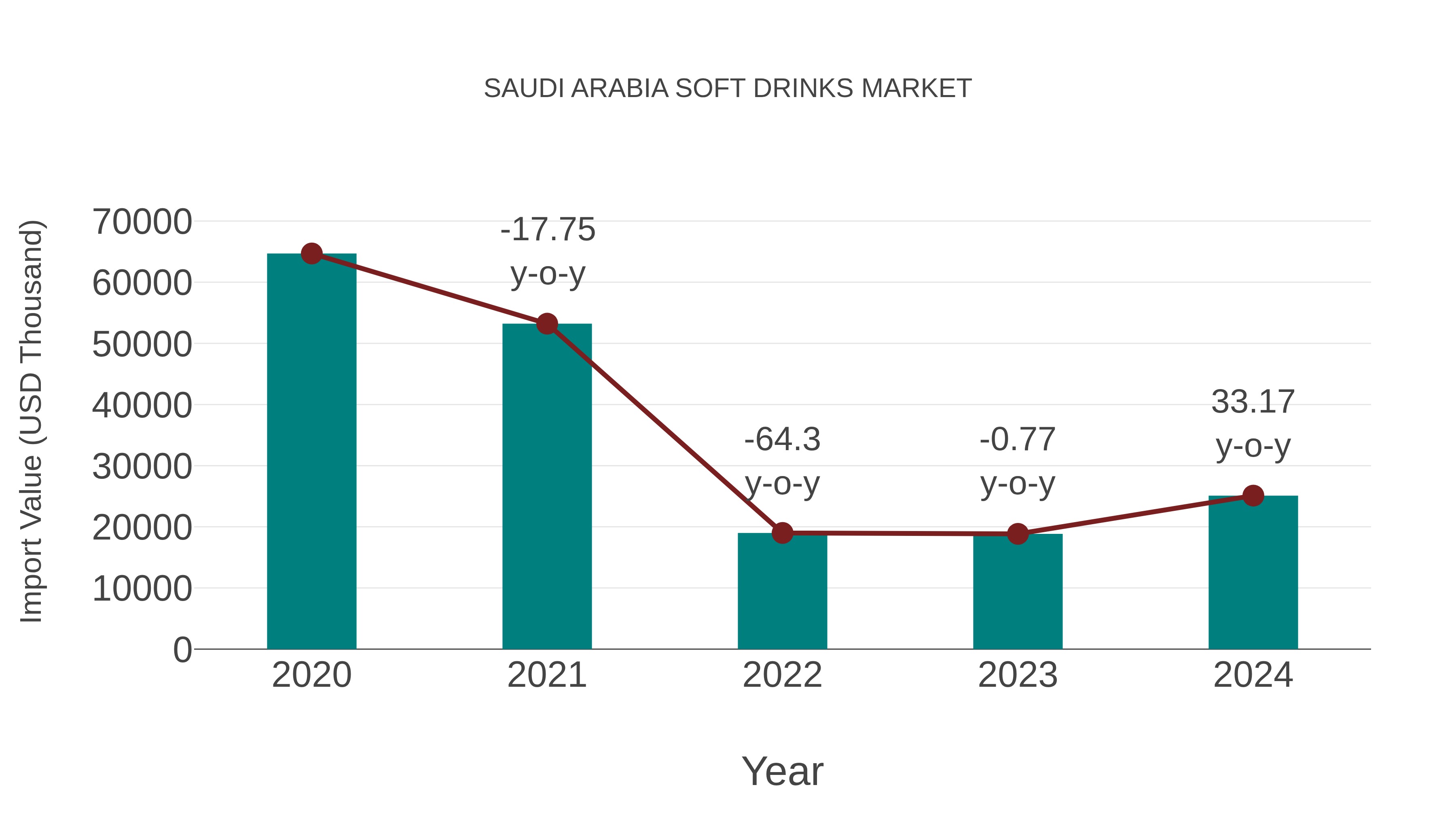
Saudi Arabia Soft Drinks Market Growth Rate
According to 6Wresearch internal database and industry insights, the Saudi Arabia Soft Drinks Market is projected to grow at a compound annual growth rate (CAGR) of 6.3% during the forecast period from 2026 to 2032.
Five-Year Growth Trajectory of the Saudi Arabia Soft Drinks Market with Core Drivers
Below mentioned are the evaluation of year-wise growth rate along with key drivers:
| Year | Est. Annual Growth (%) | Growth Drivers |
| 2021 | 480.00% | Increasing spending by consumer and the increase in disposable income. |
| 2022 | 500.00% | High demand for healthier beverage options and non-carbonated drinks. |
| 2023 | 520.00% | Expanding sales networks and government policies that supports production of local beverage. |
| 2024 | 530.00% | Innovations in product and growing awareness of beverage health benefits. |
| 2025 | 550.00% | Expansion of online platforms and increase in demand for energy and sports drinks. |
Topics Covered in the Saudi Arabia Soft Drinks Market Report
The Saudi Arabia Soft Drinks Market report thoroughly covers the market by product type and distribution channel. It provides an unbiased and detailed analysis of ongoing market trends, opportunities, challenges, and market drivers, helping stakeholders align their strategies with current and future market dynamics.
Saudi Arabia Soft Drinks Market Highlights
| Report Name | Saudi Arabia Soft Drinks Market |
| Forecast Period | 2026–2032 |
| CAGR | 6.30% |
| Growing Sector | Beverages & Soft Drinks |
Saudi Arabia Soft Drinks Market Synopsis
Saudi Arabia Soft Drinks Market is expected to experience major growth as it is driven by the increase in consumer spending, demand for healthier options, and expansion of better sales networks. Government policies such as promoting local beverage manufacturing and supporting beverage industry infrastructure are also expected to increase the demand in the market. As consumer behaviour moves towards healthier drink options, the market is likely to see a surge in demand for functional and organic beverages. The high demand for non-carbonated drinks, particularly fruit juices, is one of the main contributors to Saudi Arabia Soft Drinks Market Growth.
Evaluation of Growth Drivers in the Saudi Arabia Soft Drinks Market
Below mentioned are some prominent drivers and their impact on the Saudi Arabia Soft Drinks Market dynamics:
| Drivers | Primary Segment Affected | Why It Matters (Evidence) |
| Increasing Disposable Income | All Segments | With the increase in disposable income, consumers now have a greater ability to purchase premium and healthier drink options. |
| Government Policies | Local Beverage Manufacturers | Saudi Arabian government also supports local beverage production by subsidies and tax incentives which reduces dependency on imports. |
| Health Consciousness | Non-carbonated Drinks | Growing demand for beverages which are healthier, such as fruit juices and organic drinks, is increasing the demand of sugary sodas. |
| Retail Expansion | All Segments | High number of retail outlets such as supermarkets, hypermarkets, and online platforms will make soft drinks more accessible to a larger population. |
| Innovation in Product Offerings | Carbonated and Non-carbonated Drinks | Launch of new flavours and low-sugar options will likely to attracts more health-conscious consumers and increase demand in the market. |
Saudi Arabia Soft Drinks Market is projected to grow at a CAGR of 6.3% from 2026 to 2032. Some important factors for this growth are high disposable income, growing awareness about health in consumers, and a major shift toward healthier beverage options. The demand for non-carbonated drinks in younger consumers, is increasing the demand in the market, with a rising demand for low-sugar, sugar-free, and functional beverages. Government policies such as subsidies for local manufacturing and health campaigns promoting less consumption of sugar, are also expected to support expansion in this market. Due to rise in e-commerce, digital sales platforms is offering better convenience and improving distribution channels which is increasing the sales of soft drinks in the country.
Evaluation of Restraints in the Saudi Arabia Soft Drinks Market
Below mentioned are some major restraints and their influence on the Saudi Arabia Soft Drinks Market dynamics:
| Restraints | Primary Segment Affected | What This Means (Evidence) |
| High Sugar Content in Carbonated Drinks | Carbonated Drinks | Increased knowledge about the health risks of excessive sugar may lead to reduced demand for some sodas. |
| Stringent Regulatory Requirements | All Segments | Regulatory laws and approvals for new products may slow down innovations in the market and the introduction of new products. |
| Health Trends Impacting Consumption | Carbonated Drinks | Growing awareness about obesity and diabetes also likely to reduce the demand for sugary soft drinks in younger consumers. |
| Economic Fluctuations | All Segments | Economic difficulties could also reduce spending of consumer especially in premium and imported beverage. |
| Environmental Concerns Over Packaging | All Segments | Increased concerns about plastic waste and non-eco-friendly packaging materials could force companies to use eco-friendly solutions. |
Saudi Arabia Soft Drinks Market Challenges
Saudi Arabia Soft Drinks Market faces many challenges such as the growing health concerns regarding sugary beverages, environmental sustainability in packaging, and changing consumer damage. The government's supportive policies and infrastructure development are expected to increase these challenges over time. The new innovation in healthier beverage options like organic juices and low-sugar drinks will help in overcoming some of these obstacles. The market must navigate the increasing competition from global brands which offers healthier and better alternatives and the need to change according to changing consumer demand.
Saudi Arabia Soft Drinks Market Trends
Major trends that are changing the Saudi Arabia Soft Drinks Market dynamics include:
- Healthier Beverage Options: Major demand of beverages that are low in sugar, organic, or fortified with additional nutrients.
- Sustainability in Packaging: New trend of using eco-friendly packaging solutions to reduce environmental concerns such as biodegradable bottles.
- E-commerce Growth: New online retail platforms for soft drink sales is becoming more popular which offers better delivery services to customers.
- Customization of Flavors: Beverage companies are focusing more on selling unique and exotic flavours to fulfil consumer demand.
- Functional Beverages: High demand for energy drinks, sports drinks, and other functional beverages that fulfil specific health benefits such as hydration.
Major Investment Opportunities in the Saudi Arabia Soft Drinks Industry
Some new investment opportunities in the Saudi Arabia Soft Drinks Industry are:
- Online and Digital Platforms: Investment in e-commerce platforms and digital sales channels is a new opportunity which allows brands to connect directly with consumers.
- Health-Conscious Product Development: Investing in the development of better organic, low-sugar, and functional beverages.
- Local Manufacturing Expansion: Expanding local soft drink manufacturing will reduce the country’s dependency on imported goods and create better growth opportunities.
- Eco-Friendly Packaging Solutions: Investing in new eco-friendly packaging technologies and materials to fulfil growing demand of consumer.
- Collaborations with International Brands: Partnerships with global beverage companies to introduce premium or better drinks in the Saudi market.
Top 5 Leading Players in the Saudi Arabia Soft Drinks Market
Below is the list of prominent companies leading in the Saudi Arabia Soft Drinks Market:
1. The Coca-Cola Company
| Company Name | The Coca-Cola Company |
| Established Year | 1892 |
| Headquarters | Atlanta, Georgia, USA |
| Official Website | Click Here |
Coca-Cola is one of the largest and most recognized soft drink companies globally, offering a wide range of carbonated and non-carbonated beverages, including juices and energy drinks. They have a strong presence in Saudi Arabia and continue to innovate in product offerings, focusing on low-sugar and healthier beverage alternatives.
2. PepsiCo, Inc.
| Company Name | PepsiCo, Inc. |
| Established Year | 1965 |
| Headquarters | Purchase, New York, USA |
| Official Website | Click Here |
PepsiCo offers a diverse range of beverages including carbonated sodas, juices, and bottled water. The company's product innovation in low-calorie and energy drinks has enabled it to maintain a strong market position in Saudi Arabia.
3. Nestlé S.A.
| Company Name | Nestlé S.A. |
| Established Year | 1905 |
| Headquarters | Vevey, Switzerland |
| Official Website | Click Here |
Nestlé’s extensive portfolio includes a variety of non-carbonated drinks such as bottled water, juices, and iced teas. The company is focusing on healthier drink options in line with global health trends, and its presence in Saudi Arabia is growing through its diverse product offerings.
4. Almarai Company
| Company Name | Almarai Company |
| Established Year | 1977 |
| Headquarters | Riyadh, Saudi Arabia |
| Official Website | Click Here |
Almarai is a leading local manufacturer of dairy and beverages in Saudi Arabia, including fruit juices, flavored water, and carbonated drinks. The company's strong distribution network and local production facilities give it a competitive edge in the Saudi market.
5. Sadafco (Saudia Dairy and Foodstuff Company)
| Company Name | Sadafco (Saudia Dairy and Foodstuff Company) |
| Established Year | 1976 |
| Headquarters | Jeddah, Saudi Arabia |
| Official Website | Click Here |
Sadafco is another prominent player in the Saudi soft drink market, offering a wide range of beverages including fruit juices, carbonated soft drinks, and bottled water. The company is known for its commitment to local manufacturing and product innovation.
Government Regulations Introduced in the Saudi Arabia Soft Drinks Market
According to Saudi Arabia’s Government data, they have started many key policies to develop its beverage sector. The Saudi Food and Drug Authority (SFDA) regulate food and beverage products and ensures that they meet health and safety standards. The government also encourages the use of local production facilities by providing tax incentives for local manufacturers. To reduce health these concerns, new rules are started to reduce the sugar content in soft drinks, with the introduction of taxes on sugary beverages.
Future Insights of the Saudi Arabia Soft Drinks Market
Saudi Arabia Soft Drinks Market is expected to have continued growth as it is driven by increased disposable income of consumers, the high popularity of non-carbonated beverages, and government policies that are supporting local manufacturing. The market will likely to benefit from expanding e-commerce platforms, as well as the high consumer change towards healthier beverage options. New innovations in product formulations, especially in functional beverages, are expected to create better opportunities for growth of this industry.
Market Segmentation Analysis
The report offers a comprehensive study of the following market segments and their leading categories:
By Product - Carbonated Drinks to dominate the market
According to Lakshita, Senior Research Analyst, 6Wresearch, Carbonated Drinks dominate the Saudi Arabia Soft Drinks Market Share due to their high popularity and strong consumer demand, particularly in the youth segment. Despite a change towards healthier options, carbonated drinks still remain a staple in the Saudi beverage market.
By Distribution Channel - Hypermarkets and Supermarkets to dominate the market
Hypermarkets and Supermarkets lead the distribution channel segment as it is driven by their wide reach and convenience for consumers. Online platforms are also becoming more popular as digital shopping trends increases.
Key Attractiveness of the Report
- 10 Years of Market Numbers
- Historical Data Starting from 2022 to 2025
- Base Year: 2025
- Forecast Data until 2032
- Key Performance Indicators Impacting the Market
- Major Upcoming Developments and Projects
Key Highlights of the Report:
- Saudi Arabia Soft Drinks Market Outlook
- Market Size of Saudi Arabia Soft Drinks Market, 2025
- Forecast of Saudi Arabia Soft Drinks Market, 2032
- Historical Data and Forecast of Saudi Arabia Soft Drinks Revenues & Volume for the Period 2022- 2032F
- Saudi Arabia Soft Drinks Market Trend Evolution
- Saudi Arabia Soft Drinks Market Drivers and Challenges
- Saudi Arabia Soft Drinks Price Trends
- Saudi Arabia Soft Drinks Porter's Five Forces
- Saudi Arabia Soft Drinks Industry Life Cycle
- Historical Data and Forecast of Saudi Arabia Soft Drinks Market Revenues & Volume By Product for the Period 2022- 2032F
- Historical Data and Forecast of Saudi Arabia Soft Drinks Market Revenues & Volume By Carbonated for the Period 2022- 2032F
- Historical Data and Forecast of Saudi Arabia Soft Drinks Market Revenues & Volume By Non-Carbonated for the Period 2022- 2032F
- Historical Data and Forecast of Saudi Arabia Soft Drinks Market Revenues & Volume By Distribution Channel for the Period 2022- 2032F
- Historical Data and Forecast of Saudi Arabia Soft Drinks Market Revenues & Volume By Hypermarkets and Supermarkets for the Period 2022- 2032F
- Historical Data and Forecast of Saudi Arabia Soft Drinks Market Revenues & Volume By Convenience Store for the Period 2022- 2032F
- Historical Data and Forecast of Saudi Arabia Soft Drinks Market Revenues & Volume By Online for the Period 2022- 2032F
- Historical Data and Forecast of Saudi Arabia Soft Drinks Market Revenues & Volume By Others for the Period 2022- 2032F
- Saudi Arabia Soft Drinks Import Export Trade Statistics
- Market Opportunity Assessment By Product
- Market Opportunity Assessment By Distribution Channel
- Saudi Arabia Soft Drinks Top Companies Market Share
- Saudi Arabia Soft Drinks Competitive Benchmarking By Technical and Operational Parameters
- Saudi Arabia Soft Drinks Company Profiles
- Saudi Arabia Soft Drinks Key Strategic Recommendations
Market Covered
The report offers a comprehensive study of the following Saudi Arabia Soft Drinks Market segments:
By Product
- Carbonated
- Non-Carbonated
By Distribution Channel
- Hypermarkets and Supermarkets
- Convenience Store
- Online
- Others






































