Seychelles Confectionery Market Growth Rate Analysis (2025 - 2031)
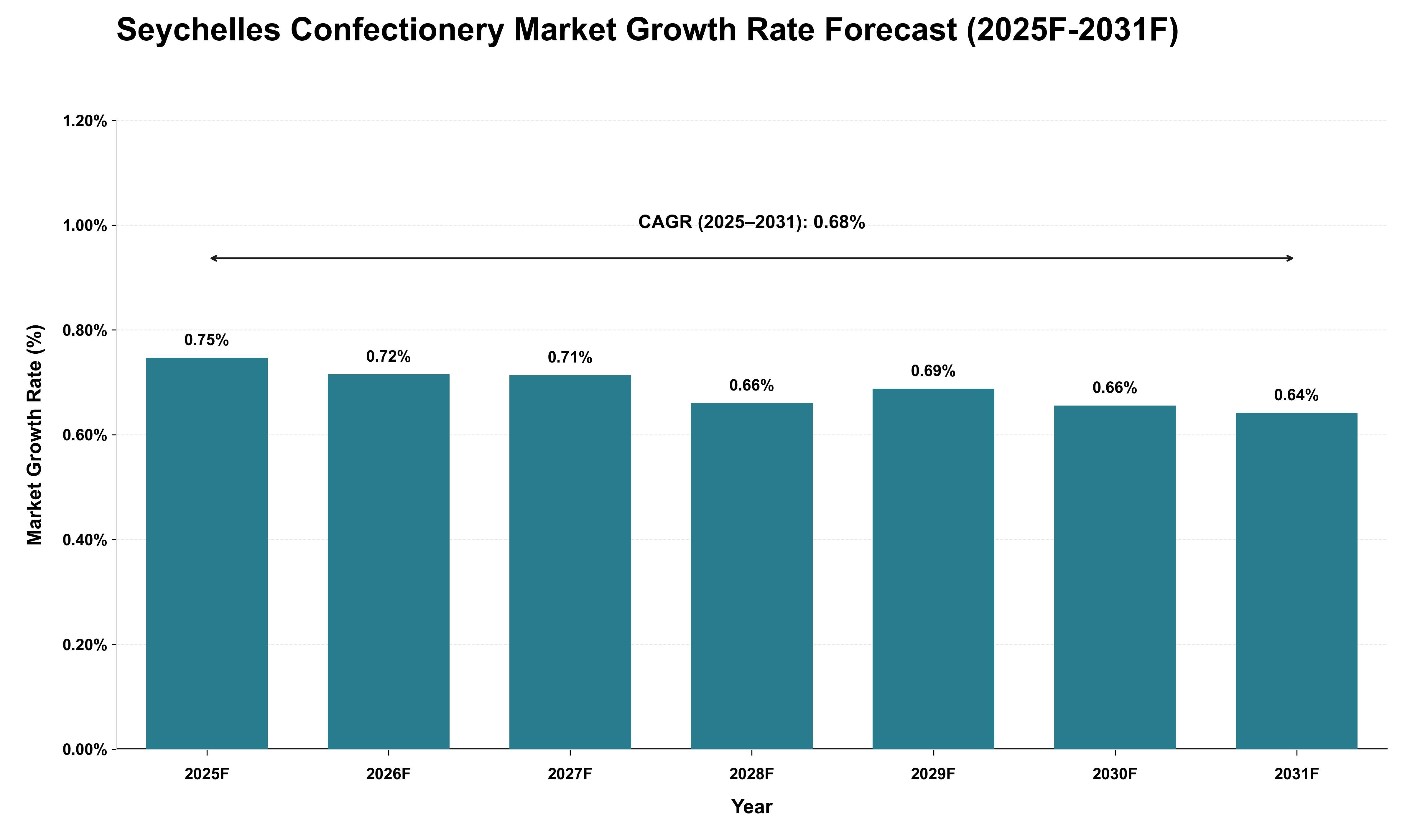
The Seychelles confectionery market will experience a gradual growth trajectory from 2025 to 2031, with an overall CAGR of 0.68%. This modest expansion will be influenced by several macroeconomic factors, particularly the dynamics of supply chain logistics and input costs. As global commodity prices fluctuate, the confectionery sector will face varying costs for raw materials such as sugar and cocoa, which are heavily reliant on international supply chains. Additionally, import dependencies will play a critical role; any disruptions in trade routes or changes in tariffs could further impact pricing structures and availability of key ingredients. The annual growth rates indicate a slight decline over the forecast period, reflecting potential challenges in consumer spending patterns and competition from alternative snack options. Consequently, manufacturers may need to adapt their sourcing strategies to mitigate cost pressures while maintaining product quality to sustain consumer interest.
Key Highlights of the Report:
- Seychelles Confectionery Market Outlook
- Market Size of Seychelles Confectionery Market, 2024
- Forecast of Seychelles Confectionery Market, 2031
- Historical Data and Forecast of Seychelles Confectionery Revenues & Volume for the Period 2021-2031
- Seychelles Confectionery Market Trend Evolution
- Seychelles Confectionery Market Drivers and Challenges
- Seychelles Confectionery Price Trends
- Seychelles Confectionery Porter`s Five Forces
- Seychelles Confectionery Industry Life Cycle
- Historical Data and Forecast of Seychelles Confectionery Market Revenues & Volume By Type for the Period 2021-2031
- Historical Data and Forecast of Seychelles Confectionery Market Revenues & Volume By Sugar for the Period 2021-2031
- Historical Data and Forecast of Seychelles Confectionery Market Revenues & Volume By Chocolate for the Period 2021-2031
- Historical Data and Forecast of Seychelles Confectionery Market Revenues & Volume By Fine Bakery Wares for the Period 2021-2031
- Historical Data and Forecast of Seychelles Confectionery Market Revenues & Volume By Others for the Period 2021-2031
- Historical Data and Forecast of Seychelles Confectionery Market Revenues & Volume By Distribution Channel for the Period 2021-2031
- Historical Data and Forecast of Seychelles Confectionery Market Revenues & Volume By Supermarket/Hypermarket for the Period 2021-2031
- Historical Data and Forecast of Seychelles Confectionery Market Revenues & Volume By Specialist Retailers for the Period 2021-2031
- Historical Data and Forecast of Seychelles Confectionery Market Revenues & Volume By Online Retail Stores for the Period 2021-2031
- Historical Data and Forecast of Seychelles Confectionery Market Revenues & Volume By Convenience Stores for the Period 2021-2031
- Historical Data and Forecast of Seychelles Confectionery Market Revenues & Volume By Other Distribution Channels for the Period 2021-2031
- Seychelles Confectionery Import Export Trade Statistics
- Market Opportunity Assessment By Type
- Market Opportunity Assessment By Distribution Channel
- Seychelles Confectionery Top Companies Market Share
- Seychelles Confectionery Competitive Benchmarking By Technical and Operational Parameters
- Seychelles Confectionery Company Profiles
- Seychelles Confectionery Key Strategic Recommendations






































