Singapore Algorithmic Trading Market Size & Growth Rate (2026-2032)
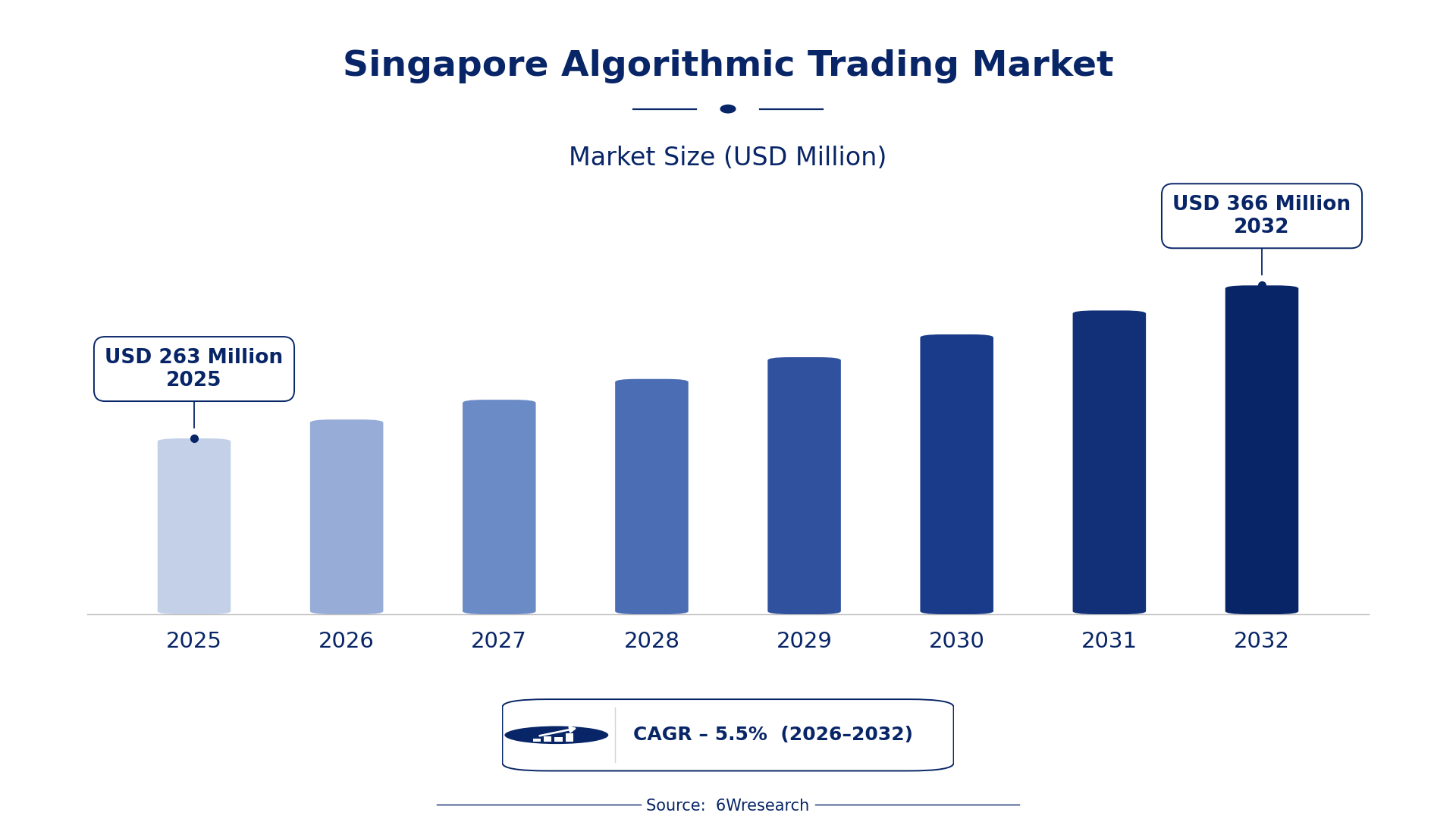
The Singapore Algorithmic Trading Market was estimated at USD 263 Million in 2025 and is projected to reach USD 366 Million by 2032, growing at a CAGR of 5.5% from 2026 to 2032.
Singapore Algorithmic Trading Market Synopsis
The Singapore Algorithmic Trading Market is currently experiencing rapid growth as financial institutions increasingly adopt algorithmic trading strategies. This shift is largely driven by the need for enhanced efficiency and precision in trade execution. With Singapore positioned as a prominent financial hub in the Asia-Pacific region, the demand for algorithmic solutions is expected to soar in the coming years.
Market participants are leveraging advanced algorithms to minimize risks and streamline trading processes. As competition intensifies, the role of technology in trading strategies becomes more pronounced, setting the stage for further innovations in algorithmic trading practices across Singapore's financial markets.
Singapore Algorithmic Trading Market Year-wise Growth Rate and Key Drivers
This graph illustrates the annual growth rates of the Singapore Algorithmic Trading Market from 2021 to 2032, highlighting a steady upward trajectory and projected expansion over the forecast period.
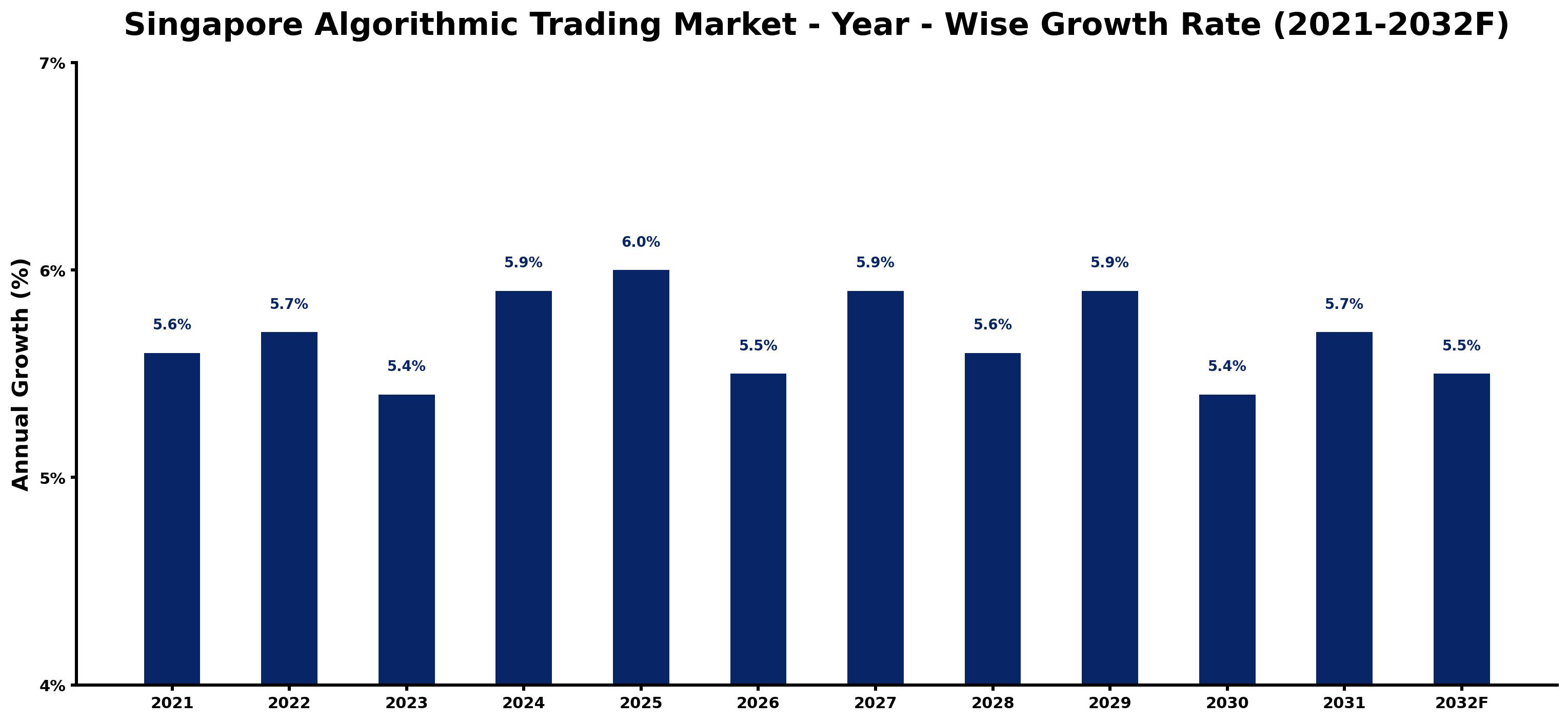
The table below presents the year‑wise growth rates along with the key drivers influencing the market
| Year | Growth Rate | Major Drivers |
| 2021 | 5.6% | Monetary Authority's fintech initiatives boost algorithmic trading adoption. |
| 2022 | 5.7% | Increased demand for quantitative strategies among local funds. |
| 2023 | 5.4% | Growing fintech ecosystem encourages innovative trading solutions. |
| 2024 | 5.9% | Launch of advanced trading platforms enhances market liquidity. |
| 2025 | 6.0% | Regulatory support for AI in trading algorithms accelerates growth. |
| 2026 | 5.5% | Surge in high-frequency trading firms entering market drives demand. |
| 2027 | 5.9% | Rise of retail investors utilizing algorithmic trading tools. |
| 2028 | 5.6% | Strong educational programs on trading technology attract talent. |
| 2029 | 5.9% | Increasing partnerships between banks and tech firms enhance offerings. |
| 2030 | 5.4% | Global market volatility accelerates interest in automated strategies. |
| 2031 | 5.7% | Sustained economic growth promotes investment in tech-driven trading. |
| 2032 | 5.5% | Enhanced cybersecurity regulations increase trust in algorithmic solutions. |
Note: Market size estimations and growth projections presented in this report are based on 6Wresearch's proprietary forecasting methodology, utilizing the latest available industry data, government publications, and primary research inputs.
Singapore Algorithmic Trading Market Key Takeaways
Below are some of the specific key takeaways from the market, including:
- Growing adoption of algorithmic trading strategies among financial institutions.
- Increased focus on optimizing trade execution and minimizing human errors.
- Ongoing advancements in technology are reshaping trading efficiency.
- Heightened regulatory scrutiny affecting algorithmic trading practices.
- Market volatility during the COVID-19 pandemic accelerated algorithmic trading reliance.
Evaluation of Restraints in Singapore Algorithmic Trading Market
While the Singapore Algorithmic Trading Market is on an upward trajectory, it faces several notable restraints. Achieving low-latency and high-frequency trading capabilities presents significant technical challenges. Financial institutions must also navigate a complex regulatory environment that seeks to ensure market stability while promoting innovation. on top of that, adapting algorithmic trading systems to keep pace with rapid market changes is a demanding task that requires continuous investment in technology and expertise.
Singapore Algorithmic Trading Market Trends
Several trends are shaping the Singapore Algorithmic Trading Market, with a marked increase in the use of machine learning and artificial intelligence to enhance trading strategies. Financial institutions are increasingly investing in sophisticated data analytics tools to improve decision-making processes. Additionally, the integration of blockchain technology into trading operations is gaining traction, promising greater transparency and security in transactions. The rising importance of ESG (Environmental, Social, and Governance) factors in investment strategies is also influencing algorithmic trading algorithms, reflecting a shift towards more sustainable trading practices.
Singapore Algorithmic Trading Market Opportunities
The market is brimming with opportunities for growth, particularly in technology-driven trading solutions. There is a clear demand for tailored algorithmic trading platforms that cater to specific market needs, which presents a ripe opportunity for innovation. As financial institutions seek competitive advantages, partnerships with technology providers can facilitate the development of cutting-edge trading systems. on top of that, the expansion of retail trading platforms offers a new avenue for algorithmic strategies, as individual traders increasingly look to leverage technology for improved trading outcomes.
Government Initiatives in the Singapore Algorithmic Trading Market
The Singapore government actively shapes the Algorithmic Trading Market through various regulatory and support initiatives aimed at fostering innovation while ensuring market integrity. With a strong focus on enhancing the financial sector's technological capabilities, policies are designed to facilitate the adoption of advanced trading technologies while addressing potential risks associated with algorithmic trading.
- A regulatory framework introduced in 2025 mandating transparency in algorithmic trading practices.
- Ongoing initiatives to promote fintech development, including grants for technology adoption in trading.
- A national digital infrastructure upgrade programme now in its rollout phase, aimed at enhancing trading speed and security.
- Planned public-private partnerships expected to boost research and development in algorithmic trading technologies by 2028.
- Current consultations regarding algorithmic trading regulations to ensure market stability and protect investors.
Future Insights of the Singapore Algorithmic Trading Market
Looking ahead to 2026-2032, the Singapore Algorithmic Trading Market is set for substantial transformation driven by technological advancements and evolving market demands. As financial institutions continue to prioritize efficiency and risk management, the reliance on sophisticated algorithms will deepen. The ongoing integration of AI and machine learning into trading strategies will likely enhance predictive capabilities and responsiveness. Additionally, regulatory developments will shape how these technologies are deployed, ensuring that innovation aligns with market stability and investor protection.
Singapore Algorithmic Trading Market Latest Developments
In the last year, the Singapore Algorithmic Trading Market has witnessed a flurry of activity, with financial institutions investing heavily in algorithmic solutions to adapt to changing market dynamics. The emphasis on efficiency has led to several notable advancements and collaborations within the sector.
- A major technology vendor launched a new algorithmic trading platform in late 2025, aimed at enhancing execution speed and user experience.
- An initiative that began in early 2025 and remains underway focuses on integrating AI-driven analytics into existing trading systems for improved performance.
- Partnerships between financial institutions and tech startups have been announced, with projects expected to deliver innovative trading solutions by mid-2026.
- Ongoing enhancements to compliance frameworks are being developed to address the increasing scrutiny of algorithmic trading practices.
- A rollout expected to begin in Q3 2026 aims to expand the use of blockchain technology in trading operations for greater transparency.
Singapore Algorithmic Trading Market - Key Attractiveness of the Report
- 10 Years of Market Numbers
- Historical Data Starting from 2022 to 2025
- Base Year: 2025
- Forecast Data until 2032
- Key Performance Indicators Impacting the Market
- Major Upcoming Developments and Projects
Key Highlights of the Report:
- Singapore Algorithmic Trading Market Outlook
- Market Size of Singapore Algorithmic Trading Market, 2025
- Forecast of Singapore Algorithmic Trading Market, 2032
- Historical Data and Forecast of Singapore Algorithmic Trading Revenues & Volume for the Period 2022-2032F
- Singapore Algorithmic Trading Market Trend Evolution
- Singapore Algorithmic Trading Market Drivers and Challenges
- Singapore Algorithmic Trading Price Trends
- Singapore Algorithmic Trading Porter's Five Forces
- Singapore Algorithmic Trading Industry Life Cycle
- Historical Data and Forecast of Singapore Algorithmic Trading Market Revenues & Volume By Trading Type for the Period 2022-2032F
- Historical Data and Forecast of Singapore Algorithmic Trading Market Revenues & Volume By Foreign Exchange (FOREX) for the Period 2022-2032F
- Historical Data and Forecast of Singapore Algorithmic Trading Market Revenues & Volume By Stock Markets for the Period 2022-2032F
- Historical Data and Forecast of Singapore Algorithmic Trading Market Revenues & Volume By Exchange-Traded Fund (ETF) for the Period 2022-2032F
- Historical Data and Forecast of Singapore Algorithmic Trading Market Revenues & Volume By Bonds for the Period 2022-2032F
- Historical Data and Forecast of Singapore Algorithmic Trading Market Revenues & Volume By Cryptocurrencies for the Period 2022-2032F
- Historical Data and Forecast of Singapore Algorithmic Trading Market Revenues & Volume By Others for the Period 2022-2032F
- Historical Data and Forecast of Singapore Algorithmic Trading Market Revenues & Volume By Deployment Mode for the Period 2022-2032F
- Historical Data and Forecast of Singapore Algorithmic Trading Market Revenues & Volume By Cloud for the Period 2022-2032F
- Historical Data and Forecast of Singapore Algorithmic Trading Market Revenues & Volume By On-premises for the Period 2022-2032F
- Historical Data and Forecast of Singapore Algorithmic Trading Market Revenues & Volume By Component for the Period 2022-2032F
- Historical Data and Forecast of Singapore Algorithmic Trading Market Revenues & Volume By Solutions for the Period 2022-2032F
- Historical Data and Forecast of Singapore Algorithmic Trading Market Revenues & Volume By Services for the Period 2022-2032F
- Historical Data and Forecast of Singapore Algorithmic Trading Market Revenues & Volume By Enterprise Size for the Period 2022-2032F
- Historical Data and Forecast of Singapore Algorithmic Trading Market Revenues & Volume By Small and Medium-sized Enterprises (SMEs) for the Period 2022-2032F
- Historical Data and Forecast of Singapore Algorithmic Trading Market Revenues & Volume By Large Enterprises for the Period 2022-2032F
- Singapore Algorithmic Trading Import Export Trade Statistics
- Market Opportunity Assessment By Trading Type
- Market Opportunity Assessment By Deployment Mode
- Market Opportunity Assessment By Component
- Market Opportunity Assessment By Enterprise Size
- Singapore Algorithmic Trading Top Companies Market Share
- Singapore Algorithmic Trading Competitive Benchmarking By Technical and Operational Parameters
- Singapore Algorithmic Trading Company Profiles
- Singapore Algorithmic Trading Key Strategic Recommendations






































