Singapore Biocides Market: Import Trend Analysis
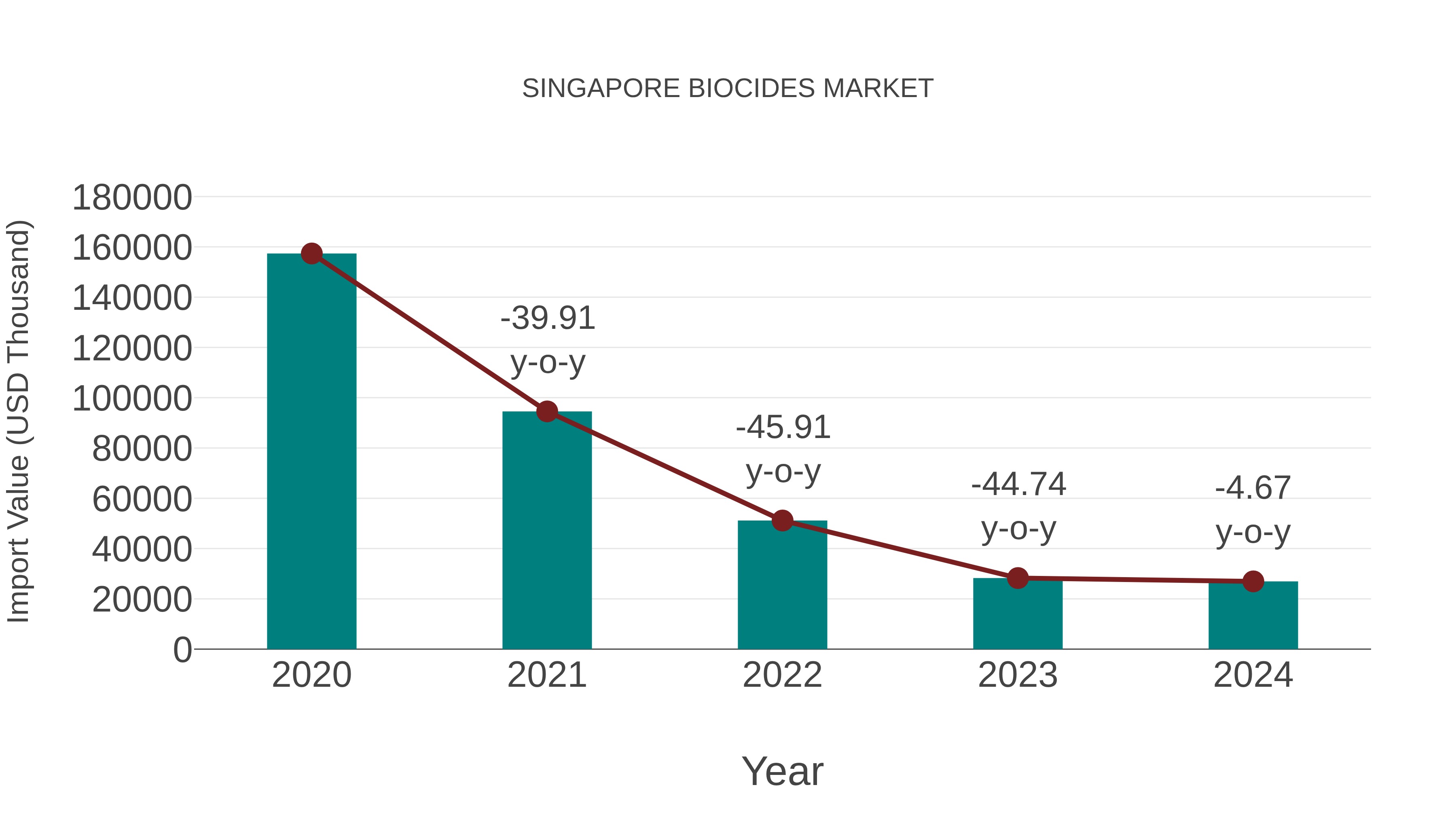
In 2024, Singapore`s import trend for the biocides market experienced a decline, with a growth rate of -4.67% compared to the previous year. The compound annual growth rate (CAGR) for the period 2020-2024 was -35.67%. This negative momentum could be attributed to shifts in demand dynamics or evolving trade policies impacting market stability.
Singapore Biocides Market Overview
Biocides are essential chemicals used to control or eliminate harmful microorganisms in water treatment, agriculture, healthcare, and industrial processes. The biocides market in Singapore is experiencing growth due to the increasing need for effective disinfection and preservation solutions. Biocides are crucial in ensuring water quality, preventing the growth of pathogens, and extending the shelf life of products. Market players are continuously developing biocides that are environmentally friendly, cost-effective, and exhibit a broad spectrum of antimicrobial activity. With rising concerns about hygiene and safety, the demand for biocides in healthcare and food industries is expected to remain robust. Additionally, regulatory frameworks are driving the adoption of biocides that meet stringent environmental and safety standards.
Drivers of the Market
The Singapore Biocides market is primarily driven by the increasing awareness of the need for microbial control in various applications. Biocides are essential for preventing and controlling the growth of microorganisms in water treatment, paints and coatings, and personal care products. As hygiene and safety standards become more stringent, the demand for biocides to maintain product integrity and safety is expected to increase.
Challenges of the Market
The Singapore Biocides Market is confronted with regulatory challenges as there is a growing emphasis on environmental and health concerns. The use of certain biocides is being restricted or regulated due to their potential impact on aquatic ecosystems and human health. Market players need to navigate complex regulatory landscapes and develop eco-friendly biocide solutions to address these challenges.
Covid-19 impact of the Market
The COVID-19 pandemic had a significant impact on the Singapore biocides market. The demand for biocides, particularly in disinfection and sanitation applications, soared as the importance of cleanliness and hygiene became paramount. Biocides were crucial in the formulation of hand sanitizers, surface disinfectants, and healthcare-related products. The market adapted by increasing production capacity and exploring new formulations to meet the growing demand while maintaining regulatory compliance and environmental sustainability.
Leading Players of the Market
Key players in the Singapore biocides market often include multinational companies like Lonza, DuPont, and BASF, which specialize in the production of biocidal products. These companies are known for developing biocides that are effective in controlling microbial growth and protecting various industrial applications, including water treatment, paints, and coatings. Local manufacturers and distributors also play a role in supplying biocidal solutions that meet the specific needs of Singaporean industries.
Key Highlights of the Report:
- Singapore Biocides Market Outlook
- Market Size of Singapore Biocides Market, 2025
- Forecast of Singapore Biocides Market, 2032
- Historical Data and Forecast of Singapore Biocides Revenues & Volume for the Period 2022-2032F
- Singapore Biocides Market Trend Evolution
- Singapore Biocides Market Drivers and Challenges
- Singapore Biocides Price Trends
- Singapore Biocides Porter's Five Forces
- Singapore Biocides Industry Life Cycle
- Historical Data and Forecast of Singapore Biocides Market Revenues & Volume By Type for the Period 2022-2032F
- Historical Data and Forecast of Singapore Biocides Market Revenues & Volume By Oxidizing Biocide for the Period 2022-2032F
- Historical Data and Forecast of Singapore Biocides Market Revenues & Volume By Non-Oxidizing Biocide for the Period 2022-2032F
- Historical Data and Forecast of Singapore Biocides Market Revenues & Volume By Others for the Period 2022-2032F
- Historical Data and Forecast of Singapore Biocides Market Revenues & Volume By Application for the Period 2022-2032F
- Historical Data and Forecast of Singapore Biocides Market Revenues & Volume By Water Treatment for the Period 2022-2032F
- Historical Data and Forecast of Singapore Biocides Market Revenues & Volume By Household for the Period 2022-2032F
- Historical Data and Forecast of Singapore Biocides Market Revenues & Volume By Industrial & Institutional Cleaning and Home Care for the Period 2022-2032F
- Historical Data and Forecast of Singapore Biocides Market Revenues & Volume By Paints & Coatings for the Period 2022-2032F
- Historical Data and Forecast of Singapore Biocides Market Revenues & Volume By Wood Preservatives for the Period 2022-2032F
- Historical Data and Forecast of Singapore Biocides Market Revenues & Volume By Others for the Period 2022-2032F
- Singapore Biocides Import Export Trade Statistics
- Market Opportunity Assessment By Type
- Market Opportunity Assessment By Application
- Singapore Biocides Top Companies Market Share
- Singapore Biocides Competitive Benchmarking By Technical and Operational Parameters
- Singapore Biocides Company Profiles
- Singapore Biocides Key Strategic Recommendations






































