Singapore Blenders Market: Import Trend Analysis
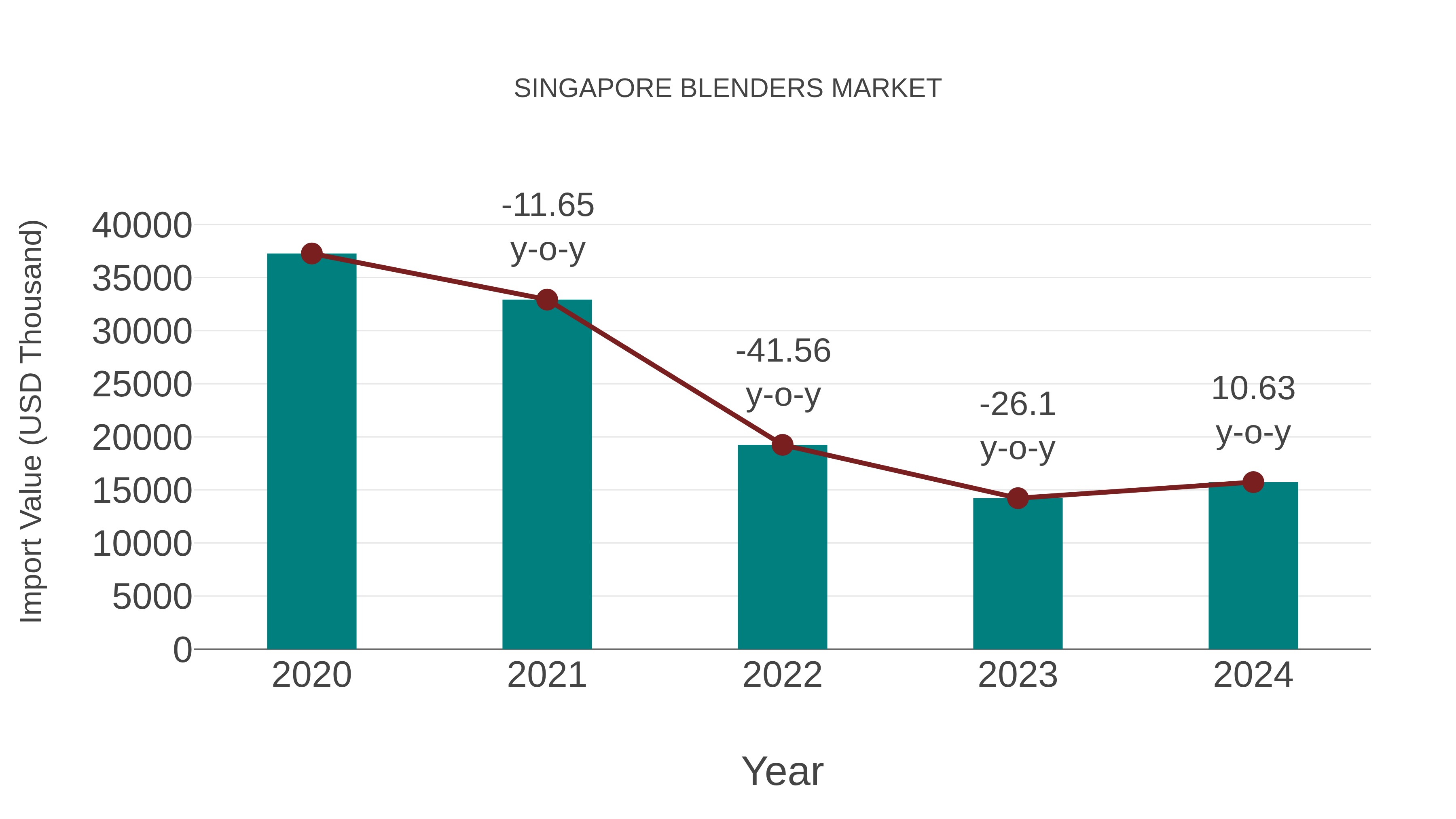
In 2024, Singapore`s import trend for the blender market showed a growth rate of 10.63%, contrasting with a negative Compound Annual Growth Rate (CAGR) of -19.4% from 2020 to 2023. This shift indicates a potential recovery in market demand post-pandemic disruptions, driving import momentum in the Singapore blender market.
Singapore Blenders Market Synopsis
Singapore is a growing market for blenders owing to the high consumption of ready-to-drink beverages and smoothies. With the increasing health consciousness among consumers, the demand for blenders in Singapore is expected to remain strong due to their convenience and affordability. The favorable government policies, such as tax incentives and subsidies for small business owners, are also contributing to the growth of this market.
Market Drivers
The primary driver of this market is an increase in health consciousness among Singapores which has led them to prefer healthy drinks over sugary soft drinks. This has resulted in an increased demand for blenders that can mix nutritious ingredients into tasty beverage concoctions quickly and conveniently. In addition, rising disposable incomes have enabled households in Singapore to purchase higher quality versions of blender equipment at more affordable prices than before. Furthermore, online shopping portals have allowed customers easy access to a larger variety of models that they can choose from while they are on the go or staying at home.
Market challenges
There are certain challenges faced by manufacturers when it comes to marketing these products in Singapore as compared with other countries where similar products may be sold more easily due the lack of language barriers or cultural differences between different regions within that country/region itself. Furthermore, many local brands face tough competition from international brands who often offer better quality product at lower price points than those offered by local vendors who may not have access to economies of scale enjoyed by global players.Lastly, counterfeiting remains a major issue where fake blender parts threaten customer safety even if genuine spare parts cost slightly more than those available from unreliable sources online or otherwise.
Key players
Major players operating in this sector include Philips, Panasonic, Blendtec, Ninja Blender & Vitamix.
Covid-19 Impact
The Covid-19 pandemic has had both positive and negative impacts on this sector with sales dropping overall due lockdowns across most countries including Singapore that lasted several months causing prolonged disruption throughout 2020 until just recently when restrictions were eased off gradually allowing businesses resume operations albeit under strict social distancing protocols imposed by governments worldwide.Despite this, some niche markets like personal blenders saw unusually large increases year on year since people had no choice but stay indoors during lockdown periods thus prompting them invest money into countertop appliances like blenders which could help them make homemade meals & snacks without having rely upon pre packaged food items delivered through ecommerce platforms ETC
Key Highlights of the Report:
- Singapore Blenders Market Outlook
- Market Size of Singapore Blenders Market, 2023
- Forecast of Singapore Blenders Market, 2030
- Historical Data and Forecast of Singapore Blenders Revenues & Volume for the Period 2020-2030
- Singapore Blenders Market Trend Evolution
- Singapore Blenders Market Drivers and Challenges
- Singapore Blenders Price Trends
- Singapore Blenders Porter's Five Forces
- Singapore Blenders Industry Life Cycle
- Historical Data and Forecast of Singapore Blenders Market Revenues & Volume By Types for the Period 2020-2030
- Historical Data and Forecast of Singapore Blenders Market Revenues & Volume By Hand Blenders for the Period 2020-2030
- Historical Data and Forecast of Singapore Blenders Market Revenues & Volume By Single-Serve Blenders for the Period 2020-2030
- Historical Data and Forecast of Singapore Blenders Market Revenues & Volume By Full-Size Blenders for the Period 2020-2030
- Historical Data and Forecast of Singapore Blenders Market Revenues & Volume By Applications for the Period 2020-2030
- Historical Data and Forecast of Singapore Blenders Market Revenues & Volume By Commercial for the Period 2020-2030
- Historical Data and Forecast of Singapore Blenders Market Revenues & Volume By Household for the Period 2020-2030
- Singapore Blenders Import Export Trade Statistics
- Market Opportunity Assessment By Types
- Market Opportunity Assessment By Applications
- Singapore Blenders Top Companies Market Share
- Singapore Blenders Competitive Benchmarking By Technical and Operational Parameters
- Singapore Blenders Company Profiles
- Singapore Blenders Key Strategic Recommendations






































