Singapore Brooms and Mops Market: Import Trend Analysis
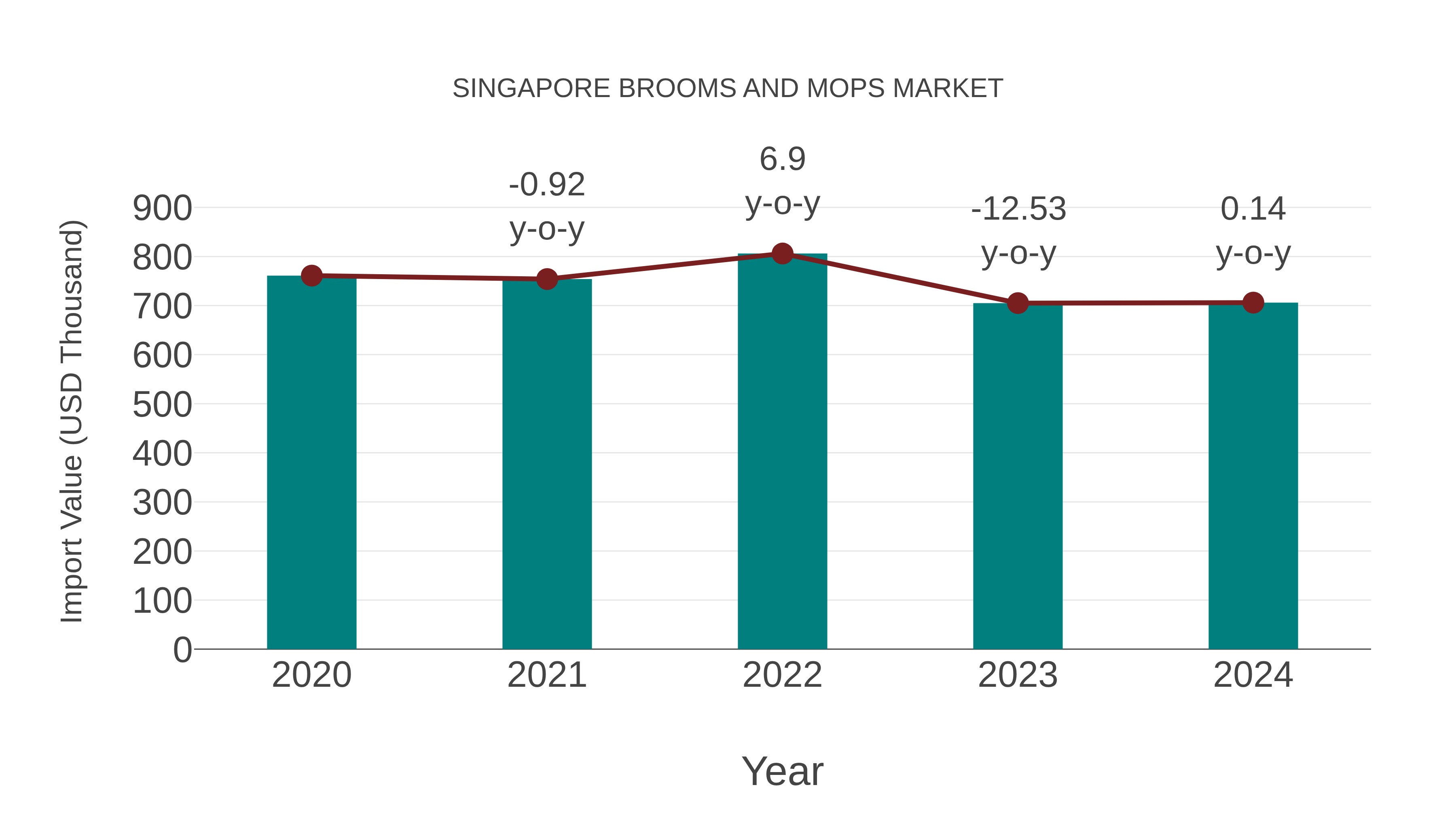
In 2024, Singapore`s import trend for brooms and mops showed a minimal growth rate of 0.14% compared to the previous year. The compound annual growth rate (CAGR) for the period 2020-2024 was -1.86%. This decline in CAGR suggests a consistent decrease in import momentum over the analyzed period, likely influenced by shifts in demand dynamics or evolving trade policies impacting the Singapore brooms and mops market.
Singapore Brooms and Mops Market Synopsis
The Singapore brooms and mops market has shown steady growth over the years, driven by factors such as urbanization, increasing disposable income, and a growing awareness of hygiene and cleanliness. The demand for efficient and convenient cleaning solutions has led to a diverse range of brooms and mops being available in the market, catering to various preferences and requirements. Additionally, the rise of eco-friendly and sustainable products has influenced consumer choices, prompting manufacturers to incorporate environmentally conscious materials and designs. As Singapore continues to prioritize cleanliness and hygiene, the brooms and mops market is expected to maintain its positive trajectory.
Drivers of the Market
The Singapore brooms and mops market is driven by several factors, including the country`s cleanliness-conscious culture, urbanization, and a growing emphasis on hygiene. The government`s rigorous cleanliness campaigns and regulations have bolstered the demand for high-quality cleaning tools. With an increasing number of households and commercial spaces, there is a constant need for efficient cleaning solutions. Additionally, the COVID-19 pandemic has heightened awareness about the importance of cleanliness, leading to a surge in demand for brooms and mops. Innovation in materials and designs, such as microfiber technology and ergonomic handles, has further accelerated market growth. The trend towards sustainability and eco-friendly products has also influenced consumer choices, leading to the development of eco-conscious brooms and mops. Overall, the Singapore brooms and mops market is poised for sustained growth due to these drivers.
Challenges of the Market
The brooms and mops market in Singapore faces challenges related to sustainability and changing cleaning habits. Consumers are increasingly looking for environmentally friendly options, which may require manufacturers to develop biodegradable materials and reduce plastic usage. Furthermore, the rise of robotic cleaning devices and changing lifestyles affect the demand for traditional brooms and mops.
COVID-19 Impact on the Market
The pandemic had a mixed impact on the brooms and mops market in Singapore. On one hand, there was an initial surge in demand for cleaning supplies as people became more conscious of hygiene and cleanliness. However, as the pandemic persisted, economic uncertainties led to reduced consumer spending. This, coupled with supply chain disruptions, affected the availability and pricing of these products. Manufacturers had to implement safety measures for their workforce and adapt to changing market dynamics.
Key Players in the Market
Major players in the brooms and mops market in Singapore include Vileda, Scotch-Brite, and O-Cedar. These brands offer a variety of cleaning solutions for households and commercial spaces.
Key Highlights of the Report:
- Singapore Brooms And Mops Market Outlook
- Market Size of Singapore Brooms And Mops Market, 2025
- Forecast of Singapore Brooms And Mops Market, 2032
- Historical Data and Forecast of Singapore Brooms And Mops Revenues & Volume for the Period 2022-2032F
- Singapore Brooms And Mops Market Trend Evolution
- Singapore Brooms And Mops Market Drivers and Challenges
- Singapore Brooms And Mops Price Trends
- Singapore Brooms And Mops Porter's Five Forces
- Singapore Brooms And Mops Industry Life Cycle
- Historical Data and Forecast of Singapore Brooms And Mops Market Revenues & Volume By Product Type for the Period 2022-2032F
- Historical Data and Forecast of Singapore Brooms And Mops Market Revenues & Volume By Mops for the Period 2022-2032F
- Historical Data and Forecast of Singapore Brooms And Mops Market Revenues & Volume By Brooms for the Period 2022-2032F
- Historical Data and Forecast of Singapore Brooms And Mops Market Revenues & Volume By Applications for the Period 2022-2032F
- Historical Data and Forecast of Singapore Brooms And Mops Market Revenues & Volume By Home Use for the Period 2022-2032F
- Historical Data and Forecast of Singapore Brooms And Mops Market Revenues & Volume By Commercial Use for the Period 2022-2032F
- Singapore Brooms And Mops Import Export Trade Statistics
- Market Opportunity Assessment By Product Type
- Market Opportunity Assessment By Applications
- Singapore Brooms And Mops Top Companies Market Share
- Singapore Brooms And Mops Competitive Benchmarking By Technical and Operational Parameters
- Singapore Brooms And Mops Company Profiles
- Singapore Brooms And Mops Key Strategic Recommendations






































