Singapore Dyes & Pigments Market: Import Trend Analysis
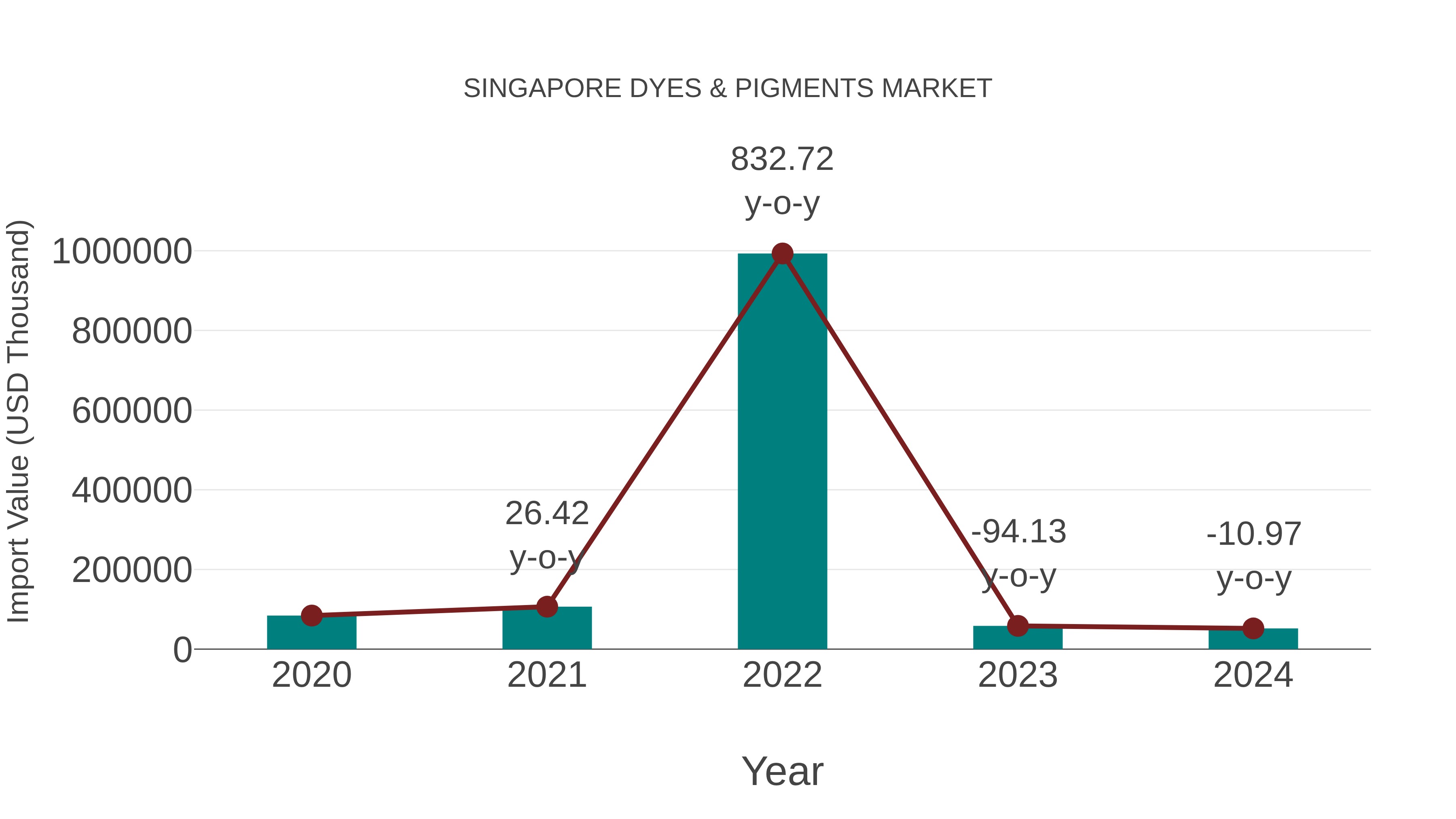
In 2024, Singapore`s imports of dyes and pigments experienced a decline with a growth rate of -10.97% compared to the previous year. The compound annual growth rate (CAGR) for the period of 2020-2024 stood at -11.39%. This negative import momentum could be attributed to shifts in demand patterns or changes in market dynamics impacting trade flows.
Dyes & Pigments Market: Singapore vs Top 5 Major Economies in 2027 (Asia)
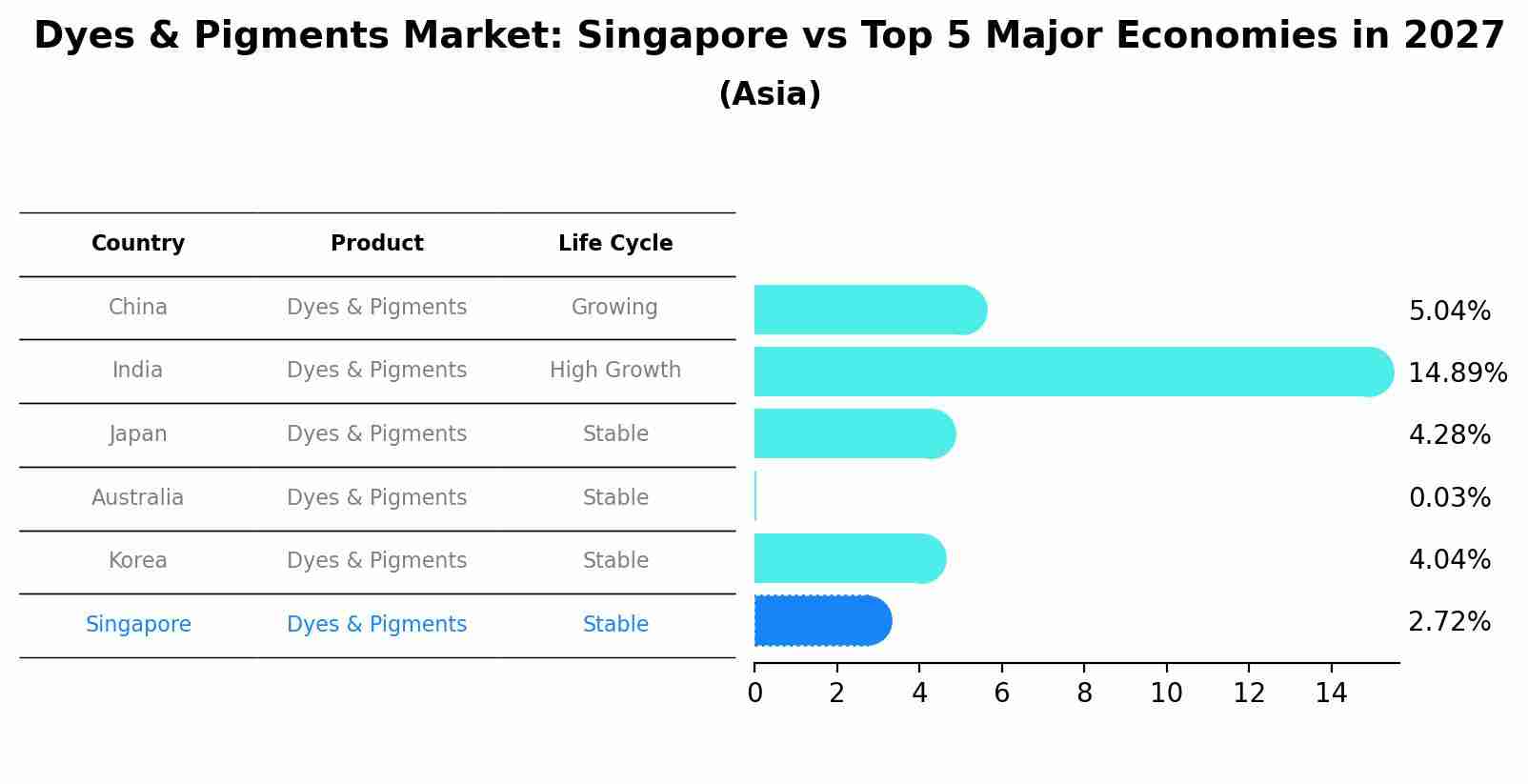
The Dyes & Pigments market in Singapore is projected to grow at a stable growth rate of 2.72% by 2027, within the Asia region led by China, along with other countries like India, Japan, Australia and South Korea, collectively shaping a dynamic and evolving market environment driven by innovation and increasing adoption of emerging technologies.
Singapore Dyes Pigments Market Synopsis
The Singapore dyes and pigments market is a significant component of the country`s chemical industry. Dyes and pigments are essential in various sectors, including textiles, paints, plastics, and more. The market is driven by the growing demand for colored products in industries such as fashion and automotive. Additionally, there is a growing emphasis on eco-friendly and sustainable dyes and pigments, reflecting Singapore commitment to environmental responsibility. Market players are investing in research and development to produce innovative and environmentally friendly colorants to cater to this demand.
Drivers of the Market
The dyes and pigments market in Singapore is flourishing due to multiple factors. The textile and automotive industries are significant contributors, with increasing demand for vibrant colors and aesthetics. Moreover, Singapore position as a regional manufacturing and export hub has led to higher demand for dyes and pigments in various industries, including plastics, paints, and coatings. Regulatory standards and environmental consciousness have also driven the adoption of eco-friendly and sustainable dyes and pigments, boosting market growth in this direction.
Challenges of the Market
In the dyes and pigments market in Singapore, regulatory compliance and environmental sustainability pose significant challenges. Stricter regulations on chemical usage and waste disposal require continuous adaptation by manufacturers. The shift towards eco-friendly and non-toxic pigments adds complexity to research and development efforts. Moreover, the global economic climate and fluctuating raw material prices can affect market stability.
COVID-19 Impact on the Market
The dyes and pigments market in Singapore witnessed varying impacts during the COVID-19 pandemic. While some segments, such as textiles and printing, experienced reduced demand due to economic uncertainties and restrictions on gatherings, others, like the healthcare and pharmaceutical sectors, continued to thrive. The market adapted by exploring new applications for dyes and pigments, such as in medical devices and personal protective equipment. Sustainability considerations also influenced product development, with a growing interest in eco-friendly and non-toxic options.
Key Players in the Market
Prominent participants in the Singapore dyes and pigments market are chemical manufacturers such as DIC Corporation and Huntsman Corporation.
Key Highlights of the Report:
- Singapore Dyes & Pigments Market Outlook
- Market Size of Singapore Dyes & Pigments Market, 2025
- Forecast of Singapore Dyes & Pigments Market, 2032
- Historical Data and Forecast of Singapore Dyes & Pigments Revenues & Volume for the Period 2022-2032F
- Singapore Dyes & Pigments Market Trend Evolution
- Singapore Dyes & Pigments Market Drivers and Challenges
- Singapore Dyes & Pigments Price Trends
- Singapore Dyes & Pigments Porter's Five Forces
- Singapore Dyes & Pigments Industry Life Cycle
- Historical Data and Forecast of Singapore Dyes & Pigments Market Revenues & Volume By Product for the Period 2022-2032F
- Historical Data and Forecast of Singapore Dyes & Pigments Market Revenues & Volume By Dyes for the Period 2022-2032F
- Historical Data and Forecast of Singapore Dyes & Pigments Market Revenues & Volume By Pigments for the Period 2022-2032F
- Singapore Dyes & Pigments Import Export Trade Statistics
- Market Opportunity Assessment By Product
- Singapore Dyes & Pigments Top Companies Market Share
- Singapore Dyes & Pigments Competitive Benchmarking By Technical and Operational Parameters
- Singapore Dyes & Pigments Company Profiles
- Singapore Dyes & Pigments Key Strategic Recommendations






































