Singapore First Aid Market: Import Trend Analysis
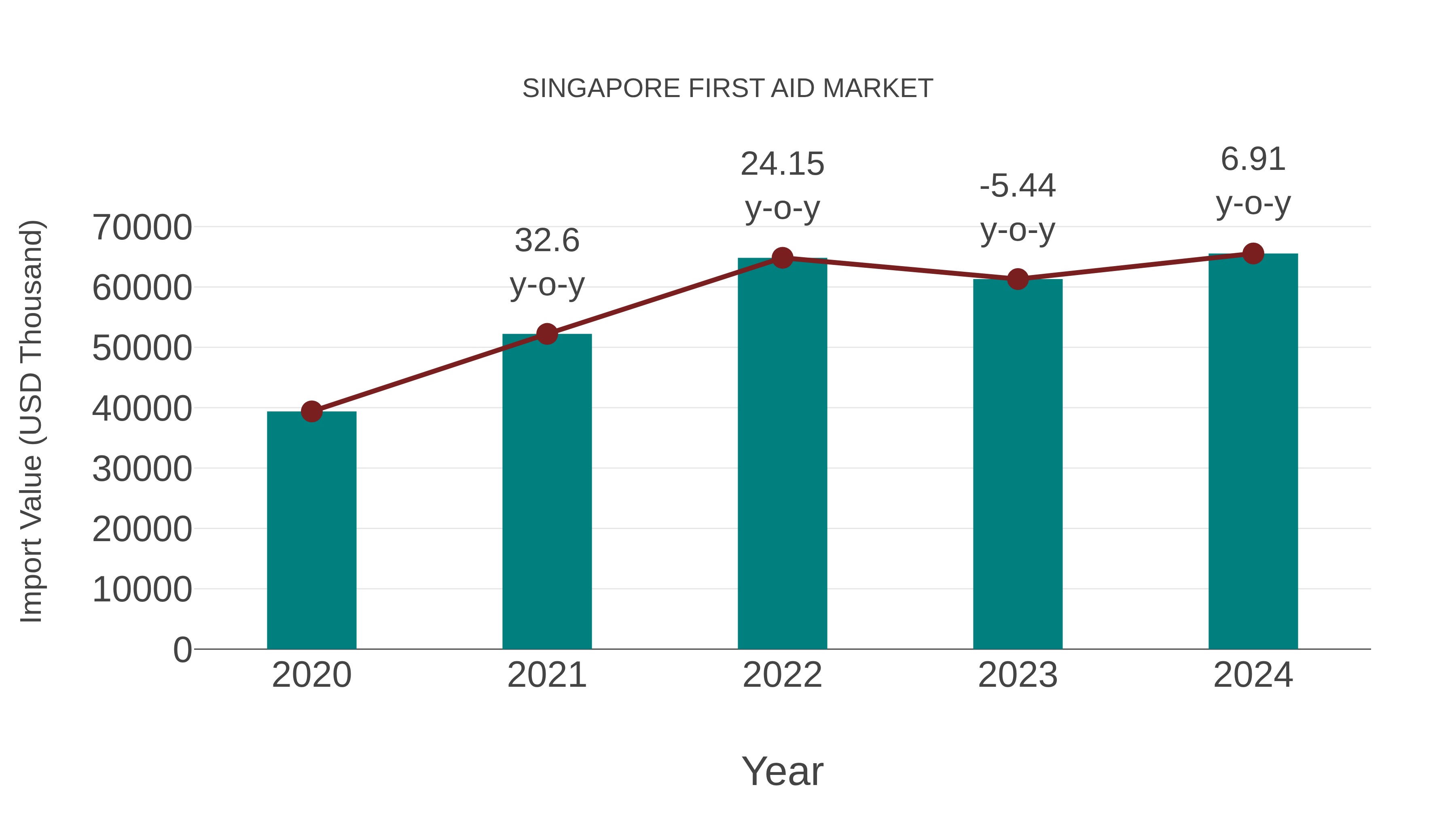
In 2024, Singapore`s import trend for the first aid market showed a growth rate of 6.91%, with a compound annual growth rate (CAGR) of 13.58% from 2020 to 2024. This momentum in import growth can be attributed to the increasing demand for quality first aid products and the stable market conditions that supported sustained import activities during this period.
Singapore First Aid Market Overview
The Singapore First Aid Market is witnessing steady growth fueled by increasing awareness about the importance of first aid training and supplies. With a growing emphasis on workplace safety regulations and public health initiatives, demand for first aid products such as kits, bandages, and CPR masks is on the rise. The market is characterized by a competitive landscape with key players including local distributors, international brands, and e-commerce platforms offering a wide range of first aid solutions. Government initiatives promoting first aid education and training programs further contribute to market expansion. The market is expected to continue growing as businesses and individuals prioritize preparedness for emergencies and accidents, driving the need for quality first aid products and services in Singapore.
Singapore First Aid Market Trends and Opportunities
The Singapore First Aid Market is witnessing a growing demand for innovative and user-friendly first aid products and services. With an increasing focus on workplace safety and healthcare awareness, there is a rising trend towards compact and portable first aid kits, online first aid training courses, and smart first aid apps for quick access to emergency information. Opportunities lie in catering to specific industries such as construction, healthcare, and hospitality with tailored first aid solutions, as well as tapping into the e-commerce sector for convenient purchase options. Collaboration with healthcare providers and government agencies for certification programs and regulatory compliance can further enhance market penetration. Overall, the Singapore First Aid Market is ripe for expansion through technological advancements and customized offerings to meet the evolving needs of businesses and individuals.
Singapore First Aid Market Challenges
In the Singapore First Aid Market, some key challenges include the lack of awareness and education about the importance of first aid, leading to a lower demand for first aid products and services. Additionally, there is competition from various suppliers, both local and international, which can make it difficult for companies to differentiate themselves and capture market share. Regulatory requirements and certifications also pose challenges for businesses operating in this sector, as they must adhere to strict guidelines to ensure the quality and effectiveness of their products. Furthermore, the ongoing COVID-19 pandemic has added complexity by changing consumer behavior and increasing the need for specific first aid solutions and training. Overall, companies in the Singapore First Aid Market must navigate these challenges to stay competitive and meet the evolving needs of customers.
Singapore First Aid Market Drivers
The Singapore First Aid Market is primarily driven by the increasing awareness about the importance of first aid in emergency situations and the rising emphasis on workplace safety regulations. The government`s initiatives to promote first aid training and the presence of stringent safety standards in workplaces are also key drivers fueling market growth. Additionally, the growing number of accidents and injuries, coupled with the rising health consciousness among the general population, are contributing to the demand for first aid products and services in Singapore. The expanding healthcare sector, advancements in first aid technology, and the increasing availability of first aid training programs further support market growth by enhancing the accessibility and effectiveness of first aid solutions in the country.
Singapore First Aid Market Government Policies
The Singapore government has implemented various policies to promote first aid awareness and education in the country. This includes initiatives by the Singapore Civil Defence Force (SCDF) to provide first aid training to the public and workplaces, as well as promoting the importance of having certified first aiders within organizations. Additionally, the Ministry of Manpower (MOM) requires certain workplaces to have trained first aiders on site to ensure the safety and well-being of employees. The government also encourages the purchase and maintenance of essential first aid supplies in public spaces and workplaces through regulations and guidelines. Overall, these policies aim to enhance the readiness and response capabilities of individuals and organizations in handling medical emergencies effectively in Singapore.
Singapore First Aid Market Future Outlook
The Singapore First Aid Market is projected to experience steady growth in the coming years, driven by increasing awareness of the importance of first aid training and supplies in emergency situations. Factors such as the growing emphasis on workplace safety, rising healthcare expenditures, and government initiatives to promote first aid education are expected to contribute to market expansion. The market is also likely to benefit from advancements in technology, such as the development of innovative first aid products and apps. With a focus on improving response times and outcomes in emergencies, the Singapore First Aid Market is poised for continuous growth as individuals and organizations prioritize preparedness and safety measures.
Key Highlights of the Report:
- Singapore First Aid Market Outlook
- Market Size of Singapore First Aid Market, 2025
- Forecast of Singapore First Aid Market, 2032
- Historical Data and Forecast of Singapore First Aid Revenues & Volume for the Period 2022 - 2032F
- Singapore First Aid Market Trend Evolution
- Singapore First Aid Market Drivers and Challenges
- Singapore First Aid Price Trends
- Singapore First Aid Porter's Five Forces
- Singapore First Aid Industry Life Cycle
- Historical Data and Forecast of Singapore First Aid Market Revenues & Volume By Type for the Period 2022 - 2032F
- Historical Data and Forecast of Singapore First Aid Market Revenues & Volume By First Aid Room Equipment for the Period 2022 - 2032F
- Historical Data and Forecast of Singapore First Aid Market Revenues & Volume By Automated External Defibrillators for the Period 2022 - 2032F
- Historical Data and Forecast of Singapore First Aid Market Revenues & Volume By First Aid Training Products for the Period 2022 - 2032F
- Historical Data and Forecast of Singapore First Aid Market Revenues & Volume By End-use for the Period 2022 - 2032F
- Historical Data and Forecast of Singapore First Aid Market Revenues & Volume By Hospital & Clinics for the Period 2022 - 2032F
- Historical Data and Forecast of Singapore First Aid Market Revenues & Volume By Home & Offices for the Period 2022 - 2032F
- Singapore First Aid Import Export Trade Statistics
- Market Opportunity Assessment By Type
- Market Opportunity Assessment By End-use
- Singapore First Aid Top Companies Market Share
- Singapore First Aid Competitive Benchmarking By Technical and Operational Parameters
- Singapore First Aid Company Profiles
- Singapore First Aid Key Strategic Recommendations






































