Singapore Hexane Market: Import Trend Analysis
In 2024, Singapore`s import trend for the hexane market experienced a decline with a growth rate of -9.58%, contrasting the 6.92% compound annual growth rate (CAGR) observed from 2020 to 2023. This negative momentum can be attributed to shifting demand patterns or potential market adjustments impacting the hexane trade landscape.
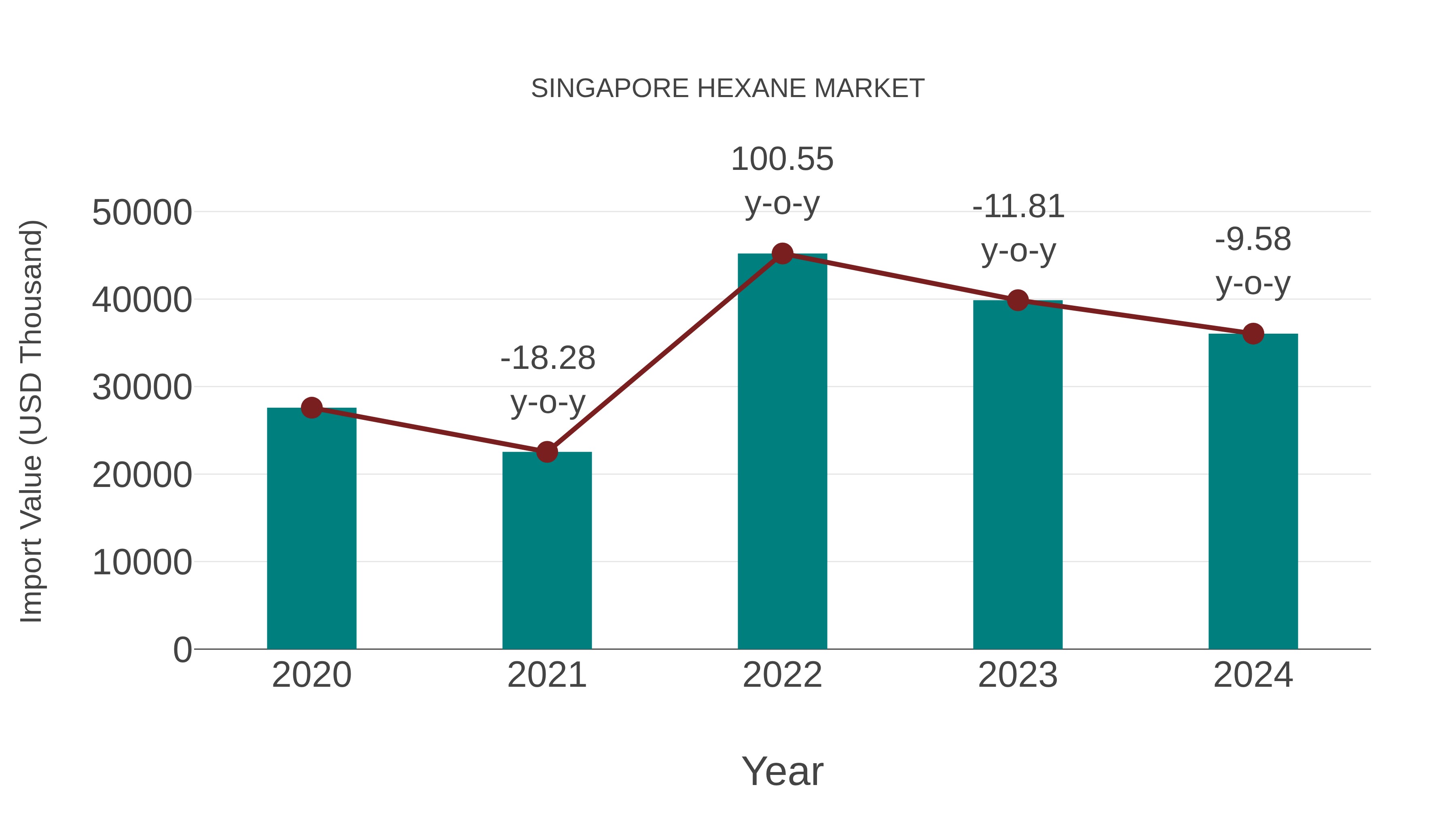
Singapore Hexane Market Overview
The Singapore hexane market is a vital component of the chemical and industrial sectors. Hexane, a hydrocarbon solvent, is used in various applications, including oil extraction, pharmaceuticals, and industrial cleaning. The market is characterized by its contribution to the oil and gas industry, particularly in the extraction of vegetable oils and the production of edible products. Singapore position as a regional trading hub adds to the significance of this market in the broader petrochemical industry.
Drivers of the Market
The Singapore hexane market is witnessing growth due to its use in various industrial processes, including the extraction of vegetable oils and as a solvent. Hexane`s importance in the chemical and food industries contributes to its market expansion. The growth is fueled by Singapore commitment to maintaining a strong industrial base and complying with international quality standards.
Challenges of the Market
The hexane market in Singapore is not without its challenges. One major concern is environmental sustainability. Hexane is a volatile organic compound with potential environmental and health risks, and its production and use must adhere to strict regulations. The market may also face challenges related to fluctuating crude oil prices, as hexane is derived from petroleum. Market volatility can impact both the cost of production and pricing for end-users. Additionally, competition from alternative solvents and increasing awareness of the environmental impact of hexane usage can pose a threat to the market`s growth and sustainability.
Covid-19 impact of the Market
The Singapore hexane market felt the impact of the COVID-19 pandemic, primarily due to its use in various industrial applications. Reduced industrial activity temporarily affected the market. However, the pandemic also underscored the need for efficient and reliable solvents in pharmaceuticals, agrochemicals, and other sectors. As industries adapted to the evolving landscape, the market for hexane is expected to recover and continue serving diverse applications.
Leading Players of the Market
The Singapore hexane market comprises companies engaged in the production and distribution of hexane, which is widely used in the chemical industry. Key players include ExxonMobil, Shell Chemicals, and Chevron Phillips Chemical Company, which offer high-quality hexane products to various industrial sectors.
Key Highlights of the Report:
- Singapore Hexane Market Outlook
- Market Size of Singapore Hexane Market, 2025
- Forecast of Singapore Hexane Market, 2032
- Historical Data and Forecast of Singapore Hexane Revenues & Volume for the Period 2022-2032F
- Singapore Hexane Market Trend Evolution
- Singapore Hexane Market Drivers and Challenges
- Singapore Hexane Price Trends
- Singapore Hexane Porter's Five Forces
- Singapore Hexane Industry Life Cycle
- Historical Data and Forecast of Singapore Hexane Market Revenues & Volume By Grade for the Period 2022-2032F
- Historical Data and Forecast of Singapore Hexane Market Revenues & Volume By Oil Extraction/Food for the Period 2022-2032F
- Historical Data and Forecast of Singapore Hexane Market Revenues & Volume By Pharmaceutical for the Period 2022-2032F
- Historical Data and Forecast of Singapore Hexane Market Revenues & Volume By Industrial for the Period 2022-2032F
- Historical Data and Forecast of Singapore Hexane Market Revenues & Volume By Application for the Period 2022-2032F
- Historical Data and Forecast of Singapore Hexane Market Revenues & Volume By Oil Extraction for the Period 2022-2032F
- Historical Data and Forecast of Singapore Hexane Market Revenues & Volume By Pharmaceutical for the Period 2022-2032F
- Historical Data and Forecast of Singapore Hexane Market Revenues & Volume By Industrial Cleaning for the Period 2022-2032F
- Historical Data and Forecast of Singapore Hexane Market Revenues & Volume By Degreasing for the Period 2022-2032F
- Historical Data and Forecast of Singapore Hexane Market Revenues & Volume By Polymerization for the Period 2022-2032F
- Singapore Hexane Import Export Trade Statistics
- Market Opportunity Assessment By Grade
- Market Opportunity Assessment By Application
- Singapore Hexane Top Companies Market Share
- Singapore Hexane Competitive Benchmarking By Technical and Operational Parameters
- Singapore Hexane Company Profiles
- Singapore Hexane Key Strategic Recommendations






































