Singapore Opaque Polymers Market: Import Trend Analysis
In 2024, Singapore`s opaque polymers market witnessed a steady increase in imports. This trend was driven by rising demand from various industries. The market saw a notable influx of opaque polymers from key global suppliers, reflecting Singapore`s reliance on imports to meet domestic demand.
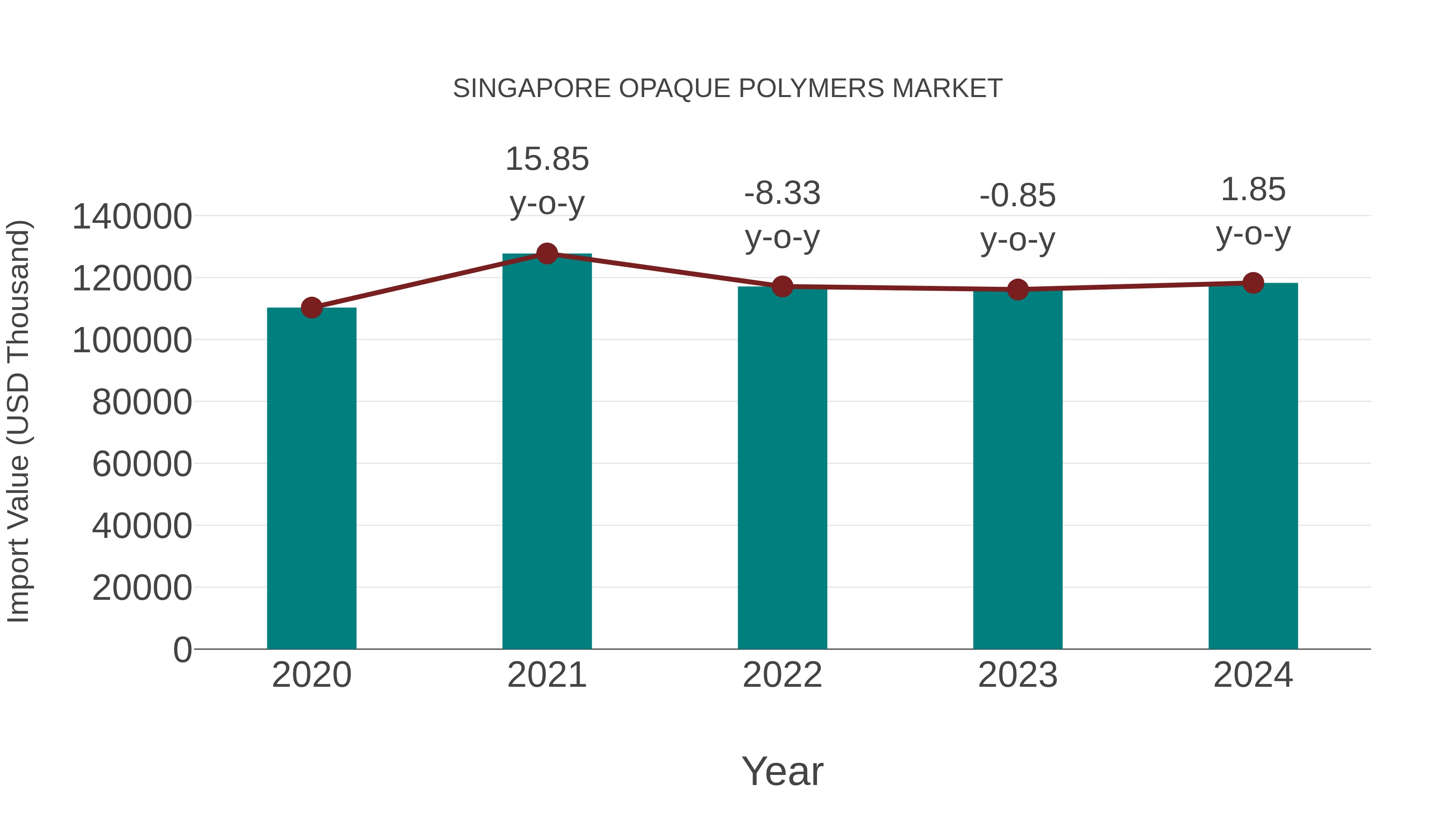
Singapore Opaque Polymers Market Overview
The opaque polymers market in Singapore has been experiencing steady growth in recent years. Opaque polymers, which find applications in various industries such as paints and coatings, textiles, and packaging, have gained significant traction in the country. This growth can be attributed to the increasing demand for high-performance and environmentally friendly materials. Manufacturers in Singapore are focusing on developing innovative opaque polymer formulations to meet the evolving needs of end-users. The market is expected to continue its growth trajectory, driven by factors like the construction and automotive sectors` expansion and the ongoing emphasis on sustainability.
Drivers of the Market
The Singapore Opaque Polymers market is driven by the increasing demand for high-performance paints and coatings in various industries, including construction and automotive. Opaque polymers enhance the hiding and opacity of paints, providing vibrant and long-lasting finishes. As industries seek durable and aesthetically pleasing coatings for their products, the demand for opaque polymers is expected to rise, supporting innovation in the paint and coatings sector.
Challenges of the Market
The Singapore opaque polymers market faces several challenges. One significant obstacle is the environmental concern associated with the production and disposal of opaque polymers. As Singapore pushes towards sustainability, manufacturers are under pressure to adopt eco-friendly production methods and reduce their carbon footprint. Additionally, the opaque polymers market is highly competitive, which makes it difficult for companies to maintain pricing and profitability.
Covid-19 impact of the Market
The COVID-19 pandemic influenced the Singapore opaque polymers market by affecting the demand in sectors like construction and automotive coatings. With lockdowns and economic uncertainties, some construction projects were delayed, leading to a temporary decline in the market. However, the market remained resilient in applications where opaque polymers are used for their durability and resistance to weathering, such as outdoor signage and architectural coatings.
Leading Players of the Market
The Opaque Polymers market in Singapore features key players like Arkema, Ashland, and Dow Chemicals, contributing to the development of specialized polymer materials with exceptional hiding power and rheological properties.
Key Highlights of the Report:
- Singapore Opaque Polymers Market Outlook
- Market Size of Singapore Opaque Polymers Market, 2025
- Forecast of Singapore Opaque Polymers Market, 2032
- Historical Data and Forecast of Singapore Opaque Polymers Revenues & Volume for the Period 2022-2032F
- Singapore Opaque Polymers Market Trend Evolution
- Singapore Opaque Polymers Market Drivers and Challenges
- Singapore Opaque Polymers Price Trends
- Singapore Opaque Polymers Porter's Five Forces
- Singapore Opaque Polymers Industry Life Cycle
- Historical Data and Forecast of Singapore Opaque Polymers Market Revenues & Volume By Type for the Period 2022-2032F
- Historical Data and Forecast of Singapore Opaque Polymers Market Revenues & Volume By Solid Content 30% for the Period 2022-2032F
- Historical Data and Forecast of Singapore Opaque Polymers Market Revenues & Volume By Solid Content 40% for the Period 2022-2032F
- Historical Data and Forecast of Singapore Opaque Polymers Market Revenues & Volume By Application for the Period 2022-2032F
- Historical Data and Forecast of Singapore Opaque Polymers Market Revenues & Volume By Paints & Coatings for the Period 2022-2032F
- Historical Data and Forecast of Singapore Opaque Polymers Market Revenues & Volume By Personal Care for the Period 2022-2032F
- Historical Data and Forecast of Singapore Opaque Polymers Market Revenues & Volume By Detergents for the Period 2022-2032F
- Singapore Opaque Polymers Import Export Trade Statistics
- Market Opportunity Assessment By Type
- Market Opportunity Assessment By Application
- Singapore Opaque Polymers Top Companies Market Share
- Singapore Opaque Polymers Competitive Benchmarking By Technical and Operational Parameters
- Singapore Opaque Polymers Company Profiles
- Singapore Opaque Polymers Key Strategic Recommendations






































