Slovakia Gypsum Plaster Market Size (2020-2030)
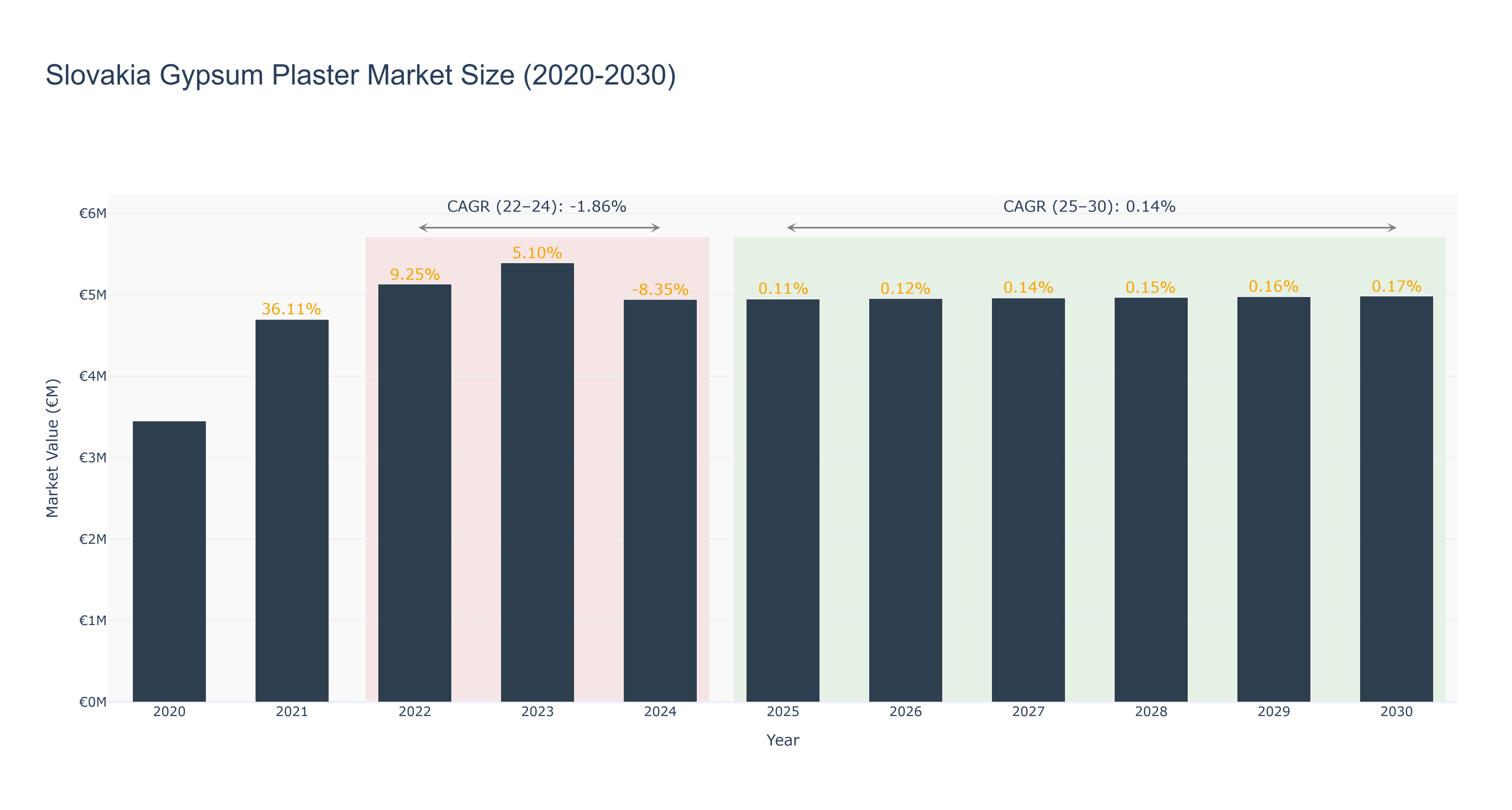
Slovakia Gypsum Plaster Market has seen fluctuations in market size over the years. The peak market size of €5.39 million was recorded in 2023, followed by a decline to €4.94 million in 2024. However, the market has stabilized around €4.95 million since 2025, with a slight growth trend. The CAGR for the period 2022-24 was -1.86%, reflecting a temporary downturn, while the CAGR for 2025-30 is projected at 0.14%, indicating a modest but steady growth trajectory. The market's performance can be attributed to factors like fluctuating construction activities and changing consumer preferences in the region. Looking ahead, upcoming infrastructure projects in Slovakia are expected to drive demand for gypsum plaster products, supporting the market's growth in the near future.
Slovakia Gypsum Plaster Market: Production & Trade Performance (2019-2025)
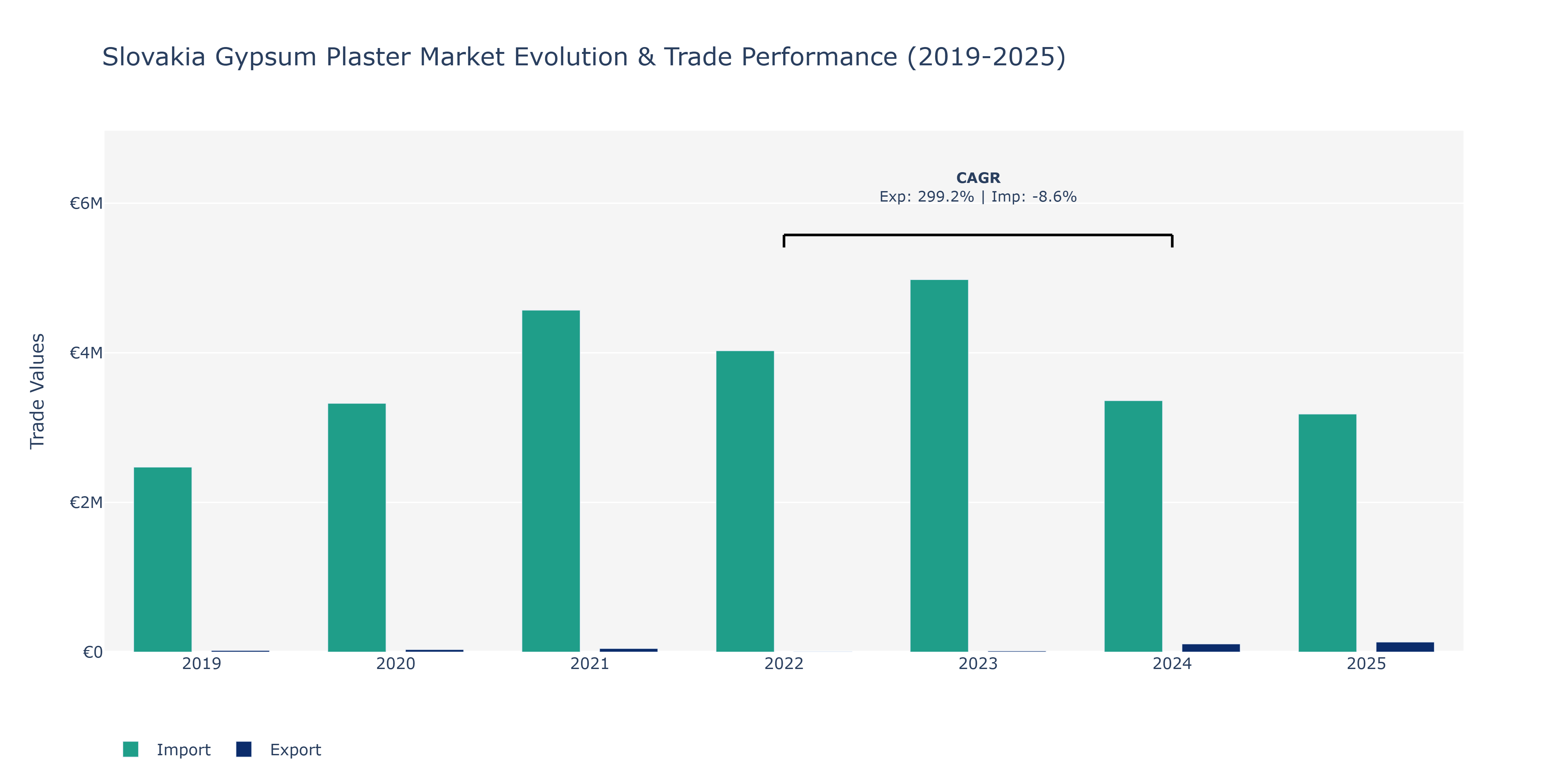
Between 2019 and 2025, Slovakia's Gypsum Plaster market saw varying trends in exports and imports. Exports started at €20.71 thousand in 2019, experienced a dip in 2022 to €6.77 thousand, and surged to a peak of €133.05 thousand in 2025, indicating a significant growth trajectory. Conversely, imports fluctuated differently, starting at €2.47 million in 2019, dropping to €3.36 million in 2024, and ending at €3.18 million in 2025. The market observed a substantial decline in imports in 2024, contrasting the peak export value reached in the same year. These fluctuations could be attributed to evolving construction demands, infrastructure projects, and trade agreements impacting the gypsum industry. The surge in exports could reflect increased demand for Slovakia's gypsum products in international markets, while the decline in imports might indicate enhanced domestic production capabilities or shifts in sourcing preferences. Such trends emphasize the importance of market players understanding global market dynamics to capitalize on growth opportunities.
Slovakia Gypsum Plaster Market Overview
The Slovakia gypsum plaster market is experiencing steady growth due to increasing construction activities in both residential and commercial sectors. Gypsum plaster is favored for its ease of application, smooth finish, and fire resistance properties. The market is driven by the rising demand for eco-friendly and sustainable construction materials, as gypsum plaster is known for its low environmental impact. Key market players in Slovakia include Knauf, Saint-Gobain, and Rigips, offering a range of gypsum plaster products catering to different customer needs. The market is expected to witness further growth with the increasing focus on energy-efficient buildings and the growing trend towards interior design and renovation projects. However, challenges such as price volatility of raw materials and competition from alternative materials may impact market growth in the near future.
Slovakia Gypsum Plaster Market Trends
The Slovakia Gypsum Plaster Market is experiencing steady growth driven by the increasing demand for sustainable and eco-friendly construction materials. Key trends in the market include the growing popularity of lightweight gypsum plasters that offer improved workability and faster drying times. Additionally, there is a rising preference for pre-mixed gypsum plasters that save time and labor costs for construction projects. Sustainability is also a significant trend, with manufacturers focusing on developing low-carbon footprint gypsum plasters that meet environmental standards. The market is witnessing a shift towards innovative formulations that enhance performance characteristics such as strength, durability, and sound insulation properties. Overall, the Slovakia Gypsum Plaster Market is poised for further growth as construction activities continue to expand and demand for high-quality building materials rises.
Slovakia Gypsum Plaster Market Challenges
In the Slovakia Gypsum Plaster Market, some key challenges include intense competition among manufacturers leading to price wars and pressure on profit margins, fluctuating raw material costs impacting production costs and overall pricing strategy, and the need for continuous innovation to meet evolving customer preferences and sustainability requirements. Additionally, regulatory compliance and environmental concerns related to gypsum mining and production processes pose challenges for market players in terms of operational efficiency and sustainability practices. Moreover, the market may also face challenges in terms of distribution networks, access to skilled labor, and economic uncertainties impacting construction activities and demand for gypsum plaster products. Overall, addressing these challenges will require strategic planning, investment in research and development, and effective risk management strategies to ensure long-term success in the Slovakia Gypsum Plaster Market.
Slovakia Gypsum Plaster Market Investment Opportunities
The Slovakia Gypsum Plaster Market presents promising investment opportunities due to increasing demand driven by the booming construction sector in the country. With the growing focus on sustainable and energy-efficient building materials, gypsum plaster is gaining popularity for its versatility, durability, and eco-friendly properties. Investors can consider opportunities in manufacturing and supplying gypsum plaster products to meet the rising demand from residential, commercial, and industrial construction projects in Slovakia. Additionally, investing in research and development to innovate new gypsum plaster formulations or production processes could provide a competitive edge in the market. Overall, the Slovakia Gypsum Plaster Market offers a favorable environment for investment and growth potential in alignment with the country`s construction industry trends.
Slovakia Gypsum Plaster Market Government Policy
The government policies related to the Slovakia Gypsum Plaster Market primarily revolve around environmental regulations, building codes, and quality standards. Slovakia has regulations in place to ensure that gypsum plaster products adhere to specific quality standards to guarantee consumer safety and satisfaction. Additionally, there are strict environmental guidelines that govern the production and disposal of gypsum plaster to minimize the impact on the environment. Building codes also play a crucial role in regulating the use of gypsum plaster in construction projects to ensure structural integrity and safety. Overall, the government policies aim to promote sustainable practices, quality control, and compliance with industry standards within the Slovakia Gypsum Plaster Market.
Slovakia Gypsum Plaster Market Future Outlook
The Slovakia Gypsum Plaster Market is projected to experience steady growth in the coming years, driven by increasing demand for sustainable and eco-friendly construction materials. The construction sector in Slovakia is expected to expand, supported by government investments in infrastructure projects and growing demand for residential and commercial properties. Additionally, the rising trend towards renovation and restoration activities in the country is likely to boost the demand for gypsum plaster products. With a focus on enhancing energy efficiency and reducing carbon footprint in buildings, gypsum plaster is gaining popularity for its thermal insulation properties and fire resistance. Overall, the Slovakia Gypsum Plaster Market is anticipated to witness positive growth opportunities in the foreseeable future.
Key Highlights of the Report:
- Slovakia Gypsum Plaster Market Outlook
- Market Size of Slovakia Gypsum Plaster Market, 2021
- Forecast of Slovakia Gypsum Plaster Market, 2031
- Historical Data and Forecast of Slovakia Gypsum Plaster Revenues & Volume for the Period 2021 - 2031
- Slovakia Gypsum Plaster Market Trend Evolution
- Slovakia Gypsum Plaster Market Drivers and Challenges
- Slovakia Gypsum Plaster Price Trends
- Slovakia Gypsum Plaster Porter's Five Forces
- Slovakia Gypsum Plaster Industry Life Cycle
- Historical Data and Forecast of Slovakia Gypsum Plaster Market Revenues & Volume By Plaster System for the Period 2021 - 2031
- Historical Data and Forecast of Slovakia Gypsum Plaster Market Revenues & Volume By Manually-applied Plaster for the Period 2021 - 2031
- Historical Data and Forecast of Slovakia Gypsum Plaster Market Revenues & Volume By Machine-applied Plaster for the Period 2021 - 2031
- Historical Data and Forecast of Slovakia Gypsum Plaster Market Revenues & Volume By Finishes for the Period 2021 - 2031
- Historical Data and Forecast of Slovakia Gypsum Plaster Market Revenues & Volume By Raw Material for the Period 2021 - 2031
- Historical Data and Forecast of Slovakia Gypsum Plaster Market Revenues & Volume By Natural Gypsum for the Period 2021 - 2031
- Historical Data and Forecast of Slovakia Gypsum Plaster Market Revenues & Volume By Synthetic Gypsum for the Period 2021 - 2031
- Historical Data and Forecast of Slovakia Gypsum Plaster Market Revenues & Volume By End-use for the Period 2021 - 2031
- Historical Data and Forecast of Slovakia Gypsum Plaster Market Revenues & Volume By Residential for the Period 2021 - 2031
- Historical Data and Forecast of Slovakia Gypsum Plaster Market Revenues & Volume By Non-residential for the Period 2021 - 2031
- Slovakia Gypsum Plaster Import Export Trade Statistics
- Market Opportunity Assessment By Plaster System
- Market Opportunity Assessment By Raw Material
- Market Opportunity Assessment By End-use
- Slovakia Gypsum Plaster Top Companies Market Share
- Slovakia Gypsum Plaster Competitive Benchmarking By Technical and Operational Parameters
- Slovakia Gypsum Plaster Company Profiles
- Slovakia Gypsum Plaster Key Strategic Recommendations






































