Slovakia Raw Cane Sugar Market Size (2020-2030)
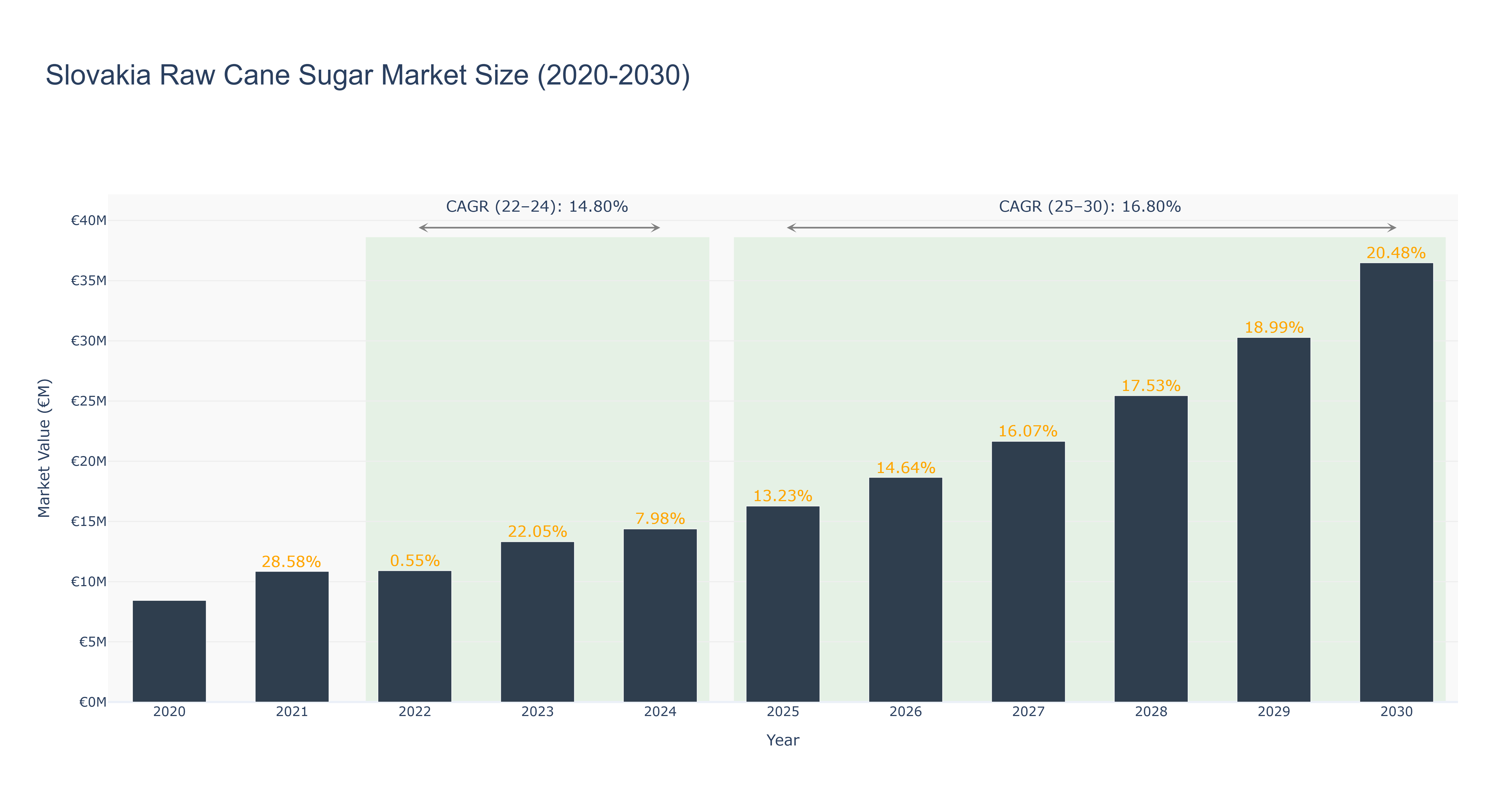
The Slovakia Raw Cane Sugar Market experienced significant fluctuations between 2020 and 2024, peaking at €14.37 million in 2024, after growing from €10.90 million in 2022 and €10.84 million in 2021. This period showcased a compound annual growth rate (CAGR) of 14.80%, driven primarily by rising consumer demand for natural sweeteners and the increasing popularity of health-conscious products. Moving into the forecasted period from 2025 to 2030, the market is projected to expand further, reaching €36.48 million by 2030, with a robust CAGR of 16.80%. This growth will likely be supported by ongoing trends towards sustainable agriculture and innovations in sugar production processes. Additionally, the anticipated rise in organic food consumption and regulatory support for healthier alternatives will further propel market development. Overall, the Slovakia Raw Cane Sugar Market is poised for sustained growth as consumer preferences evolve and industry dynamics shift.
Slovakia Raw Cane Sugar Market: Production & Trade Performance (2019-2025)
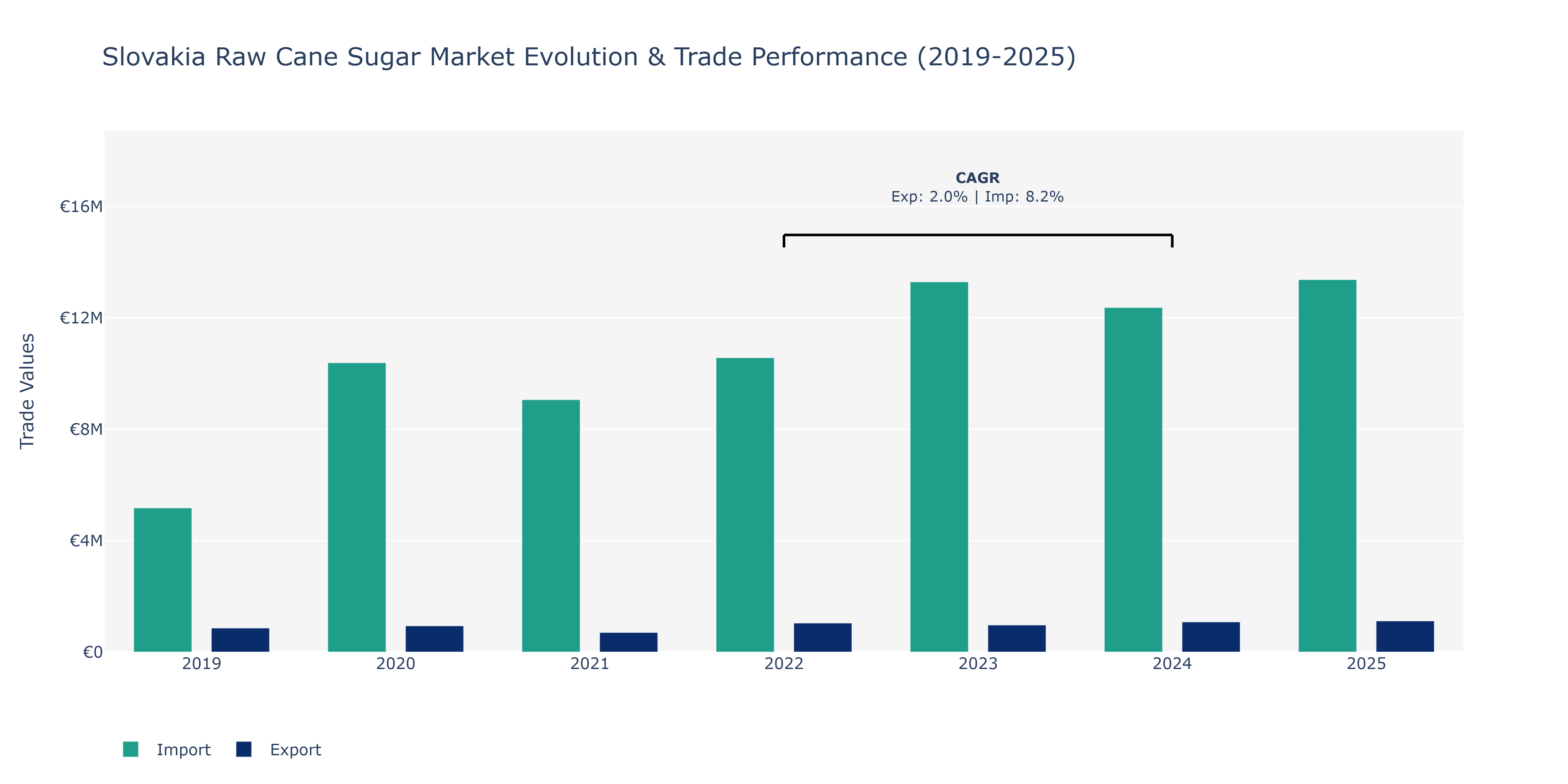
Between 2019 and 2025, Slovakia's Raw Cane Sugar Market experienced varied trends in exports and imports of raw cane sugar. The Export value show a general upward trajectory, starting at €860.82 thousand in 2019 and reaching €1.12 million in 2025. This growth pattern was interrupted in 2021 with a temporary decline to €702.57 thousand, likely influenced by global market fluctuations and potential supply chain disruptions. In contrast, imports consistently rose over the years, escalating from €5.17 million in 2019 to €13.37 million in 2025. The considerable increase in imports could be attributed to rising domestic demand, possibly driven by increased consumption or limited local production capacities. The CAGR for exports was 1.96%, reflecting a modest growth rate, while imports experienced a more substantial CAGR of 8.2%, indicating a significant rise in foreign purchases of raw cane sugar. These trends suggest a dynamic market impacted by both international factors and domestic consumption patterns, highlighting the need for market players to adapt to evolving trade dynamics and ensure a stable supply chain to meet growing demand.
Slovakia Raw Cane Sugar Market Overview
The Slovakia raw cane sugar market is characterized by steady growth driven by increasing consumer demand for natural and unrefined sweeteners. Raw cane sugar is favored for its unprocessed nature and higher mineral content compared to refined sugar. With a growing awareness of the health benefits of raw cane sugar, including its lower glycemic index and trace minerals such as iron and calcium, there is a rising preference for this product among health-conscious consumers in Slovakia. The market is also influenced by the trend of clean label products, with consumers seeking transparency and authenticity in their food choices. Key players in the Slovakia raw cane sugar market include both domestic producers and international suppliers catering to the diverse needs of the market. Overall, the market is expected to continue its positive trajectory as consumers prioritize natural and healthier sweetening options.
Slovakia Raw Cane Sugar Market Trends
The Slovakia Raw Cane Sugar Market is currently witnessing a growing demand for organic and sustainably sourced products, driven by increasing consumer awareness of health and environmental concerns. Consumers are seeking products that are free from artificial additives and chemicals, leading to a preference for raw cane sugar over refined sugar. This trend is further supported by a rising interest in traditional and natural food ingredients. Additionally, there is a growing focus on transparency in the supply chain, with consumers showing a preference for knowing the origins of the raw cane sugar they are purchasing. As a result, companies in the Slovakia Raw Cane Sugar Market are increasingly emphasizing ethical sourcing practices and promoting their products as environmentally friendly and socially responsible.
Slovakia Raw Cane Sugar Market Challenges
In the Slovakia Raw Cane Sugar Market, one of the primary challenges faced is the competition from refined sugar products. Refined sugar often has a lower price point and longer shelf life, making it a more attractive option for consumers. Additionally, there is a limited availability of locally produced raw cane sugar in Slovakia, leading to a reliance on imports which can drive up costs and impact the market competitiveness. Furthermore, consumer awareness and demand for raw cane sugar products are relatively low compared to refined sugar, requiring market players to invest in education and marketing efforts to promote the benefits of raw cane sugar. Overall, navigating these challenges requires strategic pricing, distribution, and marketing strategies to establish a strong foothold in the Slovakia Raw Cane Sugar Market.
Slovakia Raw Cane Sugar Market Investment Opportunities
Investment opportunities in the Slovakia Raw Cane Sugar Market include potential for growth due to increasing demand for natural and organic sweeteners. With consumers becoming more health-conscious and seeking alternatives to refined sugar, raw cane sugar presents a lucrative opportunity for investors. Slovakia`s strategic location within the European Union also provides access to a larger market, further enhancing investment prospects. Additionally, the government`s support for agricultural development and focus on sustainable practices could attract investors looking for environmentally-friendly opportunities. Investing in processing facilities, distribution networks, and marketing initiatives to promote raw cane sugar products could yield favorable returns in the Slovakia market. Overall, the growth potential and favorable market conditions make the Slovakia Raw Cane Sugar Market an attractive choice for investors seeking to capitalize on changing consumer preferences.
Slovakia Raw Cane Sugar Market Government Policy
In Slovakia, the Raw Cane Sugar Market is governed by various policies and regulations set forth by the government. The country follows the European Union`s Common Agricultural Policy, which includes measures to support the sugar sector, such as production quotas and price support mechanisms. Additionally, Slovakia has its own national regulations on sugar production, labeling, and quality standards, in line with EU directives. The government also promotes sustainable agriculture practices and environmental protection in the sugar industry. Overall, the government policies aim to ensure a competitive and sustainable Raw Cane Sugar Market in Slovakia while adhering to the EU guidelines and fostering innovation and growth in the sector.
Slovakia Raw Cane Sugar Market Future Outlook
The future outlook for the Slovakia Raw Cane Sugar Market appears promising, with steady growth expected in the coming years. Factors such as increasing consumer preference for natural sweeteners, rising awareness about the health benefits of raw cane sugar over refined sugar, and the growing trend towards clean label products are likely to drive market expansion. Additionally, the rising demand for organic and non-GMO food products is anticipated to further boost the market for raw cane sugar in Slovakia. With a focus on sustainable and ethically sourced ingredients gaining traction among consumers, there is a great opportunity for market players to capitalize on this trend and innovate their product offerings to cater to evolving consumer preferences in the raw cane sugar sector.
Key Highlights of the Report:
- Slovakia Raw Cane Sugar Market Outlook
- Market Size of Slovakia Raw Cane Sugar Market, 2024
- Forecast of Slovakia Raw Cane Sugar Market, 2031
- Historical Data and Forecast of Slovakia Raw Cane Sugar Revenues & Volume for the Period 2021 - 2031
- Slovakia Raw Cane Sugar Market Trend Evolution
- Slovakia Raw Cane Sugar Market Drivers and Challenges
- Slovakia Raw Cane Sugar Price Trends
- Slovakia Raw Cane Sugar Porter's Five Forces
- Slovakia Raw Cane Sugar Industry Life Cycle
- Historical Data and Forecast of Slovakia Raw Cane Sugar Market Revenues & Volume By Product Type for the Period 2021 - 2031
- Historical Data and Forecast of Slovakia Raw Cane Sugar Market Revenues & Volume By Demerara-style Sugar for the Period 2021 - 2031
- Historical Data and Forecast of Slovakia Raw Cane Sugar Market Revenues & Volume By Organic Sugar for the Period 2021 - 2031
- Historical Data and Forecast of Slovakia Raw Cane Sugar Market Revenues & Volume By End User for the Period 2021 - 2031
- Historical Data and Forecast of Slovakia Raw Cane Sugar Market Revenues & Volume By Food Processors for the Period 2021 - 2031
- Historical Data and Forecast of Slovakia Raw Cane Sugar Market Revenues & Volume By Livestock Feed for the Period 2021 - 2031
- Historical Data and Forecast of Slovakia Raw Cane Sugar Market Revenues & Volume By Retailers for the Period 2021 - 2031
- Historical Data and Forecast of Slovakia Raw Cane Sugar Market Revenues & Volume By Industrial Uses for the Period 2021 - 2031
- Slovakia Raw Cane Sugar Import Export Trade Statistics
- Market Opportunity Assessment By Product Type
- Market Opportunity Assessment By End User
- Slovakia Raw Cane Sugar Top Companies Market Share
- Slovakia Raw Cane Sugar Competitive Benchmarking By Technical and Operational Parameters
- Slovakia Raw Cane Sugar Company Profiles
- Slovakia Raw Cane Sugar Key Strategic Recommendations






































