Slovenia Bedding Market Size (2020-2030)
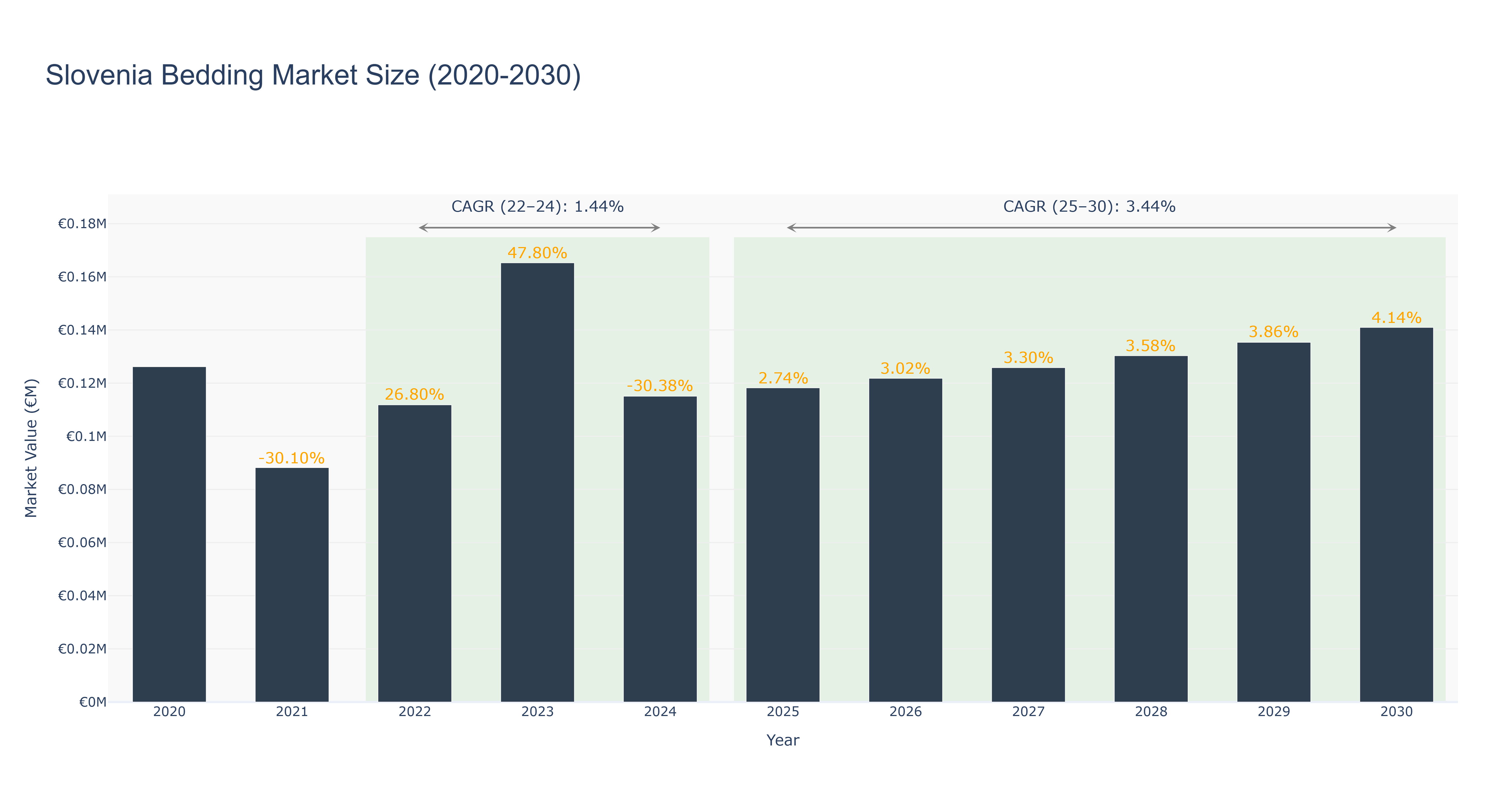
Slovenia Bedding Market has shown a fluctuating trend over the past decade. The peak market size of €0.17 million was reached in 2023, driven by a substantial growth rate of 47.80%. However, the market experienced a decline in 2024, dropping to €0.12 million with a negative growth rate of -30.38%. From 2025 to 2030, the market is forecasted to grow steadily, with a CAGR of 3.44%. The recent positive growth trends can be attributed to increasing consumer demand for premium bedding products and a growing focus on home decor. Looking ahead, Slovenia's bedding market is expected to witness further growth driven by innovative product offerings and expanding distribution channels. In the near future, a new sustainable bedding collection is set to be launched, catering to the environmentally conscious consumer segment.
Slovenia Bedding Market: Production & Trade Performance (2019-2025)
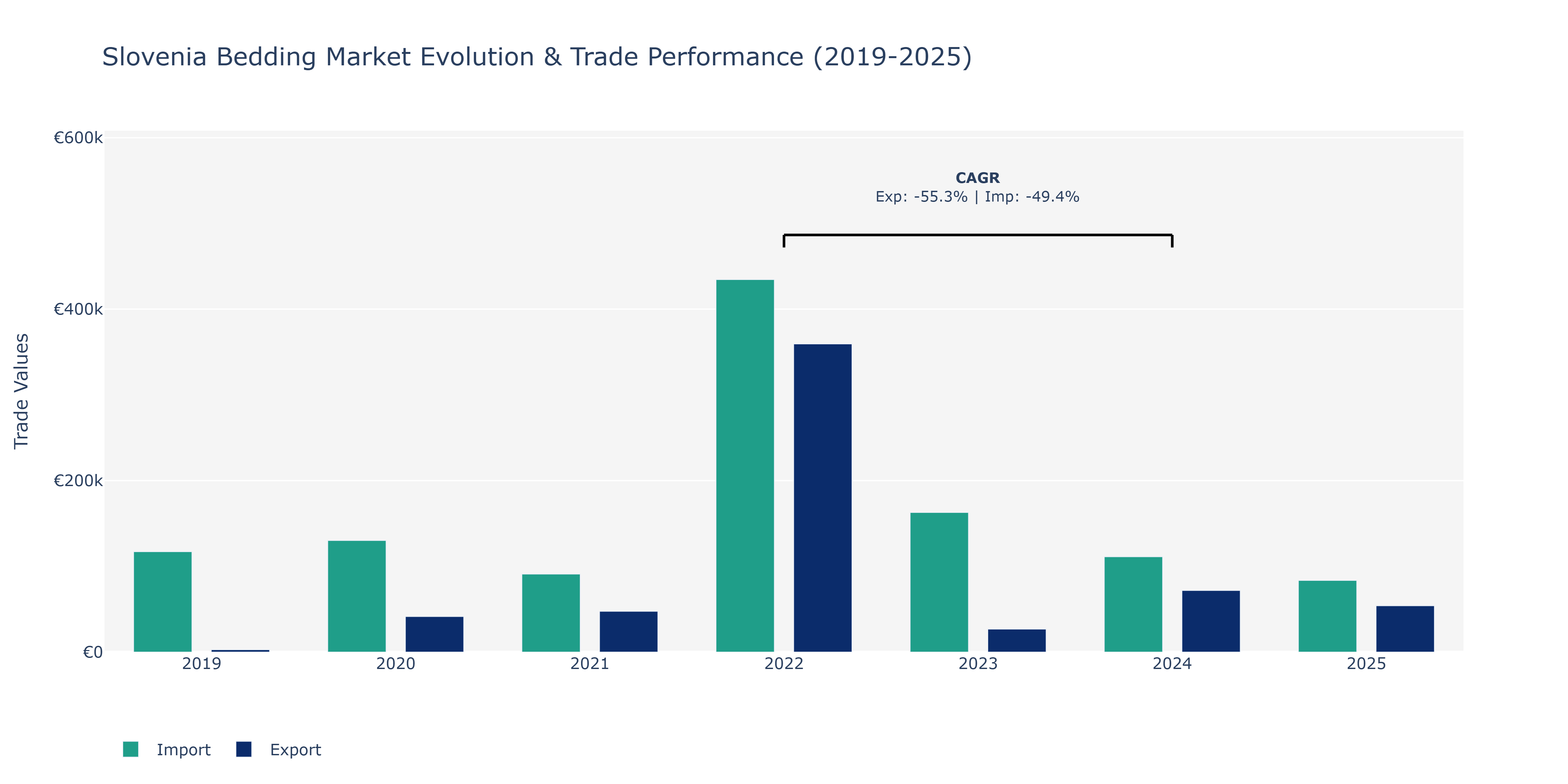
Between 2019 and 2025, the Slovenia Bedding Market's exports and imports witnessed notable fluctuations. Exports surged from €2.72 thousand in 2019 to €359.35 thousand in 2022, showing a substantial peak before declining sharply. However, by 2025, exports stabilized at around €53.93 thousand. In contrast, imports showed a less erratic pattern, increasing consistently from €116.94 thousand in 2019 to €434.42 thousand in 2022, before experiencing a slight decrease to €83.5 thousand in 2025. The market's imports outpaced exports, indicating a growing demand for foreign bedding products in Slovenia. This trend can be attributed to increased consumer awareness of international trends, leading to a preference for high-quality imported bedding products. The decline in exports could be due to shifts in domestic production capacities or changes in export policies impacting outbound shipments. Such fluctuations underline the market's sensitivity to global economic conditions and consumer preferences, highlighting the need for market players to adapt to evolving trends to maintain competitiveness in the Slovenia Bedding Market.
Key Highlights of the Report:
- Slovenia Bedding Market Outlook
- Market Size of Slovenia Bedding Market, 2025
- Forecast of Slovenia Bedding Market, 2032
- Historical Data and Forecast of Slovenia Bedding Revenues & Volume for the Period 2022-2032F
- Slovenia Bedding Market Trend Evolution
- Slovenia Bedding Market Drivers and Challenges
- Slovenia Bedding Price Trends
- Slovenia Bedding Porter's Five Forces
- Slovenia Bedding Industry Life Cycle
- Historical Data and Forecast of Slovenia Bedding Market Revenues & Volume By Type for the Period 2022-2032F
- Historical Data and Forecast of Slovenia Bedding Market Revenues & Volume By home Bedding for the Period 2022-2032F
- Historical Data and Forecast of Slovenia Bedding Market Revenues & Volume By Hotel Bedding for the Period 2022-2032F
- Historical Data and Forecast of Slovenia Bedding Market Revenues & Volume By Distribution Channel for the Period 2022-2032F
- Historical Data and Forecast of Slovenia Bedding Market Revenues & Volume By supermarkets/Hypermarkets for the Period 2022-2032F
- Historical Data and Forecast of Slovenia Bedding Market Revenues & Volume By Specialty Stores for the Period 2022-2032F
- Historical Data and Forecast of Slovenia Bedding Market Revenues & Volume By Online for the Period 2022-2032F
- Historical Data and Forecast of Slovenia Bedding Market Revenues & Volume By Other Distribution Channels for the Period 2022-2032F
- Slovenia Bedding Import Export Trade Statistics
- Market Opportunity Assessment By Type
- Market Opportunity Assessment By Distribution Channel
- Slovenia Bedding Top Companies Market Share
- Slovenia Bedding Competitive Benchmarking By Technical and Operational Parameters
- Slovenia Bedding Company Profiles
- Slovenia Bedding Key Strategic Recommendations






































