Slovenia Mobile Computer Market: Import Trend Analysis
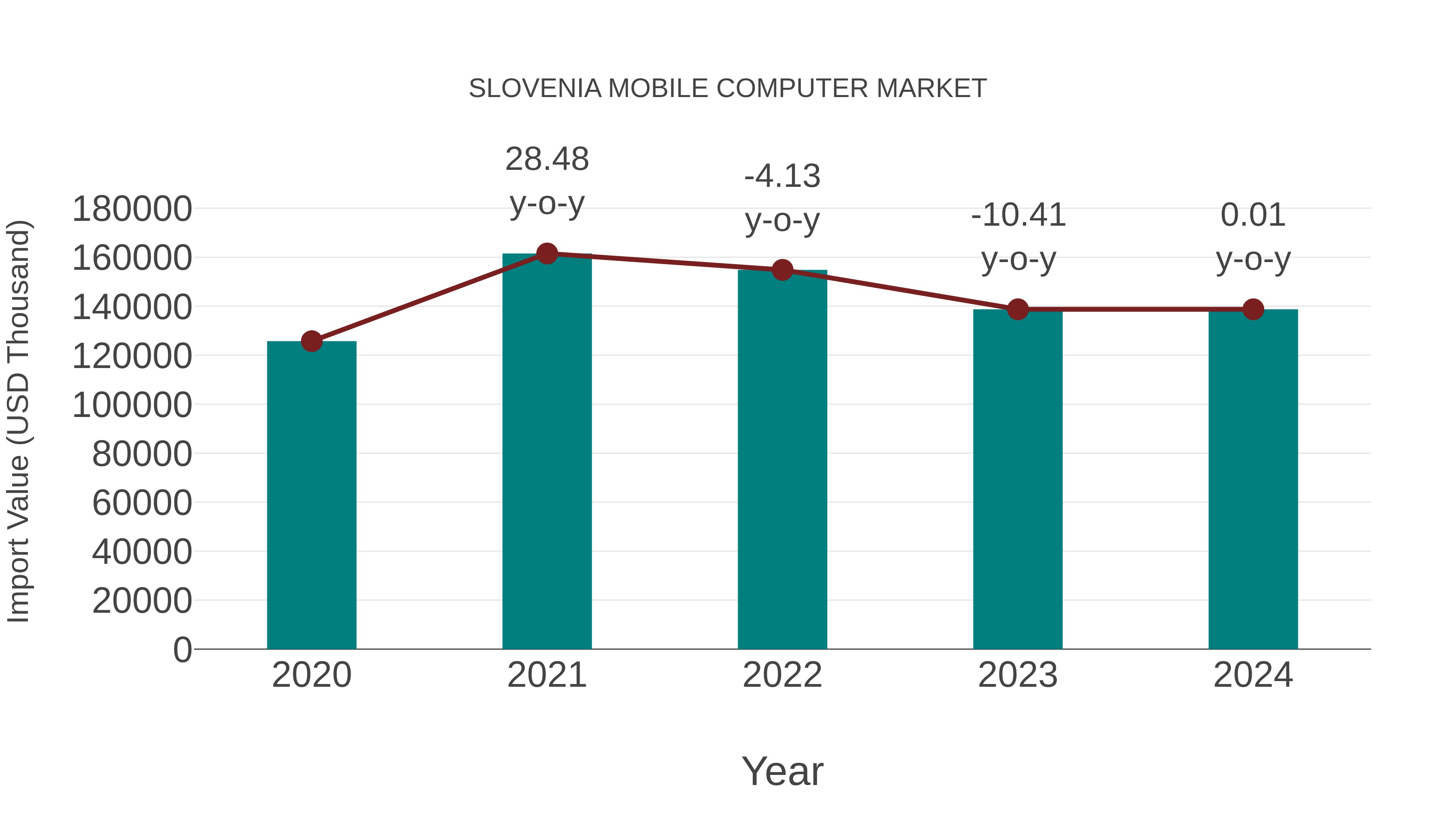
Slovenia import trend for the mobile computer market showed a minimal growth rate of 0.01% from 2023 to 2024, with a compound annual growth rate (CAGR) of 2.49% from 2020 to 2024. This slight increase in import momentum could be attributed to a stable demand for mobile computers despite external market challenges.
Slovenia Mobile Computer Market Overview
The mobile computer market in Slovenia is experiencing steady growth driven by factors such as increasing consumer demand for portable computing devices, technological advancements, and the rising trend of remote work and online learning. Key players in the market include global brands like Apple, Samsung, and Lenovo, as well as local brands catering to specific consumer preferences. The market offers a range of products including smartphones, tablets, and laptops with varying specifications to meet different user needs. With a tech-savvy population and growing digitalization across industries, the mobile computer market in Slovenia presents opportunities for continued expansion and innovation in the coming years, making it a dynamic and competitive landscape for both domestic and international manufacturers and retailers.
Slovenia Mobile Computer Market Trends
The mobile computer market in Slovenia is experiencing a shift towards more compact and lightweight devices, with a growing demand for 2-in-1 laptops and ultra-thin notebooks. Consumers are increasingly looking for devices that offer both portability and performance, driving manufacturers to focus on designing sleek and powerful products. Additionally, there is a rising interest in gaming laptops among a younger demographic, leading to the introduction of gaming-centric features in mobile computers. The market is also witnessing a surge in demand for Chromebooks, especially in the education sector, due to their affordability and ease of use. Overall, the Slovenia Mobile Computer Market is seeing a trend towards versatile, high-performance devices that cater to various consumer needs and preferences.
Slovenia Mobile Computer Market Challenges
In the Slovenia Mobile Computer Market, some of the key challenges include intense competition among major global brands and local players, leading to pricing pressures and the need for continuous innovation to stay competitive. Additionally, the rapid pace of technological advancements and changing consumer preferences pose challenges in terms of keeping up with the latest trends and ensuring product differentiation. Distribution and logistics can also be a challenge in reaching the dispersed population across the country efficiently. Moreover, economic uncertainties and fluctuations in currency exchange rates can impact consumer purchasing power and affect overall market demand. Overall, navigating these challenges requires companies to adopt a strategic approach, focusing on product development, marketing strategies, and efficient supply chain management to succeed in the dynamic Slovenia Mobile Computer Market.
Slovenia Mobile Computer Market Investment Opportunities
The mobile computer market in Slovenia presents various investment opportunities due to the growing demand for portable computing devices. With an increasing number of individuals and businesses relying on mobile technology for work and entertainment, there is a need for innovative and high-quality mobile computers. Investing in the development and production of lightweight, powerful laptops, tablets, and 2-in-1 devices tailored to the Slovenian market can be lucrative. Additionally, there is potential in providing value-added services such as mobile device accessories, repair services, and software solutions. Collaborating with local retailers and online platforms to distribute and market these products can help tap into the expanding mobile computer market in Slovenia.
Slovenia Mobile Computer Market Government Policy
In Slovenia, the mobile computer market is governed by policies that promote fair competition, consumer protection, and technological innovation. The government`s regulatory framework ensures that mobile computer manufacturers and service providers adhere to industry standards and data protection regulations. Additionally, the government encourages the development of mobile computer technologies through research and development incentives and funding opportunities. Data privacy laws, such as the General Data Protection Regulation (GDPR), are also enforced to protect consumer information collected by mobile computer companies. Overall, the government`s policies in Slovenia aim to create a competitive and secure mobile computer market that benefits both businesses and consumers.
Slovenia Mobile Computer Market Future Outlook
The future outlook for the Slovenia Mobile Computer Market is positive, with continued growth expected in the coming years. Factors driving this growth include increasing demand for portable computing devices, advancements in technology leading to more powerful and efficient devices, and a growing trend towards remote work and digitalization. The market is likely to see a rise in sales of laptops, tablets, and hybrid devices as consumers and businesses seek versatile and mobile computing solutions. Additionally, the adoption of 5G technology is expected to further boost the market by enabling faster and more reliable connectivity on mobile devices. Overall, the Slovenia Mobile Computer Market is poised for expansion and innovation in the foreseeable future.
Key Highlights of the Report:
- Slovenia Mobile Computer Market Outlook
- Market Size of Slovenia Mobile Computer Market, 2025
- Forecast of Slovenia Mobile Computer Market, 2032
- Historical Data and Forecast of Slovenia Mobile Computer Revenues & Volume for the Period 2022 - 2032F
- Slovenia Mobile Computer Market Trend Evolution
- Slovenia Mobile Computer Market Drivers and Challenges
- Slovenia Mobile Computer Price Trends
- Slovenia Mobile Computer Porter's Five Forces
- Slovenia Mobile Computer Industry Life Cycle
- Historical Data and Forecast of Slovenia Mobile Computer Market Revenues & Volume By Component for the Period 2022 - 2032F
- Historical Data and Forecast of Slovenia Mobile Computer Market Revenues & Volume By Hardware for the Period 2022 - 2032F
- Historical Data and Forecast of Slovenia Mobile Computer Market Revenues & Volume By Software for the Period 2022 - 2032F
- Historical Data and Forecast of Slovenia Mobile Computer Market Revenues & Volume By Services for the Period 2022 - 2032F
- Historical Data and Forecast of Slovenia Mobile Computer Market Revenues & Volume By Size for the Period 2022 - 2032F
- Historical Data and Forecast of Slovenia Mobile Computer Market Revenues & Volume By SMBs for the Period 2022 - 2032F
- Historical Data and Forecast of Slovenia Mobile Computer Market Revenues & Volume By Large Businesses for the Period 2022 - 2032F
- Historical Data and Forecast of Slovenia Mobile Computer Market Revenues & Volume By Industry for the Period 2022 - 2032F
- Historical Data and Forecast of Slovenia Mobile Computer Market Revenues & Volume By Retail for the Period 2022 - 2032F
- Historical Data and Forecast of Slovenia Mobile Computer Market Revenues & Volume By Manufacturing for the Period 2022 - 2032F
- Historical Data and Forecast of Slovenia Mobile Computer Market Revenues & Volume By Healthcare for the Period 2022 - 2032F
- Historical Data and Forecast of Slovenia Mobile Computer Market Revenues & Volume By Warehouse for the Period 2022 - 2032F
- Historical Data and Forecast of Slovenia Mobile Computer Market Revenues & Volume By Others for the Period 2022 - 2032F
- Slovenia Mobile Computer Import Export Trade Statistics
- Market Opportunity Assessment By Component
- Market Opportunity Assessment By Size
- Market Opportunity Assessment By Industry
- Slovenia Mobile Computer Top Companies Market Share
- Slovenia Mobile Computer Competitive Benchmarking By Technical and Operational Parameters
- Slovenia Mobile Computer Company Profiles
- Slovenia Mobile Computer Key Strategic Recommendations






































