South Africa Flexible Intermediate Bulk Container Market Size Growth Rate
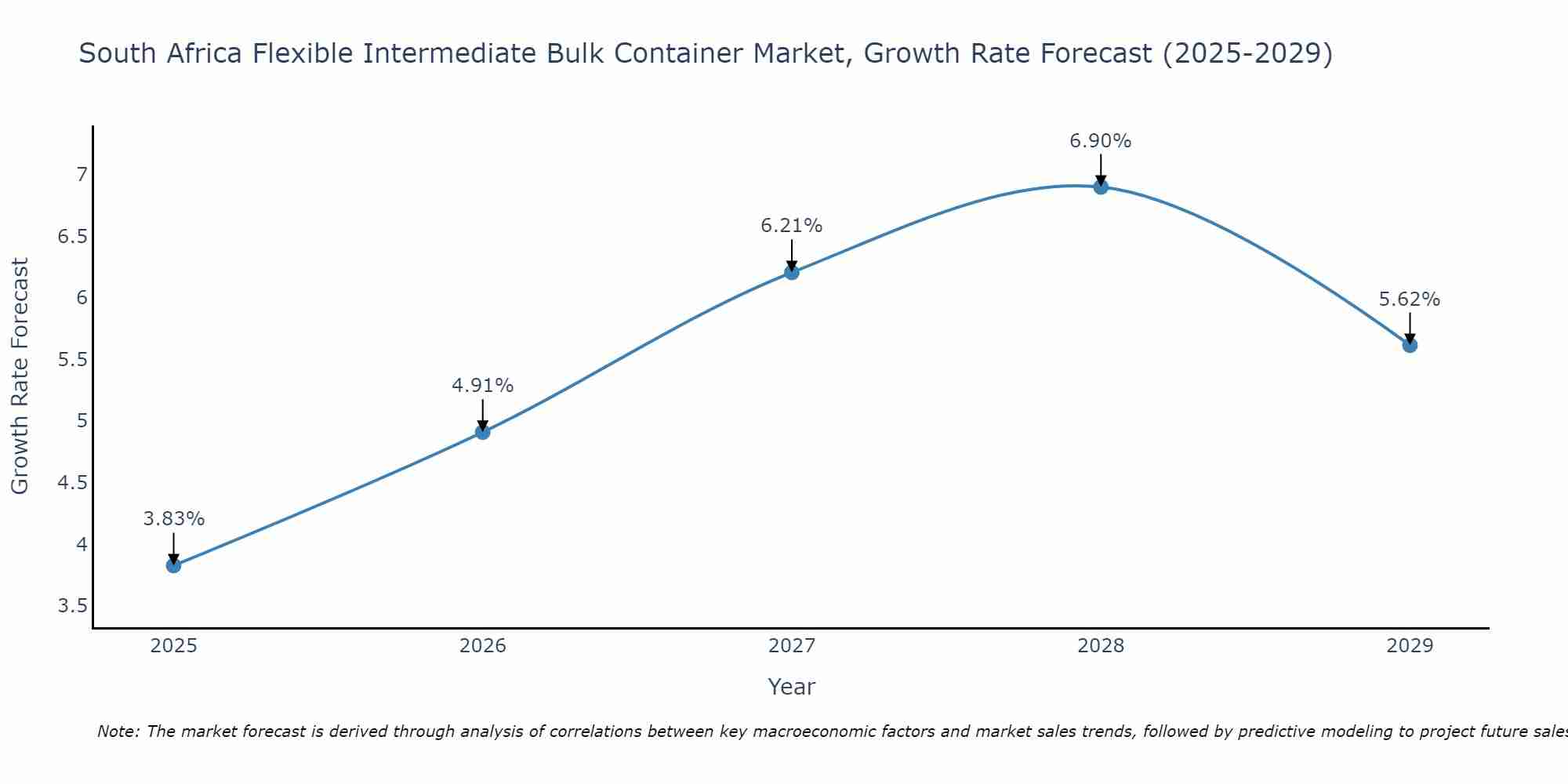
The South Africa Flexible Intermediate Bulk Container Market is projected to witness mixed growth rate patterns during 2025 to 2029. Growth accelerates to 6.90% in 2028, following an initial rate of 3.83%, before easing to 5.62% at the end of the period.
South Africa Flexible Intermediate Bulk Container Market Synopsis
The South Africa Flexible Intermediate Bulk Container (FIBC) market is experiencing steady growth driven by various industries such as agriculture, mining, and chemicals. The demand for FIBCs in South Africa is increasing due to their cost-effectiveness, ease of handling, and ability to transport bulk goods efficiently. Factors such as the country`s expanding agricultural sector, growth in mining activities, and rising exports are contributing to the market`s expansion. Additionally, the government`s initiatives to promote sustainable packaging solutions are further boosting the adoption of FIBCs in the region. Key players in the South Africa FIBC market are focusing on product innovations, customization, and strategic partnerships to gain a competitive edge in the growing market.
South Africa Flexible Intermediate Bulk Container Market Trends
In the South Africa Flexible Intermediate Bulk Container (FIBC) market, there is a growing emphasis on sustainable and eco-friendly solutions. Manufacturers are increasingly focusing on producing FIBCs that are recyclable, reusable, and made from environmentally friendly materials. This trend is driven by both regulatory requirements and the growing awareness among consumers about the importance of sustainability. Additionally, there is a rising demand for customized FIBCs that cater to specific industry needs, such as the food and pharmaceutical sectors. The market is also witnessing technological advancements in FIBC design and manufacturing processes to enhance durability, safety, and efficiency. Overall, the South Africa FIBC market is evolving towards more sustainable practices and tailored solutions to meet the diverse needs of different industries.
South Africa Flexible Intermediate Bulk Container Market Challenges
In the South Africa Flexible Intermediate Bulk Container (FIBC) market, challenges primarily revolve around regulatory compliance, quality control, and competition. Regulatory compliance is a significant hurdle as the industry must adhere to strict standards to ensure the safe transportation of goods. Ensuring consistent quality control throughout the manufacturing process is another challenge, as any defects in FIBCs can compromise the integrity of the products being transported. Additionally, the market is becoming increasingly competitive, with more players entering the industry, putting pressure on existing companies to differentiate themselves through innovation and cost-effectiveness. Overall, navigating these challenges requires FIBC manufacturers in South Africa to stay updated on regulations, invest in quality control measures, and continuously improve their products and services to stay competitive in the market.
South Africa Flexible Intermediate Bulk Container Market Investment Opportunities
The South Africa Flexible Intermediate Bulk Container (FIBC) market presents promising investment opportunities due to factors such as increasing demand from industries like agriculture, mining, and chemicals. The growing export activities in the region further boost the need for FIBCs for packaging and transportation. With the emphasis on cost-effective and eco-friendly packaging solutions, there is a rising preference for FIBCs over traditional packaging methods. Investing in the South Africa FIBC market can be lucrative, especially for companies looking to capitalize on the expanding industrial sectors in the region. Additionally, innovations in FIBC technology, such as anti-static FIBCs for hazardous materials, provide avenues for differentiation and market growth. Overall, the market offers potential for investors seeking opportunities in the packaging and logistics industry within South Africa.
South Africa Flexible Intermediate Bulk Container Market Future Outlook
The South Africa Flexible Intermediate Bulk Container (FIBC) market is expected to witness steady growth in the coming years due to the increasing demand for cost-effective and efficient bulk packaging solutions across various industries such as agriculture, chemicals, and mining. Factors such as the rise in exports, improving economic conditions, and the growing emphasis on sustainable packaging practices are likely to drive the market`s expansion. Additionally, advancements in FIBC technology, such as the development of innovative designs and materials, are anticipated to further boost market growth. However, challenges related to fluctuating raw material prices and regulatory issues may pose some constraints. Overall, the South Africa FIBC market is forecasted to experience positive growth opportunities and attract investments in the foreseeable future.
Key Highlights of the Report:
- South Africa Flexible Intermediate Bulk Container Market Outlook
- Market Size of South Africa Flexible Intermediate Bulk Container Market, 2021
- Forecast of South Africa Flexible Intermediate Bulk Container Market, 2031
- Historical Data and Forecast of South Africa Flexible Intermediate Bulk Container Revenues & Volume for the Period 2018 - 2031
- South Africa Flexible Intermediate Bulk Container Market Trend Evolution
- South Africa Flexible Intermediate Bulk Container Market Drivers and Challenges
- South Africa Flexible Intermediate Bulk Container Price Trends
- South Africa Flexible Intermediate Bulk Container Porter's Five Forces
- South Africa Flexible Intermediate Bulk Container Industry Life Cycle
- Historical Data and Forecast of South Africa Flexible Intermediate Bulk Container Market Revenues & Volume By Product for the Period 2018 - 2031
- Historical Data and Forecast of South Africa Flexible Intermediate Bulk Container Market Revenues & Volume By Type A for the Period 2018 - 2031
- Historical Data and Forecast of South Africa Flexible Intermediate Bulk Container Market Revenues & Volume By Type B for the Period 2018 - 2031
- Historical Data and Forecast of South Africa Flexible Intermediate Bulk Container Market Revenues & Volume By Type C for the Period 2018 - 2031
- Historical Data and Forecast of South Africa Flexible Intermediate Bulk Container Market Revenues & Volume By Type D for the Period 2018 - 2031
- Historical Data and Forecast of South Africa Flexible Intermediate Bulk Container Market Revenues & Volume By End-Use for the Period 2018 - 2031
- Historical Data and Forecast of South Africa Flexible Intermediate Bulk Container Market Revenues & Volume By Food for the Period 2018 - 2031
- Historical Data and Forecast of South Africa Flexible Intermediate Bulk Container Market Revenues & Volume By Chemical for the Period 2018 - 2031
- Historical Data and Forecast of South Africa Flexible Intermediate Bulk Container Market Revenues & Volume By Pharmaceuticals for the Period 2018 - 2031
- Historical Data and Forecast of South Africa Flexible Intermediate Bulk Container Market Revenues & Volume By Others for the Period 2018 - 2031
- South Africa Flexible Intermediate Bulk Container Import Export Trade Statistics
- Market Opportunity Assessment By Product
- Market Opportunity Assessment By End-Use
- South Africa Flexible Intermediate Bulk Container Top Companies Market Share
- South Africa Flexible Intermediate Bulk Container Competitive Benchmarking By Technical and Operational Parameters
- South Africa Flexible Intermediate Bulk Container Company Profiles
- South Africa Flexible Intermediate Bulk Container Key Strategic Recommendations






































