South Korea Bamboo Furniture Market Size, Share & Growth Rate
The South Korea Bamboo Furniture Market was estimated at USD 422 Million in 2025 and is projected to reach USD 616 Million by 2032, growing at a CAGR of 5.6% from 2026 to 2032. This upward trajectory is fueled by increasing consumer awareness surrounding sustainability, alongside a notable shift toward minimalist design trends that favor natural materials. As environmental considerations gain importance in purchasing decisions, bamboos unique combination of aesthetic and eco-friendly characteristics is expected to drive further growth in the sector.
South Korea Bamboo Furniture Market Year-wise Growth Rate and Key Drivers
This graph highlights how the South Korea Bamboo Furniture Market has steadily grown over the years, supported by major growth factors.
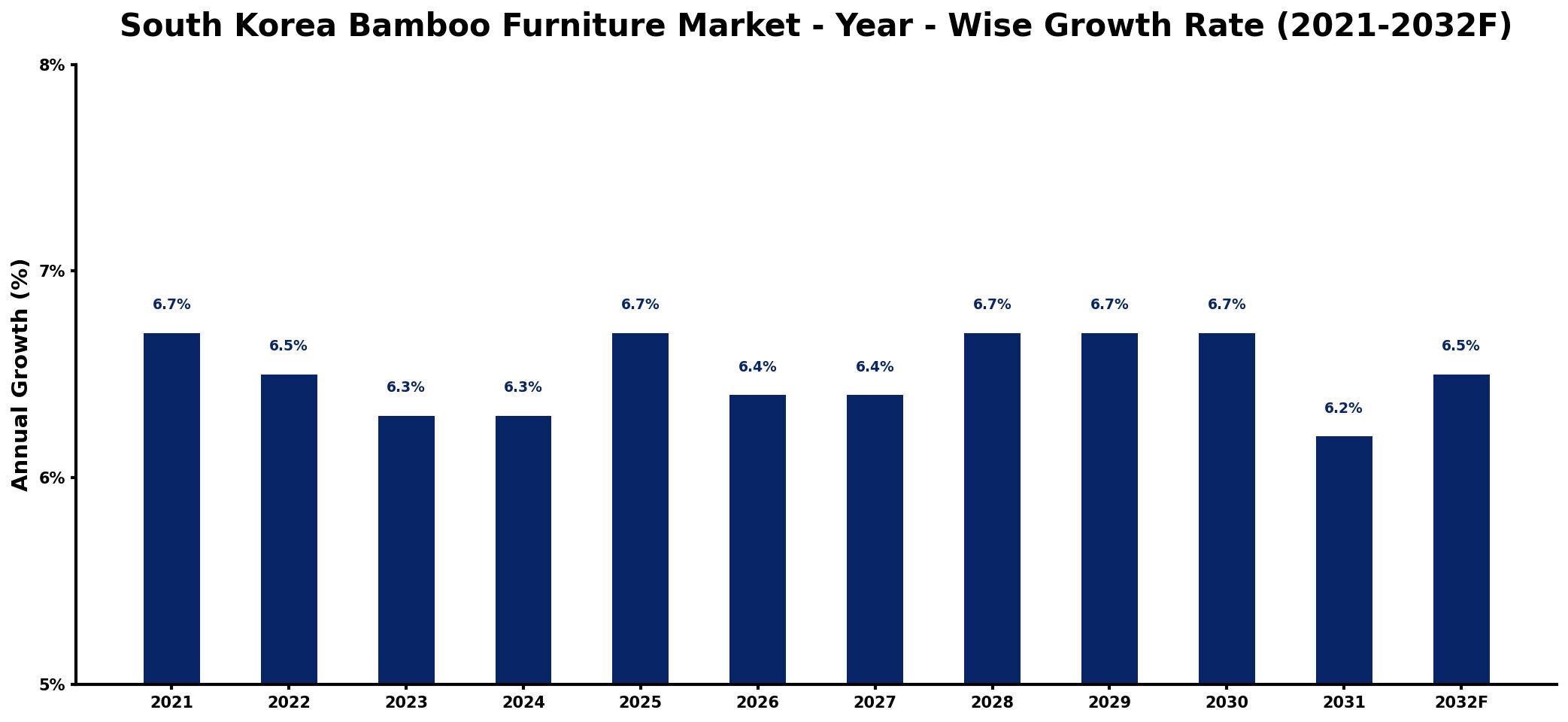
The table below presents the year‑wise growth rates along with the key drivers influencing the market
| Year | Growth Rate | Major Drivers |
| 2021 | 6.7% | Rising eco-friendly consumer preferences |
| 2022 | 6.5% | Increased investment in sustainability |
| 2023 | 6.3% | Growth in online retail channels |
| 2024 | 6.3% | Expansion of home decor trends |
| 2025 | 6.7% | Surge in home improvement projects |
| 2026 | 6.4% | Growing interest in renewable materials |
| 2027 | 6.4% | Increase in urban living spaces |
| 2028 | 6.7% | Popularity of minimalist design styles |
| 2029 | 6.7% | Enhanced awareness of environmental impact |
| 2030 | 6.7% | Development of innovative manufacturing techniques |
| 2031 | 6.2% | Shift towards artisanal craftsmanship |
| 2032 | 6.5% | Emergence of new design collaborations |
Note: Market size estimations and growth projections presented in this report are based on 6Wresearch's proprietary forecasting methodology, utilizing the latest available industry data, government publications, and primary research inputs.
South Korea Bamboo Furniture Market Synopsis
In recent years, the South Korea Bamboo Furniture Market has seen a remarkable surge in interest, primarily driven by a cultural shift towards eco-conscious living. Consumers are increasingly drawn to bamboo furniture not only for its modern appeal but also for its reputation as a sustainable alternative to traditional furniture materials.
As the market evolves, innovative designs and increased quality craftsmanship have emerged, positioning bamboo furniture as a stylish yet responsible choice for interior decor. This growth is bolstered by a consumer base that prioritizes durability and environmental friendliness, making bamboo furniture a viable option for the modern home.
South Korea Bamboo Furniture Market Key Takeaways
- Increasing consumer preference for sustainable products is driving demand for bamboo furniture.
- Minimalist and contemporary design trends are enhancing the appeal of bamboo as a material.
- Manufacturers are innovating with designs that emphasize both style and ecological benefits.
- Consumer education about the advantages of bamboo is crucial for market expansion.
- Investment opportunities are burgeoning in the bamboo furniture manufacturing and retail sectors.
Evaluation of Restraints in South Korea Bamboo Furniture Market
Despite its many advantages, the South Korea Bamboo Furniture Market faces certain limitations that may hinder its growth trajectory. Primarily, bamboo competes with more traditional materials like wood and metal, which may have entrenched consumer loyalties. Furthermore, limited awareness and understanding of bamboo's benefits can lead to hesitance in consumer purchasing decisions. Challenges in sourcing high-quality bamboo and ensuring consistent production processes can also affect the market's overall viability. To navigate these constraints, it will be essential for stakeholders to invest in consumer education and enhance the perceived value of bamboo products.
South Korea Bamboo Furniture Market Trends
The South Korea Bamboo Furniture Market is experiencing a pronounced trend towards eco-friendliness, with consumers actively seeking furniture that aligns with their sustainable lifestyle choices. Additionally, the rising popularity of minimalist and modern design aesthetics is paving the way for bamboo to be prominently featured in contemporary interiors. Theres also an increasing recognition of bamboo's ecological benefits, such as its rapid growth and reduced carbon footprint compared to conventional wood. As a result, retailers are diversifying their bamboo offerings to cater to this burgeoning demand.
South Korea Bamboo Furniture Market Opportunities
The South Korea Bamboo Furniture Market presents a multitude of investment opportunities, particularly as sustainable living becomes a more significant consumer priority. Companies that focus on innovative designs and quality craftsmanship are likely to capture the attention of eco-conscious buyers. Additionally, leveraging South Korea's reputation for superior craftsmanship opens doors for export opportunities in regions that prioritize sustainable products. Startups that introduce fresh, innovative approaches to bamboo furniture design can also find a receptive audience in this expanding market.
Government Initiatives in the South Korea Bamboo Furniture Market
The South Korean government has actively supported the bamboo furniture sector through policies encouraging sustainability and eco-friendly materials. Initiatives include providing incentives for businesses to adopt bamboo in their products, along with funding for research and development in bamboo manufacturing technologies. These policies aim to elevate the overall quality of bamboo products while promoting fair market competition. Furthermore, the government is advocating for the incorporation of bamboo furniture in public spaces, enhancing awareness and acceptance among consumers.
Future Insights of the South Korea Bamboo Furniture Market
Looking ahead to 2026-2032, the South Korea Bamboo Furniture Market is on a promising growth trajectory. As consumers increasingly prioritize sustainability, the demand for bamboo furniture is expected to surge. Government support for sustainable materials will further amplify this trend, encouraging manufacturers to innovate and meet consumer expectations for stylish, eco-friendly solutions. The market's expansion will be driven by a collective shift toward environmentally responsible living, positioning bamboo furniture as a staple in contemporary interiors.
South Korea Bamboo Furniture Market Latest Developments (2025 - 2026)
Recent developments in the South Korea Bamboo Furniture Market indicate a strong push towards innovative product offerings that cater to contemporary aesthetic demands. There has been an uptick in collaborations between designers and manufacturers, leading to unique bamboo pieces that blend functionality with artistic expression. Retailers are also adopting more aggressive marketing strategies to educate consumers about the benefits of bamboo, enhancing its appeal as a sustainable choice. Overall, the industry is positioning itself well to meet the anticipated demand over the coming years.
South Korea Bamboo Furniture Market - Key Attractiveness of the Report
- 10 Years of Market Numbers
- Historical Data Starting from 2022 to 2025
- Base Year: 2025
- Forecast Data until 2032
- Key Performance Indicators Impacting the Market
- Major Upcoming Developments and Projects
Key Highlights of the Report:
- South Korea Bamboo Furniture Market Outlook
- Market Size of South Korea Bamboo Furniture Market, 2025
- Forecast of South Korea Bamboo Furniture Market, 2032
- Historical Data and Forecast of South Korea Bamboo Furniture Revenues & Volume for the Period 2022-2032F
- South Korea Bamboo Furniture Market Trend Evolution
- South Korea Bamboo Furniture Market Drivers and Challenges
- South Korea Bamboo Furniture Price Trends
- South Korea Bamboo Furniture Porter's Five Forces
- South Korea Bamboo Furniture Industry Life Cycle
- Historical Data and Forecast of South Korea Bamboo Furniture Market Revenues & Volume By Type for the Period 2022-2032F
- Historical Data and Forecast of South Korea Bamboo Furniture Market Revenues & Volume By Chairs & Tables for the Period 2022-2032F
- Historical Data and Forecast of South Korea Bamboo Furniture Market Revenues & Volume By Stools for the Period 2022-2032F
- Historical Data and Forecast of South Korea Bamboo Furniture Market Revenues & Volume By Beds for the Period 2022-2032F
- Historical Data and Forecast of South Korea Bamboo Furniture Market Revenues & Volume By Others for the Period 2022-2032F
- Historical Data and Forecast of South Korea Bamboo Furniture Market Revenues & Volume By End User for the Period 2022-2032F
- Historical Data and Forecast of South Korea Bamboo Furniture Market Revenues & Volume By Residential for the Period 2022-2032F
- Historical Data and Forecast of South Korea Bamboo Furniture Market Revenues & Volume By Commercial for the Period 2022-2032F
- South Korea Bamboo Furniture Import Export Trade Statistics
- Market Opportunity Assessment By Type
- Market Opportunity Assessment By End User
- South Korea Bamboo Furniture Top Companies Market Share
- South Korea Bamboo Furniture Competitive Benchmarking By Technical and Operational Parameters
- South Korea Bamboo Furniture Company Profiles
- South Korea Bamboo Furniture Key Strategic Recommendations






































