Spain 2 Phenylethanol Market: Import Trend Analysis
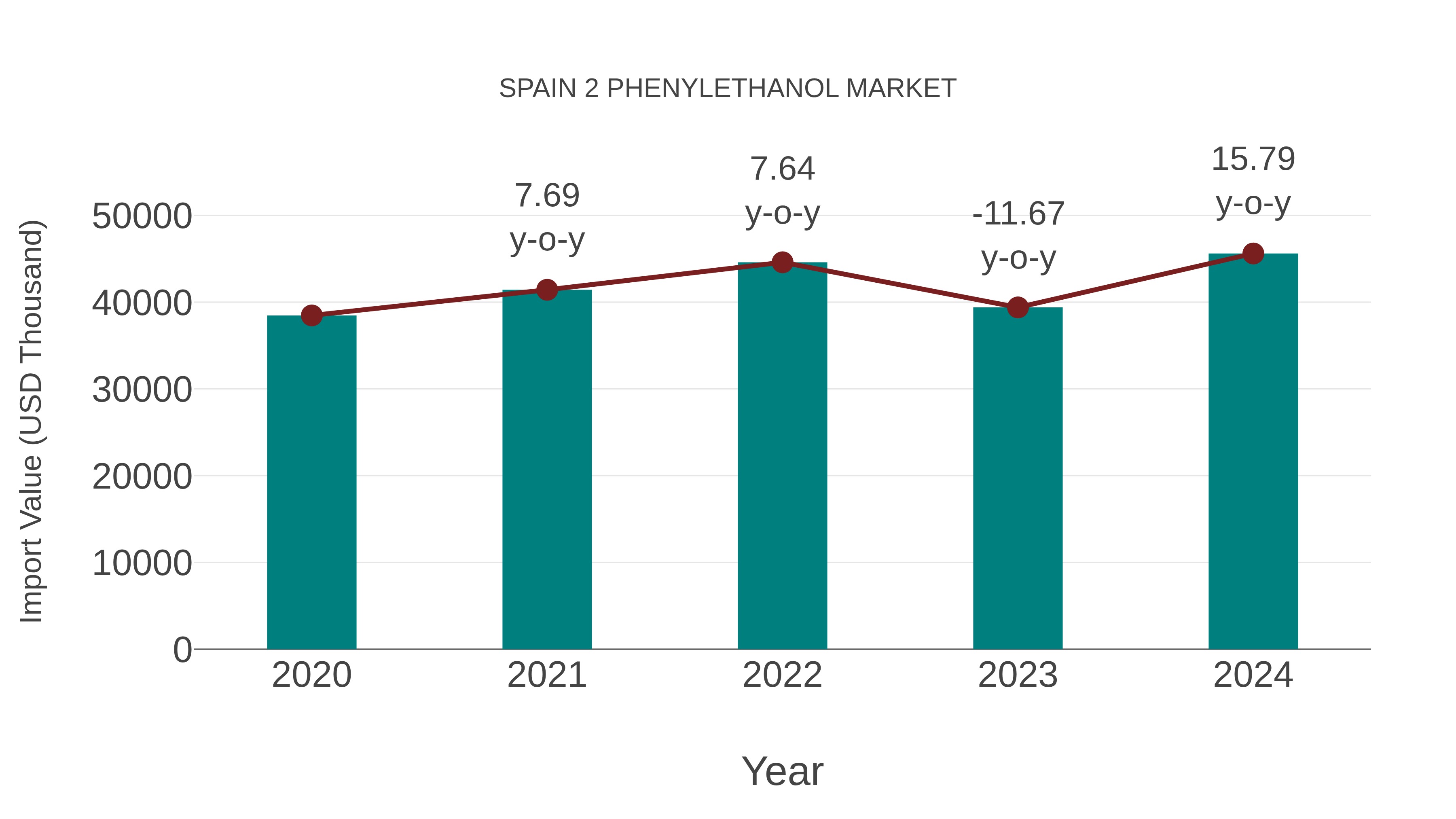
In 2024, Spain`s import trend for Spain 2-phenylethanol market showed a steady increase in volume. The demand for this compound was driven by its applications in various industries, leading to a notable surge in imports during the year.
Spain 2 Phenylethanol Market Overview
The Spain 2-phenylethanol market is experiencing steady growth due to its versatile applications in industries such as fragrance, food, and pharmaceuticals. 2-phenylethanol, also known as rose alcohol, is widely used as a fragrance ingredient in perfumes, cosmetics, and personal care products. The increasing demand for natural and organic ingredients in these sectors has further fueled the market growth. Additionally, 2-phenylethanol is utilized in the food industry as a flavoring agent, particularly in the production of rose-flavored products. The pharmaceutical industry also utilizes 2-phenylethanol in the manufacturing of various medicines and drugs. With the rising consumer preference for natural and sustainable products, the Spain 2-phenylethanol market is expected to continue its growth trajectory in the coming years.
Spain 2 Phenylethanol Market Trends
The Spain 2-phenylethanol market is experiencing steady growth driven by increasing demand from the fragrance and flavors industry. With a rising consumer preference for natural and organic products, 2-phenylethanol, a naturally occurring compound found in roses, is gaining popularity as a key ingredient in perfumes, cosmetics, and food additives. The market is also witnessing a shift towards sustainable sourcing practices, with companies focusing on environmentally friendly production methods and ethically sourced raw materials. Additionally, the growing awareness of the potential health benefits of 2-phenylethanol, such as its calming and mood-enhancing properties, is further driving its demand in various applications. Overall, the Spain 2-phenylethanol market is poised for continued growth as companies innovate to meet consumer preferences for natural and sustainable products.
Spain 2 Phenylethanol Market Challenges
In the Spain 2-phenylethanol market, one of the main challenges faced is the competition from synthetic alternatives. Synthetic 2-phenylethanol can be produced at a lower cost, posing a threat to natural sources of the compound. Another challenge is the fluctuation in raw material prices, as 2-phenylethanol is derived from sources such as rose oil or benzene. This can impact the overall production costs and pricing strategies of companies operating in the market. Additionally, regulatory hurdles related to the use of 2-phenylethanol in certain industries such as cosmetics and fragrances can pose challenges for market players in terms of compliance and market access. Overall, navigating these challenges while maintaining product quality and market competitiveness is crucial for businesses in the Spain 2-phenylethanol market.
Spain 2 Phenylethanol Market Investment Opportunities
The Spain 2-phenylethanol market presents promising investment opportunities due to the growing demand for this compound in various industries. 2-phenylethanol is commonly used in the fragrance and flavor industry, as well as in the production of cosmetics, pharmaceuticals, and food products. The market is driven by increasing consumer preference for natural and organic ingredients, as 2-phenylethanol can be derived from natural sources such as rose oil. Investing in the Spain 2-phenylethanol market could be lucrative as the demand for this compound is expected to continue rising. Additionally, with advancements in technology and manufacturing processes, there is potential for innovation and development of new applications for 2-phenylethanol, further expanding the market opportunities.
Spain 2 Phenylethanol Market Government Policy
Government policies related to the Spain 2-phenylethanol market primarily focus on regulating the production, import, and export of this chemical compound. The Spanish government has implemented strict guidelines to ensure the safety and quality of 2-phenylethanol, which is commonly used in the fragrance and flavor industry. These regulations include obtaining necessary permits and licenses for the manufacturing and distribution of 2-phenylethanol, as well as adhering to environmental standards to minimize any potential negative impact on the environment. Additionally, the government may also impose tariffs or trade restrictions to protect domestic producers and maintain a competitive market environment. Overall, the regulatory framework aims to promote sustainable growth and innovation within the 2-phenylethanol market while safeguarding public health and environmental well-being.
Spain 2 Phenylethanol Market Future Outlook
The future outlook for the Spain 2-phenylethanol market appears promising, driven by the increasing demand from various end-use industries such as fragrance, cosmetics, and food & beverages. The growth of the personal care and cosmetics sector, coupled with the rising consumer preference for natural and organic products, is expected to fuel the demand for 2-phenylethanol as a key ingredient in fragrances. Additionally, the expanding food and beverage industry in Spain is likely to create new opportunities for the utilization of 2-phenylethanol in flavoring applications. Furthermore, the growing trend towards sustainable and eco-friendly products is anticipated to drive the market towards the adoption of bio-based 2-phenylethanol production methods, further boosting market growth in the coming years.
Key Highlights of the Report:
- Spain 2 Phenylethanol Market Outlook
- Market Size of Spain 2 Phenylethanol Market, 2025
- Forecast of Spain 2 Phenylethanol Market, 2032
- Historical Data and Forecast of Spain 2 Phenylethanol Revenues & Volume for the Period 2022-2032F
- Spain 2 Phenylethanol Market Trend Evolution
- Spain 2 Phenylethanol Market Drivers and Challenges
- Spain 2 Phenylethanol Price Trends
- Spain 2 Phenylethanol Porter's Five Forces
- Spain 2 Phenylethanol Industry Life Cycle
- Historical Data and Forecast of Spain 2 Phenylethanol Market Revenues & Volume By Application for the Period 2022-2032F
- Historical Data and Forecast of Spain 2 Phenylethanol Market Revenues & Volume By Fragrances for the Period 2022-2032F
- Historical Data and Forecast of Spain 2 Phenylethanol Market Revenues & Volume By Pharmaceuticals for the Period 2022-2032F
- Historical Data and Forecast of Spain 2 Phenylethanol Market Revenues & Volume By Solvents for the Period 2022-2032F
- Historical Data and Forecast of Spain 2 Phenylethanol Market Revenues & Volume By End-Use for the Period 2022-2032F
- Historical Data and Forecast of Spain 2 Phenylethanol Market Revenues & Volume By Cosmetics for the Period 2022-2032F
- Historical Data and Forecast of Spain 2 Phenylethanol Market Revenues & Volume By Healthcare for the Period 2022-2032F
- Historical Data and Forecast of Spain 2 Phenylethanol Market Revenues & Volume By Chemicals for the Period 2022-2032F
- Historical Data and Forecast of Spain 2 Phenylethanol Market Revenues & Volume By Product Type for the Period 2022-2032F
- Historical Data and Forecast of Spain 2 Phenylethanol Market Revenues & Volume By Natural for the Period 2022-2032F
- Historical Data and Forecast of Spain 2 Phenylethanol Market Revenues & Volume By Synthetic for the Period 2022-2032F
- Historical Data and Forecast of Spain 2 Phenylethanol Market Revenues & Volume By Distribution Channel for the Period 2022-2032F
- Historical Data and Forecast of Spain 2 Phenylethanol Market Revenues & Volume By Online for the Period 2022-2032F
- Historical Data and Forecast of Spain 2 Phenylethanol Market Revenues & Volume By Offline for the Period 2022-2032F
- Spain 2 Phenylethanol Import Export Trade Statistics
- Market Opportunity Assessment By Application
- Market Opportunity Assessment By End-Use
- Market Opportunity Assessment By Product Type
- Market Opportunity Assessment By Distribution Channel
- Spain 2 Phenylethanol Top Companies Market Share
- Spain 2 Phenylethanol Competitive Benchmarking By Technical and Operational Parameters
- Spain 2 Phenylethanol Company Profiles
- Spain 2 Phenylethanol Key Strategic Recommendations






































