Spain Flip Flops Market Size (2020-2030)
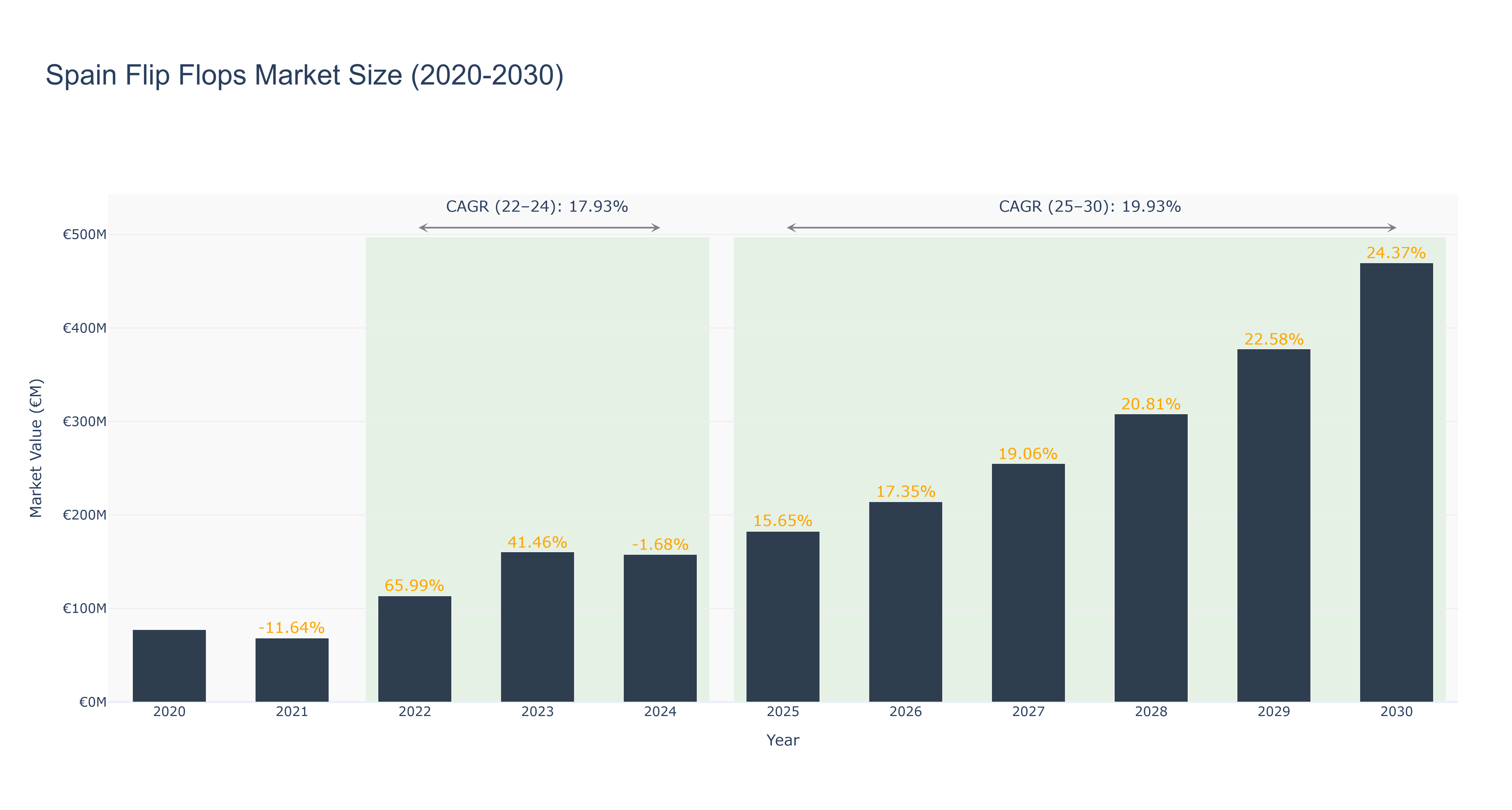
Spain Flip Flops Market has shown a notable growth trend over the years. The peak market size of €469.67 million is forecasted for 2030, with a steady increase since 2020. The market exhibited a slight decline in 2024, with a size of €157.82 million, attributed to market saturation and changing consumer preferences. The subsequent years saw a significant rebound, driven by innovative product offerings and effective marketing strategies. The CAGR for 2025-2030 is projected at 19.93%, indicating strong potential for continued expansion. Industry drivers such as increasing disposable income and a growing focus on comfort and style have fueled this growth. Looking ahead, Spain Flip Flops Market is expected to witness further growth through collaborations with sustainable fashion brands and the introduction of eco-friendly materials in product lines.
Spain Flip Flops Market: Production & Trade Performance (2019-2025)
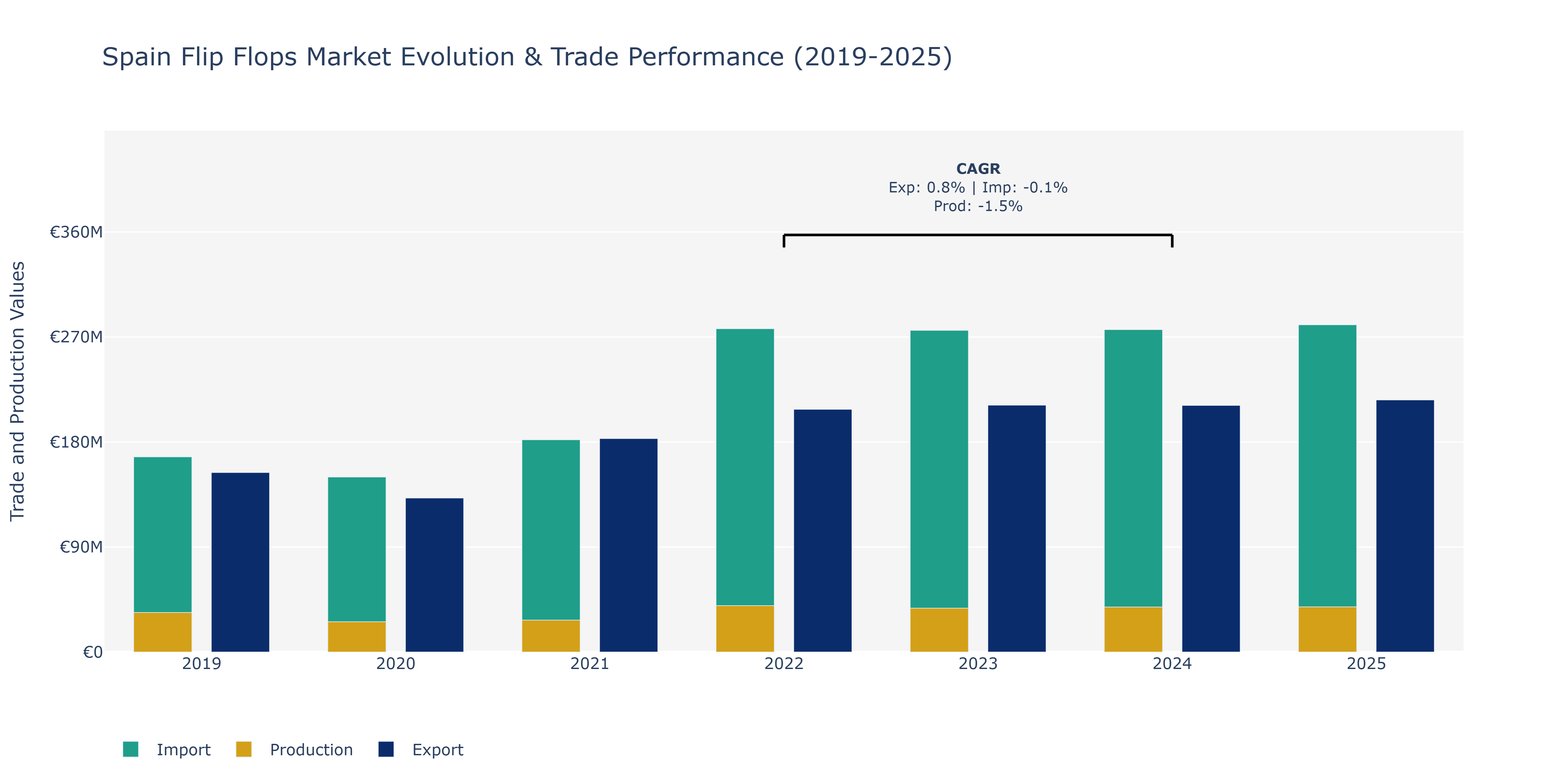
In the Spain Flip Flops Market, exports exhibited a fluctuating trend from 2019 to 2025. Starting at €153.8 million in 2019, exports experienced a decline in 2020 to €131.96 million but then showed a steady increase, peaking at €216.05 million in 2025. In contrast, imports followed a similar pattern by initially decreasing to €149.95 million in 2020 before rising and reaching €280.44 million in 2025. Production levels also varied, with a notable increase from €33.87 million in 2019 to €39.72 million in 2022, although experiencing a slight dip in 2023 before rebounding to €38.69 million by 2025. These trends can be attributed to evolving consumer preferences, changing fashion trends, and possibly shifts in global supply chains affecting the demand for Spanish flip flops. The market's resilience in exports and imports despite the production fluctuations highlights the competitiveness and adaptability of the Spanish flip flops industry in responding to market dynamics and consumer demands.
Spain Flip Flops Market Overview
The Spain flip flops market is a thriving sector characterized by a wide range of options for consumers in terms of style, material, and price points. With a strong emphasis on fashion and comfort, Spanish consumers are increasingly turning to flip flops as a popular footwear choice, especially during the warmer months. Local brands like Havaianas, Ipanema, and Birkenstock compete with international players in the market, offering trendy designs and quality materials. The market is also witnessing a growing trend towards sustainable and eco-friendly options, with many brands incorporating recycled materials in their products. E-commerce platforms play a significant role in the distribution of flip flops, providing consumers with convenient access to a diverse selection of products. Overall, the Spain flip flops market presents opportunities for both local and international brands to cater to the evolving preferences of Spanish consumers.
Spain Flip Flops Market Trends
The Spain Flip Flops Market is experiencing a surge in demand for sustainable and eco-friendly options, with consumers showing a growing preference for brands that focus on environmental consciousness. Additionally, there is a trend towards customization and personalization, with consumers seeking unique designs and styles that reflect their individuality. Comfort and durability remain key factors influencing purchasing decisions, with a shift towards high-quality materials and ergonomic designs. Online sales are also on the rise, driven by the convenience and variety offered by e-commerce platforms. Collaborations with fashion designers and influencers are becoming more common, adding a stylish and aspirational element to flip flop offerings in the Spanish market. Overall, the market is evolving to meet the demands of eco-conscious, style-savvy consumers who prioritize both comfort and fashion in their footwear choices.
Spain Flip Flops Market Challenges
In the Spain Flip Flops Market, some of the challenges faced include intense competition from both domestic and international brands, fluctuating consumer preferences and fashion trends, and seasonality of demand due to the weather-dependent nature of flip flop usage. Additionally, the market may also face challenges related to sustainability and environmental concerns, as the production and disposal of flip flops can have negative impacts on the environment. Furthermore, economic factors such as changes in disposable income levels and consumer spending habits can also impact the demand for flip flops in Spain. Overall, companies operating in the Spain Flip Flops Market need to stay agile, innovative, and ethical to navigate these challenges and maintain a competitive edge in the market.
Spain Flip Flops Market Investment Opportunities
The Spain flip flops market presents a promising investment opportunity due to the country`s vibrant tourism industry and warm climate, resulting in a high demand for comfortable footwear. Key trends such as the growing popularity of sustainable and eco-friendly materials in fashion offer a niche for premium flip flop brands to differentiate themselves and attract environmentally conscious consumers. Additionally, the rise of online shopping and e-commerce platforms provides a convenient avenue for flip flop brands to reach a wider audience beyond traditional retail channels. By leveraging these trends and focusing on quality, design innovation, and marketing strategies tailored to the Spanish market, investors can tap into the potential growth of the Spain flip flops market and capitalize on the country`s fashion-forward consumer base.
Spain Flip Flops Market Government Policy
In Spain, the flip flops market is subject to various government policies and regulations. These include consumer protection laws ensuring that products sold meet safety standards and are accurately labeled. Additionally, there may be regulations related to the materials used in flip flops to protect the environment and ensure they are produced sustainably. Import and export regulations may also impact the market, affecting pricing and availability of flip flops in Spain. Furthermore, taxation policies such as value-added tax (VAT) may apply to the sale of flip flops, influencing consumer purchasing decisions. Overall, government policies play a significant role in shaping the Spain flip flops market, impacting aspects such as product quality, sustainability, pricing, and market competitiveness.
Spain Flip Flops Market Future Outlook
The future outlook for the Spain Flip Flops Market appears positive, with steady growth expected in the coming years. Factors driving this growth include increasing consumer preference for comfortable and versatile footwear, especially in warm weather regions like Spain. Additionally, the rise of online retail platforms and e-commerce is providing easier access to a wide range of flip flop options for consumers. Innovation in materials and designs, coupled with the growing trend of sustainable and eco-friendly products, are also likely to influence market dynamics. Overall, the Spain Flip Flops Market is anticipated to experience continued growth, with opportunities for market players to capitalize on evolving consumer preferences and market trends.
Key Highlights of the Report:
- Spain Flip Flops Market Outlook
- Market Size of Spain Flip Flops Market, 2021
- Forecast of Spain Flip Flops Market, 2031
- Historical Data and Forecast of Spain Flip Flops Revenues & Volume for the Period 2018 - 2031
- Spain Flip Flops Market Trend Evolution
- Spain Flip Flops Market Drivers and Challenges
- Spain Flip Flops Price Trends
- Spain Flip Flops Porter's Five Forces
- Spain Flip Flops Industry Life Cycle
- Historical Data and Forecast of Spain Flip Flops Market Revenues & Volume By Sole Material for the Period 2018 - 2031
- Historical Data and Forecast of Spain Flip Flops Market Revenues & Volume By EVA Flip Flops for the Period 2018 - 2031
- Historical Data and Forecast of Spain Flip Flops Market Revenues & Volume By PVC Flip Flops for the Period 2018 - 2031
- Historical Data and Forecast of Spain Flip Flops Market Revenues & Volume By Rubber Flip Flops for the Period 2018 - 2031
- Historical Data and Forecast of Spain Flip Flops Market Revenues & Volume By EVA+Rubber Flip Flops for the Period 2018 - 2031
- Historical Data and Forecast of Spain Flip Flops Market Revenues & Volume By Others for the Period 2018 - 2031
- Historical Data and Forecast of Spain Flip Flops Market Revenues & Volume By End User for the Period 2018 - 2031
- Historical Data and Forecast of Spain Flip Flops Market Revenues & Volume By Women Flip Flops for the Period 2018 - 2031
- Historical Data and Forecast of Spain Flip Flops Market Revenues & Volume By Men Flip Flops for the Period 2018 - 2031
- Historical Data and Forecast of Spain Flip Flops Market Revenues & Volume By Girls Flip Flops for the Period 2018 - 2031
- Historical Data and Forecast of Spain Flip Flops Market Revenues & Volume By Boys Flip Flops for the Period 2018 - 2031
- Spain Flip Flops Import Export Trade Statistics
- Market Opportunity Assessment By Sole Material
- Market Opportunity Assessment By End User
- Spain Flip Flops Top Companies Market Share
- Spain Flip Flops Competitive Benchmarking By Technical and Operational Parameters
- Spain Flip Flops Company Profiles
- Spain Flip Flops Key Strategic Recommendations






































