Spain Honey Wine Market: Import Trend Analysis
In 2024, Spain`s honey wine market saw a steady increase in imports. The trend reflected growing consumer interest in unique alcoholic beverages. This surge in imports indicates a potential opportunity for market expansion and diversification in the honey wine sector.
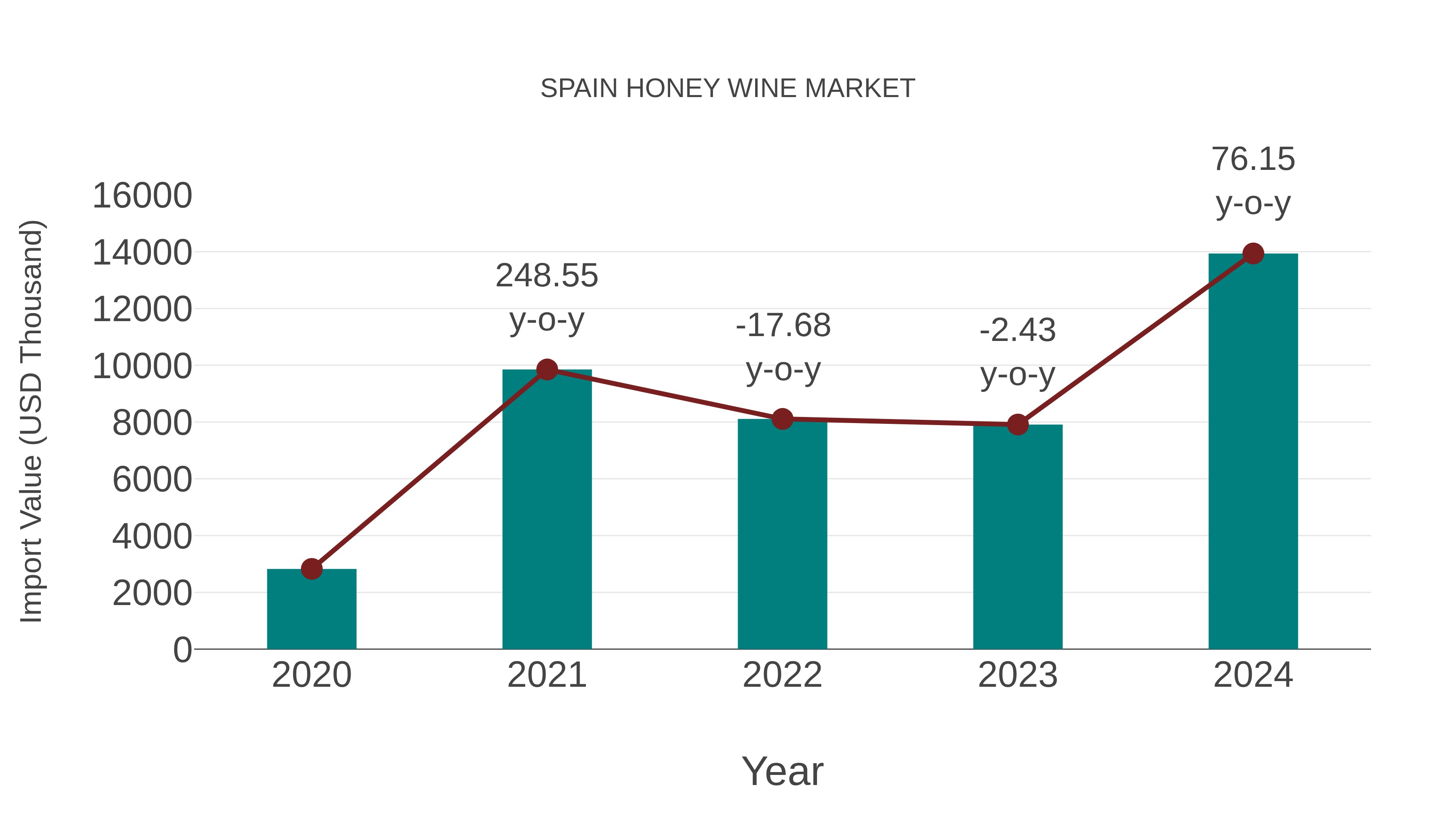
Spain Honey Wine Market Overview
The honey wine market in Spain is experiencing steady growth driven by increasing consumer interest in natural and traditional alcoholic beverages. Known as "mead" locally, honey wine is gaining popularity among consumers looking for unique and artisanal products. The market is characterized by a diverse range of honey wine producers offering different flavors and styles to cater to various consumer preferences. Key factors contributing to the growth of the market include the rising trend of supporting local and sustainable products, as well as the growing awareness of the health benefits associated with honey consumption. As a result, both domestic consumption and exports of Spanish honey wine are on the rise, positioning the country as a significant player in the global mead market.
Spain Honey Wine Market Trends
The Spain honey wine market is experiencing a surge in popularity driven by the growing interest in natural and artisanal products. Consumers are increasingly seeking unique and traditional beverages, leading to a rise in demand for honey wine, also known as mead. The market is witnessing a trend towards innovative flavor profiles and craft variations, appealing to a diverse range of consumers including those interested in specialty beverages and natural ingredients. Producers are focusing on sustainability, using locally sourced honey and organic practices to cater to the demand for high-quality, ethically produced honey wine. As a result, the Spain honey wine market is poised for continued growth as consumers seek out new and authentic drinking experiences.
Spain Honey Wine Market Challenges
In the Spain honey wine market, one of the main challenges is competition from other alcoholic beverages. Honey wine, also known as mead, faces stiff competition from more mainstream options such as wine, beer, and spirits. Additionally, consumer awareness and understanding of honey wine may be limited, making it difficult for producers to differentiate their products and educate consumers about the unique qualities of mead. Distribution and marketing can also be challenging, as honey wine is a niche product that may not have the same level of visibility or availability as other alcoholic beverages. Overall, increasing market penetration, raising awareness, and differentiating honey wine from other products are key challenges for producers in the Spain honey wine market.
Spain Honey Wine Market Investment Opportunities
The Spain honey wine market presents promising investment opportunities due to increasing consumer interest in unique and artisanal beverages. With a growing trend towards natural and organic products, honey wine, also known as mead, offers a niche segment that appeals to health-conscious consumers and those seeking alternatives to traditional alcoholic beverages. Investing in this market could involve supporting local honey producers, partnering with mead makers to expand distribution channels, or even starting a meadery. Additionally, the rich historical and cultural significance of mead in Spain provides a unique selling point that can attract tourists and enthusiasts. Overall, the Spain honey wine market offers a blend of tradition, innovation, and consumer demand that can make it a lucrative investment opportunity for those looking to tap into the growing beverage industry.
Spain Honey Wine Market Government Policy
In Spain, the honey wine market is regulated by the government through various policies. The production and sale of honey wine, also known as "mead," are subject to standards set by the Spanish Food Safety and Nutrition Agency (AESAN) to ensure product quality and safety. Producers must adhere to labeling requirements that provide information on ingredients, alcohol content, and origin. Additionally, taxation policies apply to the sale of honey wine, with specific excise duties levied on alcoholic beverages. The Spanish government also supports the promotion of honey wine through initiatives that aim to increase awareness and consumption of this traditional beverage. Overall, government policies play a crucial role in shaping the honey wine market in Spain by ensuring compliance with quality standards, regulating sales, and promoting the product to consumers.
Spain Honey Wine Market Future Outlook
The future outlook for the Spain honey wine market appears promising, with a growing consumer interest in unique and artisanal beverages driving demand. Honey wine, also known as mead, is gaining popularity for its historical significance and perceived health benefits. As consumers seek out natural and traditional products, the market for honey wine is expected to expand further in Spain. Additionally, the rising trend of supporting local and sustainable products will likely boost the sales of honey wine produced by local beekeepers and wineries. With increased marketing efforts and product innovation, the Spain honey wine market is forecasted to experience steady growth in the coming years, presenting opportunities for both existing and new players in the industry.
Key Highlights of the Report:
- Spain Honey Wine Market Outlook
- Market Size of Spain Honey Wine Market,2025
- Forecast of Spain Honey Wine Market, 2032
- Historical Data and Forecast of Spain Honey Wine Revenues & Volume for the Period 2022-2032F
- Spain Honey Wine Market Trend Evolution
- Spain Honey Wine Market Drivers and Challenges
- Spain Honey Wine Price Trends
- Spain Honey Wine Porter's Five Forces
- Spain Honey Wine Industry Life Cycle
- Historical Data and Forecast of Spain Honey Wine Market Revenues & Volume By Product Type for the Period 2022-2032F
- Historical Data and Forecast of Spain Honey Wine Market Revenues & Volume By Traditional Honey Wine for the Period 2022-2032F
- Historical Data and Forecast of Spain Honey Wine Market Revenues & Volume By Flavored Honey Wine for the Period 2022-2032F
- Historical Data and Forecast of Spain Honey Wine Market Revenues & Volume By Sparkling Honey Wine for the Period 2022-2032F
- Historical Data and Forecast of Spain Honey Wine Market Revenues & Volume By Organic Honey Wine for the Period 2022-2032F
- Historical Data and Forecast of Spain Honey Wine Market Revenues & Volume By Fermentation Type for the Period 2022-2032F
- Historical Data and Forecast of Spain Honey Wine Market Revenues & Volume By Natural Fermentation for the Period 2022-2032F
- Historical Data and Forecast of Spain Honey Wine Market Revenues & Volume By Infused Fermentation for the Period 2022-2032F
- Historical Data and Forecast of Spain Honey Wine Market Revenues & Volume By Carbonated Process for the Period 2022-2032F
- Historical Data and Forecast of Spain Honey Wine Market Revenues & Volume By Chemical-free Fermentation for the Period 2022-2032F
- Historical Data and Forecast of Spain Honey Wine Market Revenues & Volume By End User for the Period 2022-2032F
- Historical Data and Forecast of Spain Honey Wine Market Revenues & Volume By Wine Enthusiasts for the Period 2022-2032F
- Historical Data and Forecast of Spain Honey Wine Market Revenues & Volume By Restaurants and Bars for the Period 2022-2032F
- Historical Data and Forecast of Spain Honey Wine Market Revenues & Volume By Premium Consumers for the Period 2022-2032F
- Historical Data and Forecast of Spain Honey Wine Market Revenues & Volume By Health-conscious Individuals for the Period 2022-2032F
- Historical Data and Forecast of Spain Honey Wine Market Revenues & Volume By Application for the Period 2022-2032F
- Historical Data and Forecast of Spain Honey Wine Market Revenues & Volume By Home and Personal Consumption for the Period 2022-2032F
- Historical Data and Forecast of Spain Honey Wine Market Revenues & Volume By Gourmet and Culinary Use for the Period 2022-2032F
- Historical Data and Forecast of Spain Honey Wine Market Revenues & Volume By Luxury Beverage Market for the Period 2022-2032F
- Historical Data and Forecast of Spain Honey Wine Market Revenues & Volume By Organic and Natural Food Industry for the Period 2022-2032F
- Spain Honey Wine Import Export Trade Statistics
- Market Opportunity Assessment By Product Type
- Market Opportunity Assessment By Fermentation Type
- Market Opportunity Assessment By End User
- Market Opportunity Assessment By Application
- Spain Honey Wine Top Companies Market Share
- Spain Honey Wine Competitive Benchmarking By Technical and Operational Parameters
- Spain Honey Wine Company Profiles
- Spain Honey Wine Key Strategic Recommendations






































