Sri Lanka Drill Pipe Market: Import Trend Analysis
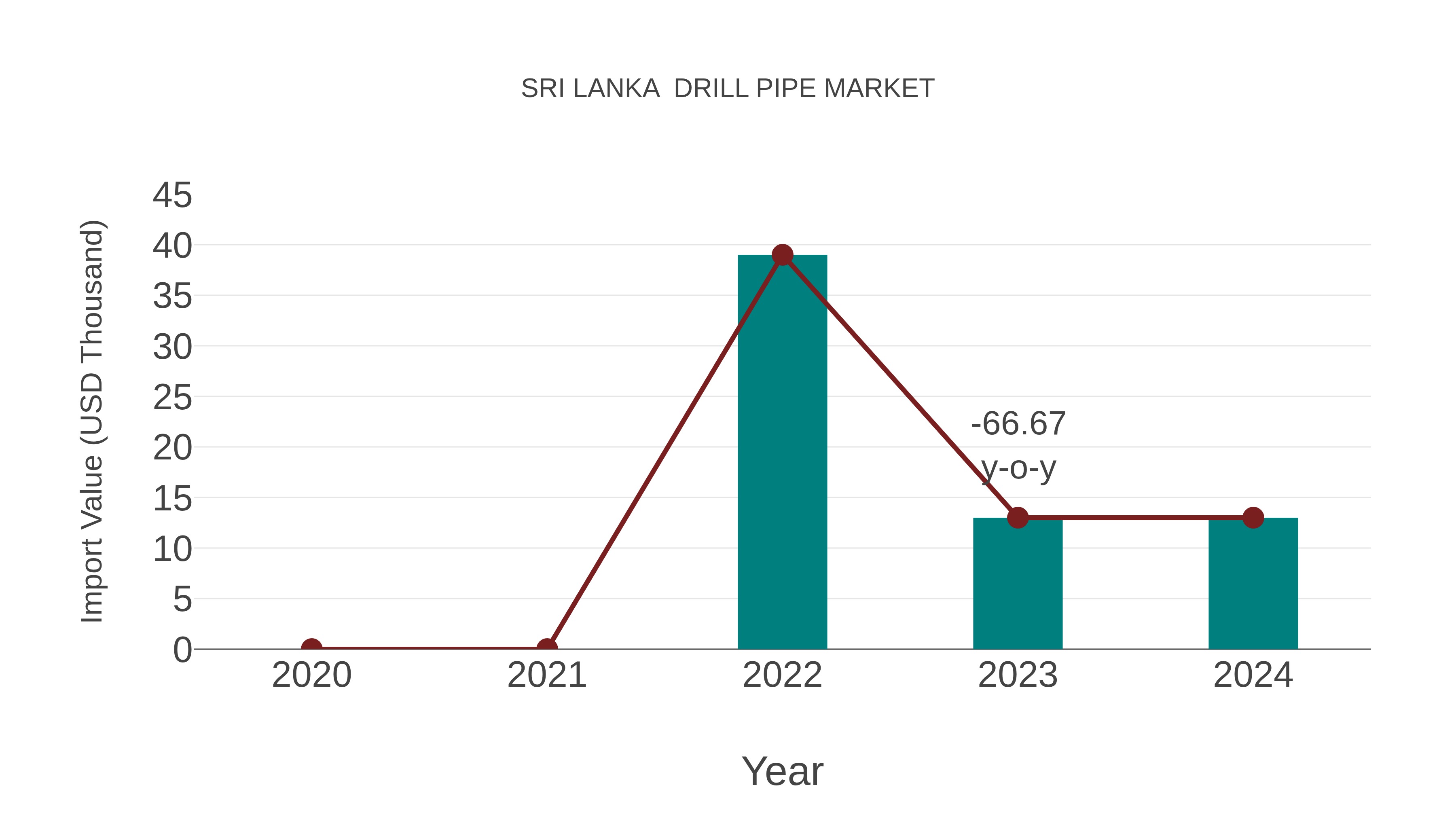
Sri Lanka import trend for the drill pipe market experienced a negative compound annual growth rate (CAGR) of -42.26% from 2020 to 2024. This decline may be attributed to shifts in demand or changes in the domestic drilling industry.
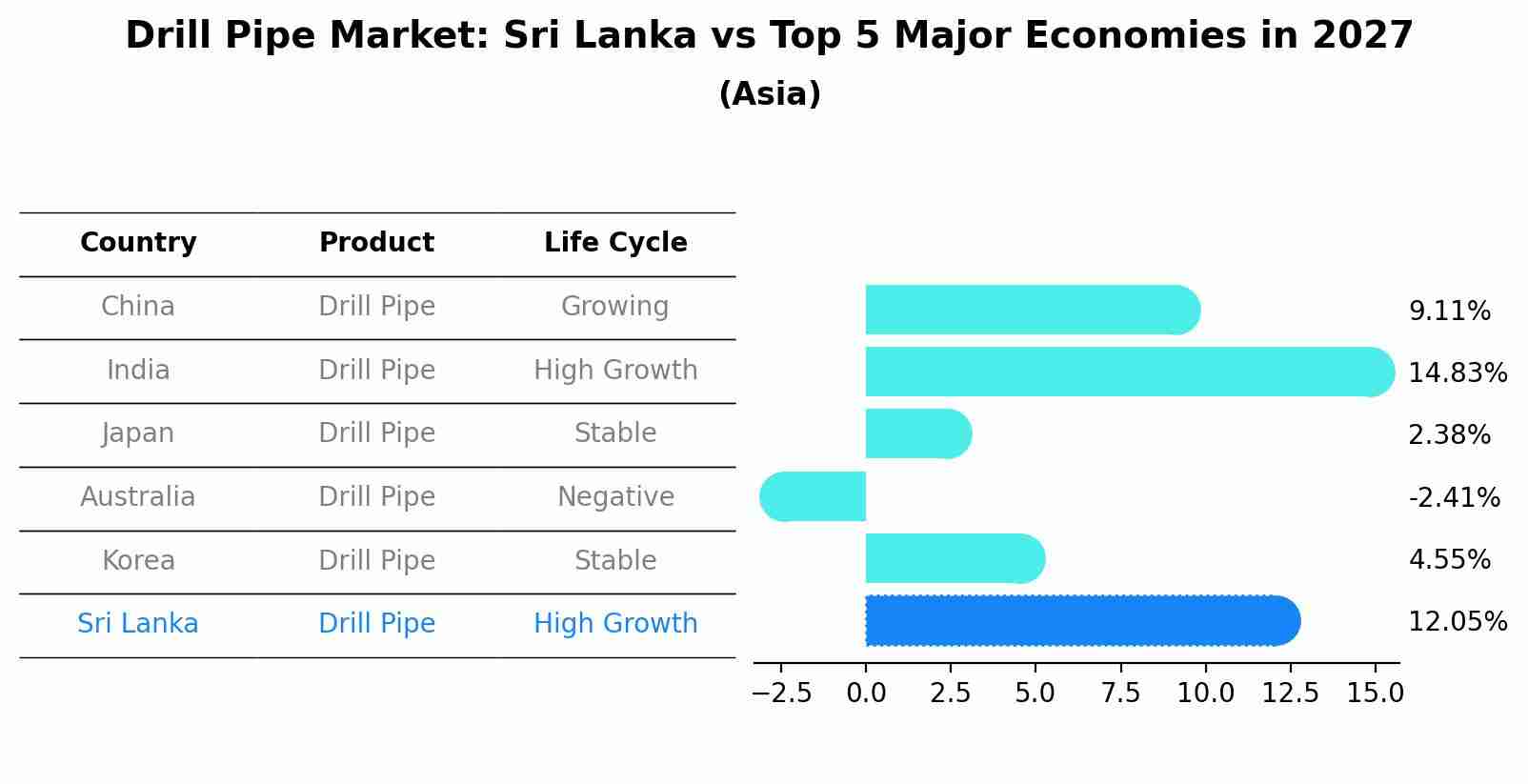
Drill Pipe Market: Sri Lanka vs Top 5 Major Economies in 2027 (Asia)
The Drill Pipe market in Sri Lanka is projected to grow at a high growth rate of 12.05% by 2027, within the Asia region led by China, along with other countries like India, Japan, Australia and South Korea, collectively shaping a dynamic and evolving market environment driven by innovation and increasing adoption of emerging technologies.
Sri Lanka Drill Pipe Market Synopsis
The Sri Lanka drill pipe market is experiencing steady growth driven by increasing oil and gas exploration activities in the country. The market is primarily driven by the demand for high-quality drill pipes that are essential for drilling operations in the oil and gas industry. The presence of key players in the market offering technologically advanced drill pipes with improved durability and performance is further propelling market growth. Additionally, government initiatives to boost domestic oil and gas production are expected to drive the demand for drill pipes in Sri Lanka. However, challenges such as fluctuating oil prices and environmental concerns related to drilling activities may hinder market growth. Overall, the Sri Lanka drill pipe market is poised for expansion with opportunities for innovation and technological advancements to meet the evolving needs of the industry.
Sri Lanka Drill Pipe Market Trends
The Sri Lanka drill pipe market is experiencing steady growth driven by increasing oil and gas exploration activities in the region. Key trends in the market include the rising demand for advanced drill pipe materials that offer enhanced durability and performance in challenging drilling environments. Technological advancements such as the integration of sensors and data analytics in drill pipes to improve drilling efficiency and reduce operational costs are also gaining traction. Additionally, the market is witnessing a shift towards environmentally sustainable practices, leading to the adoption of eco-friendly drill pipe coatings and materials. Overall, the Sri Lanka drill pipe market is poised for further expansion as the country continues to invest in its oil and gas sector and attract foreign investments for exploration and production activities.
Sri Lanka Drill Pipe Market Challenges
In the Sri Lanka drill pipe market, several challenges are faced by industry players. These include the high cost of imported drill pipes, limited availability of advanced technology and equipment locally, lack of skilled manpower for handling specialized drilling equipment, and the impact of fluctuating global oil prices on drilling activities. Additionally, the geographical constraints of Sri Lanka, such as rugged terrain and environmental concerns, pose challenges for efficient drilling operations. Furthermore, competition from international companies with established presence and expertise in the market adds to the competitive pressures faced by local drill pipe manufacturers and service providers. Overcoming these challenges requires strategic partnerships, investments in technology and skills development, and adapting to market dynamics to sustain growth in the Sri Lanka drill pipe market.
Sri Lanka Drill Pipe Market Investment Opportunities
In the Sri Lanka drill pipe market, there are opportunities for investment in the expansion and modernization of drilling operations in the oil and gas sector. The demand for drill pipes is expected to grow as exploration and production activities increase in the country. Investing in the manufacturing and supply of high-quality drill pipes meeting international standards can be a lucrative opportunity. Additionally, there is a rising trend towards environmentally sustainable practices in the industry, creating opportunities for investment in innovative, eco-friendly drill pipe technologies. Collaborating with local oil and gas companies to provide tailored solutions and building strategic partnerships can also be beneficial for investors looking to capitalize on the growth potential of the Sri Lanka drill pipe market.
Jordan Agar Market Government Policies
The Sri Lankan government does not have specific policies related to the drill pipe market. However, the overall regulatory environment for the oil and gas sector in Sri Lanka is governed by the Petroleum Resources Development Act. This legislation outlines licensing requirements, safety standards, and environmental regulations for companies operating in the sector, including those involved in drill pipe manufacturing and distribution. Additionally, the government encourages foreign investment in the oil and gas industry through various incentives and tax breaks to promote growth and development. While there are no direct policies targeting the drill pipe market, companies operating in this sector must adhere to the broader regulatory framework established for the oil and gas industry in Sri Lanka.
Sri Lanka Drill Pipe Market Future Outlook
The Sri Lanka drill pipe market is expected to witness steady growth in the coming years, driven by the increasing exploration and production activities in the country`s oil and gas sector. The government`s focus on expanding the energy infrastructure and attracting foreign investments in the sector will further boost the demand for drill pipes. Additionally, the growing adoption of advanced drilling technologies and equipment to enhance operational efficiency and productivity will contribute to market growth. However, challenges such as fluctuating oil prices, regulatory uncertainties, and environmental concerns may impact the market dynamics. Overall, the Sri Lanka drill pipe market is poised for growth opportunities, particularly with the rising demand for energy resources and the country`s strategic location for global trade routes.
Key Highlights of the Report:
- Sri Lanka Drill Pipe Market Outlook
- Market Size of Sri Lanka Drill Pipe Market, 2025
- Forecast of Sri Lanka Drill Pipe Market, 2032
- Historical Data and Forecast of Sri Lanka Drill Pipe Revenues & Volume for the Period 2022 - 2032F
- Sri Lanka Drill Pipe Market Trend Evolution
- Sri Lanka Drill Pipe Market Drivers and Challenges
- Sri Lanka Drill Pipe Price Trends
- Sri Lanka Drill Pipe Porter's Five Forces
- Sri Lanka Drill Pipe Industry Life Cycle
- Historical Data and Forecast of Sri Lanka Drill Pipe Market Revenues & Volume By Type for the Period 2022 - 2032F
- Historical Data and Forecast of Sri Lanka Drill Pipe Market Revenues & Volume By Standard Drill Pipe for the Period 2022 - 2032F
- Historical Data and Forecast of Sri Lanka Drill Pipe Market Revenues & Volume By Heavy Weight Drill Pipe for the Period 2022 - 2032F
- Historical Data and Forecast of Sri Lanka Drill Pipe Market Revenues & Volume By Drill Collar for the Period 2022 - 2032F
- Historical Data and Forecast of Sri Lanka Drill Pipe Market Revenues & Volume By Deployment for the Period 2022 - 2032F
- Historical Data and Forecast of Sri Lanka Drill Pipe Market Revenues & Volume By Onshore for the Period 2022 - 2032F
- Historical Data and Forecast of Sri Lanka Drill Pipe Market Revenues & Volume By Offshore for the Period 2022 - 2032F
- Sri Lanka Drill Pipe Import Export Trade Statistics
- Market Opportunity Assessment By Type
- Market Opportunity Assessment By Deployment
- Sri Lanka Drill Pipe Top Companies Market Share
- Sri Lanka Drill Pipe Competitive Benchmarking By Technical and Operational Parameters
- Sri Lanka Drill Pipe Company Profiles
- Sri Lanka Drill Pipe Key Strategic Recommendations






































