Sweden First Aid Market Top 5 Importing Countries and Market Competition (HHI) Analysis
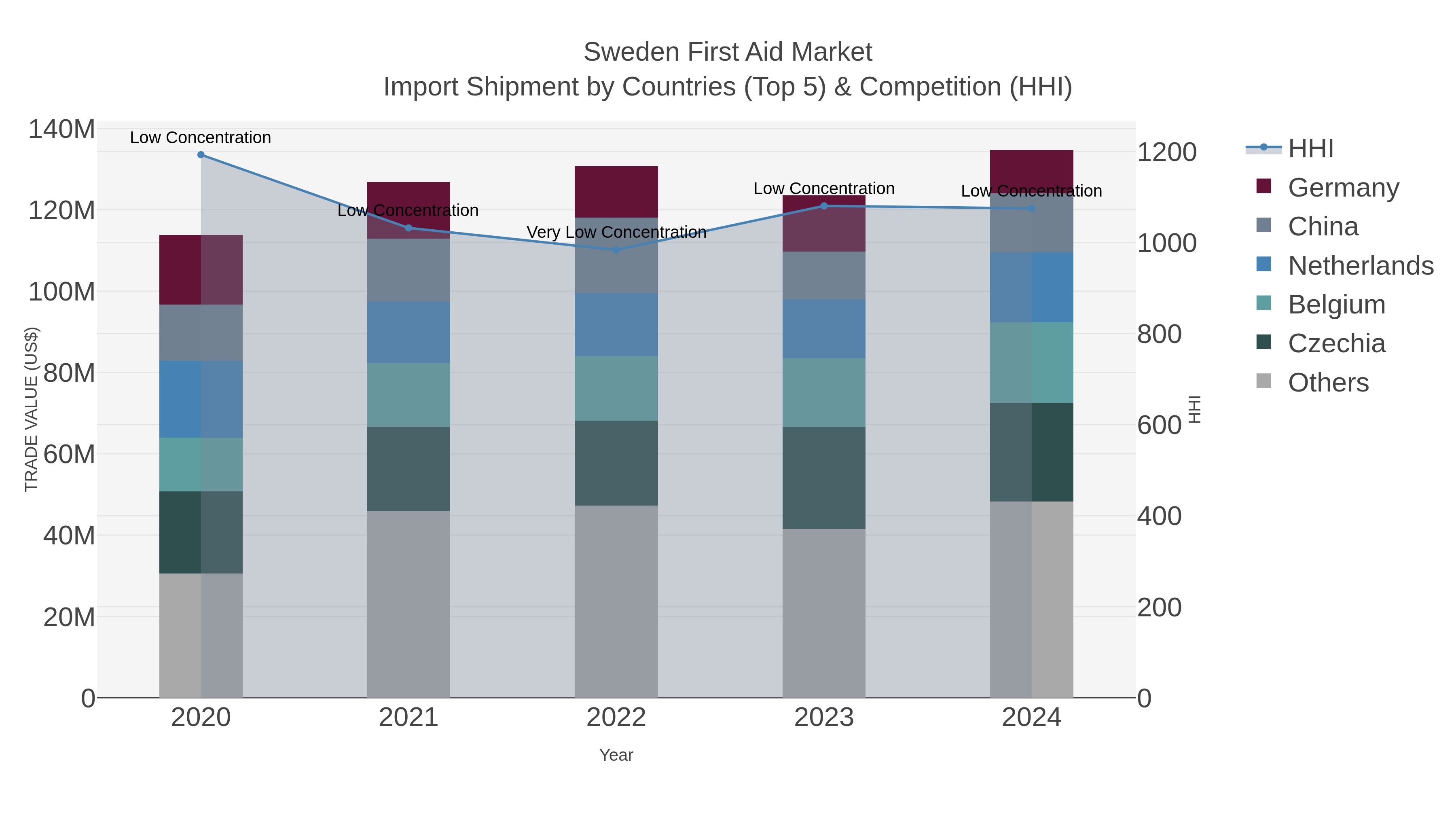
In 2024, Sweden`s first aid import market saw a diverse range of suppliers, with top exporters including Czechia, Belgium, Netherlands, China, and Estonia. The market remained moderately concentrated with a low Herfindahl-Hirschman Index (HHI) in 2024. The compound annual growth rate (CAGR) from 2020 to 2024 stood at a steady 4.29%, indicating sustained market expansion. Notably, there was a significant growth spurt in 2024, with a growth rate of 8.96% compared to the previous year, showcasing the increasing demand for first aid products in Sweden.
Sweden First Aid Market Overview
The Sweden First Aid Market is characterized by a strong emphasis on high-quality products and a focus on innovation and sustainability. The market is driven by increasing awareness about the importance of first aid in emergencies and the presence of stringent regulations ensuring the availability of standardized and effective first aid products. Key players in the market offer a wide range of first aid kits, supplies, and training services to cater to the diverse needs of consumers. The market also benefits from the growing popularity of outdoor activities and sports in Sweden, leading to a higher demand for specialized first aid products tailored to these activities. Overall, the Sweden First Aid Market is expected to continue its growth trajectory, driven by factors such as increasing health consciousness and the importance placed on safety and preparedness.
Sweden First Aid Market Trends and Opportunities
The Sweden First Aid Market is experiencing a growing demand for advanced first aid kits, training programs, and digital solutions. With an increasing focus on workplace safety and preparedness, businesses are investing in comprehensive first aid solutions to meet regulatory requirements and ensure employee well-being. There is also a rising interest in personal first aid kits for outdoor activities and home use, driven by a growing awareness of the importance of being prepared for emergencies. The market presents opportunities for innovation in smart first aid technologies, such as mobile apps for quick access to first aid information and telemedicine solutions for remote medical assistance. Collaborations between first aid providers, healthcare institutions, and technology companies can further enhance the accessibility and effectiveness of first aid services in Sweden.
Sweden First Aid Market Challenges
In the Sweden First Aid Market, several challenges are faced including increasing competition among suppliers, rising costs of first aid products and training, and the need for continuous innovation to meet changing customer demands. Additionally, there is a growing emphasis on sustainability and environmentally friendly products, which requires companies to invest in eco-friendly practices and materials. Another challenge is the need for increased awareness and education on the importance of first aid, as well as the proper use of first aid products. Companies operating in this market must navigate these challenges by staying competitive, adapting to market trends, and ensuring compliance with regulations while maintaining a focus on quality and safety in their products and services.
Sweden First Aid Market Drivers
The Sweden First Aid Market is primarily driven by factors such as increasing awareness about the importance of first aid training and equipment, growing emphasis on workplace safety regulations, and rising incidences of accidents and injuries. The government`s initiatives to promote first aid education and training among the population, coupled with the presence of established first aid organizations and companies in the country, are also contributing to the market growth. Additionally, the growing popularity of outdoor activities and sports in Sweden is fueling the demand for first aid kits and supplies among individuals and organizations. The COVID-19 pandemic has further highlighted the importance of first aid and emergency preparedness, driving the market for first aid products and services in Sweden.
Sweden First Aid Market Government Policies
In Sweden, the government has implemented policies to ensure that first aid services are widely available and accessible to the public. The Swedish Civil Contingencies Agency (MSB) is responsible for coordinating and overseeing first aid efforts, including training programs and public awareness campaigns. The government has also mandated that certain workplaces, such as construction sites and schools, must have designated first aid personnel on site. Additionally, there are regulations in place to ensure that first aid kits are stocked and maintained properly in various public spaces. Overall, the government`s policies aim to promote a culture of safety and preparedness in Sweden by prioritizing the availability and quality of first aid services.
Sweden First Aid Market Future Outlook
The Sweden First Aid Market is expected to experience steady growth in the coming years due to increasing awareness about the importance of first aid training and supplies. Factors such as rising incidences of accidents and injuries, coupled with a growing emphasis on workplace safety and emergency preparedness, are driving the demand for first aid products and services. Additionally, the aging population in Sweden is likely to contribute to the market growth as older individuals are more prone to health emergencies. Technological advancements in first aid equipment and the availability of online training programs are also expected to boost market expansion. Overall, the Sweden First Aid Market is forecasted to witness sustained growth and innovation as the need for efficient emergency response solutions continues to rise.
Key Highlights of the Report:
- Sweden First Aid Market Outlook
- Market Size of Sweden First Aid Market, 2025
- Forecast of Sweden First Aid Market, 2032
- Historical Data and Forecast of Sweden First Aid Revenues & Volume for the Period 2022- 2032
- Sweden First Aid Market Trend Evolution
- Sweden First Aid Market Drivers and Challenges
- Sweden First Aid Price Trends
- Sweden First Aid Porter's Five Forces
- Sweden First Aid Industry Life Cycle
- Historical Data and Forecast of Sweden First Aid Market Revenues & Volume By Type for the Period 2022- 2032
- Historical Data and Forecast of Sweden First Aid Market Revenues & Volume By First Aid Room Equipment for the Period 2022- 2032
- Historical Data and Forecast of Sweden First Aid Market Revenues & Volume By Automated External Defibrillators for the Period 2022- 2032
- Historical Data and Forecast of Sweden First Aid Market Revenues & Volume By First Aid Training Products for the Period 2022- 2032
- Historical Data and Forecast of Sweden First Aid Market Revenues & Volume By End-use for the Period 2022- 2032
- Historical Data and Forecast of Sweden First Aid Market Revenues & Volume By Hospital & Clinics for the Period 2022- 2032
- Historical Data and Forecast of Sweden First Aid Market Revenues & Volume By Home & Offices for the Period 2022- 2032
- Sweden First Aid Import Export Trade Statistics
- Market Opportunity Assessment By Type
- Market Opportunity Assessment By End-use
- Sweden First Aid Top Companies Market Share
- Sweden First Aid Competitive Benchmarking By Technical and Operational Parameters
- Sweden First Aid Company Profiles
- Sweden First Aid Key Strategic Recommendations






































