Switzerland Ginseng Market: Import Trend Analysis
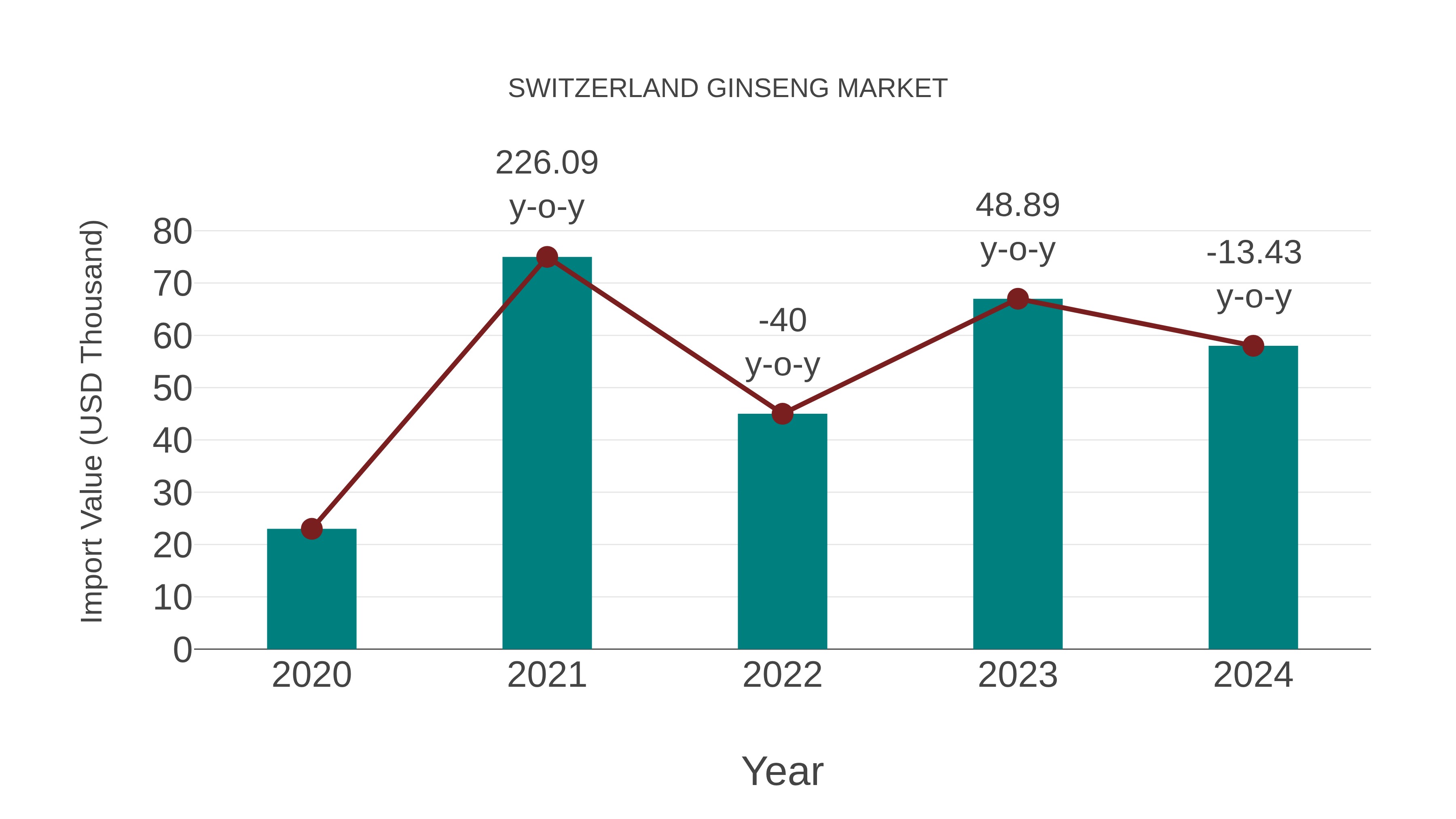
Switzerland import trend for ginseng from 2023 to 2024 experienced a decline of -13.43%, with a Compound Annual Growth Rate (CAGR) of 26.02% from 2020 to 2024. This decline could be attributed to shifts in consumer preferences or fluctuations in global supply chains.
Switzerland Ginseng Market Market Overview
The ginseng market in Switzerland is a niche segment within the larger herbal supplement industry. Ginseng, known for its potential health benefits such as improving energy levels and cognitive function, has gained popularity among health-conscious consumers in Switzerland. The market primarily consists of imported ginseng products from countries like South Korea, China, and the United States, with a focus on high-quality and organic varieties. Swiss consumers value natural and organic products, leading to a demand for ginseng products that are sustainably sourced and free from artificial additives. The market is competitive, with both local and international brands vying for market share by offering innovative ginseng formulations and targeting specific consumer segments. Overall, the Switzerland ginseng market presents opportunities for growth, driven by increasing awareness of holistic health and wellness trends among consumers.
Switzerland Ginseng Market Trends
In Switzerland, the ginseng market is experiencing a growing demand driven by the increasing popularity of natural health and wellness products. Consumers are increasingly seeking out ginseng for its reported health benefits, such as improved energy levels, mental clarity, and immune system support. Additionally, ginseng is being incorporated into various products, including supplements, teas, and skincare products, appealing to a wider range of consumers. The market is also witnessing a trend towards sustainability and ethical sourcing practices, with consumers showing a preference for ginseng products that are organic and responsibly sourced. Overall, the Switzerland ginseng market is expected to continue growing as consumers prioritize holistic health and well-being.
Switzerland Ginseng Market Challenges
In the Switzerland ginseng market, one of the key challenges faced is the competition from other popular herbal supplements and traditional medicines. Ginseng is not native to Switzerland, so imported ginseng products face stiff competition from locally produced herbal remedies. Additionally, the high price point of ginseng products compared to other herbal supplements can be a barrier for some consumers. Another challenge is the lack of widespread awareness and understanding of the health benefits of ginseng among Swiss consumers, which can impact the demand for ginseng products. To succeed in the Swiss ginseng market, companies need to effectively educate consumers about the unique benefits of ginseng, differentiate their products from competitors, and potentially explore partnerships with local herbal remedy producers to enhance market penetration.
Switzerland Ginseng Market Investment Opportunities
In the Switzerland ginseng market, there are several investment opportunities for savvy investors. One potential avenue is to invest in ginseng farming operations, either by directly owning and managing a ginseng farm or by investing in companies involved in ginseng cultivation. Another opportunity lies in the production and distribution of ginseng-based products such as supplements, teas, and cosmetics, targeting the growing health and wellness market in Switzerland. Additionally, investing in research and development of new ginseng varieties or cultivation techniques could yield long-term benefits in this niche market. With the increasing interest in natural health remedies and traditional medicine practices, the Switzerland ginseng market presents opportunities for investors looking to capitalize on the demand for high-quality ginseng products.
Switzerland Ginseng Market Government Policy
In Switzerland, the ginseng market is regulated by the Swiss Agency for Therapeutic Products (Swissmedic) which oversees the classification, registration, and marketing of ginseng products. Ginseng is considered a traditional herbal medicine in Switzerland, and its sale is permitted as long as the products meet the required quality and safety standards set by Swissmedic. Additionally, the Swiss Federal Office of Public Health (FOPH) monitors the advertising and labeling of ginseng products to ensure compliance with regulations. Importantly, ginseng products are not allowed to make unsubstantiated health claims or be marketed as a cure for specific medical conditions without proper evidence. Overall, the Swiss government`s policies aim to ensure the safety, quality, and appropriate marketing of ginseng products in the country.
Switzerland Ginseng Market Future Outlook
The future outlook for the Switzerland ginseng market appears promising as the demand for natural health supplements continues to rise. With an increasing focus on wellness and preventive healthcare, ginseng, known for its potential health benefits such as boosting energy levels and improving cognitive function, is likely to see a growing consumer base in Switzerland. Furthermore, the growing trend towards organic and sustainably sourced products aligns well with the cultivation practices of ginseng. As consumers become more conscious of the origin and quality of the products they consume, there is an opportunity for ginseng producers to differentiate themselves in the market by highlighting the purity and potency of their offerings. Overall, the Switzerland ginseng market is poised for growth driven by changing consumer preferences towards natural and holistic health solutions.
Key Highlights of the Report:
- Switzerland Ginseng Market Outlook
- Market Size of Switzerland Ginseng Market,2025
- Forecast of Switzerland Ginseng Market, 2032
- Historical Data and Forecast of Switzerland Ginseng Revenues & Volume for the Period 2022-2032F
- Switzerland Ginseng Market Trend Evolution
- Switzerland Ginseng Market Drivers and Challenges
- Switzerland Ginseng Price Trends
- Switzerland Ginseng Porter's Five Forces
- Switzerland Ginseng Industry Life Cycle
- Historical Data and Forecast of Switzerland Ginseng Market Revenues & Volume By Origin for the Period 2022-2032F
- Historical Data and Forecast of Switzerland Ginseng Market Revenues & Volume By American Ginseng for the Period 2022-2032F
- Historical Data and Forecast of Switzerland Ginseng Market Revenues & Volume By Asian Ginseng for the Period 2022-2032F
- Historical Data and Forecast of Switzerland Ginseng Market Revenues & Volume By Nature for the Period 2022-2032F
- Historical Data and Forecast of Switzerland Ginseng Market Revenues & Volume By Cultivated for the Period 2022-2032F
- Historical Data and Forecast of Switzerland Ginseng Market Revenues & Volume By Wild for the Period 2022-2032F
- Historical Data and Forecast of Switzerland Ginseng Market Revenues & Volume By Source for the Period 2022-2032F
- Historical Data and Forecast of Switzerland Ginseng Market Revenues & Volume By Fresh for the Period 2022-2032F
- Historical Data and Forecast of Switzerland Ginseng Market Revenues & Volume By Processed for the Period 2022-2032F
- Historical Data and Forecast of Switzerland Ginseng Market Revenues & Volume By End use for the Period 2022-2032F
- Historical Data and Forecast of Switzerland Ginseng Market Revenues & Volume By Dietary Supplements & Functional Food for the Period 2022-2032F
- Historical Data and Forecast of Switzerland Ginseng Market Revenues & Volume By Food & Beverage Processing for the Period 2022-2032F
- Historical Data and Forecast of Switzerland Ginseng Market Revenues & Volume By Distribution Channel for the Period 2022-2032F
- Historical Data and Forecast of Switzerland Ginseng Market Revenues & Volume By Offline for the Period 2022-2032F
- Historical Data and Forecast of Switzerland Ginseng Market Revenues & Volume By Online for the Period 2022-2032F
- Switzerland Ginseng Import Export Trade Statistics
- Market Opportunity Assessment By Origin
- Market Opportunity Assessment By Nature
- Market Opportunity Assessment By Source
- Market Opportunity Assessment By End use
- Market Opportunity Assessment By Distribution Channel
- Switzerland Ginseng Top Companies Market Share
- Switzerland Ginseng Competitive Benchmarking By Technical and Operational Parameters
- Switzerland Ginseng Company Profiles
- Switzerland Ginseng Key Strategic Recommendations






































