Switzerland Ingredients Market: Import Trend Analysis
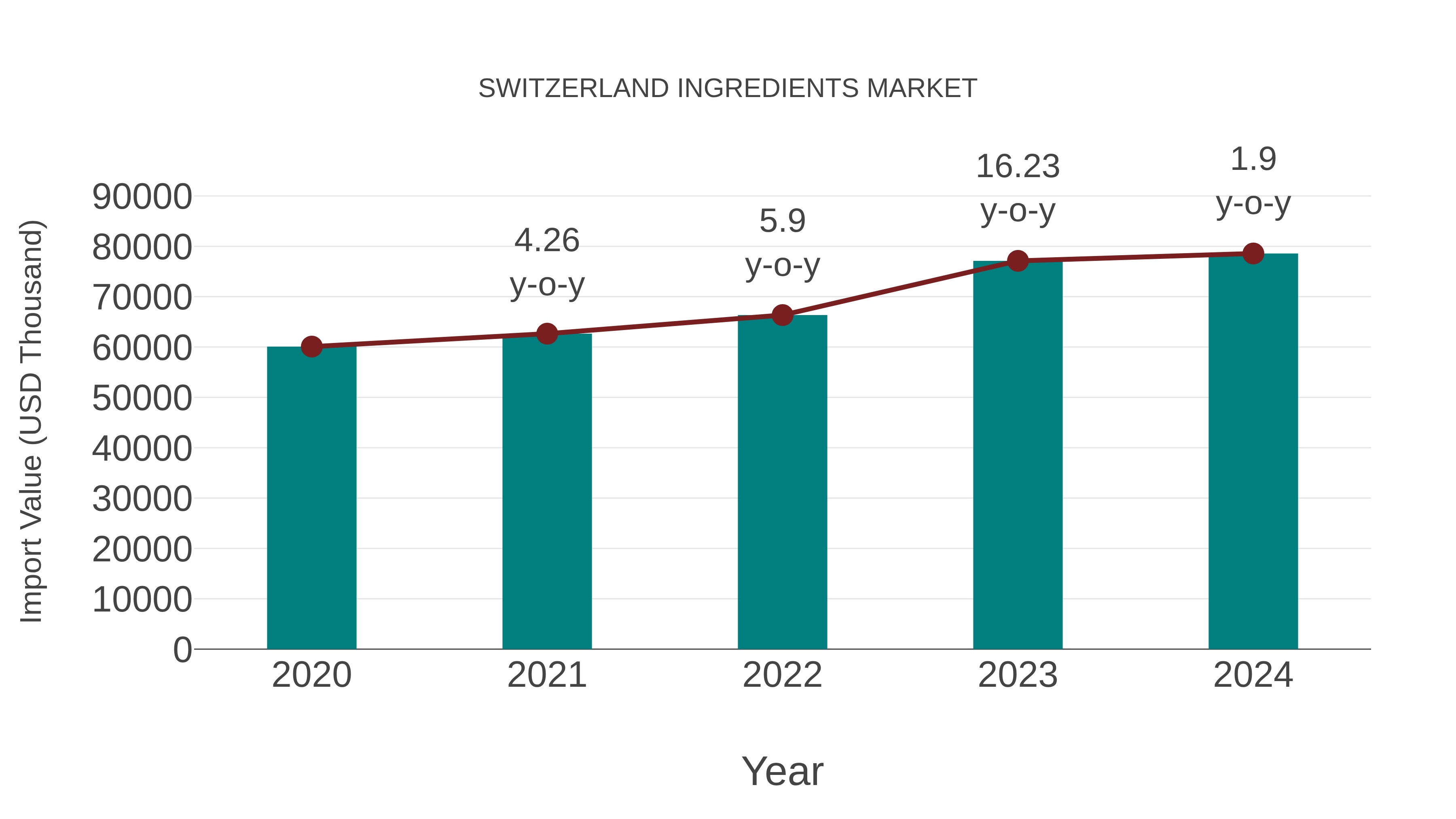
In the Switzerland ingredients market, imports experienced a 1.9% growth rate from 2023 to 2024. The compound annual growth rate (CAGR) for 2020-2024 stood at 6.94%. This upward trend can be attributed to increasing demand for high-quality ingredients and Switzerland strong trade relationships.
Switzerland Ingredients Market Overview
The Switzerland ingredients market is a dynamic and diverse sector, encompassing a wide range of products such as flavors, colors, preservatives, sweeteners, and texturizers. The market is driven by the growing demand for natural and organic ingredients, as well as the increasing focus on clean label products. Swiss consumers are increasingly seeking products with transparent sourcing and sustainable production practices, leading to a rise in the popularity of locally sourced and ethically produced ingredients. Key players in the Switzerland ingredients market include major multinational companies as well as a growing number of smaller, niche producers catering to specific consumer preferences. The market is characterized by innovation and product development, with a strong emphasis on quality and safety standards to meet the stringent regulatory requirements in Switzerland.
Switzerland Ingredients Market Trends
In Switzerland, the ingredients market is experiencing a shift towards natural and organic options, driven by increasing consumer awareness of health and sustainability. There is a growing demand for clean label ingredients, free from artificial additives and preservatives. Plant-based ingredients are also gaining popularity as consumers seek alternatives to traditional animal-derived ingredients. Additionally, there is a focus on functional ingredients that offer health benefits beyond basic nutrition, such as probiotics, superfoods, and adaptogens. The market is seeing innovation in ingredient sourcing and processing techniques to meet these changing consumer preferences. Overall, the trend in the Switzerland ingredients market is towards transparency, quality, and innovation to cater to the evolving needs of health-conscious consumers.
Switzerland Ingredients Market Challenges
In the Switzerland ingredients market, several challenges are faced including regulatory complexities related to food safety standards and labeling requirements. The country has strict regulations governing the use of ingredients in food products, which can pose challenges for companies looking to introduce new ingredients or formulations. Additionally, the market is highly competitive with a focus on quality and innovation, making it essential for companies to stay ahead of the latest trends and consumer preferences. Economic uncertainties and fluctuating exchange rates can also impact the cost of importing ingredients, further adding to the challenges faced by businesses operating in the Switzerland ingredients market. Overall, navigating these regulatory, competitive, and economic hurdles requires careful planning and a deep understanding of the market dynamics.
Switzerland Ingredients Market Investment Opportunities
Switzerland`s ingredients market offers various investment opportunities, particularly in the food and beverage sector. With a strong reputation for quality and innovation, Swiss ingredients such as chocolate, cheese, and specialty ingredients are in high demand globally. Investing in Swiss companies that produce these ingredients can provide stable returns and growth potential. Additionally, the country`s focus on sustainability and organic production presents opportunities for investments in companies that align with these values. Furthermore, Switzerland`s expertise in pharmaceutical and nutraceutical ingredients also offers promising investment prospects, especially with the growing demand for health and wellness products worldwide. Overall, the Switzerland ingredients market provides diverse opportunities for investors looking to capitalize on the country`s reputation for premium quality and innovation in the ingredients industry.
Switzerland Ingredients Market Government Policy
In Switzerland, the ingredients market is subject to various government policies aimed at ensuring food safety, quality, and transparency. The Swiss government strictly regulates the labeling and advertising of food products to protect consumers from misleading information. Additionally, there are stringent regulations in place for the approval and monitoring of food additives to prevent any potential health risks. The Swiss Federal Food Safety and Veterinary Office (FSVO) plays a key role in overseeing these regulations and ensuring compliance with European Union standards. Moreover, Switzerland has implemented strict import regulations for ingredients to maintain high standards of quality and safety in the market. Overall, the government policies in Switzerland focus on promoting consumer trust, safeguarding public health, and maintaining the integrity of the ingredients market.
Switzerland Ingredients Market Future Outlook
The Switzerland ingredients market is poised for steady growth in the coming years, driven by increasing consumer demand for natural and clean label products. With a strong emphasis on quality and innovation, Swiss ingredient suppliers are well positioned to cater to this demand by offering high-quality, sustainable, and premium ingredients. Additionally, the growing trend towards plant-based and functional ingredients is expected to further propel market growth. Factors such as the country`s reputation for excellence in food safety and production practices, as well as its strong research and development capabilities, will continue to attract international buyers and drive market expansion. Overall, the Switzerland ingredients market is likely to experience sustained growth and remain a key player in the global ingredients industry.
Key Highlights of the Report:
- Switzerland Ingredients Market Outlook
- Market Size of Switzerland Ingredients Market,2025
- Forecast of Switzerland Ingredients Market, 2032
- Historical Data and Forecast of Switzerland Ingredients Revenues & Volume for the Period 2022-2032F
- Switzerland Ingredients Market Trend Evolution
- Switzerland Ingredients Market Drivers and Challenges
- Switzerland Ingredients Price Trends
- Switzerland Ingredients Porter's Five Forces
- Switzerland Ingredients Industry Life Cycle
- Historical Data and Forecast of Switzerland Ingredients Market Revenues & Volume By Type for the Period 2022-2032F
- Historical Data and Forecast of Switzerland Ingredients Market Revenues & Volume By Food Ingredients for the Period 2022-2032F
- Historical Data and Forecast of Switzerland Ingredients Market Revenues & Volume By Pharmaceutical Ingredients for the Period 2022-2032F
- Historical Data and Forecast of Switzerland Ingredients Market Revenues & Volume By Application for the Period 2022-2032F
- Historical Data and Forecast of Switzerland Ingredients Market Revenues & Volume By Processed Foods for the Period 2022-2032F
- Historical Data and Forecast of Switzerland Ingredients Market Revenues & Volume By Nutraceuticals for the Period 2022-2032F
- Historical Data and Forecast of Switzerland Ingredients Market Revenues & Volume By End-Use for the Period 2022-2032F
- Historical Data and Forecast of Switzerland Ingredients Market Revenues & Volume By Food & Beverage for the Period 2022-2032F
- Historical Data and Forecast of Switzerland Ingredients Market Revenues & Volume By Pharmaceuticals for the Period 2022-2032F
- Switzerland Ingredients Import Export Trade Statistics
- Market Opportunity Assessment By Type
- Market Opportunity Assessment By Application
- Market Opportunity Assessment By End-Use
- Switzerland Ingredients Top Companies Market Share
- Switzerland Ingredients Competitive Benchmarking By Technical and Operational Parameters
- Switzerland Ingredients Company Profiles
- Switzerland Ingredients Key Strategic Recommendations






































