Switzerland Packaging Printing Market: Import Trend Analysis
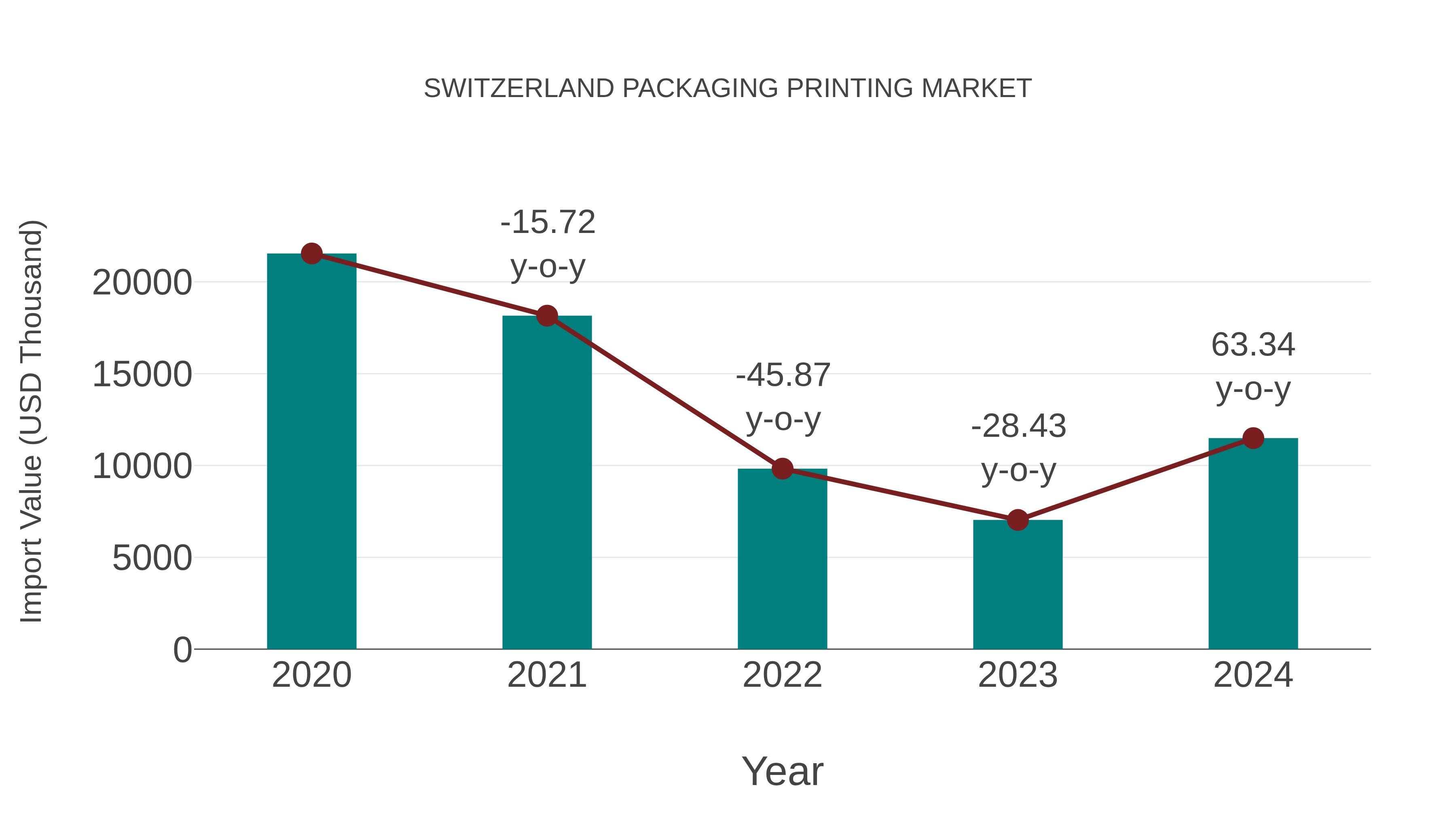
Switzerland import trend for the packaging printing market showed significant growth from 2023 to 2024 at 63.34%, while the compound annual growth rate (CAGR) from 2020 to 2024 was -14.54%. This notable surge in imports could be attributed to increased demand for specialized packaging solutions or shifts in trade policies during this period.
Switzerland Packaging Printing Market Synopsis
The Switzerland Packaging Printing Market is a dynamic sector within the Swiss printing industry, driven by the country`s strong economy and high standards of quality. The market includes a wide range of packaging materials such as cartons, labels, and flexible packaging, serving various industries including food and beverage, pharmaceuticals, and cosmetics. Digital printing technologies are gaining popularity in Switzerland due to their flexibility and ability to cater to the increasing demand for customization and shorter print runs. Sustainability is also a key trend in the market, with a growing emphasis on eco-friendly packaging solutions. The market is competitive, with players focusing on innovation, quality, and sustainability to meet the evolving needs of Swiss consumers and businesses.
Switzerland Packaging Printing Market Trends
The Switzerland Packaging Printing Market is experiencing significant growth driven by trends such as the increasing demand for sustainable packaging solutions, customization and personalization of packaging, and the rise of digital printing technologies. The shift towards eco-friendly materials and designs is creating opportunities for innovative packaging solutions that meet consumer preferences for environmentally friendly products. Customization and personalization are driving the adoption of digital printing technologies, allowing brands to create unique and targeted packaging designs. Additionally, the growing e-commerce sector is fueling the need for efficient and secure packaging solutions. Overall, the Switzerland Packaging Printing Market offers opportunities for companies to differentiate themselves through sustainable practices, innovative designs, and technological advancements to meet the evolving needs of consumers and businesses.
Switzerland Packaging Printing Market Challenges
In the Switzerland Packaging Printing Market, some key challenges include increasing competition among printing companies, rising raw material costs, and the need to adopt sustainable practices to meet environmental regulations. The industry is also facing challenges related to technological advancements, such as the shift towards digital printing and the need for investments in modern equipment to stay competitive. Additionally, fluctuations in the economy and changing consumer preferences are impacting the demand for packaging printing services. Companies in the market must continuously innovate, streamline operations, and focus on providing high-quality, cost-effective solutions to overcome these challenges and thrive in the evolving landscape of the packaging printing industry in Switzerland.
Switzerland Packaging Printing Market Investment Opportunities
The Switzerland Packaging Printing Market is primarily driven by the growing demand for sustainable and eco-friendly packaging solutions, as consumers and regulatory bodies increasingly focus on reducing environmental impact. The rising adoption of digital printing technology in packaging, which offers shorter run lengths, faster turnaround times, and customization capabilities, is also fueling market growth. Additionally, the booming e-commerce sector in Switzerland is boosting the demand for packaging printing services to cater to the shipping and delivery needs of online retailers. Furthermore, the emphasis on brand differentiation and visual appeal to attract consumers is leading to increased investments in high-quality packaging printing solutions by companies across various industries in Switzerland.
Switzerland Packaging Printing Market Government Polices
In Switzerland, government policies related to the packaging printing market primarily focus on environmental sustainability and waste management. The Swiss government has implemented strict regulations to promote the use of eco-friendly materials in packaging printing, with an emphasis on reducing carbon footprint and minimizing waste generation. Additionally, there are policies in place to encourage recycling and proper disposal of packaging materials to ensure a circular economy approach. Companies operating in the packaging printing sector in Switzerland are required to adhere to these regulations to comply with environmental standards and contribute to national sustainability goals. Overall, the government`s policies aim to drive innovation and investment in sustainable packaging solutions within the Swiss market.
Switzerland Packaging Printing Market Future Outlook
The Switzerland packaging printing market is poised for steady growth in the coming years, driven by factors such as increasing demand for customized packaging solutions, technological advancements in printing techniques, and rising environmental concerns pushing for sustainable packaging options. The market is expected to witness a shift towards digital printing technologies to meet the growing demand for short print runs and personalized packaging. Additionally, stringent regulations promoting eco-friendly practices and the emphasis on brand differentiation through innovative packaging designs will further propel market growth. As the Swiss packaging industry continues to evolve and adapt to changing consumer preferences and industry trends, opportunities for market expansion and innovation are expected to abound, making it a promising sector for investment and development in the foreseeable future.
Key Highlights of the Report:
- Switzerland Packaging Printing Market Outlook
- Market Size of Switzerland Packaging Printing Market, 2025
- Forecast of Switzerland Packaging Printing Market, 2032
- Historical Data and Forecast of Switzerland Packaging Printing Revenues & Volume for the Period 2022 - 2032F
- Switzerland Packaging Printing Market Trend Evolution
- Switzerland Packaging Printing Market Drivers and Challenges
- Switzerland Packaging Printing Price Trends
- Switzerland Packaging Printing Porter's Five Forces
- Switzerland Packaging Printing Industry Life Cycle
- Historical Data and Forecast of Switzerland Packaging Printing Market Revenues & Volume By Printing for the Period 2022 - 2032F
- Historical Data and Forecast of Switzerland Packaging Printing Market Revenues & Volume By Flexography for the Period 2022 - 2032F
- Historical Data and Forecast of Switzerland Packaging Printing Market Revenues & Volume By Offset for the Period 2022 - 2032F
- Historical Data and Forecast of Switzerland Packaging Printing Market Revenues & Volume By Digital for the Period 2022 - 2032F
- Historical Data and Forecast of Switzerland Packaging Printing Market Revenues & Volume By Others for the Period 2022 - 2032F
- Historical Data and Forecast of Switzerland Packaging Printing Market Revenues & Volume By Substrate for the Period 2022 - 2032F
- Historical Data and Forecast of Switzerland Packaging Printing Market Revenues & Volume By Paper for the Period 2022 - 2032F
- Historical Data and Forecast of Switzerland Packaging Printing Market Revenues & Volume By Plastic for the Period 2022 - 2032F
- Historical Data and Forecast of Switzerland Packaging Printing Market Revenues & Volume By Fabric for the Period 2022 - 2032F
- Historical Data and Forecast of Switzerland Packaging Printing Market Revenues & Volume By Others for the Period 2022 - 2032F
- Switzerland Packaging Printing Import Export Trade Statistics
- Market Opportunity Assessment By Printing
- Market Opportunity Assessment By Substrate
- Switzerland Packaging Printing Top Companies Market Share
- Switzerland Packaging Printing Competitive Benchmarking By Technical and Operational Parameters
- Switzerland Packaging Printing Company Profiles
- Switzerland Packaging Printing Key Strategic Recommendations






































