Tanzania Digital Market Size & Growth Rate (2026-2032)
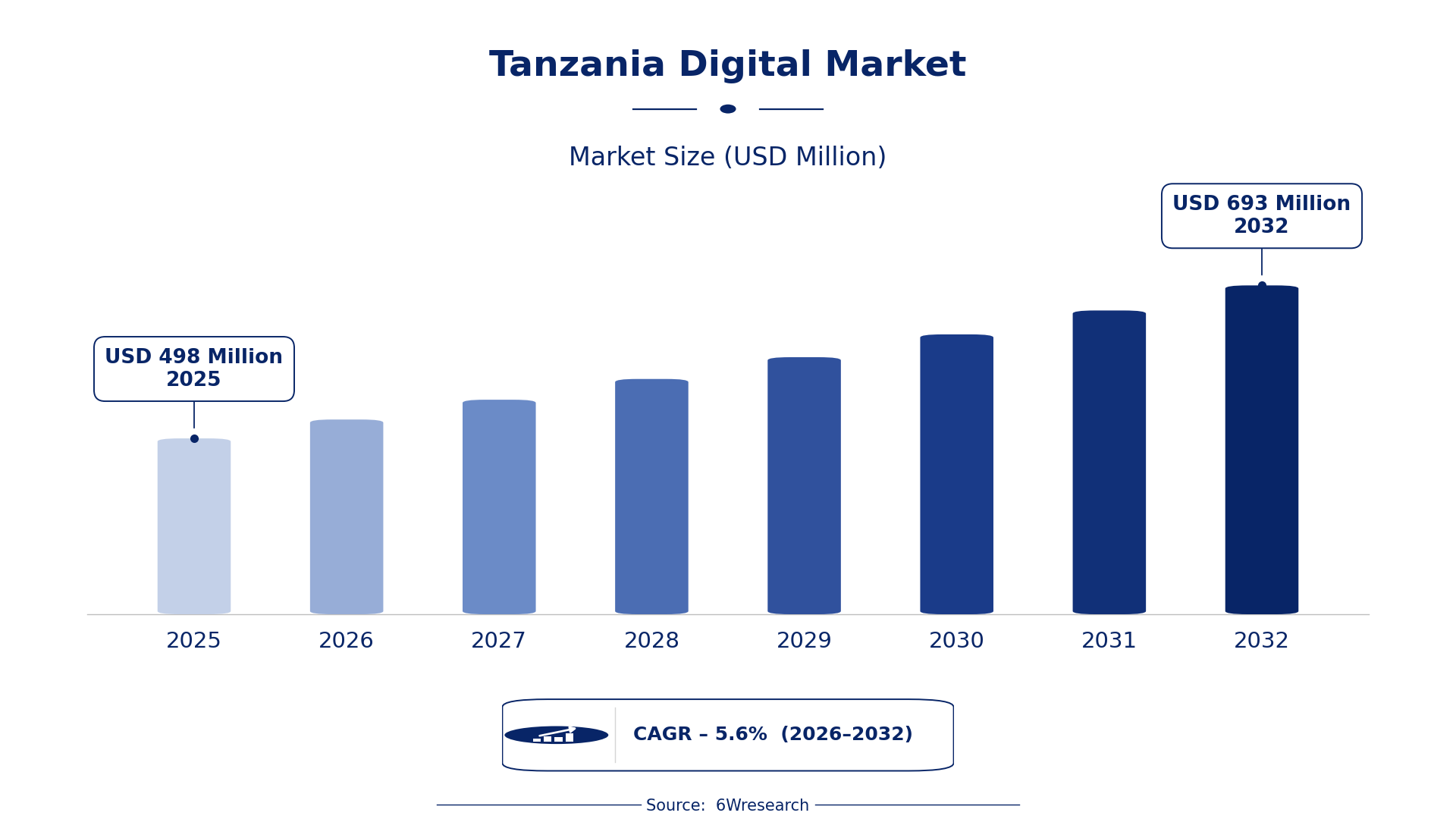
The Tanzania Digital Market was estimated at USD 498 Million in 2025 and is projected to reach USD 693 Million by 2032, growing at a CAGR of 5.6% from 2026 to 2032.
Tanzania Digital Market Synopsis
As Tanzania continues to embrace digital technologies, the demand for mobile and internet services is surging. With over 80% mobile penetration, Tanzanians are increasingly utilizing digital platforms for communication, commerce, and entertainment.
This rapid digital adoption is transforming traditional business models, particularly in e-commerce and fintech sectors. As young consumers drive this shift, businesses are presented with unique opportunities to innovate and expand their reach in the vibrant Tanzanian market.
Tanzania Digital Market Year-wise Growth Rate and Key Drivers
This graph illustrates the annual growth rates of the Tanzania Digital Market from 2021 to 2032, highlighting a steady upward trajectory and projected expansion over the forecast period.
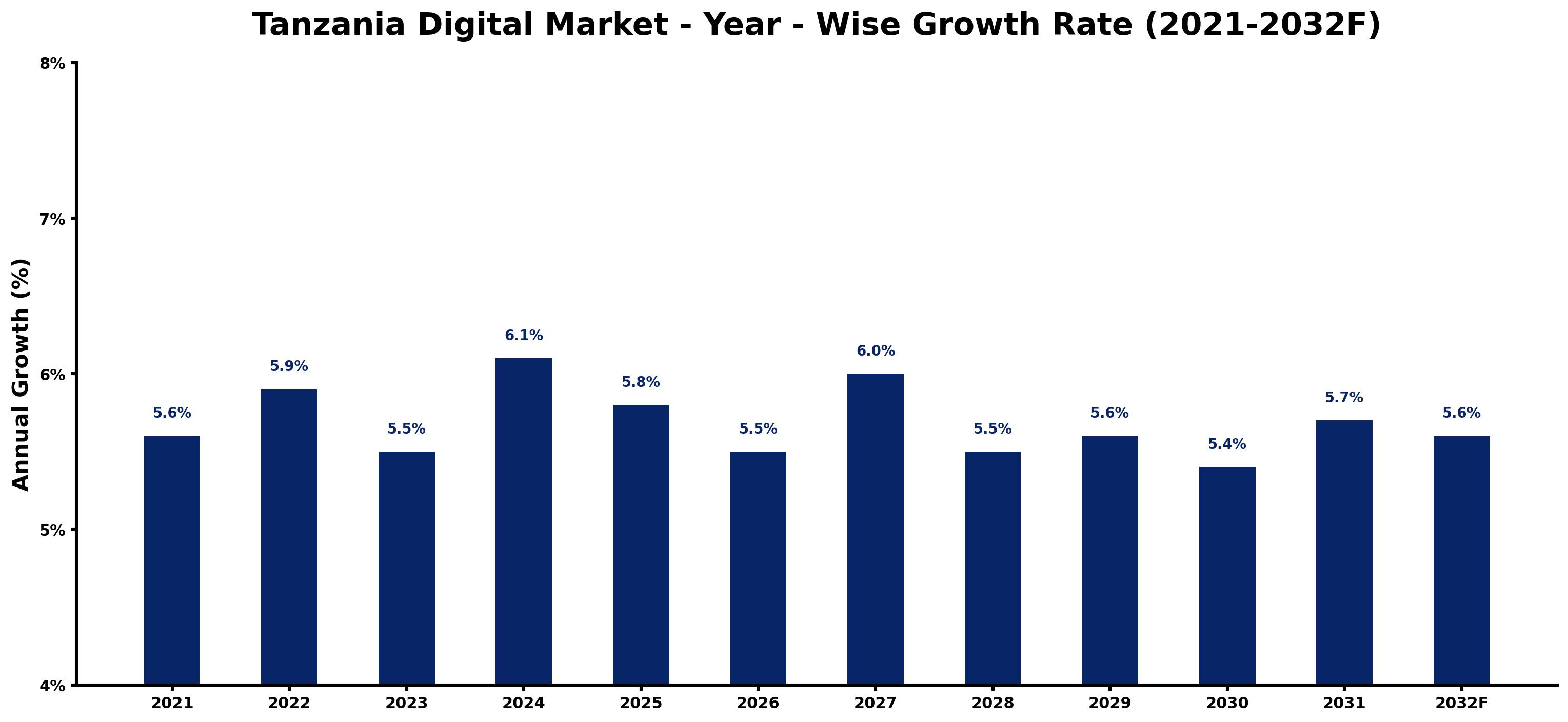
The table below presents the year‑wise growth rates along with the key drivers influencing the market
| Year | Growth Rate | Major Drivers |
| 2021 | 5.6% | Growing smartphone penetration among Tanzanian youth demographic. |
| 2022 | 5.9% | Increased government push for cashless transaction solutions. |
| 2023 | 5.5% | Adoption of 4G networks enhancing digital service accessibility. |
| 2024 | 6.1% | National Digital ID initiative improving online service registrations. |
| 2025 | 5.8% | Rise in e-commerce due to improved logistical frameworks. |
| 2026 | 5.5% | Increased Internet coverage through rural connectivity programs. |
| 2027 | 6.0% | Supportive regulations for fintech startups promoting innovation. |
| 2028 | 5.5% | Young population driving demand for digital content services. |
| 2029 | 5.6% | Collaborations between tech firms and government for digital skills. |
| 2030 | 5.4% | Focus on enhancing cybersecurity frameworks to boost consumer trust. |
| 2031 | 5.7% | Growth in remote working propelling demand for digital tools. |
| 2032 | 5.6% | Rising investment in tech infrastructure boosting startups' ecosystem. |
Note: Market size estimations and growth projections presented in this report are based on 6Wresearch's proprietary forecasting methodology, utilizing the latest available industry data, government publications, and primary research inputs.
Tanzania Digital Market Key Takeaways
Below are some of the specific key takeaways from the market, including:
- Mobile technology is a primary driver of digital adoption, with high smartphone usage.
- E-commerce is rapidly growing as more businesses establish online platforms to cater to changing consumer preferences.
- Digital payment solutions are gaining traction, driven by increased trust and demand for convenience.
- Government policies are evolving to support the digital ecosystem, providing a more secure environment for transactions.
- Challenges like low digital literacy and limited infrastructure in rural areas remain significant hurdles.
Evaluation of Restraints in Tanzania Digital Market
Despite the promising growth in Tanzania's digital market, several factors hinder broader expansion. Limited internet infrastructure, particularly in rural areas, restricts access to digital services. on top of that, low levels of digital literacy among certain demographics create barriers to adoption. Concerns about cybersecurity and online fraud also contribute to a lack of trust in digital transactions. The high cost of data and devices adds another layer of difficulty, preventing many from fully engaging with the digital economy. These challenges necessitate targeted investments in infrastructure and education to unlock the market's full potential.
Tanzania Digital Market Trends
Current trends in the Tanzania digital market indicate a shift towards mobile-first solutions. The increased availability of affordable smartphones is driving mobile internet usage, fostering a surge in mobile banking and digital payment services. Additionally, the e-commerce sector is expanding rapidly as businesses recognize the importance of online presence. Social media platforms are becoming vital tools for both personal networking and marketing, illustrating the growing online engagement among Tanzanians. These trends highlight an ongoing digital transformation that businesses cannot afford to overlook.
Tanzania Digital Market Opportunities
Investment opportunities abound in Tanzania's digital market, particularly within fintech, e-commerce, and telecommunications. Fintech solutions focused on mobile payments and digital banking are particularly attractive, given the large unbanked population. E-commerce platforms are also poised for growth as consumer behavior shifts toward online shopping. on top of that, investments in telecommunications infrastructure and digital marketing services can significantly benefit from the expanding digital ecosystem, making this market ripe for innovation and investment.
Government Initiatives in the Tanzania Digital Market
The Tanzanian government is actively shaping the digital market through various initiatives aimed at fostering growth and innovation. Recent policy developments focus on enhancing digital infrastructure and creating a supportive regulatory environment for businesses. These efforts are crucial for ensuring that the digital economy can flourish while providing security for consumers.
- A national digital infrastructure upgrade programme is currently underway to improve internet access across the country.
- In 2018, the Electronic and Postal Communications (Online Content) Regulations were introduced to oversee online content and protect consumers.
- The Electronic Transactions Act of 2015 continues to govern electronic transactions, providing legal recognition for electronic documents.
- A planned public-private initiative aims to expand mobile payment services by 2027, catering to the unbanked population.
- The National ICT Policy is being reviewed to further enhance the digital economy and encourage innovation in the sector.
Future Insights of the Tanzania Digital Market
Looking ahead to 2026-2032, the Tanzania digital market shows immense potential for continued growth. The increasing penetration of the internet, coupled with a tech-savvy youth demographic, will drive demand for digital services. E-commerce and digital payment solutions are expected to see significant expansion as consumer trust grows. With ongoing government efforts to enhance infrastructure and regulatory frameworks, businesses can anticipate a more favorable environment for digital commerce.
Tanzania Digital Market Latest Developments
Recent developments in the Tanzania digital market reflect a vibrant and evolving sector, with several initiatives aimed at enhancing service delivery and accessibility. Over the past year, businesses and the government have intensified efforts to integrate technology into various aspects of daily life, signaling a commitment to digital transformation.
- A major telecommunications provider launched a new mobile payment platform in early 2025, aimed at simplifying online transactions for users.
- Ongoing improvements to internet infrastructure have been implemented, focusing on expanding coverage in underserved areas as of mid-2025.
- In late 2025, a local e-commerce company expanded its operations to include a logistics solution for faster delivery services.
- A government initiative to conduct digital literacy training programs began in Q1 2026 to equip citizens with essential online skills.
- A rollout of a new cybersecurity framework is planned for late 2026 to enhance trust in online transactions.
Tanzania Digital Market - Key Attractiveness of the Report
- 10 Years of Market Numbers
- Historical Data Starting from 2022 to 2025
- Base Year: 2025
- Forecast Data until 2032
- Key Performance Indicators Impacting the Market
- Major Upcoming Developments and Projects
Key Highlights of the Report:
- Tanzania Digital Market Outlook
- Market Size of Tanzania Digital Market, 2025
- Forecast of Tanzania Digital Market, 2032
- Historical Data and Forecast of Tanzania Digital Revenues & Volume for the Period 2022-2032F
- Tanzania Digital Market Trend Evolution
- Tanzania Digital Market Drivers and Challenges
- Tanzania Digital Price Trends
- Tanzania Digital Porter's Five Forces
- Tanzania Digital Industry Life Cycle
- Historical Data and Forecast of Tanzania Digital Market Revenues & Volume By Software for the Period 2022-2032F
- Historical Data and Forecast of Tanzania Digital Market Revenues & Volume By CRM Software for the Period 2022-2032F
- Historical Data and Forecast of Tanzania Digital Market Revenues & Volume By Email Marketing Software for the Period 2022-2032F
- Historical Data and Forecast of Tanzania Digital Market Revenues & Volume By Social Media Advertising for the Period 2022-2032F
- Tanzania Digital Import Export Trade Statistics
- Market Opportunity Assessment By Software
- Tanzania Digital Top Companies Market Share
- Tanzania Digital Competitive Benchmarking By Technical and Operational Parameters
- Tanzania Digital Company Profiles
- Tanzania Digital Key Strategic Recommendations






































