Tanzania Fleet Management Market Size & Growth Rate (2026-2032)
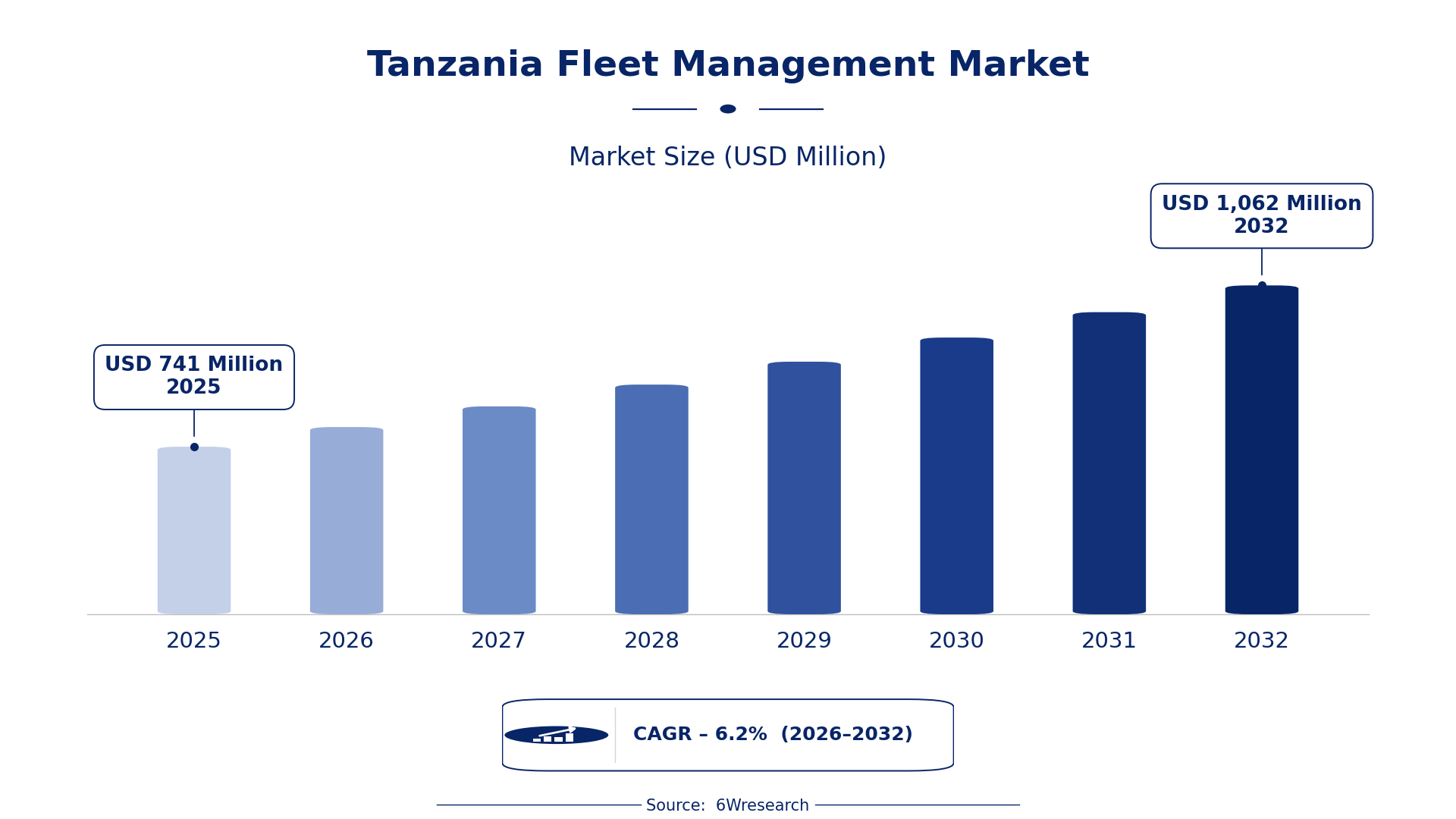
The Tanzania Fleet Management Market was estimated at USD 741 Million in 2025 and is projected to reach USD 1062 Million by 2032, growing at a CAGR of 6.2% from 2026 to 2032.
Tanzania Fleet Management Market Synopsis
The Tanzania Fleet Management Market is experiencing a dynamic shift as businesses increasingly adopt advanced telematics solutions. This shift is driven by the pressing need for enhanced operational efficiency and cost reduction across various sectors, particularly in transportation and logistics.
With the demand for real-time tracking, route optimization, and fleet maintenance services on the rise, both local and international vendors are stepping up to provide tailored solutions. As companies embrace these technologies, the market is set to flourish, reflecting a clear trend towards modernization and improved fleet management practices.
Tanzania Fleet Management Market Year-wise Growth Rate and Key Drivers
This graph illustrates the annual growth rates of the Tanzania Fleet Management Market from 2021 to 2032, highlighting a steady upward trajectory and projected expansion over the forecast period.
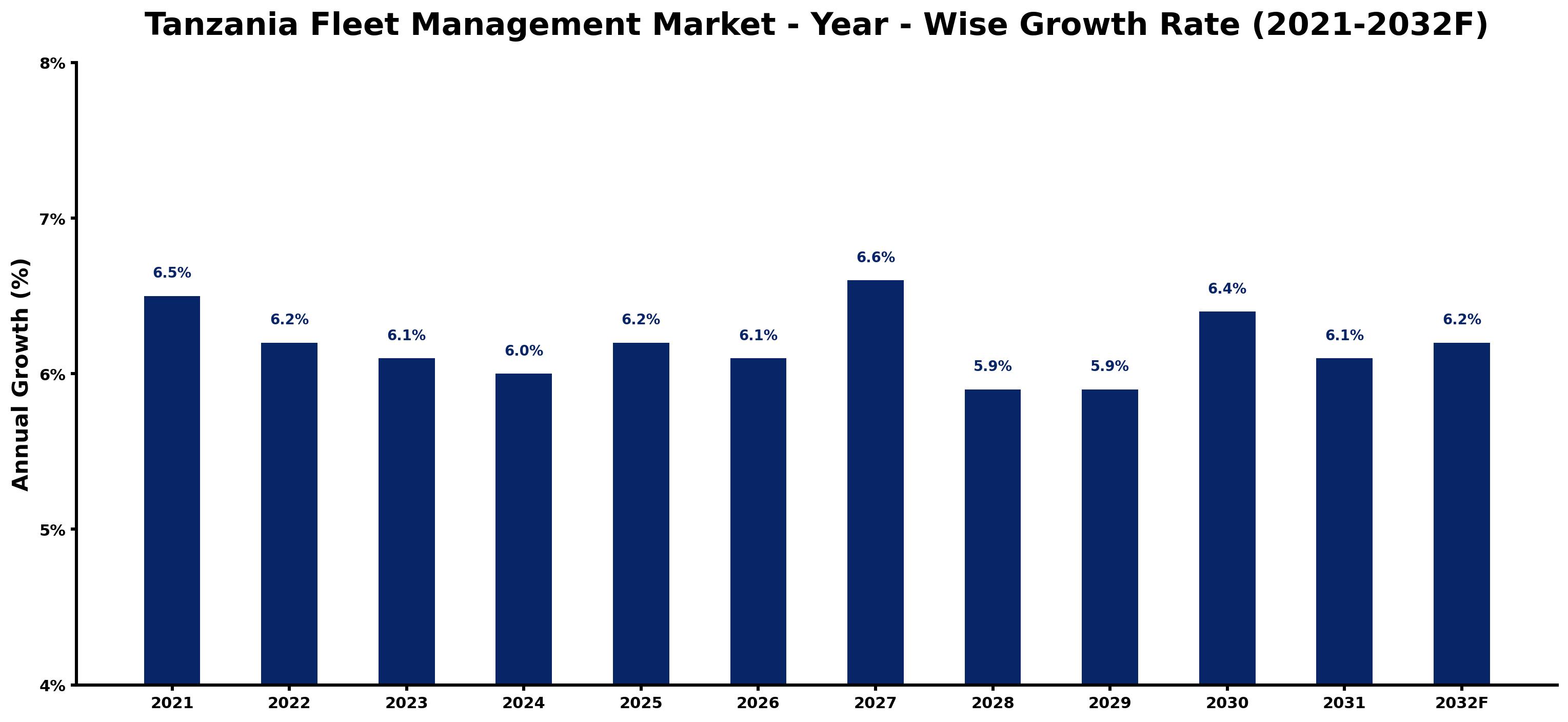
The table below presents the year‑wise growth rates along with the key drivers influencing the market
| Year | Growth Rate | Major Drivers |
| 2021 | 6.5% | Government's Intelligent Transport Systems initiative boosting fleet efficiency |
| 2022 | 6.2% | Increased logistics demand from Zanzibar tourism development projects |
| 2023 | 6.1% | Mobile penetration enhancing real-time tracking and fleet management |
| 2024 | 6.0% | Regulatory support for telematics adoption in transport sector |
| 2025 | 6.2% | Growing public-private partnerships improving road infrastructure reliability |
| 2026 | 6.1% | Rising awareness of vehicle theft prevention technologies |
| 2027 | 6.6% | Ubiquitous smartphone usage facilitating driver monitoring solutions |
| 2028 | 5.9% | Emergence of local startups driving innovation in fleet technology |
| 2029 | 5.9% | Government fuel subsidy reforms incentivizing fleet optimization |
| 2030 | 6.4% | Local automotive manufacturer introducing advanced telematics systems |
| 2031 | 6.1% | Increasing environmental regulations promoting green fleet initiatives |
| 2032 | 6.2% | Continued investment in logistics aiding fleet expansion strategies |
Note: Market size estimations and growth projections presented in this report are based on 6Wresearch's proprietary forecasting methodology, utilizing the latest available industry data, government publications, and primary research inputs.
Tanzania Fleet Management Market Key Takeaways
Below are some of the specific key takeaways from the market, including:
- The market is driven by the need for operational efficiency and cost reduction.
- Telematics solutions are becoming increasingly popular among fleet operators.
- Key end-users include transportation, logistics, construction, mining, and retail sectors.
- Competitive pressures are pushing innovation and the introduction of new technologies.
- Government policies are actively shaping the market by promoting safety and sustainability.
Evaluation of Restraints in Tanzania Fleet Management Market
The Tanzania Fleet Management Market faces several limitations that hinder its growth. A primary issue is the inadequate road infrastructure, which leads to higher vehicle maintenance costs and operational challenges. on top of that, there is a shortage of skilled technicians capable of servicing advanced fleet management systems. The absence of standardized regulations also creates uncertainty for businesses trying to implement best practices. These factors collectively slow the adoption of modern technologies and impact overall market performance.
Tanzania Fleet Management Market Trends
A notable trend in the Tanzania Fleet Management Market is the growing emphasis on telematics systems that enhance vehicle tracking and performance monitoring. Companies are increasingly investing in solutions that provide insights into driver behavior, fuel consumption, and maintenance needs. As awareness of these technologies grows, there's also a rising demand for integrated platforms that offer comprehensive fleet management capabilities, including predictive maintenance and compliance management. The incorporation of IoT and AI technologies into fleet operations is expected to further transform the market.
Tanzania Fleet Management Market Opportunities
Investment opportunities abound in the Tanzania Fleet Management Market, particularly in the development of advanced telematics systems that facilitate real-time tracking and reporting. There is also a pressing need for tailored fleet management software that aligns with local regulatory requirements and mapping services. on top of that, focusing on training programs for fleet operators can provide a competitive edge, enabling smoother technology adoption and enhancing operational performance.
Government Initiatives in the Tanzania Fleet Management Market
Government policies are playing an essential role in shaping the Tanzania Fleet Management Market. With a focus on road safety, emissions reduction, and operational efficiency, these initiatives are vital for the modernization of the transportation sector. The regulatory landscape is geared towards encouraging businesses to adopt fleet management technologies, ensuring compliance with international standards, and promoting sustainable practices.
- A recently completed initiative mandated the installation of GPS tracking systems in all commercial vehicles to enhance monitoring and safety.
- Ongoing enforcement of speed limits and driver behavior monitoring programs aims to improve road safety across the country.
- Periodic vehicle inspections have been introduced to ensure compliance with roadworthiness standards.
- Current discussions are underway regarding incentives for companies investing in eco-friendly fleet management solutions.
- A planned public-private initiative seeks to enhance road infrastructure, expected to begin its rollout by late 2026.
Future Insights of the Tanzania Fleet Management Market
Looking ahead to 2026-2032, the Tanzania Fleet Management Market is set for robust growth, driven by the continued adoption of advanced technologies. As the government focuses on improving infrastructure and regulatory frameworks, businesses will increasingly seek solutions that enhance efficiency and safety. The rise of e-commerce and logistics will further fuel demand for effective fleet management, making it essential for companies to embrace innovative practices and technologies to stay competitive.
Tanzania Fleet Management Market Latest Developments
Over the past 12-14 months, the Tanzania Fleet Management Market has seen a surge in activity, reflecting a broader commitment to modernizing fleet operations. Companies are launching new technologies and forming partnerships to enhance service offerings and improve operational efficiency.
- A major technology vendor introduced a comprehensive fleet management software suite in early 2025, aimed at improving data analytics for fleet operators.
- An initiative that began in mid-2025 focuses on expanding telematics services across rural areas, currently underway with promising early results.
- In Q3 2025, a regional operator announced a partnership to integrate IoT devices into their fleet, enhancing real-time tracking capabilities.
- A rollout expected to begin in early 2026 will introduce predictive maintenance solutions aimed at reducing downtime for fleet operators.
Tanzania Fleet Management Market - Key Attractiveness of the Report
- 10 Years of Market Numbers
- Historical Data Starting from 2022 to 2025
- Base Year: 2025
- Forecast Data until 2032
- Key Performance Indicators Impacting the Market
- Major Upcoming Developments and Projects
Key Highlights of the Report:
- Tanzania Fleet Management Market Outlook
- Market Size of Tanzania Fleet Management Market, 2025
- Forecast of Tanzania Fleet Management Market, 2032
- Historical Data and Forecast of Tanzania Fleet Management Revenues & Volume for the Period 2022-2032F
- Tanzania Fleet Management Market Trend Evolution
- Tanzania Fleet Management Market Drivers and Challenges
- Tanzania Fleet Management Price Trends
- Tanzania Fleet Management Porter's Five Forces
- Tanzania Fleet Management Industry Life Cycle
- Historical Data and Forecast of Tanzania Fleet Management Market Revenues & Volume By Solution for the Period 2022-2032F
- Historical Data and Forecast of Tanzania Fleet Management Market Revenues & Volume By Operations Management for the Period 2022-2032F
- Historical Data and Forecast of Tanzania Fleet Management Market Revenues & Volume By Vehicle Maintenance and Diagnostics for the Period 2022-2032F
- Historical Data and Forecast of Tanzania Fleet Management Market Revenues & Volume By Fleet Analytics and Reporting for the Period 2022-2032F
- Historical Data and Forecast of Tanzania Fleet Management Market Revenues & Volume By Deployment Type for the Period 2022-2032F
- Historical Data and Forecast of Tanzania Fleet Management Market Revenues & Volume By Cloud for the Period 2022-2032F
- Historical Data and Forecast of Tanzania Fleet Management Market Revenues & Volume By On-premises for the Period 2022-2032F
- Historical Data and Forecast of Tanzania Fleet Management Market Revenues & Volume By Fleet Type for the Period 2022-2032F
- Historical Data and Forecast of Tanzania Fleet Management Market Revenues & Volume By Commercial Fleets for the Period 2022-2032F
- Historical Data and Forecast of Tanzania Fleet Management Market Revenues & Volume By Passenger Cars for the Period 2022-2032F
- Historical Data and Forecast of Tanzania Fleet Management Market Revenues & Volume By Service for the Period 2022-2032F
- Historical Data and Forecast of Tanzania Fleet Management Market Revenues & Volume By Professional Services for the Period 2022-2032F
- Historical Data and Forecast of Tanzania Fleet Management Market Revenues & Volume By Managed Services for the Period 2022-2032F
- Historical Data and Forecast of Tanzania Fleet Management Market Revenues & Volume By Vertical for the Period 2022-2032F
- Historical Data and Forecast of Tanzania Fleet Management Market Revenues & Volume By Retail for the Period 2022-2032F
- Historical Data and Forecast of Tanzania Fleet Management Market Revenues & Volume By Healthcare and Pharmaceutical for the Period 2022-2032F
- Historical Data and Forecast of Tanzania Fleet Management Market Revenues & Volume By Construction for the Period 2022-2032F
- Historical Data and Forecast of Tanzania Fleet Management Market Revenues & Volume By Transportation and Logistics for the Period 2022-2032F
- Historical Data and Forecast of Tanzania Fleet Management Market Revenues & Volume By Utilities for the Period 2022-2032F
- Historical Data and Forecast of Tanzania Fleet Management Market Revenues & Volume By Oil, Gas, and Mining for the Period 2022-2032F
- Historical Data and Forecast of Tanzania Fleet Management Market Revenues & Volume By Government for the Period 2022-2032F
- Historical Data and Forecast of Tanzania Fleet Management Market Revenues & Volume By Other Verticals for the Period 2022-2032F
- Tanzania Fleet Management Import Export Trade Statistics
- Market Opportunity Assessment By Solution
- Market Opportunity Assessment By Deployment Type
- Market Opportunity Assessment By Fleet Type
- Market Opportunity Assessment By Service
- Market Opportunity Assessment By Vertical
- Tanzania Fleet Management Top Companies Market Share
- Tanzania Fleet Management Competitive Benchmarking By Technical and Operational Parameters
- Tanzania Fleet Management Company Profiles
- Tanzania Fleet Management Key Strategic Recommendations






































