Thailand Bio-based Leather Market: Import Trend Analysis
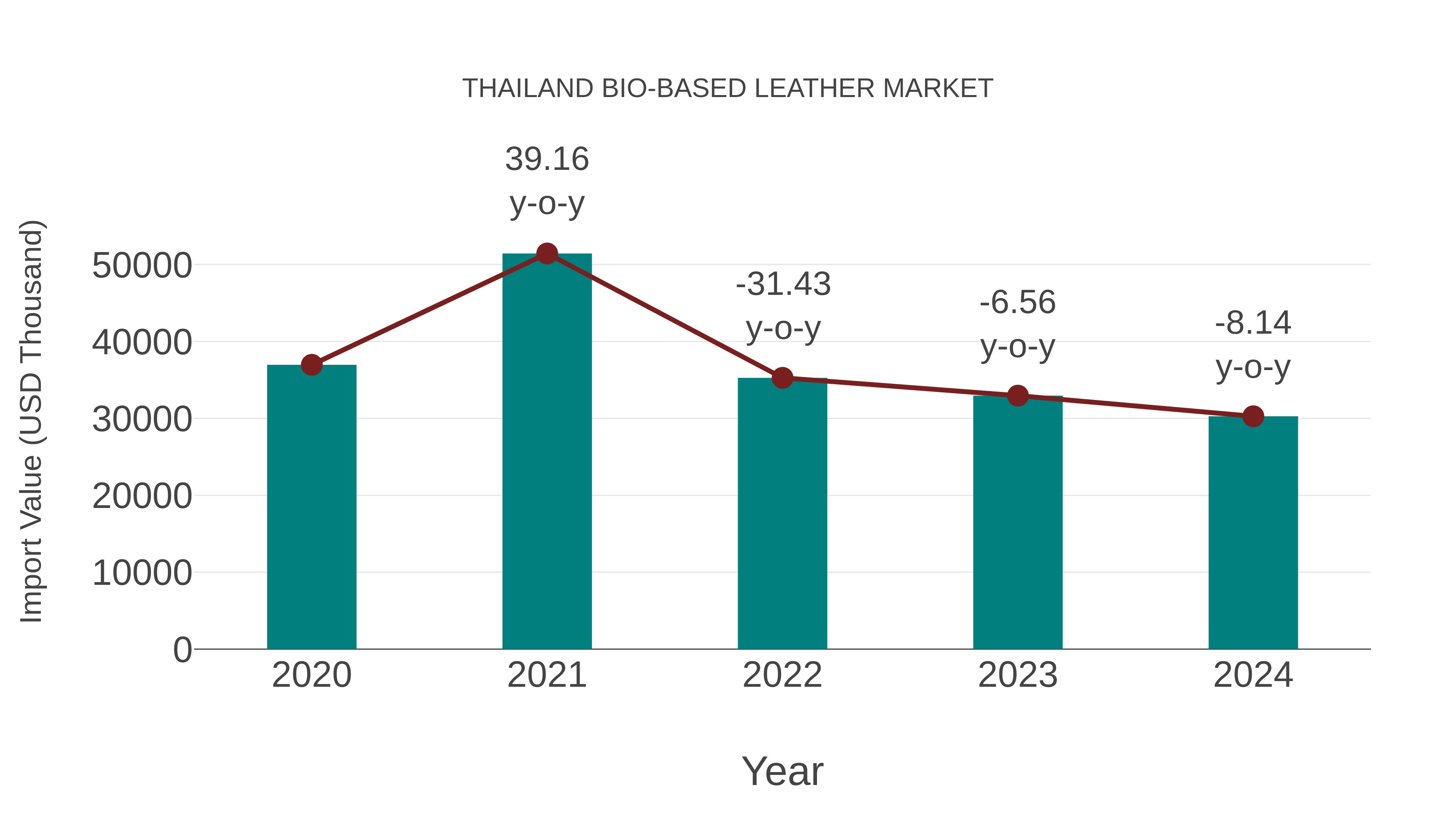
Thailand import trend for bio-based leather in 2024 experienced a decline, with a growth rate of -8.14% compared to the previous year. The compound annual growth rate (CAGR) from 2020 to 2024 stood at -4.87%. This negative momentum could be attributed to shifting consumer preferences towards sustainable alternatives or disruptions in the supply chain affecting imports.
Thailand Bio-based Leather Market Synopsis
The Thailand Bio-based Leather Market is emerging as a sustainable alternative to traditional leather, derived from animal hides. Bio-based leather is manufactured using plant-based materials, reducing the environmental impact of leather production. Thailand fashion and accessories industries are embracing this eco-friendly material, and the market is poised for growth. Manufacturers are continually innovating to create bio-based leather with high-quality and aesthetic properties, contributing to a more sustainable and ethical fashion landscape.
Drivers of the Market
The Bio-based Leather market in Thailand is witnessing significant growth, driven by the shift towards sustainable and cruelty-free alternatives in the fashion and automotive industries. Bio-based leather, often derived from plant-based materials or agricultural by-products, is gaining popularity as a sustainable substitute for traditional animal leather. The increasing consumer awareness of ethical and sustainable fashion choices, coupled with the implementation of regulations promoting eco-friendly materials, is contributing to the adoption of bio-based leather in Thailand. Additionally, the versatility of bio-based leather in various applications is further propelling its positive momentum in the market.
Challenges of the Market
In the Thailand Bio-based Leather Market, challenges revolve around achieving widespread acceptance of bio-based leather products. Addressing perceptions of quality, durability, and cost competitiveness compared to traditional leather poses significant hurdles for market players.
COVID-19 Impact on the Market
The Thailand bio-based leather market encountered challenges during the COVID-19 pandemic, with disruptions in the fashion and apparel industries. The market is recovering as consumer awareness of sustainable and cruelty-free materials increases. Manufacturers are adapting to changing market dynamics by developing innovative bio-based leather alternatives, contributing to the growing trend of sustainable fashion in the post-pandemic landscape.
Key Players in the Market
BioLeather Solutions Ltd. stands out in the Thailand Bio-based Leather market. Renowned for its bio-based leather alternatives, derived from plant-based materials, BioLeather Solutions Ltd. contributes to providing cruelty-free and sustainable options in the fashion and upholstery industries. The company bio-based leather plays a crucial role in supporting ethical and eco-friendly choices in the Thai market.
Key Highlights of the Report:
- Thailand Bio-based Leather Market Outlook
- Market Size of Thailand Bio-based Leather Market, 2025
- Forecast of Thailand Bio-based Leather Market, 2032
- Historical Data and Forecast of Thailand Bio-based Leather Revenues & Volume for the Period 2022-2032F
- Thailand Bio-based Leather Market Trend Evolution
- Thailand Bio-based Leather Market Drivers and Challenges
- Thailand Bio-based Leather Price Trends
- Thailand Bio-based Leather Porter's Five Forces
- Thailand Bio-based Leather Industry Life Cycle
- Historical Data and Forecast of Thailand Bio-based Leather Market Revenues & Volume By Source for the Period 2022-2032F
- Historical Data and Forecast of Thailand Bio-based Leather Market Revenues & Volume By Mushroom for the Period 2022-2032F
- Historical Data and Forecast of Thailand Bio-based Leather Market Revenues & Volume By Pineapple for the Period 2022-2032F
- Historical Data and Forecast of Thailand Bio-based Leather Market Revenues & Volume By Cork for the Period 2022-2032F
- Historical Data and Forecast of Thailand Bio-based Leather Market Revenues & Volume By Leftover Fruits for the Period 2022-2032F
- Historical Data and Forecast of Thailand Bio-based Leather Market Revenues & Volume By End-use for the Period 2022-2032F
- Historical Data and Forecast of Thailand Bio-based Leather Market Revenues & Volume By Footwear for the Period 2022-2032F
- Historical Data and Forecast of Thailand Bio-based Leather Market Revenues & Volume By Garment & Accessories for the Period 2022-2032F
- Thailand Bio-based Leather Import Export Trade Statistics
- Market Opportunity Assessment By Source
- Market Opportunity Assessment By End-use
- Thailand Bio-based Leather Top Companies Market Share
- Thailand Bio-based Leather Competitive Benchmarking By Technical and Operational Parameters
- Thailand Bio-based Leather Company Profiles
- Thailand Bio-based Leather Key Strategic Recommendations






































