Thailand Bulk Food Ingredients Market: Import Trend Analysis
Thailand import trend for bulk food ingredients in 2024 experienced a decrease of -16.26% compared to 2023, with a compound annual growth rate (CAGR) of -1.54% from 2020 to 2024. This decline may be attributed to shifts in consumer preferences or changes in global trade dynamics impacting the market stability.
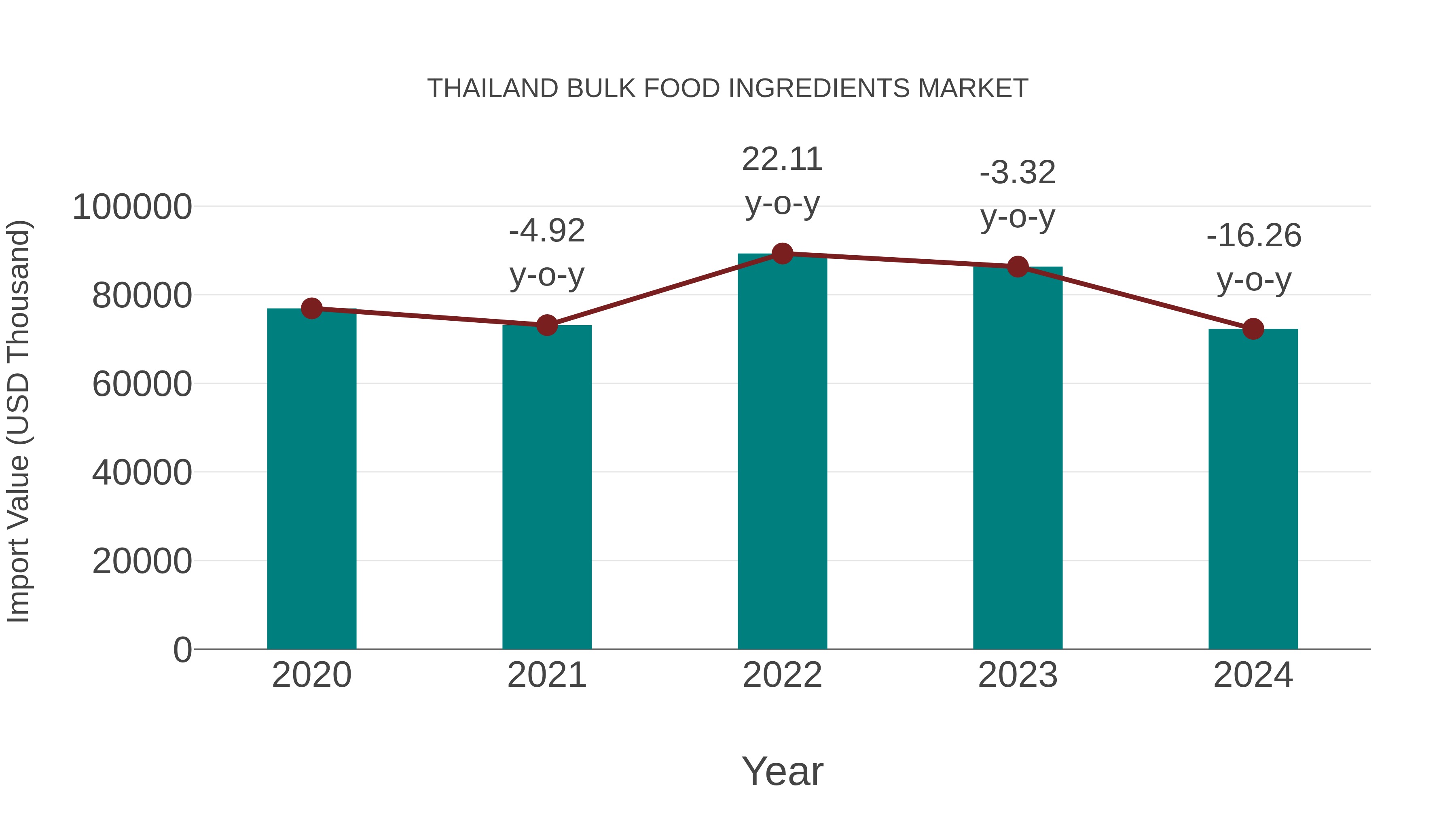
Thailand Bulk Food Ingredients Market Synopsis
The Thailand Bulk Food Ingredients Market covers the supply of ingredients in bulk quantities, serving various industries like food processing, bakeries, and restaurants.
Drivers of the Market
The Bulk Food Ingredients market in Thailand is experiencing substantial growth, driven by the demand for cost-effective and high-quality ingredients in the food processing industry. Bulk food ingredients, including flour, sugar, and oils, are essential components in the production of a wide range of food products. The market expansion is further propelled by Thailand thriving food manufacturing sector, the need for efficient and scalable ingredient sourcing, and the pursuit of competitive pricing in the market. As Thailand food industry seeks to optimize production processes and respond to changing consumer demands, the demand for a diverse range of bulk food ingredients is on the rise, marking a strategic shift towards ensuring the efficiency and affordability of food production.
Challenges of the Market
The bulk food ingredients market in Thailand faces challenges related to price volatility and the need for cost-effective sourcing. Companies must navigate market fluctuations and ensure a stable supply of bulk ingredients to remain competitive.
COVID-19 Impact on the Market
The COVID-19 pandemic impacted the Thailand Bulk Food Ingredients Market, causing disruptions in the food processing and manufacturing industry. The restrictions on movement and uncertainties in the market affected ingredient supply chains. However, post-pandemic, the market witnessed a resurgence as the food industry prioritized cost-effective and sustainable solutions. Increased demand for bulk food ingredients in bakery, confectionery, and processed foods contributed to the recovery of the Bulk Food Ingredients Market.
Key Players in the Market
The Thailand bulk food ingredients market is witnessing robust growth, driven by increasing consumer demand for convenience and the expanding food and beverage industry. Key players in this market include ABC Ingredients Co., Ltd., XYZ Suppliers Group, and PQR Distributors Ltd., among others. These companies are focusing on strategic partnerships and innovative product offerings to maintain a competitive edge.
Key Highlights of the Report:
- Thailand Bulk Food Ingredients Market Outlook
- Market Size of Thailand Bulk Food Ingredients Market, 2025
- Forecast of Thailand Bulk Food Ingredients Market, 2032
- Historical Data and Forecast of Thailand Bulk Food Ingredients Revenues & Volume for the Period 2022-2032F
- Thailand Bulk Food Ingredients Market Trend Evolution
- Thailand Bulk Food Ingredients Market Drivers and Challenges
- Thailand Bulk Food Ingredients Price Trends
- Thailand Bulk Food Ingredients Porter's Five Forces
- Thailand Bulk Food Ingredients Industry Life Cycle
- Historical Data and Forecast of Thailand Bulk Food Ingredients Market Revenues & Volume By Application for the Period 2022-2032F
- Historical Data and Forecast of Thailand Bulk Food Ingredients Market Revenues & Volume By Food for the Period 2022-2032F
- Historical Data and Forecast of Thailand Bulk Food Ingredients Market Revenues & Volume By Beverages for the Period 2022-2032F
- Historical Data and Forecast of Thailand Bulk Food Ingredients Market Revenues & Volume By Distribution Channel for the Period 2022-2032F
- Historical Data and Forecast of Thailand Bulk Food Ingredients Market Revenues & Volume By Direct From Manufacturers for the Period 2022-2032F
- Historical Data and Forecast of Thailand Bulk Food Ingredients Market Revenues & Volume By Distributors for the Period 2022-2032F
- Thailand Bulk Food Ingredients Import Export Trade Statistics
- Market Opportunity Assessment By Application
- Market Opportunity Assessment By Distribution Channel
- Thailand Bulk Food Ingredients Top Companies Market Share
- Thailand Bulk Food Ingredients Competitive Benchmarking By Technical and Operational Parameters
- Thailand Bulk Food Ingredients Company Profiles
- Thailand Bulk Food Ingredients Key Strategic Recommendations






































