Thailand Digital Market Size & Growth Rate (2026-2032)
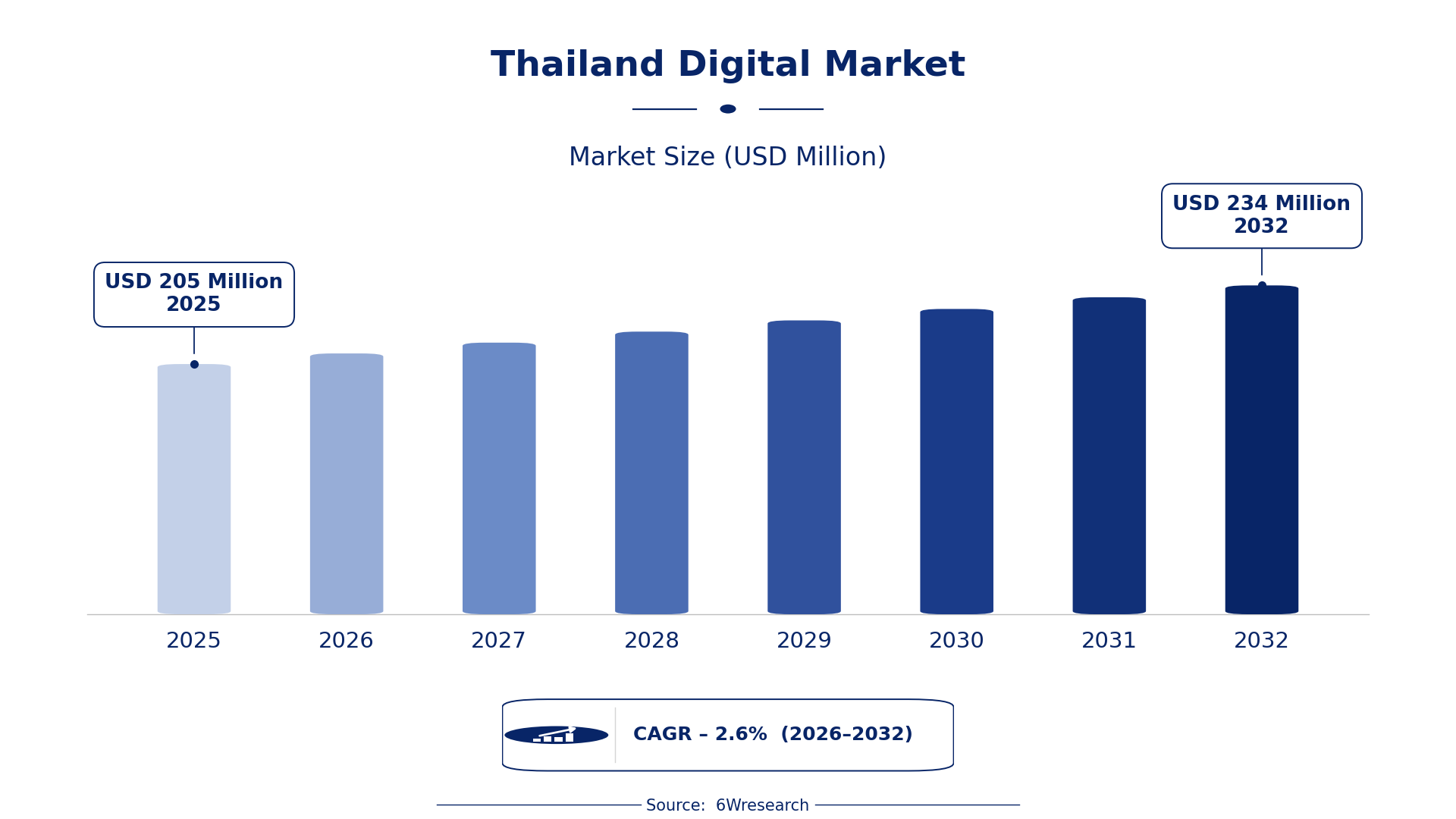
The Thailand Digital Market was estimated at USD 205 Million in 2025 and is projected to reach USD 234 Million by 2032, growing at a CAGR of 2.6% from 2026 to 2032.
Thailand Digital Market Synopsis
The rapid expansion of e-commerce platforms in Thailand reflects a marked shift in consumer behavior. With increasing smartphone penetration, more Thais are opting for online shopping, leading to a surge in demand for digital solutions that cater to this audience.
As businesses adapt to these changes, the landscape for digital marketing and online services is transforming. Companies are looking for innovative ways to connect with their customers, emphasizing the importance of effective digital strategies in a competitive environment.
Thailand Digital Market Year-wise Growth Rate and Key Drivers
This graph illustrates the annual growth rates of the Thailand Digital Market from 2021 to 2032, highlighting a steady upward trajectory and projected expansion over the forecast period.
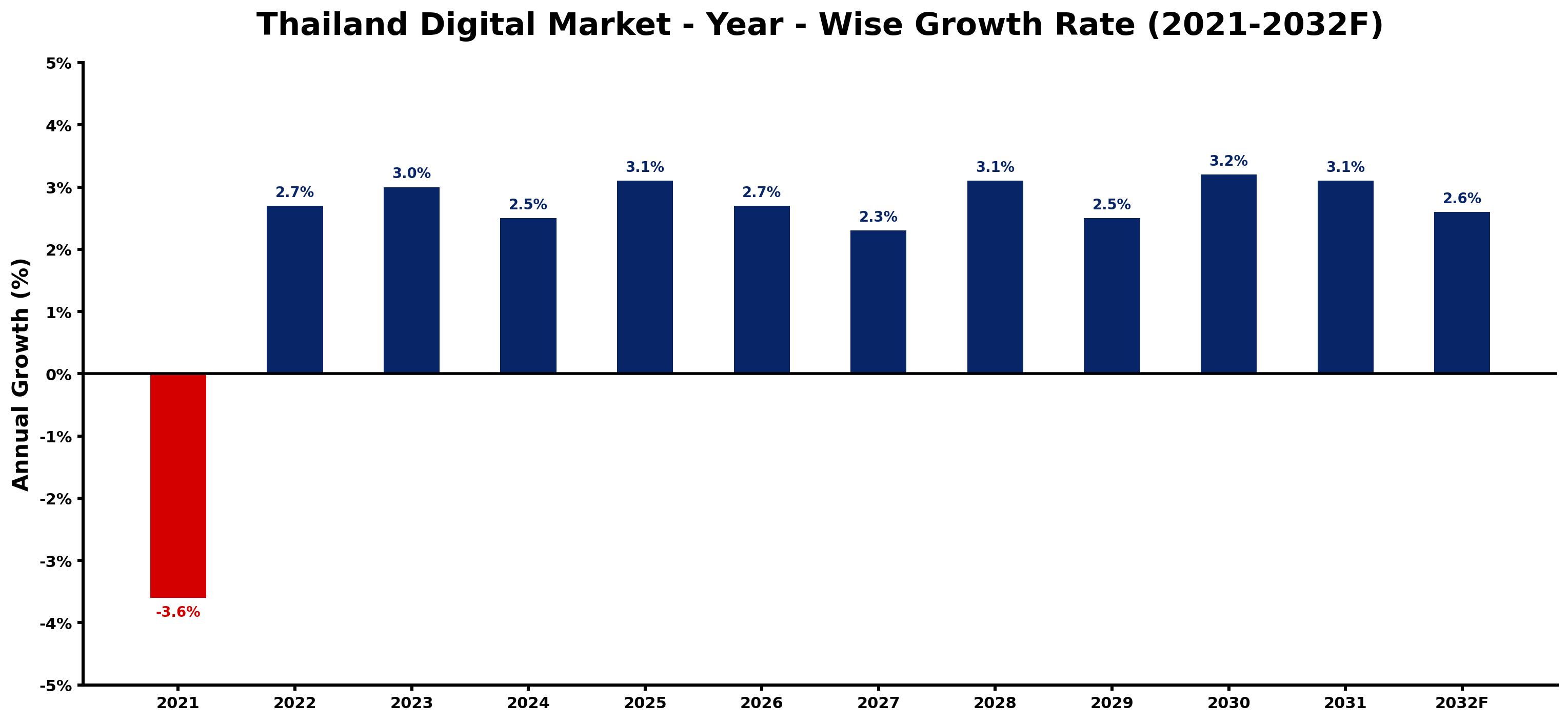
The table below presents the year‑wise growth rates along with the key drivers influencing the market
| Year | Growth Rate | Major Drivers |
| 2021 | -3.6% | Thai government digital policy delays hindered innovation efforts. |
| 2022 | 2.7% | Increased mobile internet accessibility drives online shopping |
| 2023 | 3.0% | Government's Thailand 4.0 initiative boosts tech innovation sector |
| 2024 | 2.5% | Growing youth population enhances social media engagement |
| 2025 | 3.1% | Increased foreign investment in fintech startups encourages innovations |
| 2026 | 2.7% | E-commerce growth spurred by digital payment adoption |
| 2027 | 2.3% | Healthcare digitization project expands telemedicine services |
| 2028 | 3.1% | Local businesses transition to online platforms amid pandemic recovery |
| 2029 | 2.5% | Government incentives for digital marketing attract SMEs' investments |
| 2030 | 3.2% | Surge in remote work increases demand for collaboration tools |
| 2031 | 3.1% | Rising influence of influencers drives digital advertising growth |
| 2032 | 2.6% | Innovation in blockchain tech appeals to security-conscious consumers |
Note: Market size estimations and growth projections presented in this report are based on 6Wresearch's proprietary forecasting methodology, utilizing the latest available industry data, government publications, and primary research inputs.
Thailand Digital Market Key Takeaways
Below are some of the specific key takeaways from the market, including:
- The digital adoption rate among consumers in Thailand is accelerating, driven by the pandemic.
- Key industries, such as retail and entertainment, are heavily investing in digital advertising to reach online audiences.
- The government is actively promoting initiatives to enhance digital infrastructure across the country.
- Businesses face challenges in keeping pace with technological advancements and consumer expectations.
- Emerging technologies like AI and big data are reshaping marketing strategies and consumer interactions.
Evaluation of Restraints in Thailand Digital Market
The Thailand Digital Market is impeded by several factors that could hinder its growth trajectory. A significant challenge remains the digital divide that exists across various demographics and regions, leaving some populations behind. Additionally, businesses often struggle to keep up with the rapid pace of technological changes, which can lead to inefficiencies and missed opportunities. Lastly, concerns about data privacy and cybersecurity continue to create obstacles for companies looking to fully invest in digital transformation.
Thailand Digital Market Trends
Several trends are influencing the Thailand Digital Market today. The rise of social commerce is notable, as more consumers engage with brands through social media platforms. Personalized marketing is also gaining traction, with businesses harnessing data analytics to tailor their offerings to individual preferences. The trend towards mobile-first solutions is evident, as smartphone usage continues to dominate online activities. Finally, sustainability is becoming a focal point, with consumers increasingly favoring brands that demonstrate social responsibility.
Thailand Digital Market Opportunities
The Thailand Digital Market offers substantial opportunities for growth, particularly in e-commerce and digital marketing. Companies that can innovate and provide unique online experiences will find a receptive audience. Investment in digital infrastructure, especially in underserved regions, is likely to yield high returns. on top of that, businesses that embrace emerging technologies, such as artificial intelligence and machine learning, can gain a competitive edge by optimizing their operations and enhancing customer experiences.
Government Initiatives in the Thailand Digital Market
The Thai government is actively involved in shaping the digital market through various initiatives aimed at enhancing infrastructure and promoting digital literacy. Regulatory frameworks are being established to support innovation while ensuring consumer protection. This commitment to fostering a digital economy is crucial, as it lays the groundwork for sustainable growth and inclusivity in the sector.
- A national digital infrastructure upgrade programme now in its rollout phase aims to improve internet accessibility across rural areas.
- The Digital Economy Promotion Agency (DEPA) is currently promoting a comprehensive digital literacy initiative to empower small businesses.
- A regulatory framework introduced in 2025 mandating billing transparency is expected to enhance consumer trust in online transactions.
- A planned public-private initiative expected to expand telecom infrastructure access by 2028 focuses on enhancing connectivity nationwide.
Future Insights of the Thailand Digital Market
Looking ahead to 2026-2032, the Thailand Digital Market is on a path of steady growth. As more consumers embrace digital solutions, the demand for innovative services will rise. Businesses that prioritize digital transformation will thrive, while those that resist change may struggle. The evolving regulatory environment will likely support this growth, fostering a more inclusive digital ecosystem that benefits all stakeholders involved.
Thailand Digital Market Latest Developments
Over the past year, the Thailand Digital Market has witnessed a series of dynamic developments that signal a shift towards a more integrated digital economy. Businesses are increasingly investing in technology to enhance their online presence and improve customer engagement. This trend is expected to continue as the market matures.
- A major technology vendor announced a partnership in early 2025 to develop a new e-commerce platform tailored for local businesses.
- An initiative that began in mid-2025 and remains underway focuses on enhancing cybersecurity measures for online transactions.
- A service upgrade launched in Q1 2025 aims to improve payment processing speed for digital transactions across various platforms.
- A rollout expected to begin in the second half of 2026 will introduce augmented reality features to enhance online shopping experiences.
Thailand Digital Market - Key Attractiveness of the Report
- 10 Years of Market Numbers
- Historical Data Starting from 2022 to 2025
- Base Year: 2025
- Forecast Data until 2032
- Key Performance Indicators Impacting the Market
- Major Upcoming Developments and Projects
Key Highlights of the Report:
- Thailand Digital Market Outlook
- Market Size of Thailand Digital Market, 2025
- Forecast of Thailand Digital Market, 2032
- Historical Data and Forecast of Thailand Digital Revenues & Volume for the Period 2022-2032F
- Thailand Digital Market Trend Evolution
- Thailand Digital Market Drivers and Challenges
- Thailand Digital Price Trends
- Thailand Digital Porter's Five Forces
- Thailand Digital Industry Life Cycle
- Historical Data and Forecast of Thailand Digital Market Revenues & Volume By Software for the Period 2022-2032F
- Historical Data and Forecast of Thailand Digital Market Revenues & Volume By CRM Software for the Period 2022-2032F
- Historical Data and Forecast of Thailand Digital Market Revenues & Volume By Email Marketing Software for the Period 2022-2032F
- Historical Data and Forecast of Thailand Digital Market Revenues & Volume By Social Media Advertising for the Period 2022-2032F
- Thailand Digital Import Export Trade Statistics
- Market Opportunity Assessment By Software
- Thailand Digital Top Companies Market Share
- Thailand Digital Competitive Benchmarking By Technical and Operational Parameters
- Thailand Digital Company Profiles
- Thailand Digital Key Strategic Recommendations






































