Thailand Eco Fibers Market: Import Trend Analysis
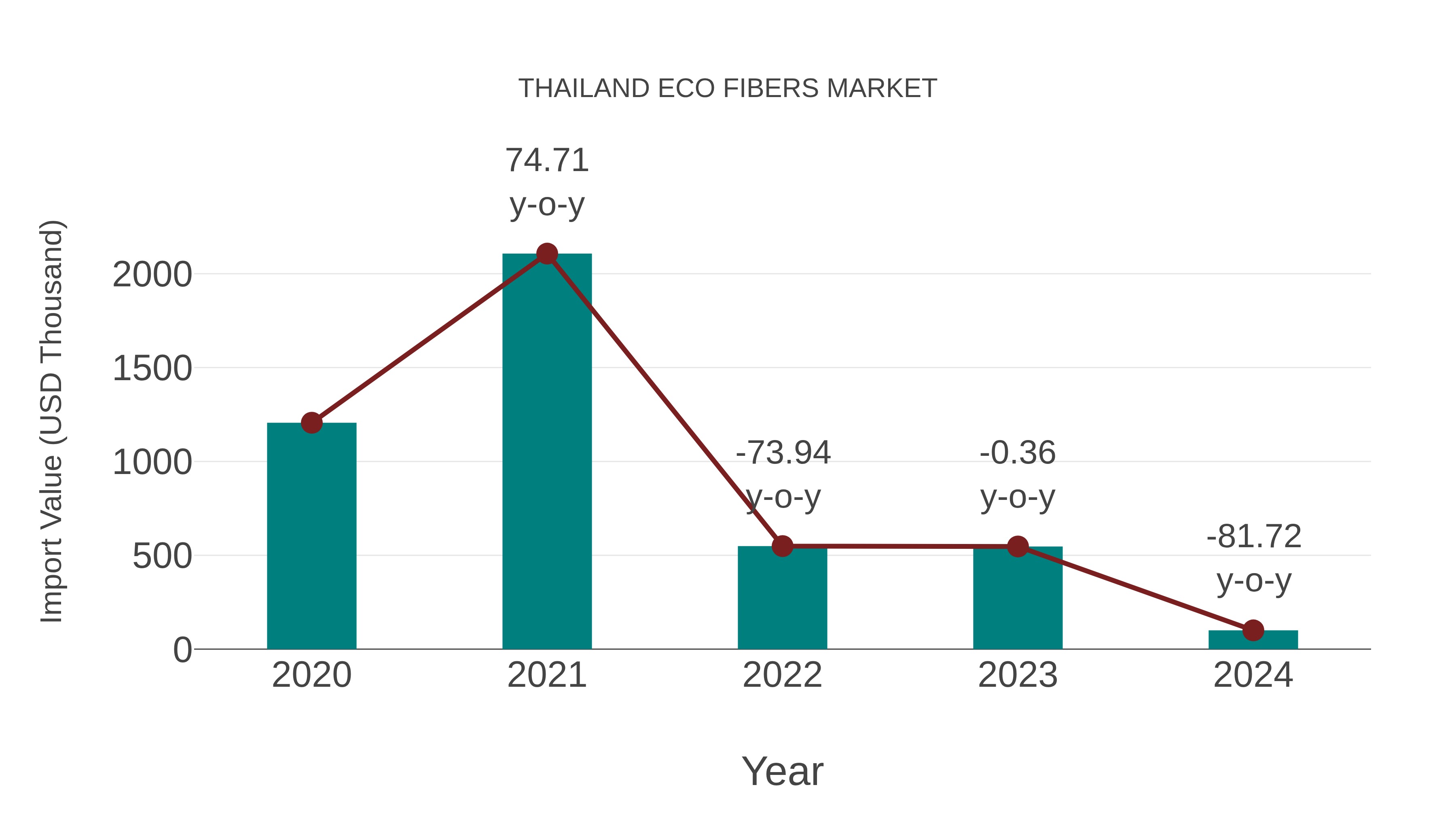
Thailand import trend for eco fibers in 2024 experienced a significant decline, with a growth rate of -81.72% compared to the previous year. The compound annual growth rate (CAGR) for the period 2020-2024 stood at -46.34%. This sharp decrease in import momentum could be attributed to shifting demand patterns or changes in trade policies impacting market stability.
Thailand Eco Fibers Market Synopsis
The Thailand Eco Fibers Market is witnessing a surge in demand as sustainability and eco-consciousness become central to the textile and fashion industries. Eco fibers, including organic cotton, hemp, and recycled materials, are being embraced by consumers and manufacturers alike. Thailand textile and apparel sector is adapting to these eco-friendly fibers, reflecting the changing consumer preferences.
Drivers of the Market
The Eco Fibers market in Thailand is witnessing notable growth, driven by the increasing emphasis on sustainable and environmentally friendly materials in the textile and fashion industries. Eco fibers, including organic cotton, hemp, and recycled polyester, are gaining prominence for their role in reducing the environmental impact of textile production. The growth of sustainable fashion initiatives, the rising awareness of eco-friendly consumer choices, and the need for responsible sourcing in Thailand are contributing to the adoption of eco fibers. Moreover, the focus on circular fashion and the collaborations between textile manufacturers and environmental organizations are further fueling the positive trajectory of the eco fibers market.
Challenges of the Market
The Thailand Eco Fibers market faces several challenges that impact its growth and sustainability. One significant obstacle is the consumer awareness and understanding of eco-friendly products. While there is an increasing demand for sustainable materials, educating consumers about the benefits and characteristics of eco fibers remains a challenge. Additionally, the higher production costs associated with eco fibers compared to traditional fibers pose a challenge to market expansion. Overcoming these challenges requires concerted efforts from industry players to invest in consumer education and explore cost-effective production methods.
COVID-19 Impact on the Market
The Thailand Eco Fibers market faced challenges during the COVID-19 pandemic, with fluctuations in the textile and fashion industries. The market is recovering as sustainability becomes a key focus in the textile supply chain. Manufacturers are focusing on providing eco-friendly fibers, such as organic cotton, recycled polyester, and bamboo, for use in apparel, home textiles, and non-woven products in the post-pandemic landscape.
Key Players in the Market
Prominent players in the Thailand Eco Fibers Market include Indorama Ventures Public Company Limited, Teijin Limited, and Asahi Kasei Corporation. These key players are actively involved in the production of eco-friendly fibers, contributing to sustainable practices in the Thai market.
Key Highlights of the Report:
- Thailand Eco Fibers Market Outlook
- Market Size of Thailand Eco Fibers Market, 2025
- Forecast of Thailand Eco Fibers Market, 2032
- Historical Data and Forecast of Thailand Eco Fibers Revenues & Volume for the Period 2022-2032F
- Thailand Eco Fibers Market Trend Evolution
- Thailand Eco Fibers Market Drivers and Challenges
- Thailand Eco Fibers Price Trends
- Thailand Eco Fibers Porter's Five Forces
- Thailand Eco Fibers Industry Life Cycle
- Historical Data and Forecast of Thailand Eco Fibers Market Revenues & Volume By Type for the Period 2022-2032F
- Historical Data and Forecast of Thailand Eco Fibers Market Revenues & Volume By Regenerated fibers for the Period 2022-2032F
- Historical Data and Forecast of Thailand Eco Fibers Market Revenues & Volume By Recycled fibers for the Period 2022-2032F
- Historical Data and Forecast of Thailand Eco Fibers Market Revenues & Volume By Organic fibers for the Period 2022-2032F
- Historical Data and Forecast of Thailand Eco Fibers Market Revenues & Volume By Application for the Period 2022-2032F
- Historical Data and Forecast of Thailand Eco Fibers Market Revenues & Volume By Textile/Clothing for the Period 2022-2032F
- Historical Data and Forecast of Thailand Eco Fibers Market Revenues & Volume By Household Furnishings for the Period 2022-2032F
- Historical Data and Forecast of Thailand Eco Fibers Market Revenues & Volume By Industrial for the Period 2022-2032F
- Historical Data and Forecast of Thailand Eco Fibers Market Revenues & Volume By Medical for the Period 2022-2032F
- Thailand Eco Fibers Import Export Trade Statistics
- Market Opportunity Assessment By Type
- Market Opportunity Assessment By Application
- Thailand Eco Fibers Top Companies Market Share
- Thailand Eco Fibers Competitive Benchmarking By Technical and Operational Parameters
- Thailand Eco Fibers Company Profiles
- Thailand Eco Fibers Key Strategic Recommendations






































