Thailand Kitchen and Table Glassware Market: Import Trend Analysis
In the Thailand kitchen and table glassware market, import trends showed a growth rate of 13.48% from 2023 to 2024, contrasting with a -1.25% compound annual growth rate (CAGR) for 2020-2024. This shift may reflect evolving consumer preferences or changes in trade policies impacting market dynamics.
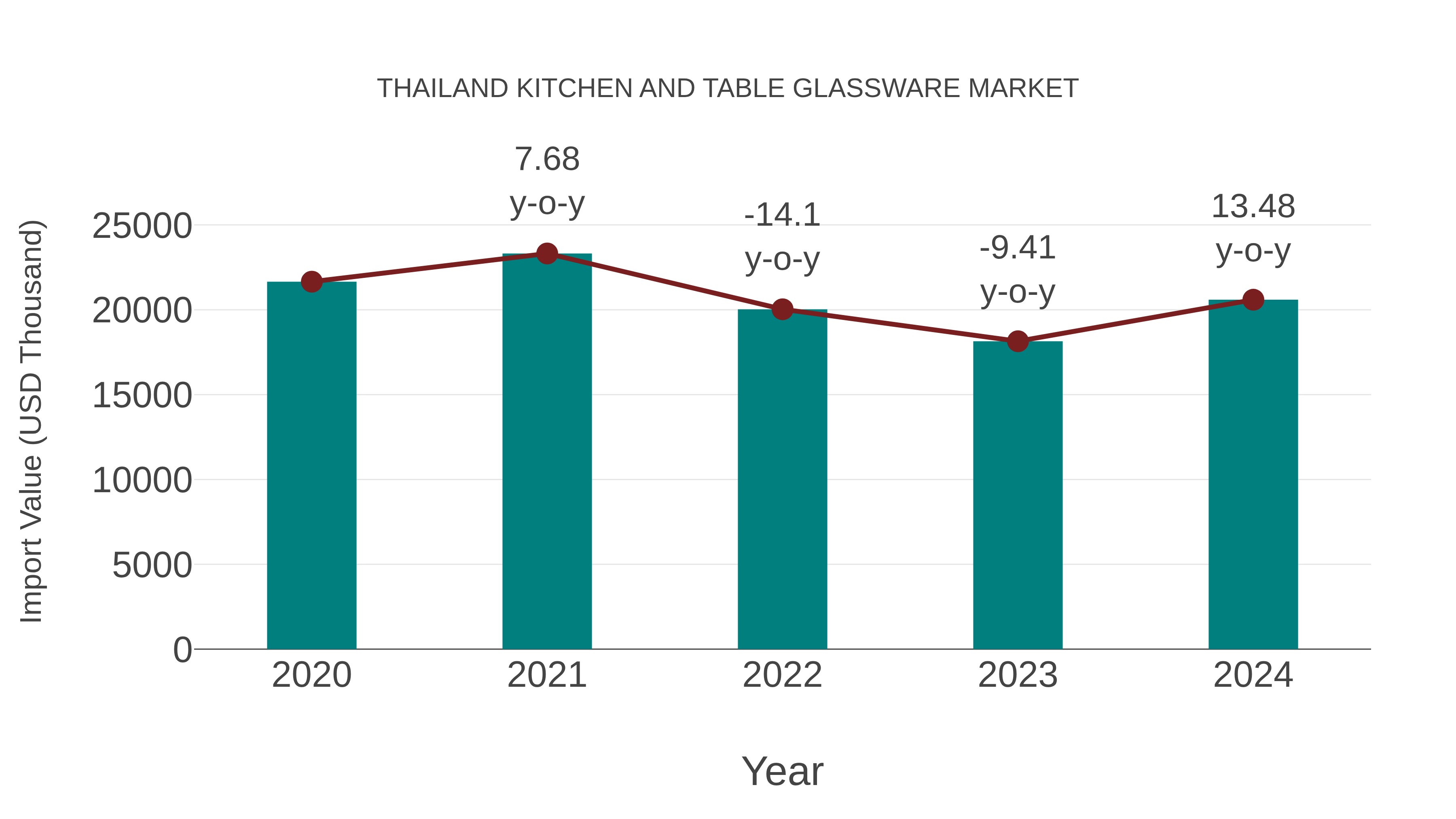
Thailand Kitchen and Table Glassware Market Synopsis
The kitchen and table glassware market in Thailand caters to the dining and hospitality sectors, as well as household consumers. Glassware products such as glass plates, bowls, cups, and utensils are integral to the presentation and serving of food and beverages. The market is influenced by trends in interior design and dining experiences, with an emphasis on aesthetics, durability, and functionality. Manufacturers in Thailand produce a wide range of glassware options, including traditional and contemporary designs. Additionally, eco-friendly and sustainable materials and production processes are gaining traction in this market as consumers become more environmentally conscious.
Drivers of the Market
The Thailand kitchen and table glassware market is flourishing due to several driving factors. Firstly, the growing urbanization and changing lifestyle patterns have led to an increased preference for dining out and home entertaining. This has resulted in a surge in demand for aesthetically pleasing and durable glassware for both commercial and household use. Additionally, the country`s thriving tourism sector has bolstered the demand for attractive glassware in hotels and restaurants. Moreover, the rise in disposable income levels has led to consumers seeking premium and branded glassware products, driving market growth. The eco-conscious consumer trend is also promoting the use of glassware due to its recyclability and eco-friendliness.
Challenges of the Market
The Thailand kitchen and table glassware market face challenges related to consumer preferences and sustainability concerns. As consumers become more conscious of the environmental impact of their choices, manufacturers must offer eco-friendly glassware options. The market also contends with competition from alternative materials like ceramics and plastics. Design aesthetics and product durability remain critical factors in consumer choices.
COVID-19 Impact on the Market
The pandemic had a dual impact on the Thailand kitchen and table glassware market. Initially, with restaurants and hospitality businesses temporarily closing, there was a decrease in demand for glassware used in these sectors. However, as more people cooked and dined at home, the demand for kitchen and table glassware for personal use surged. E-commerce platforms played a crucial role in driving sales during lockdowns, and consumers sought durable and stylish glassware for home entertaining.
Key Players in the Market
The Thailand kitchen and table glassware market features key players like Ocean Glass Public Company Limited and Thai Glass Industries. These companies offer a wide range of glassware products, including dinnerware, drinkware, and kitchen accessories, catering to both domestic and export markets.
Key Highlights of the Report:
- Thailand kitchen and table glassware Market Outlook
- Market Size of Thailand kitchen and table glassware Market, 2025
- Forecast of Thailand kitchen and table glassware Market, 2032
- Historical Data and Forecast of Thailand kitchen and table glassware Revenues & Volume for the Period 2022-2032F
- Thailand kitchen and table glassware Market Trend Evolution
- Thailand kitchen and table glassware Market Drivers and Challenges
- Thailand kitchen and table glassware Price Trends
- Thailand kitchen and table glassware Porter's Five Forces
- Thailand kitchen and table glassware Industry Life Cycle
- Historical Data and Forecast of Thailand kitchen and table glassware Market Revenues & Volume By Type for the Period 2022-2032F
- Historical Data and Forecast of Thailand kitchen and table glassware Market Revenues & Volume By Drinkware for the Period 2022-2032F
- Historical Data and Forecast of Thailand kitchen and table glassware Market Revenues & Volume By Dinnerware for the Period 2022-2032F
- Historical Data and Forecast of Thailand kitchen and table glassware Market Revenues & Volume By Others for the Period 2022-2032F
- Historical Data and Forecast of Thailand kitchen and table glassware Market Revenues & Volume By Application for the Period 2022-2032F
- Historical Data and Forecast of Thailand kitchen and table glassware Market Revenues & Volume By Commercial Use for the Period 2022-2032F
- Historical Data and Forecast of Thailand kitchen and table glassware Market Revenues & Volume By Residential Use for the Period 2022-2032F
- Historical Data and Forecast of Thailand kitchen and table glassware Market Revenues & Volume By Distribution Channel for the Period 2022-2032F
- Historical Data and Forecast of Thailand kitchen and table glassware Market Revenues & Volume By Supermarket for the Period 2022-2032F
- Historical Data and Forecast of Thailand kitchen and table glassware Market Revenues & Volume By Independent Stores for the Period 2022-2032F
- Historical Data and Forecast of Thailand kitchen and table glassware Market Revenues & Volume By E-commerce for the Period 2022-2032F
- Historical Data and Forecast of Thailand kitchen and table glassware Market Revenues & Volume By Others for the Period 2022-2032F
- Historical Data and Forecast of Thailand kitchen and table glassware Market Revenues & Volume By Product for the Period 2022-2032F
- Historical Data and Forecast of Thailand kitchen and table glassware Market Revenues & Volume By Tea Pots for the Period 2022-2032F
- Historical Data and Forecast of Thailand kitchen and table glassware Market Revenues & Volume By Pitchers for the Period 2022-2032F
- Historical Data and Forecast of Thailand kitchen and table glassware Market Revenues & Volume By Coffee Brewers for the Period 2022-2032F
- Historical Data and Forecast of Thailand kitchen and table glassware Market Revenues & Volume By Wine Glass for the Period 2022-2032F
- Historical Data and Forecast of Thailand kitchen and table glassware Market Revenues & Volume By Beer Glass for the Period 2022-2032F
- Historical Data and Forecast of Thailand kitchen and table glassware Market Revenues & Volume By Cups for the Period 2022-2032F
- Historical Data and Forecast of Thailand kitchen and table glassware Market Revenues & Volume By Mugs for the Period 2022-2032F
- Historical Data and Forecast of Thailand kitchen and table glassware Market Revenues & Volume By Others for the Period 2022-2032F
- Thailand kitchen and table glassware Import Export Trade Statistics
- Market Opportunity Assessment By Type
- Market Opportunity Assessment By Application
- Market Opportunity Assessment By Distribution Channel
- Market Opportunity Assessment By Product
- Thailand kitchen and table glassware Top Companies Market Share
- Thailand kitchen and table glassware Competitive Benchmarking By Technical and Operational Parameters
- Thailand kitchen and table glassware Company Profiles
- Thailand kitchen and table glassware Key Strategic Recommendations






































