Thailand Octopus Market: Import Trend Analysis
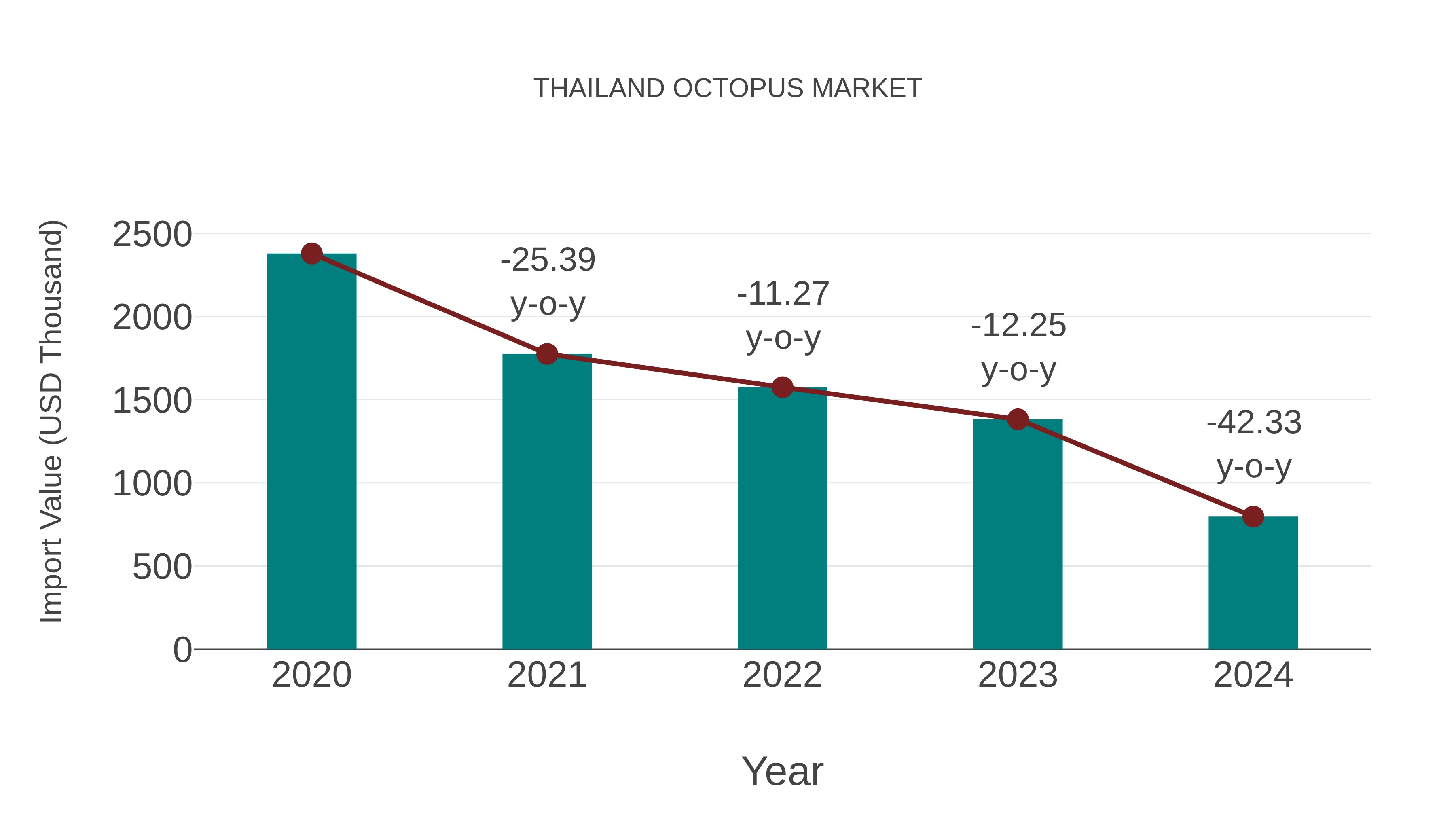
Thailand import trend for octopus in 2024 experienced a decline, with a growth rate of -42.33% compared to the previous year. The compound annual growth rate (CAGR) from 2020 to 2024 stood at -23.92%. This significant decrease in imports could be attributed to shifting consumer preferences or changes in trade policies impacting the Thailand octopus market`s stability.
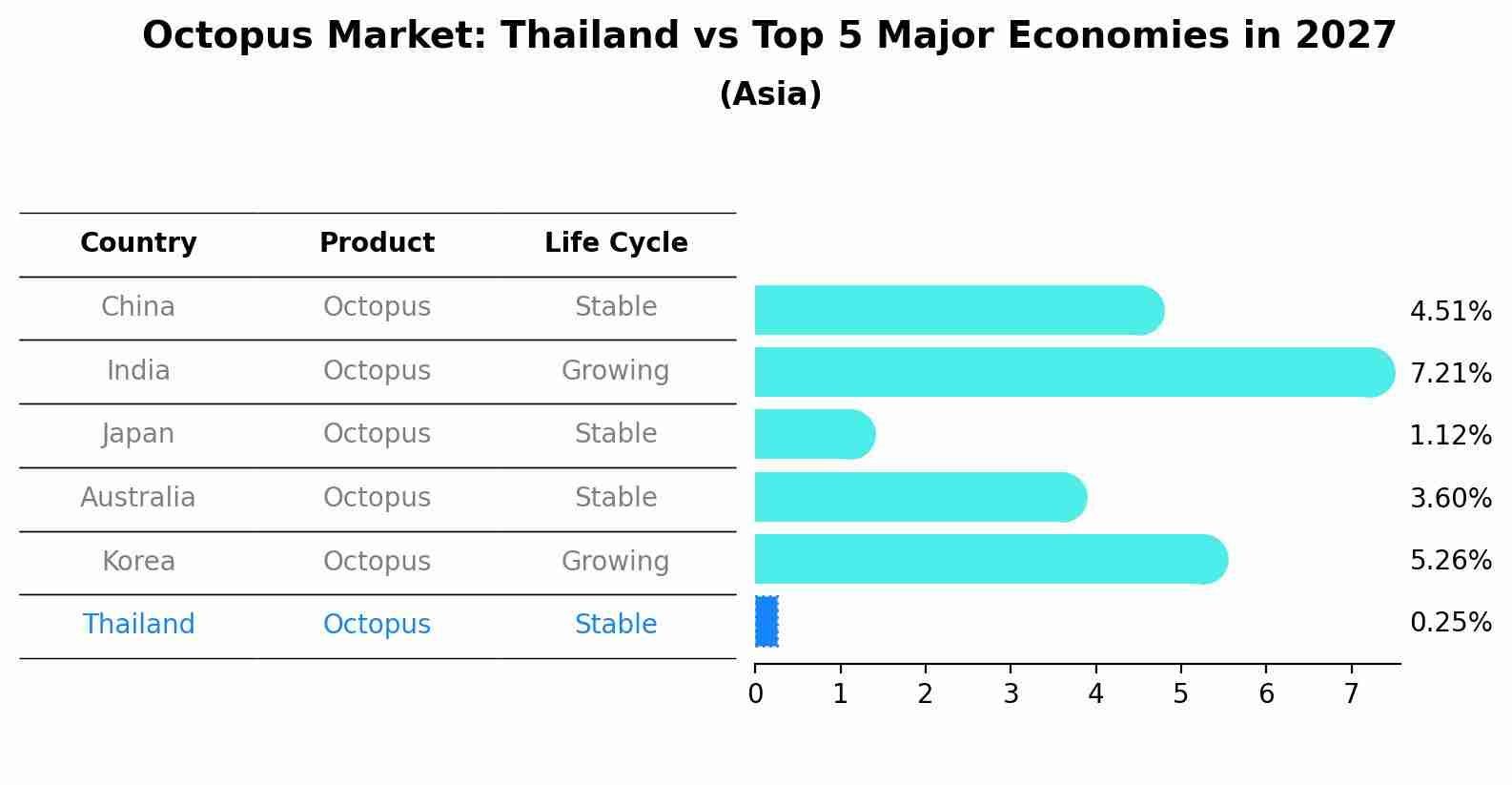
Octopus Market: Thailand vs Top 5 Major Economies in 2027 (Asia)
The Octopus market in Thailand is projected to grow at a stable growth rate of 0.25% by 2027, highlighting the country's increasing focus on advanced technologies within the Asia region, where China holds the dominant position, followed closely by India, Japan, Australia and South Korea, shaping overall regional demand.
Thailand Octopus Market Synopsis
Octopus holds a unique position in the Thai seafood market due to its versatility and ability to be incorporated into a wide range of dishes. Thai cuisine often features octopus in salads, soups, and grilled preparations. The Thailand octopus market caters to both domestic consumption and exports, with a focus on delivering high-quality and tender octopus products to meet the expectations of culinary enthusiasts.
Drivers of the Market
The octopus market in Thailand is driven by a combination of factors. Firstly, octopus is a prized seafood delicacy in Thai cuisine, and it enjoys significant domestic consumption. This demand is further bolstered by Thailand extensive coastline and fishing industry, which ensures a consistent supply of fresh octopus. Additionally, the international demand for octopus has been growing steadily due to its versatility in various global cuisines. Thai exporters have capitalized on this trend, making Thailand a key player in the global octopus market. Furthermore, the focus on sustainable fishing and responsible sourcing practices has positioned Thai octopus as a preferred choice for environmentally-conscious consumers and retailers.
Challenges of the Market
The Thailand octopus market faces challenges related to sustainability and consumer acceptance. Octopus populations can be vulnerable to overfishing, leading to concerns about long-term availability. Additionally, preparing octopus can be considered complex by some consumers, which may limit its appeal. Raising awareness about sustainable fishing practices and providing education on cooking and preparation methods are essential to overcoming these challenges.
COVID-19 Impact on the Market
The octopus market in Thailand encountered obstacles during the COVID-19 pandemic. With restrictions on travel and dining out, the demand for seafood, including octopus, diminished. The export market, particularly in regions heavily affected by the pandemic, experienced a decline in demand. The processing and packaging of octopus were also impacted by disruptions in supply chains and labor shortages. Nevertheless, as the situation improved, and consumer preferences evolved, the market began to adapt to new trends, such as increased home cooking and online seafood sales.
Key Players in the Market
In the Thailand octopus market, a few notable players have established themselves as industry leaders. Pacific Octopus Co., Ltd. is a prominent name known for its extensive octopus fishing and processing operations. Their commitment to sustainable fishing practices and stringent quality control measures has helped them maintain a strong market presence. Additionally, OctoThai Group, with its vertically integrated approach to octopus production, from fishing to processing and distribution, has also gained prominence in the market. These key players, along with others such as Thai Octopus Producers Co., contribute significantly to Thailand position as a major supplier of octopus to both domestic and international markets.
Key Highlights of the Report:
- Thailand Octopus Market Outlook
- Market Size of Thailand Octopus Market, 2025
- Forecast of Thailand Octopus Market, 2032
- Historical Data and Forecast of Thailand Octopus Revenues & Volume for the Period 2022-2032F
- Thailand Octopus Market Trend Evolution
- Thailand Octopus Market Drivers and Challenges
- Thailand Octopus Price Trends
- Thailand Octopus Porter's Five Forces
- Thailand Octopus Industry Life Cycle
- Historical Data and Forecast of Thailand Octopus Market Revenues & Volume By Product Type for the Period 2022-2032F
- Historical Data and Forecast of Thailand Octopus Market Revenues & Volume By Fresh for the Period 2022-2032F
- Historical Data and Forecast of Thailand Octopus Market Revenues & Volume By Processed for the Period 2022-2032F
- Historical Data and Forecast of Thailand Octopus Market Revenues & Volume By Application for the Period 2022-2032F
- Historical Data and Forecast of Thailand Octopus Market Revenues & Volume By Commercial for the Period 2022-2032F
- Historical Data and Forecast of Thailand Octopus Market Revenues & Volume By Food and Beverage for the Period 2022-2032F
- Historical Data and Forecast of Thailand Octopus Market Revenues & Volume By Distribution Channel for the Period 2022-2032F
- Historical Data and Forecast of Thailand Octopus Market Revenues & Volume By Direct for the Period 2022-2032F
- Historical Data and Forecast of Thailand Octopus Market Revenues & Volume By Indirect for the Period 2022-2032F
- Thailand Octopus Import Export Trade Statistics
- Market Opportunity Assessment By Product Type
- Market Opportunity Assessment By Application
- Market Opportunity Assessment By Distribution Channel
- Thailand Octopus Top Companies Market Share
- Thailand Octopus Competitive Benchmarking By Technical and Operational Parameters
- Thailand Octopus Company Profiles
- Thailand Octopus Key Strategic Recommendations






































