Thailand Peat Market: Import Trend Analysis
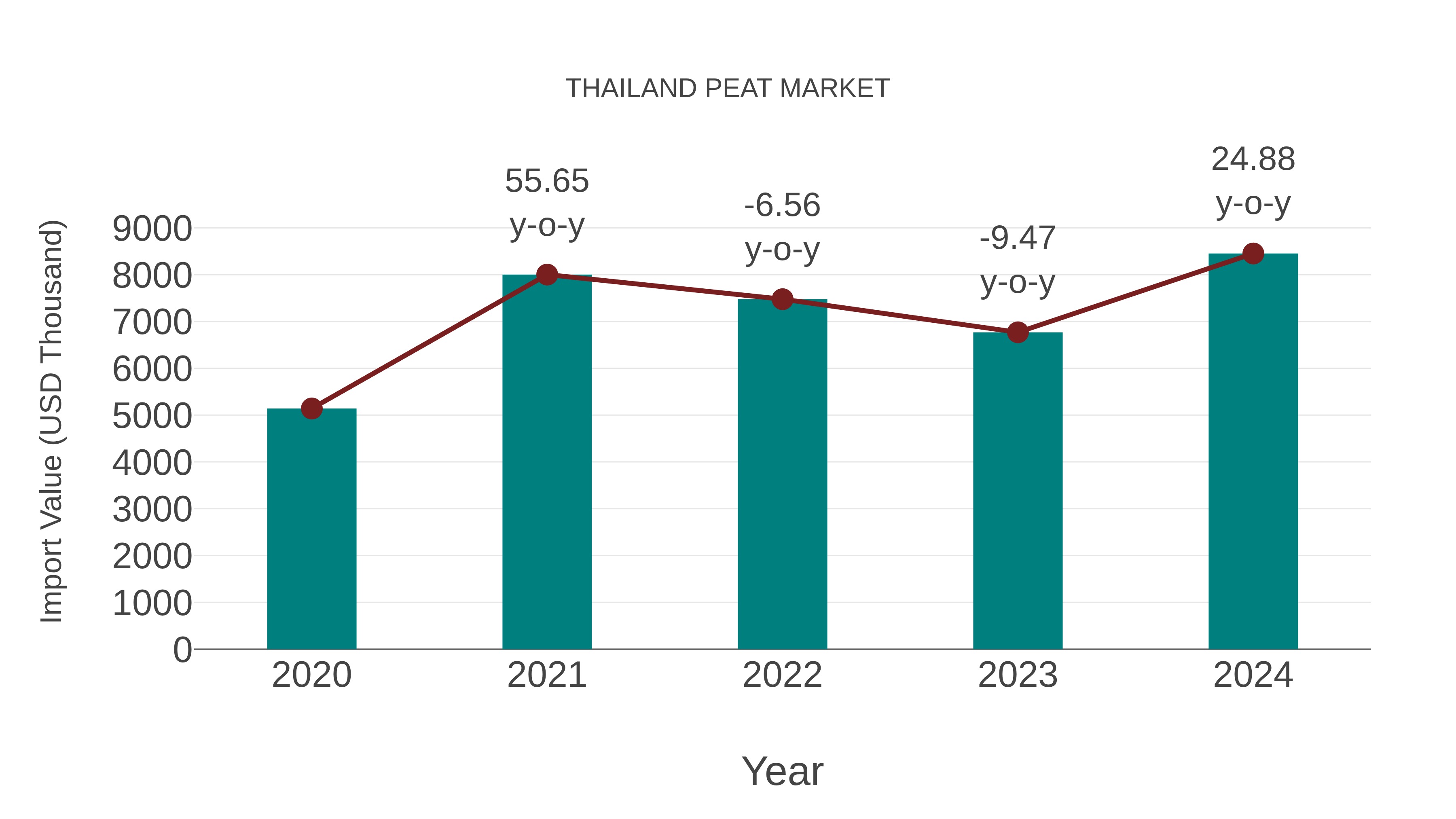
Thailand import trend for the peat market showed a notable growth rate of 24.88% from 2023 to 2024, with a compound annual growth rate (CAGR) of 13.24% from 2020 to 2024. This import momentum can be attributed to increased demand for peat products in various industries, indicating a strong market stability and sustained interest in peat imports during the period analyzed.
Thailand Peat Market Synopsis
The peat market in Thailand has seen a steady growth over the past few years, with an estimated total value of THB 6.41 billion (USD 208 million). This represented a compound annual growth rate (CAGR) of 4.5%. The major factors driving this growth include increasing demand for fuel and other agricultural inputs as well as rising prices due to higher production costs and input scarcity.
Drivers of the Market
The Thailand peat market is driven by the agricultural sector`s need for soil amendments and substrates that improve soil structure and water retention. Peat is widely used to enhance soil fertility and productivity in various crops. Furthermore, the horticulture and gardening industry relies on peat-based substrates for seedling germination and plant growth. As sustainable practices gain importance, the market is witnessing a shift towards responsibly sourced peat and alternative soil amendments. The demand for organic farming and gardening practices further contributes to the market`s growth.
Challenges of the Market
One of the challenges in the Thailand peat market is environmental sustainability. Peat extraction can have negative ecological impacts, including habitat destruction, carbon emissions, and disruption of water ecosystems. Balancing the economic benefits of peat extraction with the need to preserve sensitive ecosystems and mitigate climate change presents a complex challenge. Developing sustainable peat harvesting practices that minimize environmental impact is crucial for the long-term viability of the industry.
COVID-19 Impact on the Market
The Thailand peat market, contributing to horticulture, agriculture, and energy sectors, experienced Covid-19 repercussions that echoed throughout the supply chain. The disruption of labor availability, transportation limitations, and uncertainties in global markets impacted both the production and distribution of peat products. Lockdowns and reduced economic activities led to changes in consumer spending patterns, affecting sectors like gardening and landscaping. The demand for peat-based products faced a temporary setback. However, as economies gradually reopened, the market adapted by emphasizing sustainable practices and the benefits of peat in improving soil structure and water retention.
Key Players in the Market
Prominent players in the Thailand peat market include PeatHarvest Ltd., ThaiPeatExtraction, and EcoPeat Solutions. These companies are engaged in the extraction and processing of peat, used in horticulture, agriculture, and energy production. Their focus on sustainable peatland management and environmental considerations establishes them as significant contributors to the market.
Key Highlights of the Report:
- Thailand Peat Market Outlook
- Market Size of Thailand Peat Market, 2025
- Forecast of Thailand Peat Market, 2032
- Historical Data and Forecast of Thailand Peat Revenues & Volume for the Period 2022-2032F
- Thailand Peat Market Trend Evolution
- Thailand Peat Market Drivers and Challenges
- Thailand Peat Price Trends
- Thailand Peat Porter's Five Forces
- Thailand Peat Industry Life Cycle
- Historical Data and Forecast of Thailand Peat Market Revenues & Volume By Type for the Period 2022-2032F
- Historical Data and Forecast of Thailand Peat Market Revenues & Volume By Coco Peat for the Period 2022-2032F
- Historical Data and Forecast of Thailand Peat Market Revenues & Volume By Sod Peat for the Period 2022-2032F
- Historical Data and Forecast of Thailand Peat Market Revenues & Volume By Other for the Period 2022-2032F
- Historical Data and Forecast of Thailand Peat Market Revenues & Volume By Material Type for the Period 2022-2032F
- Historical Data and Forecast of Thailand Peat Market Revenues & Volume By Fibric for the Period 2022-2032F
- Historical Data and Forecast of Thailand Peat Market Revenues & Volume By Hemic for the Period 2022-2032F
- Historical Data and Forecast of Thailand Peat Market Revenues & Volume By Sapric for the Period 2022-2032F
- Historical Data and Forecast of Thailand Peat Market Revenues & Volume By Others for the Period 2022-2032F
- Historical Data and Forecast of Thailand Peat Market Revenues & Volume By Application for the Period 2022-2032F
- Historical Data and Forecast of Thailand Peat Market Revenues & Volume By Agriculture for the Period 2022-2032F
- Historical Data and Forecast of Thailand Peat Market Revenues & Volume By Fuel & Energy for the Period 2022-2032F
- Historical Data and Forecast of Thailand Peat Market Revenues & Volume By Others for the Period 2022-2032F
- Thailand Peat Import Export Trade Statistics
- Market Opportunity Assessment By Type
- Market Opportunity Assessment By Material Type
- Market Opportunity Assessment By Application
- Thailand Peat Top Companies Market Share
- Thailand Peat Competitive Benchmarking By Technical and Operational Parameters
- Thailand Peat Company Profiles
- Thailand Peat Key Strategic Recommendations






































