Thailand Urodynamic Equipment Market: Import Trend Analysis
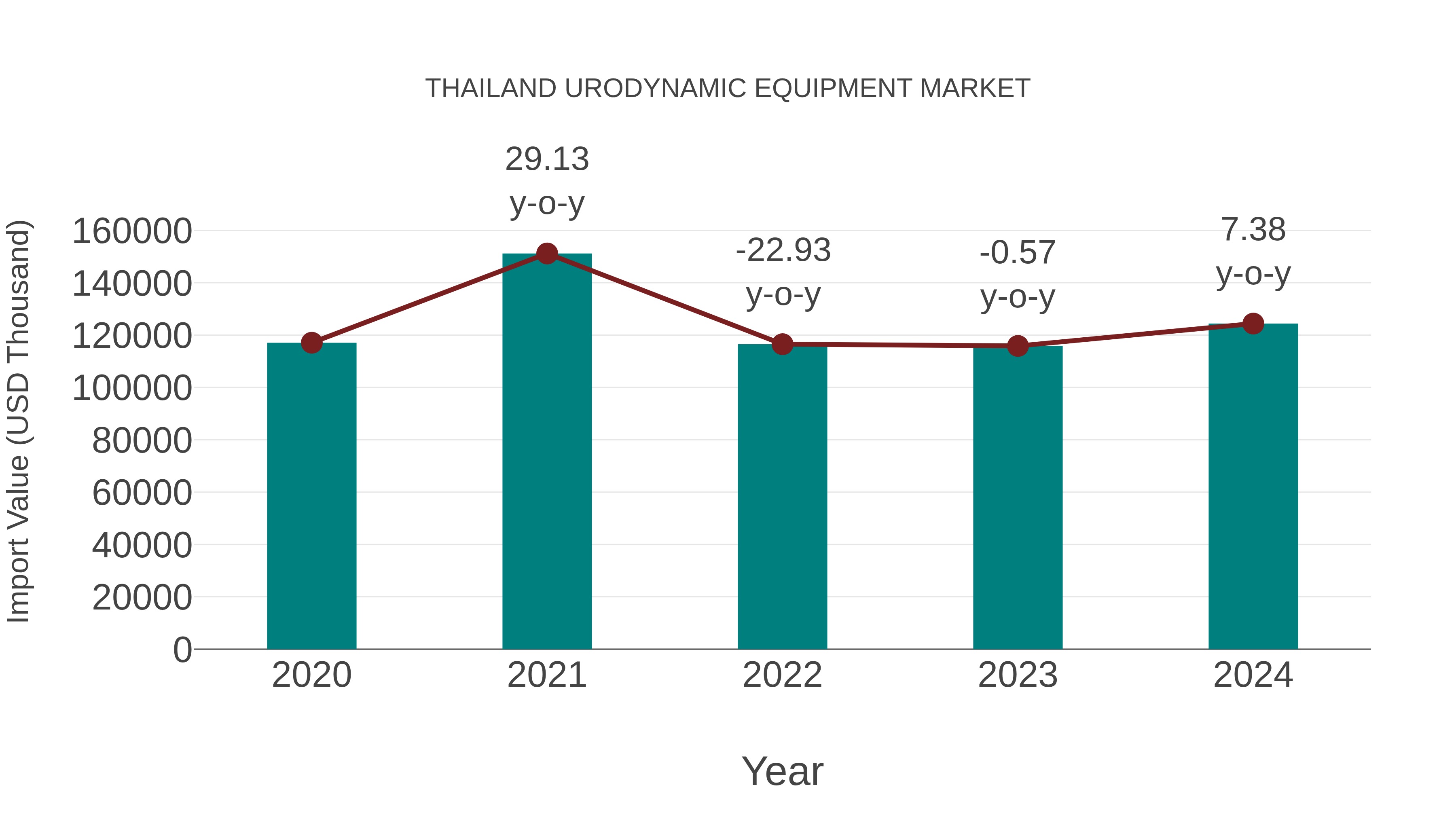
In the Thailand urodynamic equipment market, the import trend from 2023 to 2024 exhibited a growth rate of 7.38%, while the compound annual growth rate (CAGR) for the period 2020-2024 stood at 1.53%. This increase in import momentum could be attributed to a rising demand for advanced medical technologies in the country`s healthcare sector.
Thailand Urodynamic Equipment Market Synopsis
The Thailand urodynamic equipment market has experienced growth due to the increasing prevalence of urological disorders and a rising aging population. Urodynamic equipment is essential for diagnosing and monitoring conditions like urinary incontinence and urinary tract infections. The market benefits from advancements in healthcare technology, which have led to more accurate and minimally invasive diagnostic procedures. As awareness of urological health continues to rise, the demand for urodynamic equipment is expected to remain on an upward trajectory.
Drivers of the Market
The Thailand urodynamic equipment market is experiencing growth driven by several significant factors. A primary driver is the increasing prevalence of urological disorders and the aging population, which leads to a higher demand for urodynamic testing and diagnosis. Healthcare providers` emphasis on accurate and early diagnosis of urological conditions is boosting the adoption of urodynamic equipment. Additionally, advancements in technology, such as non-invasive urodynamic testing methods, are making these procedures more patient-friendly and accessible. The awareness of urological health and the need for comprehensive diagnostic tools are key drivers of market growth.
Challenges of the Market
The urodynamic equipment market in Thailand encounters several challenges. One primary challenge is the limited availability of urodynamic testing facilities and trained healthcare professionals, which can hinder the diagnosis and treatment of urological conditions. Additionally, the high cost of urodynamic equipment and the need for regular maintenance can be a barrier for healthcare facilities, especially in resource-constrained areas. Ensuring patient comfort and compliance during urodynamic testing poses challenges for healthcare providers. Finally, staying updated with the latest urodynamic technology and standards can be demanding for both manufacturers and healthcare practitioners.
COVID-19 Impact on the Market
The Thailand urodynamic equipment market faced mixed impacts due to COVID-19. While some urology procedures were deemed non-essential during the pandemic, leading to a temporary decline in demand for urodynamic equipment, there was a growing need for telemedicine and remote patient monitoring in the urology field. Physicians and patients turned to virtual consultations and diagnostics, which drove innovation in urodynamic technology to support remote assessments. This shift may have a lasting impact on the market as healthcare providers incorporate telehealth solutions into their practice. As elective procedures resumed and healthcare facilities adapted to the new normal, the urodynamic equipment market is likely to see a resurgence in demand.
Key Players in the Market
In the Thailand urodynamic equipment market, leading companies like Laborie Medical Technologies, Medtronic, and Albyn Medical have developed advanced diagnostic and monitoring solutions for urological disorders. Their innovative technologies contribute to the improvement of patient care in the field of urology.
Key Highlights of the Report:
- Thailand Urodynamic Equipment Market Outlook
- Market Size of Thailand Urodynamic Equipment Market, 2025
- Forecast of Thailand Urodynamic Equipment Market, 2032
- Historical Data and Forecast of Thailand Urodynamic Equipment Revenues & Volume for the Period 2022-2032F
- Thailand Urodynamic Equipment Market Trend Evolution
- Thailand Urodynamic Equipment Market Drivers and Challenges
- Thailand Urodynamic Equipment Price Trends
- Thailand Urodynamic Equipment Porter's Five Forces
- Thailand Urodynamic Equipment Industry Life Cycle
- Historical Data and Forecast of Thailand Urodynamic Equipment Market Revenues & Volume By Product Type for the Period 2022-2032F
- Historical Data and Forecast of Thailand Urodynamic Equipment Market Revenues & Volume By Urodynamic Equipment for the Period 2022-2032F
- Historical Data and Forecast of Thailand Urodynamic Equipment Market Revenues & Volume By Urodynamic Consumables for the Period 2022-2032F
- Historical Data and Forecast of Thailand Urodynamic Equipment Market Revenues & Volume By End User for the Period 2022-2032F
- Historical Data and Forecast of Thailand Urodynamic Equipment Market Revenues & Volume By Hospitals for the Period 2022-2032F
- Historical Data and Forecast of Thailand Urodynamic Equipment Market Revenues & Volume By Ambulatory Centers for the Period 2022-2032F
- Historical Data and Forecast of Thailand Urodynamic Equipment Market Revenues & Volume By Diagnostic Centers for the Period 2022-2032F
- Historical Data and Forecast of Thailand Urodynamic Equipment Market Revenues & Volume By Others for the Period 2022-2032F
- Thailand Urodynamic Equipment Import Export Trade Statistics
- Market Opportunity Assessment By Product Type
- Market Opportunity Assessment By End User
- Thailand Urodynamic Equipment Top Companies Market Share
- Thailand Urodynamic Equipment Competitive Benchmarking By Technical and Operational Parameters
- Thailand Urodynamic Equipment Company Profiles
- Thailand Urodynamic Equipment Key Strategic Recommendations






































